Milking Machine Parts
CN → US| HS Code | Tariff Rate | Origin | Destination | Doc |
|---|---|---|---|---|
| 8434900000 | 35.0% | CN | US | Official Doc |
| 8434100000 | 17.5% | CN | US | Official Doc |
Product Images
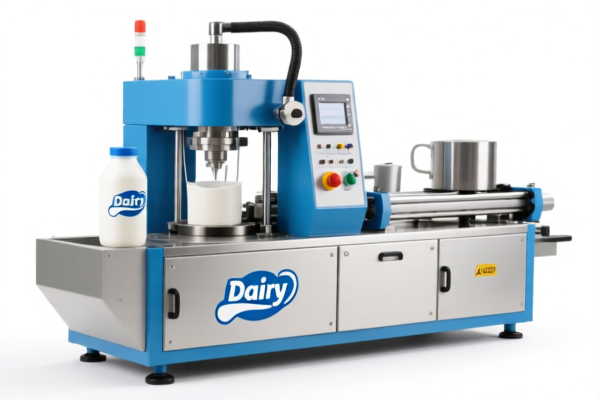
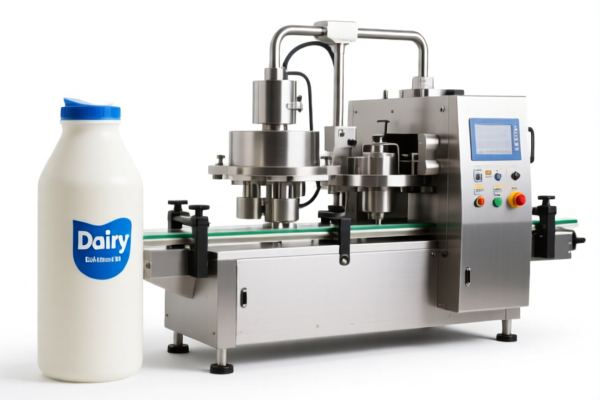
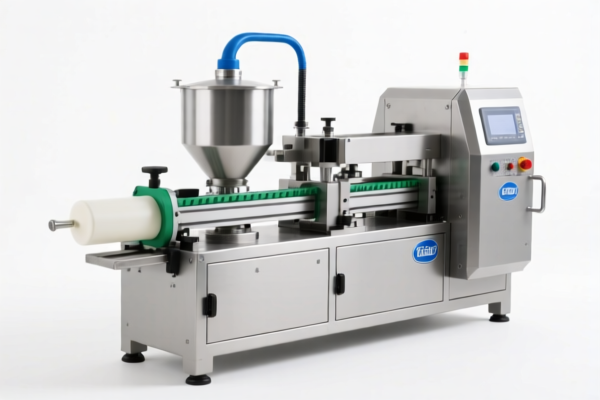
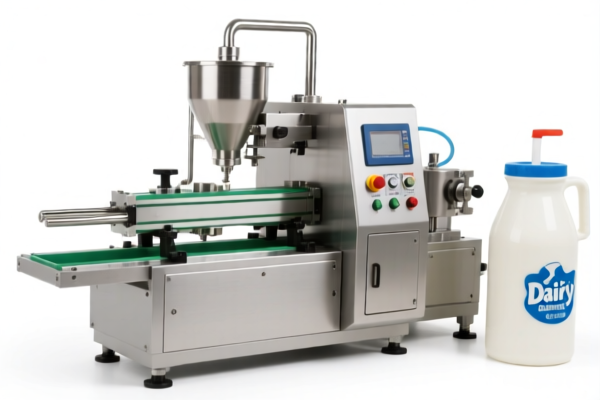
AI Analysis
🐄 Milking Machine & Dairy Machinery Parts
HS Code: 8434.90.00.00
🌐 HS Code Reference & Customs Clearance Guide | 2026 Latest Tariff Analysis | Professional Clearance Strategy
📌 I. Product Definition & Classification: What Exactly Are "Milking Machine Parts"?
Milking machines and dairy machinery are specialized agricultural equipment used for the efficient and hygienic extraction of milk from cattle and other dairy animals. In international trade, Parts refer to components designed exclusively or primarily for use with these machines.
Common Examples of "Parts" (HS 8434.90.00.00): * Rubber/Milk Tubes: Flexible tubing for milk transport. * Teat Cups & Liners: The contact points that attach to the animal. * Pulsators: Devices that alternate pressure to mimic natural suckling. * Vacuum Pumps & Motors: Core mechanical components (if not sold as a whole machine). * Control Panels & Valves: Electronic or mechanical regulators.
⚠️ Key Distinction Point:
- If the item is a complete, functional Milking Machine (ready to use), it falls under HS 8434.10.00.00.
- If the item is a component, spare part, or accessory for the machine, it falls under HS 8434.90.00.00.
- Do not misclassify a complete milking unit as a "part" to avoid higher duties, or vice versa!
📦 II. HS Code Classification Details (2026 Latest Tariff Authority Comparison)
| HS Code | Product Description | Applicability | Contains Complete Function? |
|---|---|---|---|
8434.10.00.00 |
Milking machines | Complete milking units (e.g., stall-mounted systems, portable milking clusters ready for use) | ✅ Yes |
8434.90.00.00 |
Parts | Spare parts, replacement liners, tubes, pulsalators, vacuum pumps (as components), control valves | ❌ No |
🔍 Critical Reminder:
- All complete milking machines must be declared under8434.10.00.00.
- All components, spares, and accessories exclusively for dairy machinery must be declared under8434.90.00.00.
- Mixing complete machines and parts in a single shipment requires separate line items with distinct HS codes.
💰 III. 2026 Latest Tariff Rate Details (Including Additional Duties)
✅ Applicable Country: United States (US)
✅ Country of Origin: China (CN)
✅ Effective Date: 2025年11月10日起 (including subsequent imports)
🎯 1. 8434.90.00.00 —— Milking Machines Parts
| Item | Content |
|---|---|
| Base Tariff Rate | 0.0% (ad valorem) |
| Additional Tariff (Section 301) | +25.0% |
| Total Tariff Rate | 25.0% |
| Tax Calculation | CIF Value × 25% |
| De Minimis Exemption? | ❌ Not Applicable (High duty rate exceeds typical de minimis thresholds for tax purposes) |
| Legal Basis Path | HTSUS: 8434.90.00.00 → Section 301 Tariff List → 25% Additional Duty |
📌 Explanation:
- The Base Rate is 0%, which is favorable for agricultural machinery.
- However, due to trade tensions, an Additional Tariff of 25% is applied to Chinese-origin goods under this classification.
- Total Tax Burden: 25%. This is a moderate-to-high duty compared to some electronics but standard for many industrial/agricultural goods from China.
🎯 2. 8434.10.00.00 —— Milking Machines (Complete Units)
| Item | Content |
|---|---|
| Base Tariff Rate | 0.0% (ad valorem) |
| Additional Tariff (Section 301) | +7.5% |
| Total Tariff Rate | 7.5% |
| Tax Calculation | CIF Value × 7.5% |
| De Minimis Exemption? | ❌ Not Applicable |
| Legal Basis Path | HTSUS: 8434.10.00.00 → Section 301 Tariff List → 7.5% Additional Duty |
📌 Note:
- Complete Milking Machines enjoy a significantly lower additional tariff (7.5%) compared to their parts (25%).
- Strategic Implication: If you are shipping a complete milking system, declare it as8434.10.00.00to save 17.5% in duties.
- Warning: Do not artificially split a complete machine into "parts" to avoid this classification if it is functionally complete. Customs may reclassify and impose the higher 25% rate + penalties.
🛠️ IV. Customs Clearance Practical Advice (Battle-Tested Pitfall Guide)
✅ 1. Documentation Checklist (Absolutely Required)
| Document | Mandatory? | Notes |
|---|---|---|
| ✅ Product Specification Sheet | ✔️ | Detail dimensions, material (e.g., food-grade silicone for liners), and intended use. |
| ✅ Commercial Invoice | ✔️ | Must clearly state: "Parts for Milking Machine" or "Complete Milking Machine". |
| ✅ Packing List | ✔️ | Clearly distinguish between complete units and spare parts if mixed. |
| ✅ Product Photos | ✔️ | Show the item with any labels, models, and interfaces to prove it is a part vs. a machine. |
| ✅ Certificate of Origin (CO) | ✔️ | If originating from China, standard CO applies. |
| ✅ Declaration of Function | ✔️ | Brief statement: "This item is a replacement liner for dairy machinery, not a standalone machine." |
✅ 2. Declaration Techniques (Key Mantras)
🔥 “Parts vs. Machine: Function Defines Code!”
| Scenario | Correct Declaration | Wrong Practice |
|---|---|---|
| Selling only replacement teat cups/tubes | 8434.90.00.00 (Parts) |
Misdeclaring as "Milking Machine" → 7.5% (You lose the 0% base, but pay lower add'l? No, parts are 25%. If you misdeclare parts as machines, you risk fraud charges. If you misdeclare machines as parts, you pay 25% instead of 7.5%.) |
| Selling a complete milking unit | 8434.10.00.00 (Machine) |
Splitting into "pump + tubes + control panel" to claim 0% base on each part → High Risk of Audit & Penalties. |
| Mixed Shipment (Machine + Spares) | Two Lines: 1. Machine: 8434.10.00.00 (7.5%)2. Parts: 8434.90.00.00 (25%) |
Combining into one line item → Customs Rejection. |
💡 Cost-Saving Tip:
- If you sell complete machines, ensure they are packaged as a single functional unit to qualify for 7.5%.
- If you sell spare parts, prepare for 25%. Consider bundling parts in a way that doesn't imply a complete functional system unless intended.
✅ 3. Special Cases Handling
| Situation | Handling Advice |
|---|---|
| OEM Custom Parts | Provide end-user certificate or contract to prove these are specific to the buyer’s milking machine model. |
| Universal Parts | Clearly describe as "compatible with [Brand/Model] milking machines" to avoid ambiguity. |
| Valves & Sensors | If these are electronic controls specifically for milking, keep them under 8434.90.00.00. Do not misclassify as general electrical parts (Chapter 85) unless they are standard industrial components with no specific dairy application. |
| Complete vs. Kit | A "kit" that includes all necessary parts to assemble a functional milking machine on-site may be viewed as a complete machine. Ensure proper declaration. |
🌍 V. Global Market Comparison (2026 Latest)
| Country/Region | Recommended HS Code | Tariff Rate (CN Origin) | Certification Requirements | Notes |
|---|---|---|---|---|
| 🇺🇸 USA | 8434.90.00.00 (Parts)8434.10.00.00 (Machine) |
25% (Parts) 7.5% (Machine) |
FDA (Food Contact), USDA guidelines | High tariffs due to Section 301. |
| 🇨🇳 China | 8434.90.00.008434.10.00.00 |
0% (Most Favored Nation) | CCC (if applicable), Food Safety Cert | No additional tariffs for imports into China. |
| 🇪🇺 EU | 8434.90.00 (Parts)8434.10.00 (Machine) |
0% | CE Marking, FDA-equivalent food safety | Generally low/no duty for agricultural machinery. |
| 🇦🇺 Australia | 8434.90.008434.10.00 |
5% | SFI (Sanitary Food Import) Certification | Standard MFN rates apply. |
📌 Conclusion:
- USA is the most challenging market due to 25% tariff on parts.
- EU & China offer 0% tariffs, making them more attractive for pricing competitiveness.
- Strategy: For US-bound shipments, if possible, export complete machines (7.5%) rather than parts (25%) to reduce duty costs, provided the product design allows it.
📌 VI. Common Errors & Pitfall Guide (Lessons Learned)
❌ Error 1: Declaring a complete milking unit as "Parts" to avoid higher duties?
👉 Result: No, this leads to higher duties (25% vs 7.5%). Customs will reclassify and charge the difference + penalties.
❌ Error 2: Declaring "Milking Machine Parts" that are actually complete milking systems.
👉 Result: Customs Audit. You pay 25% instead of 7.5%. Lost money!
❌ Error 3: Misclassifying dairy pumps as "General Industrial Pumps" (HS 8413) to avoid dairy-specific duties.
👉 Result: High Risk. If the pump is designed specifically for milk (stainless steel, food-grade seals, specific flow rate), it must be under Chapter 8434. Misclassification leads to fraud allegations.
❌ Error 4: Not specifying "Food-Grade" material for liners/tubes.
👉 Result: FDA Compliance Issues. US Customs may detain the shipment for lacking proper food contact material declarations.
✅ Correct Practice:
"Replacement Rubber Liners for Dairy Milking Machines, Food-Grade Silicone, Model XYZ, Compatible with ABC Brand Milking Systems."
HS Code:8434.90.00.00
Duty: 25%"Complete Stall-Mounted Milking System, 4-Stall, Vacuum Pump Included, Model DEF."
HS Code:8434.10.00.00
Duty: 7.5%
🎯 VII. Conclusion: Professional Declaration, Cost Efficiency
🎯 Remember the Mantra:
🔹 "Parts are 25%, Machines are 7.5%."
🔹 "Function Defines HS Code: Is it a whole? Declare Machine. Is it a spare? Declare Parts."
🔹 "FDA Compliance is Key for Food-Contact Parts."
📌 Pro Tip:
If you are a distributor, consider shipping complete machines to the US where possible to leverage the 7.5% tariff instead of 25% for parts. For end-users requiring frequent spares, factor the 25% cost into your pricing strategy.
📣 Immediate Action:
📞 Consult a Licensed Customs Broker
📝 Verify FDA Requirements for Food-Contact Parts
🚀 Ensure Accurate HS Classification to Avoid Delays and Penalties
✨ Precision in Classification Saves Money in Customs!
💼 Optimize Your Supply Chain with Accurate Tariff Strategy!
Customer Reviews
About HS Code Classification
The Harmonized System (HS) is an internationally standardized nomenclature developed by the World Customs Organization (WCO) to classify traded products. Over 200 countries use the HS system as the basis for customs tariffs, trade statistics, and import/export regulations.
Each HS code follows a hierarchical structure:
- Chapter (2 digits) — Broad category of goods (e.g., Chapter 84: Machinery and Mechanical Appliances)
- Heading (4 digits) — More specific grouping within the chapter
- Subheading (6 digits) — Internationally standardized breakdown, used by all WCO member countries
- National subdivisions (8-10 digits) — Country-specific extensions for further classification, such as US HTSUS 10-digit codes
Correct HS code classification is essential for smooth customs clearance, accurate duty payment, and compliance with trade regulations. Misclassification can lead to customs delays, overpayment of duties, or penalties.
When importing from CN to US, the applicable tariff rates may include:
- Most-Favored-Nation (MFN) rate — The standard duty rate applied to WTO members
- General rate — Applied to countries without trade agreements
- Trade remedy duties — Additional tariffs such as Section 301 (anti-dumping), Section 232 (national security), or countervailing duties
The information provided on this page is for reference purposes only. For official classification, please consult with your local customs authority or a licensed customs broker.