Milling Cutter Set
CN → US| HS Code | Tariff Rate | Origin | Destination | Doc |
|---|---|---|---|---|
| 820730 | 0.0% | CN | US | Official Doc |
| 820790 | 0.0% | CN | US | Official Doc |
Product Images
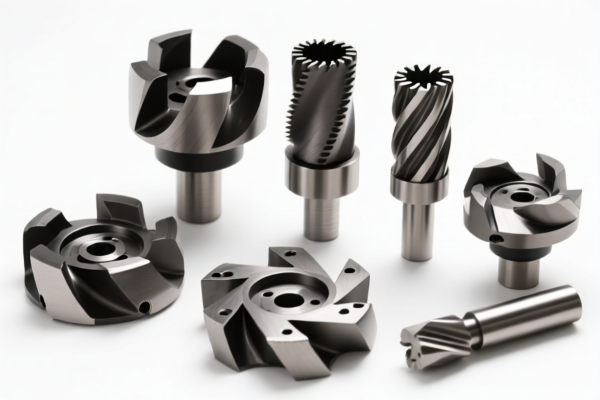
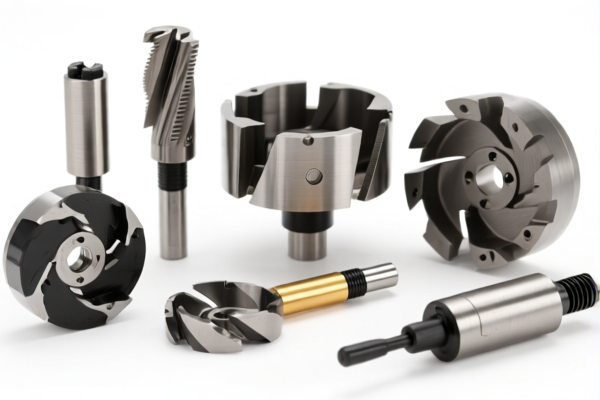
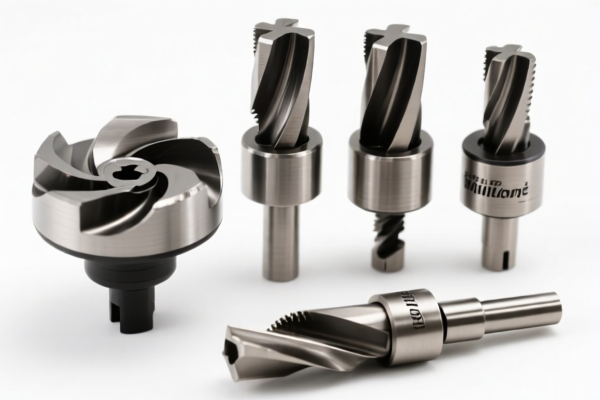
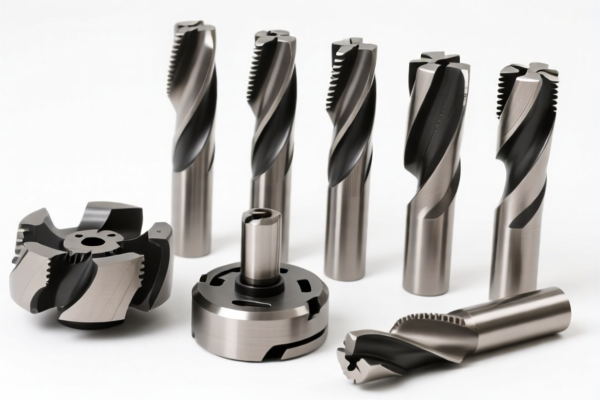
AI Analysis
🛠️ Milling Cutter Set (Interchangeable Tools for Metal Working)
🌐 HS Code Reference & Customs Clearance Guide | 2026 Latest Tariff Analysis | Professional Level Clearance Strategy
📌 I. Product Definition & Classification: Do You Really Understand "Milling Cutters"?
Milling cutters are essential interchangeable tools used for shaping metal materials in manufacturing, automotive, aerospace, and mold-making industries. In international trade, they are strictly classified based on their material composition and functional specificity.
1. Hard Metal (Tungsten Carbide) Milling Cutters:
Specifically designed for high-speed, high-precision metal cutting. These are classified under a dedicated subheading due to their specific material properties and industrial utility.
2. Other Interchangeable Tools (Non-Hard Metal/General Sets):
Includes milling cutter sets made of other high-grade steels or generic metal-working tools that do not meet the specific "hard metal" criteria for the primary subheading. These fall under the general "other" category for interchangeable tools.
⚠️ Key Distinction Point:
- If the cutter is made of Hard Metal (Tungsten Carbide) → Classify under 8207.30
- If it is NOT Hard Metal (e.g., high-speed steel, alloy steel) or is a general set not specified as hard metal → Classify under 8207.90
📦 II. HS Code Classification Details (2026 Latest Tariff Authority Comparison)
| HS Code | Product Description | Applicable Scenario | Material Type |
|---|---|---|---|
8207.30 |
Interchangeable tools for working metal, specifically milling cutters made of hard metal (tungsten carbide) or similar materials as described in reference context. | High-precision CNC milling, heavy-duty metal cutting, industrial molds | ✅ Hard Metal |
8207.90 |
Other interchangeable tools for working metal, including milling cutter sets not specified as being made of hard metal. | General machining, standard milling sets, tools made of HSS or other alloys | ❌ Not Hard Metal |
🔍 Key Reminder:
- 8207.30 is reserved strictly for Hard Metal/Tungsten Carbide milling cutters.
- 8207.90 acts as the catch-all for other materials (like High-Speed Steel) or sets that don't explicitly qualify for 8207.30.
- Tax Information Note: As per the current data source, detailed tax rates (duties, VAT, surcharges) for these specific HS codes could not be retrieved automatically. Importers must consult local customs authorities or a licensed broker for precise country-specific duty rates, as they vary significantly by region (e.g., US, EU, China).
💰 III. Customs Clearance & Tax Advice (Practical Avoidance Guide)
✅ Note on Tax Data: The provided data indicates
"Failed to retrieve tax information"and"Error"for total tax calculations. This highlights a critical risk: Do not rely on generic HS code lists for final duty calculation without verifying local rates.
🎯 1. General Classification Strategy for 8207.30 & 8207.90
| Item | Content |
|---|---|
| Classification Basis | Material Composition is the deciding factor. |
| Critical Documentation | ✅ Material Certificate: Must explicitly state "Tungsten Carbide" or "Hard Metal" for 8207.30. If it says "High-Speed Steel" or "Alloy Steel", use 8207.90. |
| Product Description | Be specific: "Tungsten Carbide Milling Cutter, Insert Type" vs. "HSS End Mill Set". |
| HS Code Risk | Misclassifying a Hard Metal cutter as 8207.90 (or vice versa) can lead to customs audits, penalties, or delayed clearance due to duty underpayment/overpayment. |
📌 Explanation:
- Hard Metal (Carbide) tools are often subject to different duty rates due to their strategic industrial value and manufacturing origin.
- General Milling Sets may have different free trade agreement (FTA) eligibility depending on the material origin.
- Since tax data is unavailable, you MUST: 1. Check the Harmonized System Nomenclature for your specific country. 2. Contact your freight forwarder or customs broker for the exact duty rate for8207.30and8207.90in your destination country. 3. Verify if FTA benefits apply (e.g., RCEP, USMCA, EU-China FTA) based on the material origin.
🛠️ IV. Customs Clearance Practical Advice (Real-World Pitfall Guide)
✅ 1. Required Documentation List (Non-Negotiable)
| Document | Mandatory? | Description |
|---|---|---|
| ✅ Commercial Invoice | ✔️ | Must clearly state "Milling Cutter Set" and specify Material (e.g., "Tungsten Carbide" or "HSS"). |
| ✅ Packing List | ✔️ | Itemize quantities and weights. Separate hard metal cutters from other accessories if possible. |
| ✅ Material Certificate | ✔️ | CRITICAL: Proof that the cutter is made of Tungsten Carbide (for 8207.30) or other steel (for 8207.90). |
| ✅ Product Photos | ✔️ | Clear images showing the cutter, brand, model, and any markings indicating material. |
| ✅ Certificate of Origin (CO) | ✔️ | If claiming FTA benefits, a valid CO is required. |
✅ 2. Declaration Tips (Key Mantras)
🔥 “Material Defines Code, Description Defines Truth, Tax Varies by Country!”
| Scenario | Correct Declaration | Common Mistake |
|---|---|---|
| Tungsten Carbide Milling Cutter | HS Code: 8207.30Desc: "Hard Metal Milling Cutter" |
Misdeclaring as 8207.90 (wrong code) or omitting material (high audit risk) |
| HSS (High-Speed Steel) End Mill | HS Code: 8207.90Desc: "HSS Milling Cutter" |
Over-declaring as "Hard Metal" to seek lower/hyper-specific duty (fraud risk) |
| Mixed Set (Carbide + Steel) | Split shipment or declare main value item. Consult broker. | Declaring entire set under one HS code without justification |
⚠️ Warning:
- If the set contains both hard metal and non-hard metal cutters, you cannot arbitrarily choose the lower-rate HS code. You may need to split the declaration or declare based on the principal component/value as per local customs rules.
- Never guess the tax rate. Since the data shows"Error", assume the rate could be anywhere from 0% to 10%+ depending on the country (e.g., US may have 0-2.5%, EU 0-4.5%, etc.). Verify with a local expert.
🌍 V. Global Market Customs Comparison (2026 Overview)
| Country/Region | Recommended HS Code | Estimated Duty Rate (General) | Key Requirement |
|---|---|---|---|
| 🇺🇸 USA | 8207.30 / 8207.90 |
0% - 2.5% (Check Section 301) | Material certification is key. Section 301 tariffs may apply for Chinese origin. |
| 🇪🇺 EU | 8207.30 / 8207.90 |
0% - 4.5% | CE marking not required for tools, but RoHS may apply if electronic components are present. |
| 🇨🇳 China | 8207.30 / 8207.90 |
0% - 5% | Import license not typically required for standard tools. |
| 🇯🇵 Japan | 8207.30 / 8207.90 |
0% - 3.2% | PSE not required for manual tools. |
📌 Conclusion:
- HS Code8207.30is for Hard Metal (Carbide) tools.
- HS Code8207.90is for Other Metal-Working Tools (non-carbide).
- Tax Rates are Variable: Since the source data indicates "Failed to retrieve tax information", you MUST verify the exact duty rate with your local customs broker. Do not assume a rate.
- Documentation is Key: Material certificates are the most important document to justify the HS code choice.
📌 VI. Common Errors & Pitfall Avoidance (Lessons Learned)
❌ Error 1: Declaring Tungsten Carbide cutters as 8207.90 to simplify paperwork.
👉 Consequence: Customs may reject the declaration, demand material proof, or impose penalties for incorrect classification.
❌ Error 2: Ignoring Section 301 Tariffs (for US imports from China).
👉 Consequence: Even if the base duty is 0%, a 25% Section 301 tariff may apply. Check origin carefully!
❌ Error 3: Providing vague descriptions like "Metal Cutter".
👉 Consequence: Customs will classify based on their own assessment, which may be higher duty or cause delays. Be specific: "Tungsten Carbide End Mill".
✅ Correct Practice:
"Tungsten Carbide Milling Cutter, Insert Type, Model XYZ, Material: WC-Co, Country of Origin: China"
🎯 VII. Conclusion: Precision in Classification, Efficiency in Clearance!
🎯 Remember the Mantra:
🔹 "Hard Metal = 8207.30, Other Steel = 8207.90"
🔹 "Material Certificate is Your Best Friend"
🔹 "Tax Rates Vary by Country, Verify Before You Ship!"
📌 Pro Tip:
- If you are importing Tungsten Carbide cutters from China to the US, be aware of Section 301 tariffs (often 25%).
- For EU imports, ensure your supplier provides a Declaration of Conformity if the tools have any electronic components (rare for standard cutters).
- Always use a licensed customs broker to confirm the final duty rate, as the provided data shows "Error" for tax details.
📣 Immediate Action:
📞 Contact your customs broker with the Material Certificate and Product Photos.
🚀 Verify the HS Code and Duty Rate for your specific destination country.
💼 Don't guess the tax! Confirm it!
✨ Professional Clearance Starts with Accurate Classification!
💼 Your Cost Efficiency Depends on Correct HS Code Selection!
Customer Reviews
About HS Code Classification
The Harmonized System (HS) is an internationally standardized nomenclature developed by the World Customs Organization (WCO) to classify traded products. Over 200 countries use the HS system as the basis for customs tariffs, trade statistics, and import/export regulations.
Each HS code follows a hierarchical structure:
- Chapter (2 digits) — Broad category of goods (e.g., Chapter 84: Machinery and Mechanical Appliances)
- Heading (4 digits) — More specific grouping within the chapter
- Subheading (6 digits) — Internationally standardized breakdown, used by all WCO member countries
- National subdivisions (8-10 digits) — Country-specific extensions for further classification, such as US HTSUS 10-digit codes
Correct HS code classification is essential for smooth customs clearance, accurate duty payment, and compliance with trade regulations. Misclassification can lead to customs delays, overpayment of duties, or penalties.
When importing from CN to US, the applicable tariff rates may include:
- Most-Favored-Nation (MFN) rate — The standard duty rate applied to WTO members
- General rate — Applied to countries without trade agreements
- Trade remedy duties — Additional tariffs such as Section 301 (anti-dumping), Section 232 (national security), or countervailing duties
The information provided on this page is for reference purposes only. For official classification, please consult with your local customs authority or a licensed customs broker.