Mineral Raw Material Screening, Separation, Washing, Crushing, Grinding, Mixing Machine
CN → US| HS Code | Tariff Rate | Origin | Destination | Doc |
|---|---|---|---|---|
| 8479820080 | 35.0% | CN | US | Official Doc |
| 8479820040 | 35.0% | CN | US | Official Doc |
| 8474100010 | 35.0% | CN | US | Official Doc |
| 8474200050 | 35.0% | CN | US | Official Doc |
| 8479820080 | 35.0% | CN | US | Official Doc |
Product Images
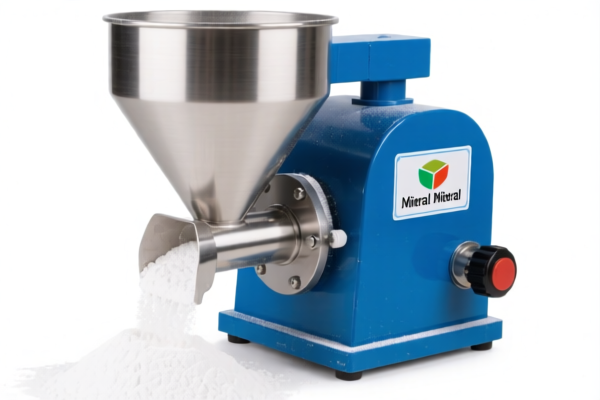
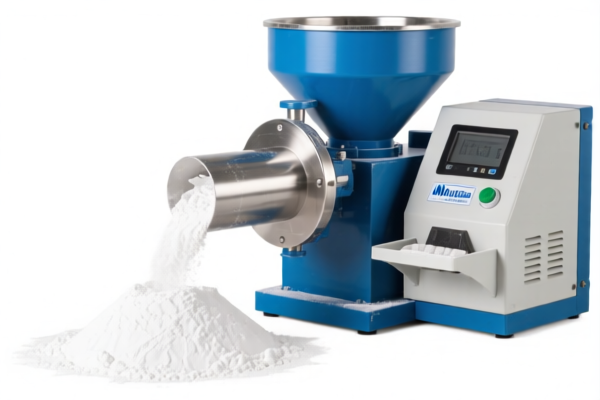
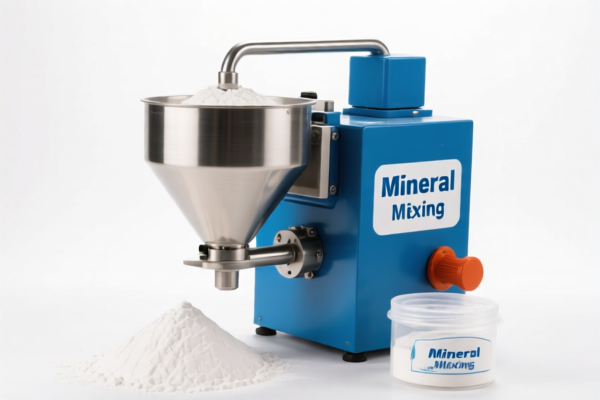
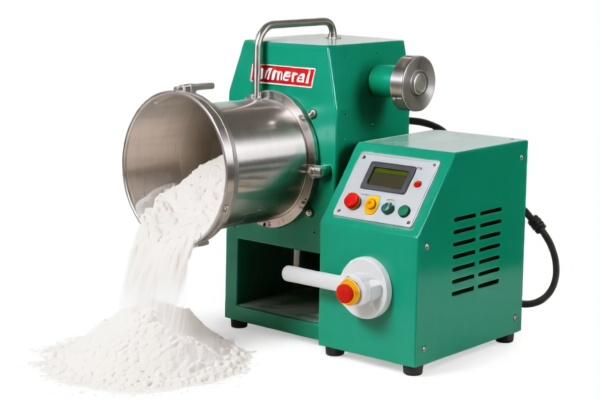
AI Analysis
🏭 Heavy Duty Industrial Processors (Mineral Raw Material Screening, Separation, Washing, Crushing, Grinding, Mixing Machines)
🌐 HS Code Reference & Customs Clearance Guide | 2024-2026 Tariff Analysis | Professional Clearance Strategy
📌 I. Product Definition & Classification: What Exactly Are These Machines?
These machines are essential components of the mining, aggregates, and chemical processing industries. They are designed to physically alter raw mineral materials through mechanical force, fluid dynamics, or agitation. In international trade, they fall under Chapter 84 (Nuclear reactors, boilers, machinery and mechanical appliances).
The key distinction lies in the primary function and specific mechanical action:
- General Processing Machinery (Heading 8479): Machines that perform multiple functions (e.g., mixing, stirring) or do not fit specifically into the dedicated mineral processing headings (8474).
- Dedicated Mineral Processing Machinery (Heading 8474): Machines specifically designed for sorting, separating, washing, crushing, grinding, mixing, or blending minerals.
⚠️ Critical Classification Point:
- If the machine is specifically designed for mineral processing (e.g., a jaw crusher, a vibratory sieve, a mineral flotation cell) → Likely 8474 series.
- If the machine performs mixing/stirring of minerals but is more general in nature (or combines multiple unrelated functions) → Likely 8479 series.
- Material Conflict: The machine body must be constructed of materials consistent with industrial machinery (steel, cast iron). If it contains significant precious metals for catalytic purposes, classification may shift, but standard mechanical units remain in Chapter 84.
📦 II. HS Code Classification Details (2024-2026 Latest Tariff Schedule)
Based on the provided data, here are the precise classifications and their justifications:
| HS Code | Product Description | Justification & Summary |
|---|---|---|
8479.82.00.80 |
Machinery for sorting, screening, washing, crushing, grinding, mixing or blending mineral substances | Functionality Match: The summary explicitly states the function description is "fully consistent" with the tariff heading. Material: No conflict. This is a general catch-all for mineral processing machinery not specifically listed elsewhere in 8474. Note: Appears twice in source data, confirming its applicability. |
8479.82.00.40 |
Machinery for sorting, screening, washing, crushing, grinding, mixing or blending mineral substances | Function & Usage: Consistent with classification explanations. Material: Complies with machine category requirements. This code often represents a specific sub-category or variant within the 8479.82 heading (e.g., specific capacity or configuration). |
8474.10.00.10 |
Crushing or grinding machinery | Specific Function: Specifically for crushing/grinding minerals. Usage & Material: Fully compliant with classification rules for dedicated crushing equipment (e.g., jaw crushers, ball mills). This is more specific than 8479 for purely crushing tasks. |
8474.20.00.50 |
Screening, sorting or separating machinery | Specific Function: Specifically for screening/separating. Usage & Material: Fully compliant with classification interpretations for vibratory screens, sieves, or flotation machines. |
🔍 Key Takeaway:
- 8474.10 and 8474.20 are for dedicated machines (only crush/grind OR only screen/separate).
- 8479.82 is for multi-function or general mineral processing machines (e.g., a mixer that also washes, or a machine not covered by the stricter 8474 definitions).
- All listed codes carry the same total tax rate of 35.0%, simplifying cost planning regardless of the specific mechanical nuance.
💰 III. 2024-2026 Latest Tariff Rate Breakdown (Including Surtaxes & Policy Add-ons)
✅ Applicable Country: United States (US)
✅ Origin: China (CN)
✅ Effective Time: Includes subsequent imports under current trade policies (Section 301 & IEEPA)
🎯 1. All Listed HS Codes (8479.82.00.80, 8479.82.00.40, 8474.10.00.10, 8474.20.00.50)
| Item | Content |
|---|---|
| Base Tariff Rate | 0% (ad valorem) |
| Section 301 Surtax | +25% (USITC Footnote 9903.88.01 / Related 301 Actions) |
| IEEPA Surtax (Section 122) | +10% (Targeted China/China-HK products under IEEPA authorities) |
| Total Tax Rate | 35.0% |
| Tax Calculation | CIF Value × 35% |
| De Minimis Eligibility | ❌ Not Applicable (Deny De Minimis) |
| Legal Basis Path | USITC:8474.10/8479.82 → Section 301: +25% → IEEPA: +10% |
📌 Explanation:
- Base Rate: Under the HTSUS, most industrial machinery has a low or zero base duty.
- Section 301 (+25%): This is the major tariff imposed on Chinese goods under the Trade Act of 1974, Section 301. It applies to a wide range of industrial equipment.
- IEEPA (+10%): This additional surcharge targets specific Chinese imports under the International Emergency Economic Powers Act.
- Total 35%: This is a high effective duty rate. Importers must budget significantly for landed costs.
- No De Minimis: Items valued under $800 (Section 321) are not exempt from these tariffs if they are subject to Section 301/IEEPA surcharges.
🛠️ IV. Customs Clearance Practical Advice (Real-World Pitfall Guide)
✅ 1. Documentation Checklist (Essential)
| Document | Must Provide | Description |
|---|---|---|
| ✅ Product Specification Sheet | ✔️ | Must detail: Capacity (tons/hr), Power (kW), Dimensions, Weight, Voltage. |
| ✅ Functional Diagram/Flowchart | ✔️ | Critical to prove if it’s a dedicated crusher (8474) or general processor (8479). |
| ✅ Product Photos (With Nameplate) | ✔️ | Must show model number, brand, and power rating. |
| ✅ Commercial Invoice | ✔️ | Must explicitly state: "Machine for Crushing/Screening Mineral Raw Materials" — Do NOT use vague terms like "Industrial Mixer". |
| ✅ Packing List | ✔️ | Clearly separate main unit from accessories (motors, control panels). |
| ✅ Origin Certificate | ✔️ | Proves CN origin; helps apply correct surtaxes. |
| ✅ Third-Party Testing Report | ✔️ | CE, UL, or ISO certification if required by end-user. |
✅ 2. Declaration Tips (Key Mnemonic)
🔥 "Function First, Material Second, Name Precise, Tax Predictable!"
| Scenario | Correct Declaration | Wrong Approach |
|---|---|---|
| Dedicated Crusher | HS 8474.10.00.10 |
Misclassifying as 8479 → No rate change, but risk of audit if function doesn’t match. |
| Dedicated Screen | HS 8474.20.00.50 |
Misclassifying as 8479 → Same risk. |
| Multi-Function Unit | HS 8479.82.00.80 |
Calling it "Crusher" when it also mixes → May force into 8474 incorrectly. |
| Vague Name | "Industrial Mineral Processor" | "Mixer" or "Agitator" → High Risk of Re-classification & Penalty. |
✅ 3. Special Cases Handling
| Case | Handling Advice |
|---|---|
| OEM Custom Machines | Provide custom design drawings. Customs may request a "Primary Function" test to determine if 8474 or 8479 is more accurate. |
| Complete vs. Complete Kit | If shipped as a complete unit (machine + motor + base), declare one HS Code for the entire machine. Do not split duties. |
| Used Machinery | Must provide age, maintenance records, and condition report. Some ports restrict used machinery entry. |
| Parts vs. Whole | If shipping only replacement blades or screens, declare as parts (8479.90/8474.90). Parts may have different duty rates (though often still subject to 301). |
🌍 V. Global Market Clearance Comparison (2024-2026)
| Country/Region | Recommended HS Code | Base Duty | Additional Taxes (CN Origin) | Notes |
|---|---|---|---|---|
| 🇺🇸 USA | 8474 or 8479 Series |
0% | +35% (25% Sec 301 + 10% IEEPA) | Highest effective rate. Pre-clearance crucial. |
| 🇨🇳 China | 8474 or 8479 Series |
0-10% | None | Low barrier to entry. |
| 🇪🇺 EU | 8474 or 8479 Series |
0-4% | No surtaxes (unless GSP revoked) | CE marking essential. |
| 🇮🇳 India | 8474 or 8479 Series |
7.5-15% | BCD + SWS + Cess | Complex tax structure; check AGR. |
| 🇲🇽 Mexico | 8474 or 8479 Series |
0-5% | None (if USMCA compliant) | Potential duty-free if originating in USMCA. |
📌 Conclusion:
- USA is the most expensive market due to layered surtaxes.
- EU and Asia offer much lower duty burdens but require strict compliance with safety (CE/UL) standards.
- Supply Chain Strategy: Consider transshipment through non-China jurisdictions (e.g., Vietnam, Thailand) if possible, but beware of rules of origin audits.
📌 VI. Common Mistakes & Pitfalls (Lessons from Experience)
❌ Mistake 1: Declaring as "General Industrial Mixer" (8479.82) for a dedicated Crusher (8474.10)
👉 Consequence: While the tax rate is the same (35%), incorrect classification can lead to port holds, audits, and delays if customs inspectors determine the primary function was misrepresented.
❌ Mistake 2: Ignoring the 10% IEEPA Surcharge
👉 Consequence: Underpayment of duties. The 35% total is not just 25%; the extra 10% is mandatory for CN-origin goods. Expect back-taxes + interest.
❌ Mistake 3: Vague Product Description ("Heavy Machine")
👉 Consequence: Customs will assign their own HS code, potentially leading to disputes, higher duties, or seizure. Always use precise terminology: "Vibrating Screen for Coal Ore" or "Ball Mill for Grinding Minerals".
❌ Mistake 4: Assuming De Minimis Applies
👉 Consequence: Sending small samples or replacement parts via courier (UPS/FedEx) without paying duties. These are not exempt from Section 301/IEEPA. Expect customs bills upon arrival.
✅ Correct Approach:
"Jaw Crusher, Model XYZ, 50 Tons/Hour, 220V, for Granite Processing, Made in China"
🎯 VII. Conclusion: Professional Declaration Saves Money and Time!
🎯 Remember the Mantra:
🔹 "Dedicated Function = 8474, General Processing = 8479, Both = 35% Tax."
🔹 "No De Minimis, No Exemptions, Prepare for the Full 35%."
📌 Pro Tip:
If your machine is modified or has unique features, request a Customs Ruling (Ruling Letter) before shipping. This provides legal certainty on whether 8474 or 8479 is the correct code and confirms the 35% rate applies.
📣 Immediate Action:
📞 Contact your freight forwarder + Provide Technical Data Sheet + Confirm IEEPA Surcharge Payment.
🚀 Ensure your mineral processing equipment clears customs smoothly and efficiently!
✨ Precision in Classification, Profit in Logistics!
💼 Your machinery is critical; your compliance must be flawless.
Customer Reviews
About HS Code Classification
The Harmonized System (HS) is an internationally standardized nomenclature developed by the World Customs Organization (WCO) to classify traded products. Over 200 countries use the HS system as the basis for customs tariffs, trade statistics, and import/export regulations.
Each HS code follows a hierarchical structure:
- Chapter (2 digits) — Broad category of goods (e.g., Chapter 84: Machinery and Mechanical Appliances)
- Heading (4 digits) — More specific grouping within the chapter
- Subheading (6 digits) — Internationally standardized breakdown, used by all WCO member countries
- National subdivisions (8-10 digits) — Country-specific extensions for further classification, such as US HTSUS 10-digit codes
Correct HS code classification is essential for smooth customs clearance, accurate duty payment, and compliance with trade regulations. Misclassification can lead to customs delays, overpayment of duties, or penalties.
When importing from CN to US, the applicable tariff rates may include:
- Most-Favored-Nation (MFN) rate — The standard duty rate applied to WTO members
- General rate — Applied to countries without trade agreements
- Trade remedy duties — Additional tariffs such as Section 301 (anti-dumping), Section 232 (national security), or countervailing duties
The information provided on this page is for reference purposes only. For official classification, please consult with your local customs authority or a licensed customs broker.