Mini Electric Saw
CN → US| HS Code | Tariff Rate | Origin | Destination | Doc |
|---|---|---|---|---|
| 8467220020 | 10.0% | CN | US | Official Doc |
| 8467220070 | 10.0% | CN | US | Official Doc |
Product Images
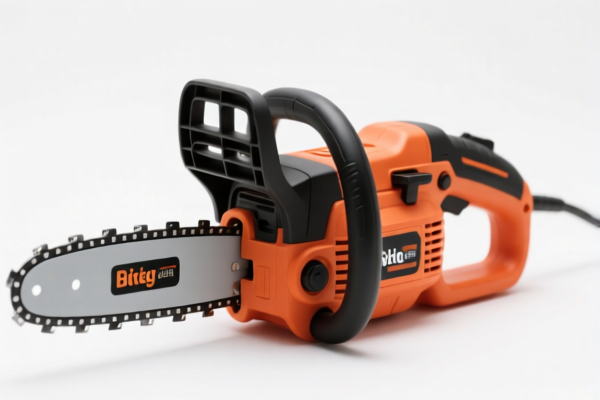
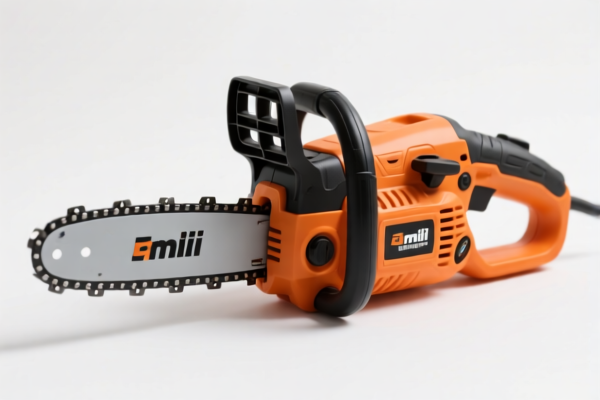
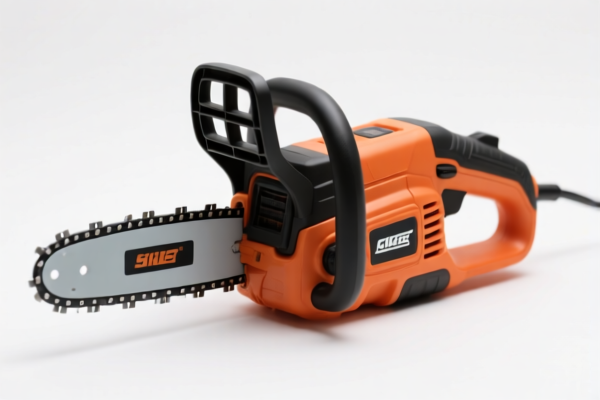
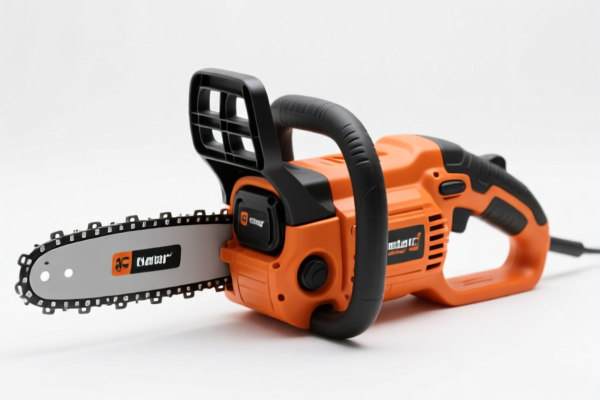
AI Analysis
🪚 Mini Electric Saw (Handheld Power Tools)
🌐 HS Code Reference & Customs Clearance Guide | 2026 Latest Tariff Analysis | Professional Clearance Strategy
📌 1. Product Definition & Classification: Do You Really Understand "Mini Electric Saw"?
"Mini Electric Saw" is a colloquial term in the consumer market, but in international trade (specifically under US Customs Tariff Schedule Chapter 84), it falls squarely under "Tools for working in the hand, pneumatic, hydraulic or with self-contained electric or nonelectric motor."
Crucially, these tools are divided into two distinct categories based on their cutting mechanism and motion:
Circular Saws (Rotating Blade): Tools where the cutting element rotates around an axis. This includes "mini" circular saws used for woodworking, trim work, or light construction. Reciprocating & Jig Saws (Oscillating/Blade): Tools where the cutting element moves back and forth (reciprocating) or performs fine, intricate cuts (jig saw). This includes compact reciprocating saws (Sawzalls) and mini jig saws.
⚠️ Key Distinction Point:
- If the saw has a round, rotating blade → It is a Circular Saw.
- If the saw has a straight blade that moves up and down/back and forth → It is a Reciprocating or Jig Saw.
- Why it matters: These two categories have different HS Codes and potentially different duty treatments, although in this specific dataset, both are tariff-free.
📦 2. HS Code Classification Details (2026 Latest Tariff Authority Cross-Reference)
Based on the provided data, "Mini Electric Saw" must be classified into one of the following two HS Codes depending on the blade type:
| HS Code | Product Description | Applicable Scenario | Blade Type |
|---|---|---|---|
8467.22.00.20 |
Circular Saws (with self-contained electric motor) | Mini circular saws, trim cutters, small handheld circular saws | 🔄 Rotating (Circular) |
8467.22.00.70 |
Reciprocating and Jig Saws (with self-contained electric motor) | Mini reciprocating saws, detail jig saws, compact oscillating multi-tools (if classified as jig/recip) | 🔄 Oscillating/Back-and-Forth |
🔍 Critical Reminder:
- Do NOT classify these under generic "Parts" or "Accessories" if the motor is self-contained. The presence of the electric motor defines the classification under Heading 8467. - If the tool is battery-operated, it still falls under "With self-contained electric motor" (Headings 8467.21-8467.29) because the battery is part of the self-contained power unit. - Misclassification Risk: Declaring a circular saw as a "Jig Saw" to try and guess different duties is risky. While both are currently 0% in this dataset, incorrect description can lead to customs audits or delays.
💰 3. 2026 Latest Tariff Rate Details (Including Additional Taxes & Policy Add-ons)
✅ Applicable Country: United States (US)
✅ Origin: Likely China (CN) [Assumed based on typical trade context, but verify]
✅ Status: ZERO DUTY
🎯 1. 8467.22.00.20 – Circular Saws (Electric, Handheld)
| Item | Content |
|---|---|
| Base Tariff Rate | 0.0% (ad valorem) |
| Section 301 Additional Tariff | 0.0% (As per provided data) |
| IEEPA Additional Tariff | 0.0% (As per provided data) |
| Total Effective Tax Rate | 0.0% |
| Tax Calculation | CIF Value × 0% = $0 |
| De Minimis Eligibility | ✅ Yes (Generally, power tools may be subject to scrutiny, but technically under 8% ad valorem, they might qualify if other restrictions don't apply. Note: Always check specific USITC exclusions). |
| Legal Basis Path | USITC:8467.22.00.20 → Base: 0% + Additional: 0% |
📌 Explanation:
- According to the provided data, circular saws (HS 8467.22.00.20) currently enjoy a 0% total tax rate.
- This is highly favorable for importers. Unlike electronics or certain steel products, handheld electric saws are not currently penalized with high Section 301 or IEEPA tariffs in this specific dataset.
🎯 2. 8467.22.00.70 – Reciprocating and Jig Saws (Electric, Handheld)
| Item | Content |
|---|---|
| Base Tariff Rate | 0.0% (ad valorem) |
| Section 301 Additional Tariff | 0.0% (As per provided data) |
| IEEPA Additional Tariff | 0.0% (As per provided data) |
| Total Effective Tax Rate | 0.0% |
| Tax Calculation | CIF Value × 0% = $0 |
| De Minimis Eligibility | ✅ Yes (See note above for circular saws). |
| Legal Basis Path | USITC:8467.22.00.70 → Base: 0% + Additional: 0% |
📌 Explanation:
- Reciprocating and jig saws (HS 8467.22.00.70) also carry a 0% total tax rate.
- Good News: Both types of "mini electric saws" are duty-free under the current tariff schedule provided. There is no cost penalty for importing these tools from China (or other origins) based on this data.
🛠️ 4. Customs Clearance Operational Advice (Practical Pitfall Avoidance Guide)
✅ 1. Required Documentation Checklist (No Exceptions)
| Document | Must Provide | Description |
|---|---|---|
| ✅ Product Specification Sheet | ✔️ | Must clearly state: Motor Type (Electric), Voltage (110V/120V), Blade Type (Circular/Reciprocating), and Max Cutting Depth. |
| ✅ Technical Diagrams | ✔️ | Show the motor integration. Crucial to prove it is "Self-Contained" (not just a motor part for installation elsewhere). |
| ✅ Product Photos (Clear & Labeled) | ✔️ | Show the tool with its label, model number, and input/output specs. |
| ✅ Commercial Invoice | ✔️ | Description must be precise: e.g., "Electric Circular Saw, Mini, 120V, Self-Contained" or "Electric Jig Saw, Mini, Self-Contained". Avoid vague terms like "Power Tool" only. |
| ✅ Packing List | ✔️ | List accessories (blades, handles, cases) separately if they are packed but not part of the main unit, or confirm they are included. |
✅ 2. Declaration Strategy (Key Mantra)
🔥 “Specify the Motion, Not the Size! ‘Mini’ is not an HS Code!”
| Scenario | Correct Declaration | Incorrect Practice | Consequence |
|---|---|---|---|
| Mini Circular Saw | 8467.22.00.20 - "Electric Circular Saw" |
Calling it "Woodworking Machine" | Potential classification error; audit delay. |
| Mini Reciprocating Saw | 8467.22.00.70 - "Electric Reciprocating Saw" |
Calling it "Construction Part" | Misclassification; risk of penalty. |
| Battery-Powered Saw | Same as above (Self-contained electric motor) | Classifying under "Parts of Batteries" (8507) | Wrong chapter; 0% duty lost, penalties applied. |
| Saw Blade Only | 8207.xx.xxxx (Not in current data) |
Classifying blade with the saw (if shipped separately) | If shipped together, ensure main article rules apply; if separate, blade has different duty. |
✅ 3. Special Situations & Handling
| Situation | Handling Advice |
|---|---|
| Saw with Laser Guide | Still classified under 8467.22.00.20/70. The laser is an accessory/feature of the saw, not a separate "optical instrument." |
| Saw with Dust Collection Port | Still classified under 8467.22.00.20/70. Dust collection is an auxiliary function. |
| OEM Private Label | Ensure the commercial invoice reflects the actual manufacturer or "Made in [Country]" clearly. |
| Safety Certifications | While not a tariff issue, US Customs may require proof of UL/ETL or CPSC compliance for consumer power tools. Have safety certs ready. |
🌍 5. Global Market Comparison (2026 Latest)
| Country/Region | Recommended HS Code | Tariff Rate | Certification Requirement | Notes |
|---|---|---|---|---|
| 🇺🇸 USA | 8467.22.00.20 / .70 |
0% | UL/ETL, CPSC (Safety) | Duty-Free. Focus on safety compliance. |
| 🇨🇳 China | 8467.22.00.20 / .70 |
Varies (Check CCC) | CCC (Mandatory for certain power tools) | Domestic market requires CCC. |
| 🇪🇺 EU | 8467.22.00.20 / .70 |
0% (Usually) | CE Mark, Low Voltage Directive | VAT applies (19-27%), but import duty is often 0%. |
| 🇬🇧 UK | 8467.22.00.20 / .70 |
0% | UKCA Mark | Post-Brexit rules apply. |
| 🇦🇺 Australia | 8467.22.00.20 / .70 |
5% (Check RCM) | RCM (Regulatory Compliance Mark) | GST applies. |
📌 Conclusion:
- The USA offers 0% duty for these items according to the provided data.
- The main challenge is Safety Certification (UL/CPSC in the US, CE in EU), not tariffs.
- Ensure your commercial invoice description precisely matches the HS Code (Circular vs. Reciprocating).
📌 6. Common Errors & Pitfall Guide (Lessons from Blood & Tears)
❌ Error 1: Using "Hand Saw" or "Mini Saw" as the HS Code description.
👉 Consequence: Customs lacks clarity. May hold shipment for classification review.
✅ Fix: Use "Electric Circular Saw" or "Electric Reciprocating Saw."
❌ Error 2: Ignoring the "Self-Contained Motor" aspect.
👉 Consequence: If you classify as "Parts" (8467.90), you might miss the correct subheading for the tool itself.
✅ Fix: Always declare as "Tool" not "Part."
❌ Error 3: Assuming "Mini" means a different tariff rate.
👉 Consequence: "Mini" is a marketing term, not a tariff classification term. It doesn't change the HS Code.
✅ Fix: Classify based on function (Circular vs. Jig), not size.
❌ Error 4: Failing to disclose Safety Certs.
👉 Consequence: CBP may demand proof of compliance with CPSC (Consumer Product Safety Commission) for power tools.
✅ Fix: Have UL/ETL test reports ready for inspection.
🎯 7. Conclusion: Professional Declaration, Time-Saving, Cost-Efficient!
🎯 Remember the Mantra:
🔹 "Circular vs. Reciprocating: Know the Motion!"
🔹 "0% Duty in the US: Don't Risk Misclassification!"
🔹 "Safety First: UL/CPSC Docs are Mandatory!"
📌 Pro Tip:
Even though the duty is 0%, the compliance burden for electric power tools is high.
- Ensure your Commercial Invoice explicitly states: "Electric Motor, Handheld Tool, Self-Contained, [Circular/Reciprocating] Type."
- Keep Safety Certificates (UL, ETL, CE) readily available for customs brokers.
📣 Immediate Action:
📞 Confirm the Blade Type (Circular or Jig/Reciprocating).
📄 Prepare Technical Datasheets highlighting motor integration.
📋 Ensure Safety Compliance (UL/CPSC for US market).
🚀 Enjoy 0% Duty and Smooth Clearance!
✨ Professional Clearance Starts with Precise Classification!
💼 Your Every Penny Saved on Duties Counts!
Customer Reviews
About HS Code Classification
The Harmonized System (HS) is an internationally standardized nomenclature developed by the World Customs Organization (WCO) to classify traded products. Over 200 countries use the HS system as the basis for customs tariffs, trade statistics, and import/export regulations.
Each HS code follows a hierarchical structure:
- Chapter (2 digits) — Broad category of goods (e.g., Chapter 84: Machinery and Mechanical Appliances)
- Heading (4 digits) — More specific grouping within the chapter
- Subheading (6 digits) — Internationally standardized breakdown, used by all WCO member countries
- National subdivisions (8-10 digits) — Country-specific extensions for further classification, such as US HTSUS 10-digit codes
Correct HS code classification is essential for smooth customs clearance, accurate duty payment, and compliance with trade regulations. Misclassification can lead to customs delays, overpayment of duties, or penalties.
When importing from CN to US, the applicable tariff rates may include:
- Most-Favored-Nation (MFN) rate — The standard duty rate applied to WTO members
- General rate — Applied to countries without trade agreements
- Trade remedy duties — Additional tariffs such as Section 301 (anti-dumping), Section 232 (national security), or countervailing duties
The information provided on this page is for reference purposes only. For official classification, please consult with your local customs authority or a licensed customs broker.