Mini Electric Turntable
CN → US| HS Code | Tariff Rate | Origin | Destination | Doc |
|---|---|---|---|---|
| 9503000073 | 10.0% | CN | US | Official Doc |
| 9503000071 | 10.0% | CN | US | Official Doc |
| 8501106080 | 37.8% | CN | US | Official Doc |
| 8501104080 | 39.4% | CN | US | Official Doc |
| 8543709860 | 37.6% | CN | US | Official Doc |
| 8543708900 | 17.5% | CN | US | Official Doc |
Product Images
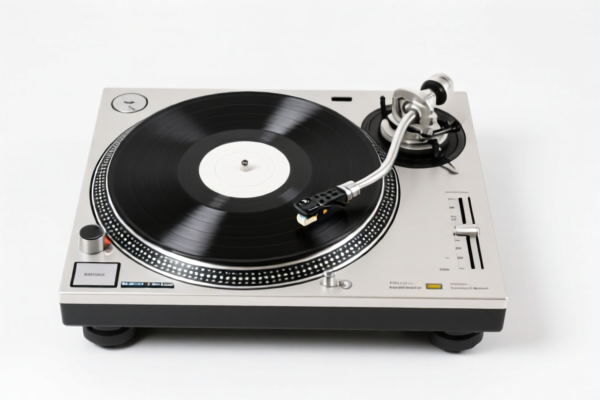
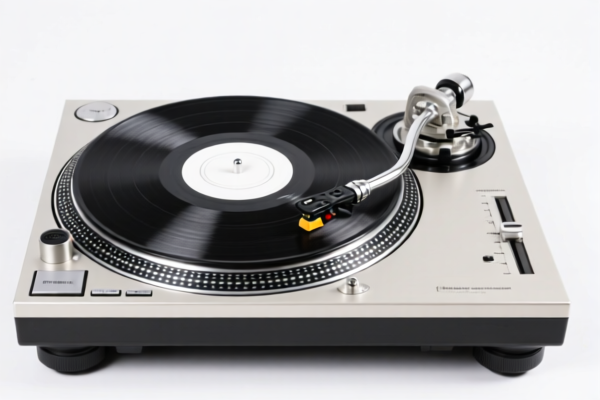
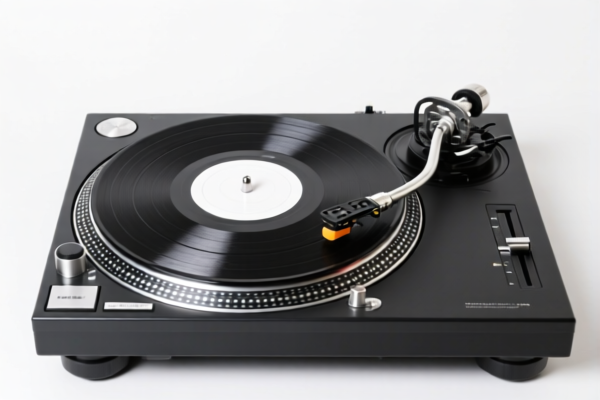
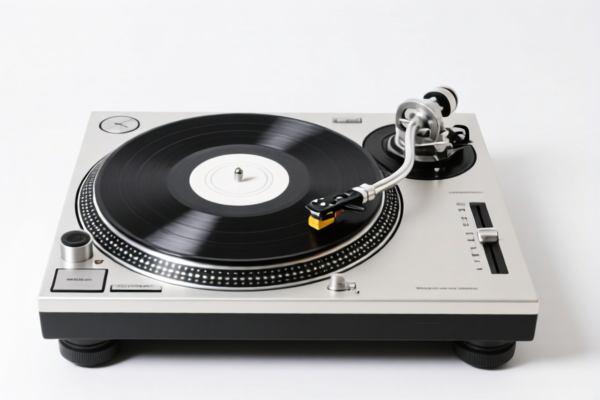
AI Analysis
🎡 Mini Electric Turntable (Rotary Stage / Indexing Table)
🌐 HS Code Reference & Customs Clearance Guide | 2026 Latest Tariff Analysis | Professional Import Strategy
📌 One, Product Definition & Classification: What exactly is a "Mini Electric Turntable"?
A Mini Electric Turntable (often referred to as a rotary stage, indexing table, or precision turntable) is a device used to rotate objects with high precision. It is commonly used in photography (product shooting), 3D scanning, industrial automation, laboratory equipment, and display stands.
In international trade, its classification depends entirely on its primary function and power source:
1. Pure Mechanical/Passive Turntable
Description: Manual rotation, no motor, no electronics. Used for display or simple positioning.
Note: If the user specifies "Electric," this category is excluded.
2. Electrical Machine/Device (The Most Common Scenario)
Description: Contains a motor, controller, power supply, and mechanical gears to rotate a load.
Key Distinction:
* If it is a standalone device for general rotation (e.g., a rotating display stand, a turntable for a scanner, or a general-purpose indexing table) → It falls under Chapter 85 (Electrical Machinery).
* If it is a part of a larger machine (e.g., a turntable built into a 3D printer or a specific testing apparatus), it might be classified as a part of that specific machine (Chapter 84 or 90).
* For the purpose of this analysis, we assume the "Mini Electric Turntable" is a standalone electrical device with individual functions.
⚠️ Critical Classification Point:
- If it has no specific description in Chapters 84 or 85 and performs an individual electrical function (rotation) → It is classified under 8543.70 (Other electrical machines and apparatus).
- If it is merely a part/accessory of a toy or a specific machine, it follows that parent code.
📦 Two, HS Code Classification Details (2026 Latest Tariff Reference)
Based on the provided data, here are the relevant HS Codes for "Mini Electric Turntable" and related items. Note: Since "Mini Electric Turntable" is not explicitly listed, we use the most appropriate functional descriptions from the data.
| HS Code | Product Description (from Data) | Why this Code? |
|---|---|---|
8543.70.98.60 |
Other machines and apparatus: Other: Other: Other Other | Primary Candidate for Standalone Electric Turntables. This code captures electrical machines with individual functions not specified elsewhere. A motorized turntable (display stand, scanner stage) fits here as an "other electrical apparatus." |
8543.70.89.00 |
Other portable battery operated electronic readers... | Unlikely, unless the turntable is specifically designed only as a reader accessory for audio/text files. Generally, a pure rotation device does not "read" text/images. |
8501.10.60.80 |
Electric motors: Output not exceeding 37.5W... Of 18.65 W or more... | If sold as a "Motor Only" or "Drive Unit". If the turntable is just the motor/gearbox assembly without a full casing/control interface, it might be classified as a motor. However, a complete "turntable" usually has control electronics, pushing it to 8543. |
8501.10.40.80 |
Electric motors: Output not exceeding 37.5W... Under 18.65 W | Low-Power Motor Component. Similar to above, only if classified strictly as a small motor part. |
9503.00.00.71 / 9503.00.00.73 |
Toys (Under 3 yrs / 3-12 yrs) | Only if it is a Toy. If the turntable is marketed as a "toy" (e.g., a toy train turntable, a dollhouse accessory), it falls under Chapter 95. Check labeling! If labeled for children, it cannot be classified as 8543. |
🔍 Key Insight:
- Most Commercial/Industrial Mini Turntables →8543.70.98.60
- Toy Turntables →9503.00.00.71or9503.00.00.73
- Do Not Use8501unless it is sold only as a bare motor component, not a complete functional device.
💰 Three, 2026 Latest Tariff Rate Details (Including Surcharges)
✅ Applicable Country: United States (US)
✅ Origin: China (CN)
✅ Effective Date: Current rates as per provided data
🎯 1. 8543.70.98.60 – Other Electrical Machines/Apparatus (Standalone Turntable)
| Item | Detail |
|---|---|
| Base Tariff | 2.6% |
| Section 301 Surcharge | +25.0% (USITC Footnote 9903.88.01) |
| Total Tariff | 27.6% |
| Tax Calculation | CIF Value × 27.6% |
| De Minimis Exemption | ❌ Not Applicable (High tariff goods are excluded from $800 de minimis threshold) |
| Legal Basis | USITC:8543.70.98.60 → FOOTNOTE:9903.88.01 |
📌 Explanation:
- The 2.6% is the standard MFN (Most Favored Nation) rate.
- The 25% is the punitive tariff imposed under Section 301 on Chinese-origin goods in this HTSUS category.
- Total: 27.6%. This is a significant cost. Importers must factor this into pricing.
🎯 2. 9503.00.00.71 / 9503.00.00.73 – Toys (If Classified as Toy)
| Item | Detail |
|---|---|
| Base Tariff | 0.0% |
| Section 301 Surcharge | 0.0% |
| Total Tariff | 0.0% |
| Tax Calculation | CIF Value × 0.0% |
| De Minimis Exemption | ✅ Applicable (If value ≤ $800) |
| Legal Basis | USITC:9503.00.00.71/73 |
📌 Explanation:
- If the turntable is explicitly marketed and labeled as a toy (e.g., "Toy Train Turntable," "Dollhouse Accessory"), the tariff is 0%.
- ⚠️ Risk: US Customs (CBP) may reclassify a "commercial" turntable as a "toy" only if it is clearly intended for children's play. Misclassification can lead to penalties.
🎯 3. 8501.10.60.80 / 8501.10.40.80 – Electric Motors (If Classified as Motor Part)
| Item | Detail |
|---|---|
| Base Tariff | 2.8% (for 18.65W–37.5W) or 0.0% (for <18.65W) |
| Section 301 Surcharge | +25.0% (for 18.65W–37.5W) or 0.0% (for <18.65W)* |
| Total Tariff | 27.8% (for >18.65W) or 0.0% (for <18.65W)* |
| Legal Basis | USITC:8501.10.60.80 → FOOTNOTE:9903.88.01 |
📌 Explanation:
- If the turntable is deemed a motor and outputs >18.65W, the rate is 27.8%.
- If it outputs <18.65W, the rate is 0.0% (no 301 surcharge for this specific subheading in the provided data).
- Check: Ensure the motor's wattage is accurately declared.
🛠️ Four, Customs Clearance Practical Advice (Pitfall Avoidance Guide)
✅ 1. Document Checklist (Essential)
| Document | Required | Notes |
|---|---|---|
| ✅ Product Specification Sheet | ✔️ | Must include: Voltage, Power (Wattage), Rotation Speed (RPM), Load Capacity, Dimensions. |
| ✅ Product Photos | ✔️ | Show the device from all angles, including any labels, model numbers, and interfaces (USB, DC jack, etc.). |
| ✅ Commercial Invoice | ✔️ | Clearly state: "Mini Electric Turntable," Model No., Quantity, Unit Price, Total Value. |
| ✅ Packing List | ✔️ | List contents: Main unit, power adapter, manual, cables. |
| ✅ FCC Certification (if applicable) | ✔️ | Electrical devices in the US often require FCC compliance. Provide FCC ID or statement. |
| ✅ Intended Use Statement | ✔️ | State if it is for Industrial/Commercial Use or Personal/Hobbyist Use. If it's a toy, provide evidence (marketing materials for children). |
✅ 2. Classification Strategy (Key Tips)
🔥 "Function Dictates Code, Label Dictates Tax!"
| Scenario | Recommended HS Code | Tariff Rate | Risk Level |
|---|---|---|---|
| Professional/Commercial Turntable (e.g., for 3D scanning, photography, lab) | 8543.70.98.60 |
27.6% | 🟡 Medium (Standard classification) |
| Toy Turntable (e.g., for trains, dolls, clearly marked for children) | 9503.00.00.71/73 |
0.0% | 🔴 High (Risk of reclassification by CBP) |
| Turntable sold as "Motor Assembly" only | 8501.10.40.80 |
0.0% | 🟠 High (If it has casing/controller, CBP will reject) |
| Turntable with high-power motor (>18.65W) | 8501.10.60.80 |
27.8% | 🟡 Medium |
💡 Pro Tip:
- If your turntable is a complete device (motor + gears + housing + control board), DO NOT classify it as a motor (8501). Use8543.70.98.60.
- If you market it as a toy, ensure all packaging, manuals, and website descriptions target children under 12. If it’s a high-precision device for professionals, CBP will reject the toy classification.
✅ 3. Special Considerations
| Situation | Handling Advice |
|---|---|
| Battery-Powered Turntable | Declare battery type (Li-ion, NiMH). May require UN38.3 testing for air freight. Still classify under 8543.70.98.60 if it’s a standalone device. |
| With Software/Controller | If the turntable has a microcontroller or app connectivity, it reinforces classification under 8543.70.98.60 (electrical apparatus with individual function). |
| Parts vs. Whole | If importing only the motor or bearing, use 8501 or 8482. If importing the complete turntable, use 8543. |
🌍 Five, Global Market Comparison (2026)
| Country/Region | Recommended HS Code | Tariff (China Origin) | Notes |
|---|---|---|---|
| 🇺🇸 USA | 8543.70.98.60 |
27.6% | High duty. Toy version (0%) is risky. |
| 🇨🇳 China | 8543.70.98.60 |
Varies (Check local) | Export from China to US faces 27.6%. |
| 🇪🇺 EU | 8543.70.99 |
0% - 2.5% | Generally low. No 301-style surcharges. |
| 🇬🇧 UK | 8543.70.99 |
0% - 2.5% | Post-Brexit rules apply, but generally favorable. |
| 🇦🇺 Australia | 8543.70.99 |
5% | Standard import tariff. |
📌 Conclusion:
- The USA is the most challenging market due to the 25% Section 301 surcharge on electrical goods.
- Toy classification offers a 0% rate but is high-risk for non-toy products.
- EU/UK/Australia are more favorable with low or zero duties.
📌 Six, Common Mistakes & Pitfalls (Lessons Learned)
❌ Mistake 1: Classifying a complete turntable as a "Motor" (8501)
👉 Consequence: CBP rejects it because it has more than just a motor. Re-classified to 8543.70.98.60 → 27.6% duty.
❌ Mistake 2: Mislabeling a professional device as a "Toy"
👉 Consequence: CBP audits and finds marketing materials for adults/professionals. Re-classified to 8543 → 27.6% duty + penalties.
❌ Mistake 3: Ignoring the wattage classification
👉 Consequence: If classified as a motor, declaring <18.65W when it’s actually 20W leads to underpayment. CBP assesses 27.8% on the true value.
✅ Correct Approach:
"Mini Electric Rotary Turntable, Model XYZ, 12V DC, 5W, for Photography/3D Scanning, with Control Unit."
→ HS Code:8543.70.98.60
→ Duty: 27.6%
🎯 Seven, Conclusion: Professional Declaration for Cost Optimization
🎯 Key Takeaway:
🔹 "Complete Device = 8543 = 27.6%"
🔹 "Bare Motor = 8501 = 27.8% (if >18.65W)"
🔹 "True Toy = 9503 = 0.0% (High Risk)"
📌 Advice:
1. If targeting the US market, budget for 27.6% duty if it’s a commercial turntable.
2. If possible, consider exporting to non-US markets (EU, UK) for lower duties.
3. Do not attempt to misclassify as a toy unless it is genuinely a children’s product. The risk of penalties outweighs the 27.6% savings.
4. FCC Compliance: Ensure your device has FCC ID or is exempt, as electrical devices are scrutinized.
📣 Immediate Action:
📞 Consult your customs broker with product photos and specs.
🚀 Apply for a Binding Tariff Ruling from CBP if the value of the shipment is high.
💼 Accurate declaration saves money and avoids delays!
✨ Professional Customs Clearance Starts with Precise Classification!
💼 Every percent of duty counts! Optimize your supply chain today!
Customer Reviews
About HS Code Classification
The Harmonized System (HS) is an internationally standardized nomenclature developed by the World Customs Organization (WCO) to classify traded products. Over 200 countries use the HS system as the basis for customs tariffs, trade statistics, and import/export regulations.
Each HS code follows a hierarchical structure:
- Chapter (2 digits) — Broad category of goods (e.g., Chapter 84: Machinery and Mechanical Appliances)
- Heading (4 digits) — More specific grouping within the chapter
- Subheading (6 digits) — Internationally standardized breakdown, used by all WCO member countries
- National subdivisions (8-10 digits) — Country-specific extensions for further classification, such as US HTSUS 10-digit codes
Correct HS code classification is essential for smooth customs clearance, accurate duty payment, and compliance with trade regulations. Misclassification can lead to customs delays, overpayment of duties, or penalties.
When importing from CN to US, the applicable tariff rates may include:
- Most-Favored-Nation (MFN) rate — The standard duty rate applied to WTO members
- General rate — Applied to countries without trade agreements
- Trade remedy duties — Additional tariffs such as Section 301 (anti-dumping), Section 232 (national security), or countervailing duties
The information provided on this page is for reference purposes only. For official classification, please consult with your local customs authority or a licensed customs broker.