Mini Flower Pot
CN → US| HS Code | Tariff Rate | Origin | Destination | Doc |
|---|---|---|---|---|
| 6912005000 | 16.0% | CN | US | Official Doc |
| 6912004810 | 19.8% | CN | US | Official Doc |
| 3924104000 | 13.4% | CN | US | Official Doc |
| 3924905650 | 20.9% | CN | US | Official Doc |
Product Images
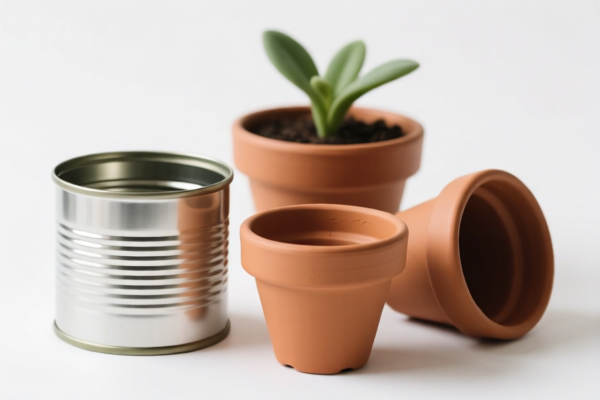
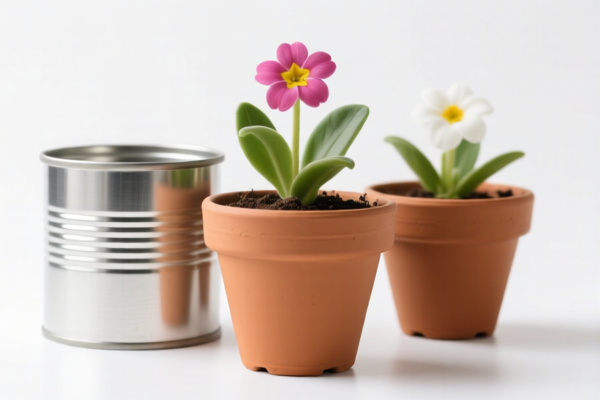
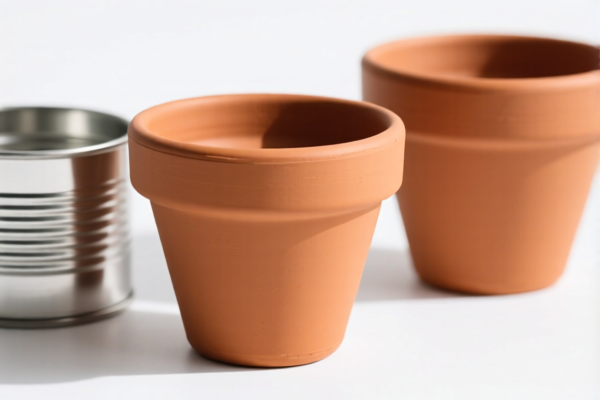
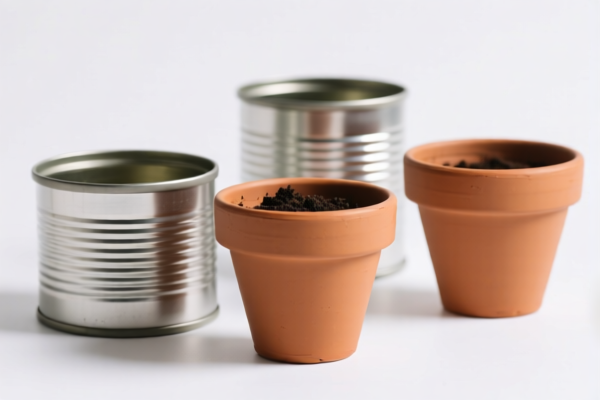
AI Analysis
🌸 Mini Flower Pot (Planters for Botanical Displays)
🌐 HS Code Reference & Customs Clearance Guide | 2026 Latest Tariff Analysis | Strategic Classification for Planters
📌 I. Product Definition & Classification: Do You Truly Understand "Mini Flower Pots"?
A Mini Flower Pot is not merely a "container"; it is a functional item defined by its material composition and end-use. In international trade, customs authorities do not classify based on size ("mini") alone, but on what it is made of and how it is used.
The input data indicates ambiguity in material composition, leading to multiple potential HS Codes depending on whether the pot is Ceramic, Plastic/Resin, or a Non-Ceramic Household Item.
⚠️ Critical Distinction Point:
- If made of Plastic/Resin: Often falls under Chapter 39 (Plastics), specifically household articles.
- If made of Ceramic: Falls under Chapter 69 (Ceramic Products), specifically tableware or other household articles.
- If material is Unclear/Other: May fall under Chapter 69 as "other ceramic household articles" or Chapter 39 as "other plastic household articles."
📦 II. HS Code Classification Details (Based on Provided Data)
The following HS Codes are derived from the provided <DATA> context. Each code reflects a different material inference, resulting in significant tax differences.
| HS Code | Product Description & Inference | Material Assumption | Key Category |
|---|---|---|---|
3924.10.40.00 |
Other Household Articles of Plastic Matched based on the logic of "Household Items." |
Plastic/Resin | Other Household Articles (Plastic) |
3924.90.56.50 |
Other Household Articles of Plastic Inferred as plastic household items, other category. |
Plastic | Other Plastic Household Items |
6912.00.50.00 |
Other Ceramic Tableware/Kitchenware/Household Articles Inferred as non-ceramic (e.g., plastic/resin) but categorized under household/sanitary goods. |
Non-Ceramic (e.g., Plastic, Resin) | Other Household Items & Sanitary Articles |
6912.00.48.10 |
Ceramic Tableware/Kitchenware/Other Household Articles Inferred that planters are often ceramic or non-metallic. |
Ceramic | Ceramic Tableware/Household Articles |
🔍 Important Note:
- The presence of Chapter 69 (Ceramics) and Chapter 39 (Plastics) in the same dataset suggests that the material of the Mini Flower Pot is ambiguous or varies by product line.
- Misclassification Risk: Declaring a plastic pot as ceramic (or vice versa) can lead to customs audits, penalties, or incorrect duty assessments.
💰 III. 2026 Latest Tariff Rate Breakdown (Detailed Analysis)
✅ Applicable Country: United States (US)
✅ Origin: China (CN) (Implied by "122 Clause" and specific tariff structures)
✅ Effective Date: 2025/2026 Current Regulations
🎯 1. 3924.10.40.00 — Plastic Household Articles (Other)
| Item | Detail |
|---|---|
| Basic Duty | 3.4% |
| Additional Duties | 0.0% (Section 301) |
| 122 Clause Duty | +10% |
| Total Tax Rate | 13.4% |
| Explanation | This is the lowest tax rate among the options. It applies if the pot is clearly identified as a plastic household article under this specific subheading. The "122 Clause" likely refers to a specific trade remedy or additional tariff imposed on certain Chinese goods. |
🎯 2. 3924.90.56.50 — Other Plastic Household Articles
| Item | Detail |
|---|---|
| Basic Duty | 3.4% |
| Additional Duties (Section 301) | +7.5% |
| 122 Clause Duty | +10% |
| Total Tax Rate | 20.9% |
| Explanation | While the basic duty is low, the 7.5% Section 301 tariff significantly increases the cost. This code is for "other" plastic household items that do not fit into the primary plastic tableware/household categories. |
🎯 3. 6912.00.50.00 — Ceramic Articles (Non-Ceramic Inference)
| Item | Detail |
|---|---|
| Basic Duty | 6.0% |
| Additional Duties | 0.0% |
| 122 Clause Duty | +10% |
| Total Tax Rate | 16.0% |
| Explanation | The summary notes "inferred material as non-ceramic (e.g., plastic, resin)" but classifies it under 6912 (Ceramics). This is counter-intuitive. Usually, 6912 is for ceramic products. If the product is actually plastic, classifying it here might be an error or a specific "catch-all" for certain sanitary/household items. However, based strictly on the data, the rate is 16.0%. |
🎯 4. 6912.00.48.10 — Ceramic Tableware/Household Articles
| Item | Detail |
|---|---|
| Basic Duty | 9.8% |
| Additional Duties | 0.0% |
| 122 Clause Duty | +10% |
| Total Tax Rate | 19.8% |
| Explanation | This is the highest tariff for ceramic products. It applies if the mini flower pot is genuinely made of ceramic. The "122 Clause" adds 10% on top of the 9.8% base. |
🛠️ IV. Customs Clearance Practical Advice (Real-World Pitfall Avoidance)
✅ 1. Preparation Checklist (Must-Haves)
| Document | Required? | Purpose |
|---|---|---|
| ✅ Product Photos | ✔️ | To prove material (glaze, texture, transparency). |
| ✅ Material Composition Statement | ✔️ | Explicitly state: "100% Polypropylene" or "High-Fire Ceramic." |
| ✅ Commercial Invoice | ✔️ | Clearly describe item as "Mini Plastic Planter" or "Ceramic Pot," NOT just "Flower Pot." |
| ✅ Packing List | ✔️ | Ensure weight and dimensions match the declared value. |
| ✅ Certification | (If applicable) | FDA (for soil contact safety), Prop 65 (California compliance). |
✅ 2. Classification Strategy (Key Rules)
🔥 “Material is King, Name is Queen”
- Do NOT simply write "Flower Pot." Customs may classify it under Chapter 70 (Glass) or Chapter 69 (Ceramics) by default if material is unclear.
- If Plastic: Use 3924.10.40.00 (13.4%) if it fits the definition, or 3924.90.56.50 (20.9%). Avoid higher rates unless necessary.
- If Ceramic: Use 6912.00.48.10 (19.8%).
✅ 3. Special Considerations
| Scenario | Recommendation |
|---|---|
| Mixed Materials (e.g., Ceramic pot with plastic saucer) | Declare as Ceramic if ceramic is the main component, or split if significant. |
| Unclear Material | If you cannot prove it is plastic, Customs may default to Ceramic (6912) or Glass (7013), which could have different rates. |
| Small Value (De Minimis) | If value is < $800 (US), it may be Duty-Free under Section 321. Always declare accurately to avoid penalties for false de minimis claims. |
| 122 Clause Compliance | Ensure your supplier is not on any restricted entity lists that might trigger additional scrutiny under the "122 Clause." |
🌍 V. Global Market Comparison (2026 Outlook)
| Market | Recommended HS Code (Plastic) | Recommended HS Code (Ceramic) | Total Duty (Est.) | Notes |
|---|---|---|---|---|
| 🇺🇸 USA | 3924.10.40.00 (13.4%) |
6912.00.48.10 (19.8%) |
13.4% - 19.8% | Includes 10% "122 Clause" tariff. |
| 🇨🇳 China (Export) | N/A | N/A | 0% | No export duty on these goods. |
| 🇪🇺 EU | 3924.10.00 (6.5%) |
6912.00.00 (6.4%) |
~6.5% | No Section 301 or 122 Clause. Lower rates. |
| 🇬🇧 UK | 3924.10.00 (4.5%) |
6912.00.00 (6.0%) |
4.5% - 6.0% | Post-Brexit rates may vary. |
📌 Conclusion:
- The US market has the highest complexity and cost due to additional tariffs (122 Clause, Section 301).
- Plastic planters are generally cheaper to import (13.4%) than Ceramic planters (19.8%) into the US.
- Material accuracy is critical to avoid misclassification penalties.
📌 VI. Common Errors & Pitfalls (Lessons Learned)
❌ Error 1: Declaring a Ceramic Pot as Plastic
👉 Consequence: If customs detects glaze or ceramic texture, they will reclassify it, apply the correct higher tariff, and issue a penalty.
❌ Error 2: Using "Garden Decor" as the description
👉 Consequence: Customs may classify it under Chapter 73 (Articles of Iron/Steel) or Chapter 83 (Miscellaneous Metal Articles), leading to higher duties and delays.
❌ Error 3: Ignoring the "122 Clause"
👉 Consequence: Failure to account for the 10% additional duty can erode profit margins unexpectedly.
✅ Correct Approach:
"Mini Planter, Polypropylene Plastic, 4-inch diameter, Household Use, Not Ceramic, Model XYZ"
🎯 VII. Conclusion: Smart Classification, Maximizing Profits!
🎯 Key Takeaways:
🔹 Plastic Pots are the cost-effective choice for the US market (13.4%).
🔹 Ceramic Pots incur a higher tax burden (19.8%).
🔹 Always specify Material in the commercial invoice to avoid customs ambiguity.
📌 Pro Tip:
If your product is 100% Plastic, strive to classify it under
3924.10.40.00for the lowest rate. If it is Ceramic, accept the 19.8% rate. Never guess the material—let the product speak through photos and specifications.
📣 Immediate Action:
📞 Confirm Material with your supplier.
📄 Update Product Descriptions to highlight material (e.g., "PP Plastic," "Ceramic").
📊 Calculate Landed Cost using the correct HS Code rates to ensure profitability.
✨ Accurate Classification, Smoother Clearance, Higher Margins!
💼 Every Penny Saved in Duty is Pure Profit!
Customer Reviews
About HS Code Classification
The Harmonized System (HS) is an internationally standardized nomenclature developed by the World Customs Organization (WCO) to classify traded products. Over 200 countries use the HS system as the basis for customs tariffs, trade statistics, and import/export regulations.
Each HS code follows a hierarchical structure:
- Chapter (2 digits) — Broad category of goods (e.g., Chapter 84: Machinery and Mechanical Appliances)
- Heading (4 digits) — More specific grouping within the chapter
- Subheading (6 digits) — Internationally standardized breakdown, used by all WCO member countries
- National subdivisions (8-10 digits) — Country-specific extensions for further classification, such as US HTSUS 10-digit codes
Correct HS code classification is essential for smooth customs clearance, accurate duty payment, and compliance with trade regulations. Misclassification can lead to customs delays, overpayment of duties, or penalties.
When importing from CN to US, the applicable tariff rates may include:
- Most-Favored-Nation (MFN) rate — The standard duty rate applied to WTO members
- General rate — Applied to countries without trade agreements
- Trade remedy duties — Additional tariffs such as Section 301 (anti-dumping), Section 232 (national security), or countervailing duties
The information provided on this page is for reference purposes only. For official classification, please consult with your local customs authority or a licensed customs broker.