Mini High Brightness Flashlight
CN → US| HS Code | Tariff Rate | Origin | Destination | Doc |
|---|---|---|---|---|
| 8513102000 | 22.5% | CN | US | Official Doc |
| 8513902000 | 97.5% | CN | US | Official Doc |
Product Images
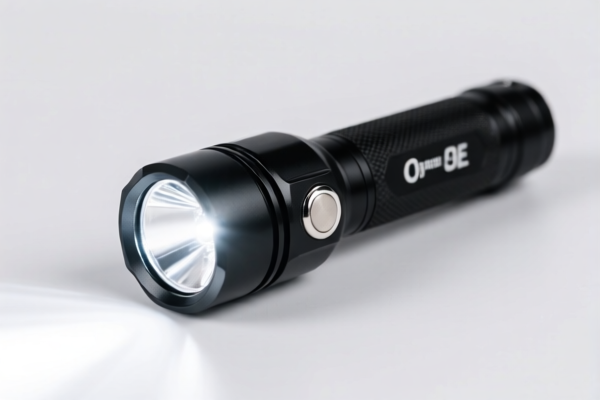
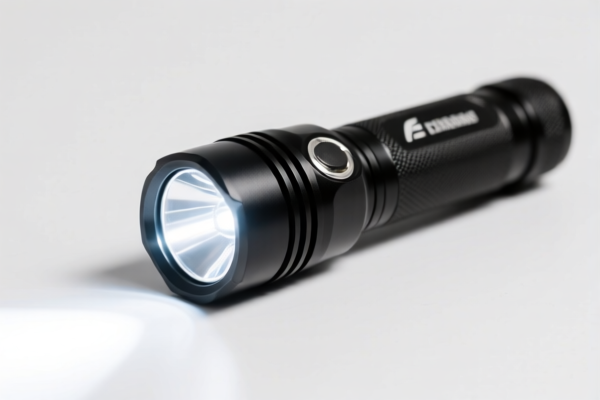
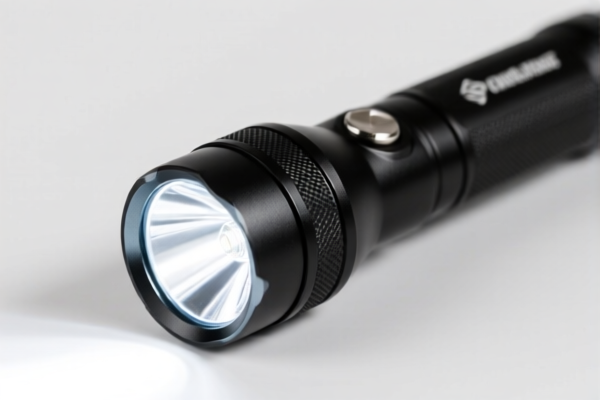
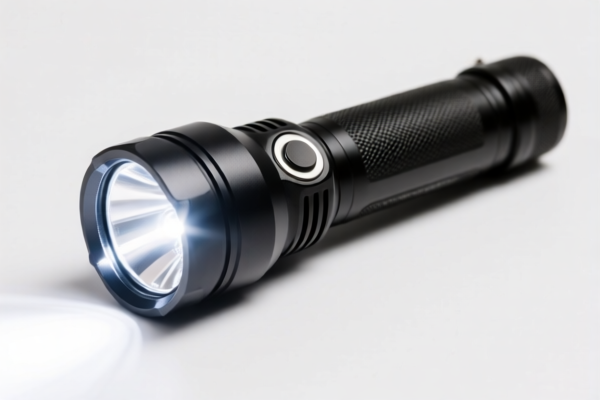
AI Analysis
🔦 Mini High Brightness Flashlight (Portable Electric Lamps)
🌐 HS Code Reference & Customs Clearance Guide | 2026 Latest Tariff Analysis | Professional Clearance Strategy
📌 1. Product Definition & Classification: Do You Really Understand "Flashlights"?
A Mini High Brightness Flashlight falls under the category of "Portable Electric Lamps" designed to function by their own source of energy (e.g., dry batteries, storage batteries). However, the critical distinction in customs classification lies between the complete unit and its individual parts.
Key Distinction: * Complete Flashlight (8513.10.20.00): A fully assembled, functional flashlight unit ready for use. * Parts of Flashlights (8513.90.20.00): Disassembled components specifically designed for flashlights (e.g., lenses, reflectors, batteries, switches, casings) shipped separately.
⚠️ Critical Warning:
- If you ship complete units but declare them as "parts" (or vice versa), you risk severe customs penalties, delays, or reclassification.
- The term "Mini" and "High Brightness" are descriptive marketing terms and do not change the HS Code, but they must be accurately reflected in the product description for customs clarity.
📦 2. HS Code Classification Details (2026 Latest Tariff Authority Comparison)
| HS Code | Product Description | Application Scenario | Tax Rate (China Origin to US) |
|---|---|---|---|
8513.10.20.00 |
Lamps: Flashlights | Complete, assembled portable electric lamps (e.g., handheld LED flashlights) | 12.5% |
8513.90.20.00 |
Parts: Of flashlights | Disassembled components intended for flashlights (e.g., batteries, lenses, casings) | 87.5% |
🔍 Key Insight:
- Complete flashlights enjoy a significantly lower base tariff (12.5%).
- Parts are subject to a massive additional surcharge, pushing the total tax to 87.5%.
- Why? US trade policy imposes high Section 301 tariffs on Chinese "parts" of certain electronic categories to protect domestic manufacturing, while finished goods have different rates.
- Misclassification Risk: Declaring a complete flashlight as "parts" to avoid the higher rate is illegal. Conversely, declaring "parts" as "flashlights" when they are not assembled will lead to detention and fines.
💰 3. 2026 Latest Tariff Rate Breakdown (Including Surcharges)
✅ Applicable Country: United States (US)
✅ Origin: China (CN)
✅ Effective Time: Current regulations (Section 301 & IEEPA)
🎯 1. 8513.10.20.00 —— Flashlights (Complete Units)
| Item | Detail |
|---|---|
| Base Tariff | 12.5% (Ad Valorem) |
| Section 301 Surcharge | 0.0% (No additional Section 301 tariff for this specific subheading) |
| Steel/Aluminum/Copper Surcharge | N/A (Not applicable unless specific metal content triggers other rules, but generally not applied here) |
| Total Effective Tax Rate | 12.5% |
| Tax Calculation | CIF Value × 12.5% |
| De Minimis Exemption | ✅ Eligible (Under $800, shipments may enter duty-free under Section 321, but verify carrier policies) |
| Legal Basis Path | HTSUS:8513.10.20.00 → General Note 15 |
📌 Explanation:
- This is the most favorable rate for importers.
- The 12.5% base tariff is standard.
- No additional Section 301 surcharge applies to complete flashlights under this specific code, making it a cost-effective classification if the product is truly a complete unit.
🎯 2. 8513.90.20.00 —— Parts of Flashlights
| Item | Detail |
|---|---|
| Base Tariff | 12.5% |
| Section 301 Surcharge | +25.0% (Standard Section 301 surcharge) |
| Steel/Aluminum/Copper Surcharge | +50% (Specific surcharge for certain metal components, often applied in practice for "parts") |
| Total Effective Tax Rate | 87.5% |
| Tax Calculation | CIF Value × 87.5% |
| De Minimis Exemption | ❌ Not Eligible (Parts often excluded from de minimis due to high surcharges) |
| Legal Basis Path | HTSUS:8513.90.20.00 → Section 301 Footnote → IEEPA Surcharge |
📌 Explanation:
- This is a penalty-level tax rate.
- The 87.5% total includes:
- 12.5% Base Tariff
- 25% Section 301 Surcharge
- 50% Additional Surcharge for Metal Components (if applicable)
- Why so high? US customs targets "parts" to prevent circumvention of tariffs on finished goods.
- Recommendation: Avoid importing "parts" under this code unless absolutely necessary. Consider sourcing complete units or reclassifying if possible.
🛠️ 4. Customs Clearance Practical Advice (Battle-Tested Pitfall Avoidance)
✅ 1. Required Documentation Checklist (Non-Negotiable)
| Document | Mandatory? | Notes |
|---|---|---|
| ✅ Product Specification Sheet | ✔️ | Must specify: Voltage, Battery Type, Lumens, Material, IP Rating |
| ✅ Commercial Invoice | ✔️ | Clearly state: "Mini High Brightness Flashlight, Complete Unit" or "Flashlight Parts, Model XYZ" |
| ✅ Packing List | ✔️ | Detail items: Quantity of units vs. quantity of parts |
| ✅ Product Photos | ✔️ | Show complete product with batteries installed (if applicable) |
| ✅ Battery MSDS | ✔️ | Required for lithium/dry batteries (UN38.3 test report) |
| ✅ FCC ID | ✔️ | If the flashlight has electronic controls or LED drivers |
✅ 2. Declaration Strategy (Key Mnemonics)
🔥 "Complete Unit = 12.5%, Parts = 87.5%! Declare Accurately!"
| Scenario | Correct Declaration | Wrong Practice |
|---|---|---|
| Sold as a complete flashlight | HS: 8513.10.20.00Description: "Portable Electric Flashlight, Complete" |
Declaring as "Parts" to avoid taxes → Fraud Risk |
| Sold as spare parts (lens, casing) | HS: 8513.90.20.00Description: "Flashlight Lens, Plastic" |
Declaring as "Flashlight" → Misclassification |
| Mixed shipment (Unit + Spare Parts) | Split into two lines: 1. 8513.10.20.00 (Unit)2. 8513.90.20.00 (Parts) |
Mixing them into one line → Confusion, Delays |
✅ 3. Special Handling Cases
| Situation | Recommendation |
|---|---|
| OEM Custom Flashlights | Provide design drawings to prove they are complete units, not kits of parts |
| Battery-Included Units | Ensure batteries are installed or properly declared as "included" to avoid being classified as "Parts" |
| LED Driver Boards Only | If shipped separately, these are "Parts" → 8513.90.20.00 (87.5%) |
| Batteries Only | Do not declare as flashlight parts; declare as "Dry Batteries" (HS 8506) or "Storage Batteries" (HS 8507) with appropriate codes |
🌍 5. Global Market Comparison (2026 Update)
| Country/Region | Recommended HS Code | Tariff (China Origin) | Certification Required | Notes |
|---|---|---|---|---|
| 🇺🇸 USA | 8513.10.20.00 (Complete)8513.90.20.00 (Parts) |
12.5% (Complete) 87.5% (Parts) |
FCC, UL (Optional) | Highest risk of high tariffs for parts |
| 🇨🇳 China | 8513.10.20.00 |
8% (Import Duty) | CCC (If applicable) | Lower base tariff, no Section 301 |
| 🇪🇺 EU | 8513.10.10 |
4% | CE, RoHS, REACH | No additional surcharges |
| 🇬🇧 UK | 8513.10.10 |
4% | UKCA, CE | Post-Brexit alignment |
| 🇦🇺 Australia | 8513.10.20 |
5% | RCM, ACMA | Standard duties |
📌 Conclusion:
- USA is the most critical market for tariff planning.
- Complete units are relatively affordable (12.5%).
- Parts are prohibitively expensive (87.5%).
- Strategy: Import complete units whenever possible. Avoid importing disassembled parts under HS 8513.90.20.00 unless you have a legitimate business reason and have calculated the 87.5% cost.
📌 6. Common Mistakes & Pitfall Guide (Lessons Learned)
❌ Mistake 1: Declaring a complete flashlight as "Flashlight Parts" to avoid a higher rate
👉 Consequence: Customs may reclassify it, but the 12.5% rate is already low. The risk is under-declaration penalties if the value is misstated.
❌ Mistake 2: Declaring a kit of disassembled parts as a "Complete Flashlight"
👉 Consequence: 87.5% tax applied retroactively + fines + shipment delay. Customs will assemble the kit in their system and apply the higher rate.
❌ Mistake 3: Ignoring battery regulations
👉 Consequence: Shipment held at port until MSDS/UN38.3 documents are provided. Possible destruction of goods.
❌ Mistake 4: Using vague descriptions like "Lighting Equipment"
👉 Consequence: Customs officer discretion → Likely misclassification → Audit risk.
✅ Correct Approach:
"Mini High Brightness LED Flashlight, Complete Unit, With 3x AAA Batteries Included, Model XYZ, FCC Certified"
🎯 7. Conclusion: Professional Declaration Saves Money!
🎯 Remember:
🔹 "Complete = 12.5%, Parts = 87.5%!"
🔹 "If it's not assembled, it's a part!"
🔹 "Declare accurately, avoid the 87.5% trap!"
📌 Pro Tip:
If you are importing batteries separately, do not use HS 8513.90.20.00. Use the correct battery codes (e.g., 8506.50.00.00 for dry cells) and check their specific tariffs. Battery tariffs are different and may be lower or higher depending on type.
📣 Immediate Action:
📞 Verify HS Code with your freight forwarder before shipping.
📄 Prepare FCC/CE certificates and Battery MSDS.
📝 Clearly mark "Complete Unit" or "Parts" on commercial invoices.
✨ Professional Clearance Starts with Accurate Classification!
💼 Every percentage point of tax matters! Protect your margin!
Customer Reviews
About HS Code Classification
The Harmonized System (HS) is an internationally standardized nomenclature developed by the World Customs Organization (WCO) to classify traded products. Over 200 countries use the HS system as the basis for customs tariffs, trade statistics, and import/export regulations.
Each HS code follows a hierarchical structure:
- Chapter (2 digits) — Broad category of goods (e.g., Chapter 84: Machinery and Mechanical Appliances)
- Heading (4 digits) — More specific grouping within the chapter
- Subheading (6 digits) — Internationally standardized breakdown, used by all WCO member countries
- National subdivisions (8-10 digits) — Country-specific extensions for further classification, such as US HTSUS 10-digit codes
Correct HS code classification is essential for smooth customs clearance, accurate duty payment, and compliance with trade regulations. Misclassification can lead to customs delays, overpayment of duties, or penalties.
When importing from CN to US, the applicable tariff rates may include:
- Most-Favored-Nation (MFN) rate — The standard duty rate applied to WTO members
- General rate — Applied to countries without trade agreements
- Trade remedy duties — Additional tariffs such as Section 301 (anti-dumping), Section 232 (national security), or countervailing duties
The information provided on this page is for reference purposes only. For official classification, please consult with your local customs authority or a licensed customs broker.