Mini Padlock
CN → US| HS Code | Tariff Rate | Origin | Destination | Doc |
|---|---|---|---|---|
| 7326908688 | 87.9% | CN | US | Official Doc |
| 8301106080 | 23.6% | CN | US | Official Doc |
| 8301108000 | 22.3% | CN | US | Official Doc |
| 7326190080 | 87.9% | CN | US | Official Doc |
| 8301106080 | 23.6% | CN | US | Official Doc |
Product Images

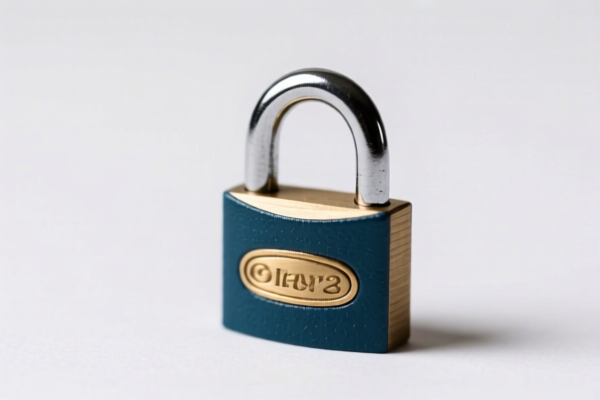


AI Analysis
🔐 Mini Padlock (Portable Security Locks)
🌐 HS Code Reference & Customs Clearance Guide | 2026 Latest Tariff Analysis | Professional Clearance Strategy
📌 I. Product Definition & Classification: Do You Really Understand "Mini Padlocks"?
A mini padlock is a small, portable locking device used to secure personal belongings, luggage, bags, lockers, or small gates. In international trade, its classification depends heavily on material and function. However, there is a critical divergence in tariff rates based on whether customs authorities classify it as a "Vermillion Metal Lock" (Chapter 83) or an "Iron/Steel Article" (Chapter 73).
Key Classification Logic: * Chapter 83 (8301.10.xx.xx): Specifically covers "Padlocks and locks (electric or not)." This is the preferred classification for dedicated locking devices, assuming they are made of common metals (ferrous or non-ferrous). * Chapter 73 (7326.90.xx.xx / 7326.19.xx.xx): Covers "Other articles of iron or steel." If the padlock is considered too generic or not meeting the specific "lock" criteria of Ch 83, it falls here as a general steel product.
⚠️ Critical Distinction:
- If classified under 8301, the total tax burden is significantly lower (~22–24%).
- If classified under 7326, the total tax burden is extremely high due to specific steel/aluminum tariffs (~87.9%).
- Recommendation: Always argue for Chapter 83 classification for dedicated padlocks unless proven otherwise.
📦 II. HS Code Classification Details (Latest Tariff Alignment)
Based on the provided data, here are the four specific HS Codes and their corresponding logic:
| HS Code | Product Description | Classification Logic & Summary |
|---|---|---|
8301.10.60.80 |
Padlocks, of base metal (General/Bottom Clause) | Most Likely Correct. The product is a padlock, made of base metal (common for locks). Falls under the "bottom clause" for base metal padlocks. |
8301.10.80.00 |
Padlocks, of base metal (Other) | Alternative Correct. Similar to above, assumes base metal material. The description notes the purpose matches "padlock," and material is inferred as base metal by common sense. |
7326.90.86.88 |
Other articles of iron or steel (General/Bottom Clause) | High Risk. Assumes the item is primarily a "steel article" rather than a dedicated lock mechanism. Often used if Ch 83 is rejected. |
7326.19.00.80 |
Articles of iron or steel, by casting/forging | High Risk. Inferred material is iron/steel. Classified as a general steel product rather than a functional lock. |
🔍 Important Note:
- Codes starting with8301have a Total Tax Rate of ~22–24%.
- Codes starting with7326have a Total Tax Rate of 87.9%.
- The difference is ~65%. Proper classification is crucial for cost control.
💰 III. 2026 Latest Tariff Rate Breakdown (Including Additional Taxes)
✅ Applicable Country: United States (US)
✅ Country of Origin: China (CN)
✅ Effective Date: Current rates apply (including Section 301 and Section 232 impacts)
🎯 1. 8301.10.60.80 & 8301.10.80.00 —— Base Metal Padlocks (Recommended)
This classification is for dedicated locking devices made of common metals.
| Item | Detail |
|---|---|
| Base Rate (MFN) | 4.8% - 6.1% (Ad Valorem) |
| Section 301 Additional Tariff | +7.5% (China-specific tariffs) |
| Section 122 Tariff (10%) | +10% (Specific to certain metal products or general additional duties) |
| Total Tariff Rate | 22.3% - 23.6% |
| Tax Calculation | CIF Value × 22.3–23.6% |
| De Minimis Exemption | ❌ Not Eligible (Value usually exceeds $800, and locks are often scrutinized) |
📌 Explanation:
- These codes fall under Chapter 83, which is more favorable for finished locking mechanisms.
- The total tax is relatively manageable compared to steel articles.
- Section 122 refers to specific additional duties that may apply to certain metal imports.
🎯 2. 7326.90.86.88 & 7326.19.00.80 —— Iron/Steel Articles (High Risk)
This classification treats the padlock as a generic steel item, triggering punitive steel tariffs.
| Item | Detail |
|---|---|
| Base Rate (MFN) | 2.9% (Ad Valorem) |
| Section 301 Additional Tariff | +25% (China-specific tariffs) |
| Section 232 Tariff (Steel/Aluminum) | +50% (Specific to steel products under Section 232) |
| Section 122 Tariff (10%) | +10% (Specific additional duty) |
| Total Tariff Rate | 87.9% |
| Tax Calculation | CIF Value × 87.9% |
| De Minimis Exemption | ❌ Not Eligible |
📌 Explanation:
- Section 232 imposes a 50% tariff on certain steel and aluminum products. If the padlock is classified as a "steel article," this penalty applies.
- Combined with Section 301 (25%) and base rates, the cost becomes prohibitive.
- Avoid this classification if possible by proving the item is a "lock" (Ch 83) rather than just "steel."
🛠️ IV. Customs Clearance Practical Advice (Real-World Pitfall Guide)
✅ 1. Required Documentation Checklist
| Document | Required? | Notes |
|---|---|---|
| ✅ Product Specification Sheet | ✔️ | Must detail dimensions, material (e.g., brass, steel, zinc alloy), locking mechanism type. |
| ✅ Material Declaration | ✔️ | Explicitly state if it is "Base Metal" (Ch 83) vs. generic "Iron/Steel" (Ch 73). |
| ✅ Photos of Product | ✔️ | Show the lock body, keyhole, and any branding. Clearly visible as a "lock." |
| ✅ Commercial Invoice | ✔️ | Description should read: "Mini Padlock, Base Metal, for Luggage/Bag Security" |
| ✅ Packing List | ✔️ | Standard packaging details. |
✅ 2. Declaration Tips (Key Mantra)
🔥 "Declare as Lock, Not Steel! Function Over Material!"
| Scenario | Correct Declaration | Incorrect Action |
|---|---|---|
| Mini Padlock (Metal) | HS 8301.10.xx.xx (Base Metal Padlock) | Misdeclaring as "Steel Bolt" or "General Hardware" → 87.9% Tax |
| Padlock with Cable | Still HS 8301 (if lock is primary function) | Splitting into "Lock + Cable" → Complex clearance, potential misclassification |
| Digital/Smart Padlock | Check for Ch 85 or Ch 83 depending on mechanism | Assuming all electronics go to Ch 85 without checking Ch 83 priority |
✅ 3. Special Considerations
| Situation | Recommendation |
|---|---|
| Material Ambiguity | If the padlock is made of Zinc Alloy or Brass, strongly argue for Ch 83 as "Base Metal," not "Iron/Steel." |
| Packaging | Ensure the product is clearly identifiable as a "padlock" in photos and descriptions to avoid Ch 73 classification. |
| Previous Declarations | If your supplier previously declared this under Ch 83, provide those documents to support consistency. |
🌍 V. Global Market Clearance Comparison (2026)
| Country/Region | Recommended HS Code | Tariff Rate | Notes |
|---|---|---|---|
| 🇺🇸 USA | 8301.10.60.80 / 8301.10.80.00 |
22–24% | Avoid Ch 73 (87.9%) due to Section 232. |
| 🇨🇳 China | 8301.10.60.80 |
Low/0% | Standard import duty for locks. |
| 🇪🇺 EU | 8301.10 |
2.7% | No additional punitive tariffs for standard locks. |
| 🇬🇧 UK | 8301.10 |
2.7% | Post-Brexit rates align closely with EU for this category. |
| 🇯🇵 Japan | 8301.10 |
5% | Standard duty for base metal locks. |
📌 Conclusion:
- The USA is the only market with severe punitive tariffs (Section 232/301).
- Correct classification as Ch 83 is essential to save ~64% in taxes.
- Other markets have low, standard duties.
📌 VI. Common Errors & Pitfalls (Lessons Learned)
❌ Error 1: Declaring padlocks as "General Steel Hardware"
👉 Result: Classified under 7326 → 87.9% Tax.
👉 Fix: Emphasize "Lock Function" and "Base Metal" in documentation.
❌ Error 2: Ignoring Material Composition
👉 Result: If the lock is brass/zinc, declaring it as "Iron" may trigger Ch 73 if not careful.
👉 Fix: Specify "Base Metal" (Chapter 83 covers all base metals, not just iron).
❌ Error 3: Inconsistent Descriptions
👉 Result: Invoice says "Steel Buckle," but product is a "Padlock."
👉 Fix: Use consistent terminology: "Mini Padlock."
✅ Correct Declaration Example:
"Mini Padlock, Base Metal (Zinc Alloy/Brass), 20mm, For Luggage/Bag Security, Model XYZ"
🎯 VII. Conclusion: Precise Classification, Maximum Savings!
🎯 Remember:
🔹 "Function First, Material Second. Lock = Ch 83, Steel = Ch 73."
🔹 "Ch 83 saves you 65% tax. Ch 73 destroys your margin."
📌 Tips:
- For shipments to the USA, always provide photos showing the locking mechanism to support Ch 83 classification.
- If the lock is electronic/digital, consult further for potential Ch 85 classification, but standard mini padlocks remain Ch 83.
- Consider Advance Ruling from US Customs if declaring high-volume shipments.
📣 Immediate Action:
📞 Consult with a licensed customs broker.
📸 Provide clear product photos highlighting the "lock" function.
🚀 Clearance Success, Profit Protection!
✨ Professional Clearance Starts with Accurate Classification!
💼 Every Percent of Tax Saved is Pure Profit!
Customer Reviews
About HS Code Classification
The Harmonized System (HS) is an internationally standardized nomenclature developed by the World Customs Organization (WCO) to classify traded products. Over 200 countries use the HS system as the basis for customs tariffs, trade statistics, and import/export regulations.
Each HS code follows a hierarchical structure:
- Chapter (2 digits) — Broad category of goods (e.g., Chapter 84: Machinery and Mechanical Appliances)
- Heading (4 digits) — More specific grouping within the chapter
- Subheading (6 digits) — Internationally standardized breakdown, used by all WCO member countries
- National subdivisions (8-10 digits) — Country-specific extensions for further classification, such as US HTSUS 10-digit codes
Correct HS code classification is essential for smooth customs clearance, accurate duty payment, and compliance with trade regulations. Misclassification can lead to customs delays, overpayment of duties, or penalties.
When importing from CN to US, the applicable tariff rates may include:
- Most-Favored-Nation (MFN) rate — The standard duty rate applied to WTO members
- General rate — Applied to countries without trade agreements
- Trade remedy duties — Additional tariffs such as Section 301 (anti-dumping), Section 232 (national security), or countervailing duties
The information provided on this page is for reference purposes only. For official classification, please consult with your local customs authority or a licensed customs broker.