Mini Pottery Machine
CN → US| HS Code | Tariff Rate | Origin | Destination | Doc |
|---|---|---|---|---|
| 8479820040 | 35.0% | CN | US | Official Doc |
| 8479909599 | 0.0% | CN | US | Official Doc |
Product Images
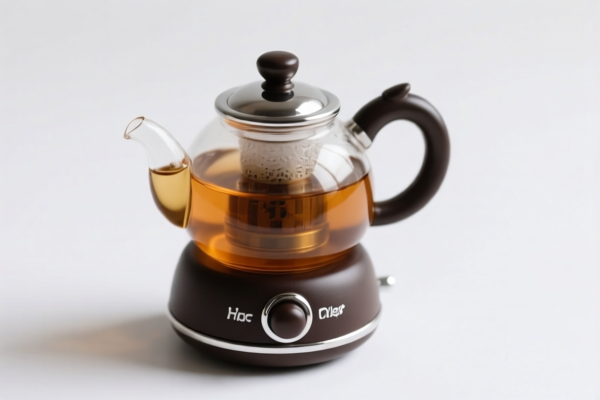
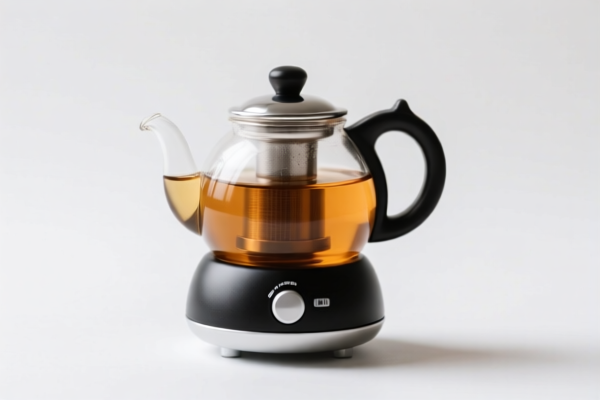
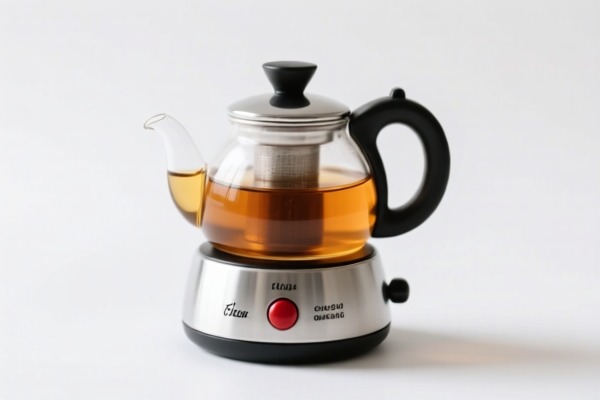

AI Analysis
🏺 Mini Pottery Machine (Mixing & Stirring Apparatus for Ceramics)
🌐 HS Code Reference & Customs Clearance Guide | 2026 Latest Tariff Analysis | Professional Compliance Strategy
📌 One, Product Definition & Classification: Is it a "Pottery Machine" or an "Industrial Mixer"?
The term "Mini Pottery Machine" is a colloquial description often used by e-commerce sellers or small-scale artisans. However, from the perspective of international trade classification (HS Code), customs authorities do not recognize "pottery machines" as a standalone category. Instead, they classify based on the primary mechanical function of the device.
Key Functional Analysis: 1. If the machine mixes, kneads, or stirs clay/water/slurry: It falls under Chapter 84, specifically heading 8479 ("Machines and mechanical appliances having individual functions..."). 2. If the machine is a simple electric mixer with no other complex function: It is classified as an "Other Mixing, Kneading, or Stirring Machine". 3. Parts and Accessories: Spare parts, motors, or blades for these machines are classified under 8479.90.
⚠️ Critical Distinction:
- If the device is merely a hand-held whisk or a very basic electric mixer for small batches, it is still a "Mixing/Kneading/Stirring Machine" under 8479.82.
- It is NOT a kiln, wheel, or press. If it performs those functions, it would fall under different chapters (e.g., 84.79 for presses, or 85.16 for electric heating). Based on the provided data, we focus on the Mixing/Kneading/Stirring function.
📦 Two, HS Code Classification Details (Based on Provided Data)
| HS Code | Product Description | Applicable Scenario | Primary Function |
|---|---|---|---|
8479.82.00.40 |
Mixing, kneading, crushing, grinding, screening, sifting, homogenizing, emulsifying or stirring machines; Mixing, kneading or stirring machines | Small-scale clay mixers, slip stirrers, glaze mixers, industrial kneaders for ceramics | ✅ Mixing/Kneading |
8479.90.95.99 |
Other machines and mechanical appliances; Other; Other Other | Parts, accessories, replacement blades, or motors for the above machines | ✅ Parts/Components |
🔍 Key Insight:
- 8479.82.00.40: This is the correct code for the complete machine used to mix or knead pottery materials (clay, glaze, slip).
- 8479.90.95.99: This code is for parts or components not specified elsewhere. If you are importing spare blades or motors, use this code. Do not use this code for the main machine.
💰 Three, 2026 Latest Tariff Rate Breakdown (US Import)
✅ Applicable Country: United States (US)
✅ Origin: China (CN) (Note: Tariffs vary by origin; these reflect typical US-China trade tensions)
✅ Effective Date: Current as of 2026 policy framework
🎯 1. 8479.82.00.40 —— Complete Mixing/Kneading Machine (Main Unit)
| Item | Content |
|---|---|
| Base Tariff (MFN) | 0.0% |
| Additional Tariff (Section 301 / Trade War) | +25.0% |
| Total Tariff Rate | 25.0% |
| Tax Calculation | CIF Value × 25.0% |
| De Minimis Exemption | ❌ Not Applicable (Section 301 goods generally excluded from $800 de minimis if high value, but verify current CBP rules) |
| Legal Basis | HTSUS 8479.82.00.40 + USITC Footnotes for China-origin goods |
📌 Explanation:
- The base tariff for mixing machines is often 0% because they are considered industrial/agricultural aids.
- However, the 25% additional tariff applies due to Section 301 investigations against China.
- Total Cost Impact: A $1,000 machine incurs $250 in duties. This is a significant cost factor.
🎯 2. 8479.90.95.99 —— Parts & Accessories
| Item | Content |
|---|---|
| Base Tariff | Error / Failed to Retrieve |
| Additional Tariff | Error / Failed to Retrieve |
| Total Tariff Rate | Error |
| Tax Calculation | N/A |
| De Minimis Exemption | ❓ Check with Customs Broker |
| Legal Basis | HTSUS 8479.90.95.99 |
⚠️ Critical Warning:
- The provided data shows "Failed to retrieve tax information" for HS Code8479.90.95.99.
- Do NOT assume 0% or low tariffs. Parts of machinery often attract high duties if the main machine is subject to Section 301 tariffs.
- Recommendation: Always request a tariff lookup from a licensed customs broker for parts. Do not self-declare based on incomplete data.
🛠️ Four, Customs Clearance Practical Advice (Pitfall Avoidance)
✅ 1. Required Documentation Checklist
| Document | Mandatory? | Description |
|---|---|---|
| ✅ Product Specification Sheet | ✔️ | Must clearly state: "Electric Clay Mixer," "Mixing Speed," "Capacity," "Voltage." |
| ✅ Function Description | ✔️ | Explicitly state: "Used for mixing, kneading, or stirring pottery clay/glaze." Avoid vague terms like "art supply." |
| ✅ Commercial Invoice | ✔️ | Must list HS Code 8479.82.00.40 and correct value. |
| ✅ Packing List | ✔️ | Itemize if parts are shipped separately (e.g., blades, motor). |
| ✅ Proof of Origin (CO) | ✔️ | If shipped from China, declare China origin to apply correct Section 301 tariffs. |
✅ 2. Declaration Tips (Key Mnemonics)
🔥 "Function Over Form, Part Over Whole, Be Specific or Pay the Price!"
| Scenario | Correct Declaration | Incorrect Declaration | Consequence |
|---|---|---|---|
| Complete Mini Pottery Mixer | 8479.82.00.40 - "Electric Mixing/Kneading Machine for Ceramics" |
"Art Pottery Tool" or "Kitchen Mixer" | ❌ Misclassification → Penalty + Back Taxes |
| Replacement Blade | 8479.90.95.99 - "Part for Mixing Machine" |
"Kitchen Knife" or "Scrap Metal" | ❌ High Duty + Inspection Delay |
| Motor Only | 8479.90.95.99 - "Part for Machine" |
"Electric Motor" (generic) | ❌ Wrong Heading (8501) → High Duty |
✅ 3. Special Cases & Recommendations
| Situation | Advice |
|---|---|
| OEM/White Label | Provide brand authorization if claiming a specific brand. |
| Kit with Multiple Functions | If it also presses or heats, consult a broker. Multi-function machines may have different HS codes. |
| Parts Shipped Separately | Declare as "Parts" under 8479.90.95.99, but verify tariffs due to data error. |
| High-Value Machine | Consider Section 301 Exclusions if available (check USTR website). |
🌍 Five, Global Market Comparison (2026 Snapshot)
| Country/Region | Recommended HS Code | Est. Tariff (China Origin) | Certification Required | Notes |
|---|---|---|---|---|
| 🇺🇸 USA | 8479.82.00.40 |
25.0% | FCC, UL (if electric) | High duty due to Section 301 |
| 🇪🇺 EU | 8479.82.00 |
~0% - 2% | CE, RoHS | No Section 301 equivalent |
| 🇨🇦 Canada | 8479.82.00 |
~0% | ISED | Check CUSMA rules |
| 🇬🇧 UK | 8479.82.00 |
~0% - 5% | UKCA | Post-Brexit rules apply |
📌 Conclusion:
- USA is the most challenging market due to 25% additional tariffs.
- EU/UK/Canada are more favorable if you can source non-China origins or if the product qualifies for preferential rates.
📌 Six, Common Errors & Pitfall Guide (Lessons Learned)
❌ Error 1: Declaring as "Kitchen Appliance"
👉 Consequence: Wrong HS Code (e.g., 8438.80) → Possible underpayment or overpayment → Audit Risk.
✅ Fix: Always use "Mixing/Kneading Machine" (8479).
❌ Error 2: Ignoring Section 301 Tariffs
👉 Consequence: Underpayment of 25% duty → Seizure, fines, or retroactive billing.
✅ Fix: Factor 25% into landed cost calculations for US imports from China.
❌ Error 3: Importing Parts as "Whole Machine"
👉 Consequence: Overpayment of duties (if parts have higher rates) or underpayment (if parts are exempt).
✅ Fix: Always separate "Machine" vs. "Parts" in documentation.
❌ Error 4: Vague Description ("Pottery Machine")
👉 Consequence: Customs may hold shipment for clarification → Delays.
✅ Fix: Use precise language: "Electric Pottery Clay Mixer, Model XYZ, 10L Capacity."
🎯 Seven, Conclusion: Professional Declaration Saves Money!
🎯 Remember:
🔹 "Mixing Machine = 8479.82.00.40"
🔹 "Parts = 8479.90.95.99 (Verify Tariff!)"
🔹 "US Import from China = +25% Duty on Main Unit"
📌 Pro Tip:
If your Mini Pottery Machine is shipped from Vietnam, Thailand, or Mexico, check for de minimis exemptions or FTAA/USMCA benefits. These countries may offer 0% additional tariffs, significantly reducing your landed cost.
📣 Immediate Action:
📞 Consult a licensed customs broker for pre-classification ruling if importing high volumes.
📦 Ensure your commercial invoice matches the HS Code and product description exactly.
🚀 Accurate classification = Faster clearance, lower risk, optimized costs.
✨ Smart Customs Clearance Starts with Precise Classification!
💼 Don’t let 25% tariffs eat your profits—declare correctly!
Customer Reviews
About HS Code Classification
The Harmonized System (HS) is an internationally standardized nomenclature developed by the World Customs Organization (WCO) to classify traded products. Over 200 countries use the HS system as the basis for customs tariffs, trade statistics, and import/export regulations.
Each HS code follows a hierarchical structure:
- Chapter (2 digits) — Broad category of goods (e.g., Chapter 84: Machinery and Mechanical Appliances)
- Heading (4 digits) — More specific grouping within the chapter
- Subheading (6 digits) — Internationally standardized breakdown, used by all WCO member countries
- National subdivisions (8-10 digits) — Country-specific extensions for further classification, such as US HTSUS 10-digit codes
Correct HS code classification is essential for smooth customs clearance, accurate duty payment, and compliance with trade regulations. Misclassification can lead to customs delays, overpayment of duties, or penalties.
When importing from CN to US, the applicable tariff rates may include:
- Most-Favored-Nation (MFN) rate — The standard duty rate applied to WTO members
- General rate — Applied to countries without trade agreements
- Trade remedy duties — Additional tariffs such as Section 301 (anti-dumping), Section 232 (national security), or countervailing duties
The information provided on this page is for reference purposes only. For official classification, please consult with your local customs authority or a licensed customs broker.