Mini Water Dispenser
CN → US| HS Code | Tariff Rate | Origin | Destination | Doc |
|---|---|---|---|---|
| 8419110000 | 35.0% | CN | US | Official Doc |
| 3924104000 | 13.4% | CN | US | Official Doc |
| 8419190160 | 35.0% | CN | US | Official Doc |
Product Images
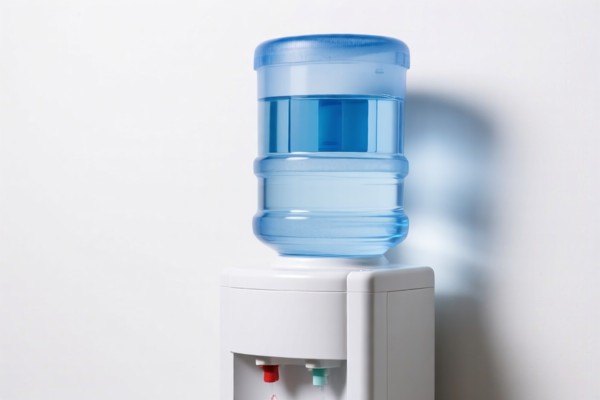
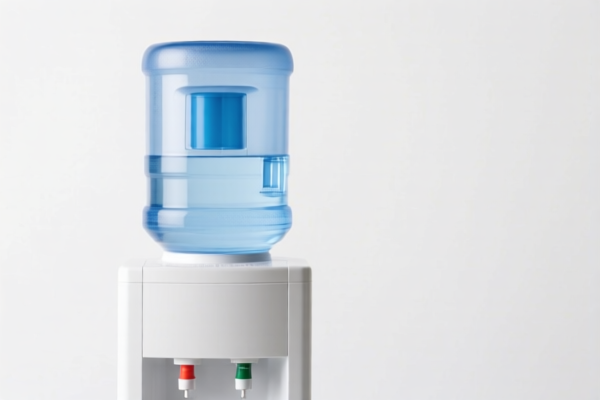
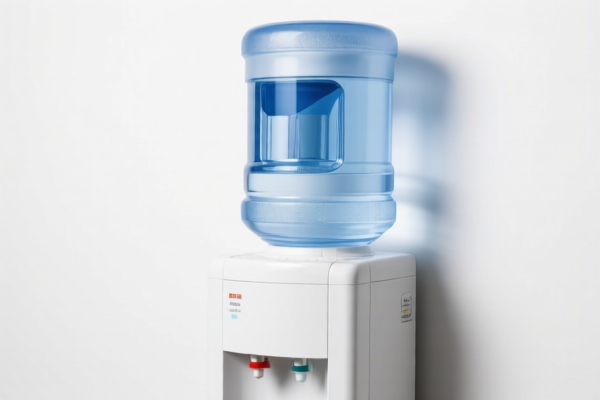
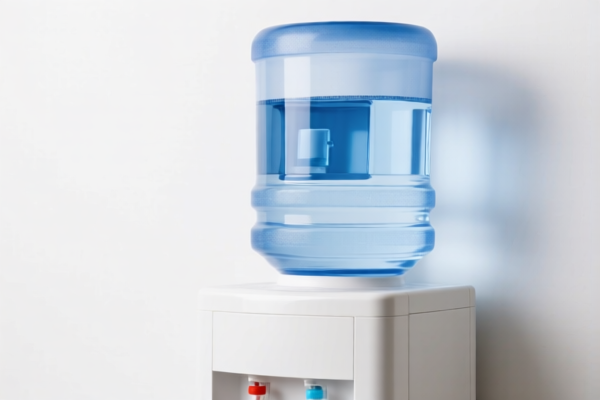
AI Analysis
💧 Mini Water Dispenser (Heating & Cooling Appliances)
🌐 HS Code Reference & Customs Clearance Guide | 2026 Latest Tariff Analysis | Professional Clearance Strategy 📌 I. Product Definition & Classification: Do You Truly Understand a "Mini Water Dispenser"?
A Mini Water Dispenser is a compact household appliance designed to heat, cool, or store drinking water. In international trade, its classification hinges on its primary function and physical form:
Functional Classification (Heating/Cooling Machinery): If the core function is temperature regulation (heating/cooling) of a material (water), it falls under Chapter 84 (Machinery and Mechanical Appliances). This is the most accurate technical classification for appliances with heating elements.
Material/Usage Classification (Household Articles): If the device is viewed primarily as a plastic container or household utility item with minimal mechanical complexity, it may be misclassified under Chapter 39 (Plastics). However, this is risky for active appliances.
⚠️ Key Distinction Point: - If the device has heating/cooling mechanisms, pumps, or tanks → It is machinery (Chapter 84). - If it is a simple passive plastic jug with no active components → It is a plastic article (Chapter 39). - Critical Warning: Most "Mini Water Dispensers" are active appliances. Misclassifying them as "Plastic Articles" to avoid tariffs is a major compliance risk.
📦 II. HS Code Classification Details (2026 Latest Tariff Authority Comparison)
Based on the provided data, three potential HS Codes are identified. Here is the detailed breakdown:
| HS Code | Product Description | Matching Logic (from Data) | Applicable Scenario |
|---|---|---|---|
8419.11.00.00 |
Water Heaters / Instant Hot Water Units | Function Match: "Water dispenser" is treated as equipment for treating water (material) via temperature change. Form: Household/small mechanical equipment. | ✅ Primary Recommendation. Applies to dispensers with heating functions. |
3924.10.40.00 |
Household Plastic Articles | Form/Usage Match: Classified as a household appliance/home accessory. Reasonably inferred to be plastic material, belonging to household goods category. | ⚠️ Risky/Alternative. Applies only if the device is deemed a passive plastic item or if no other machinery code fits. Often results in lower base tax but high risk of reclassification. |
8419.19.01.60 |
Other Heat Processors / Water Heating Equipment | Extended Function: An extension of water heater/heater functions. Categorized as "Other" non-electric or specific form, implying heating/storage capabilities. | ⚠️ Secondary Machinery Option. Used for "Other" category dispensers that don't fit 8419.11 exactly but still function as heaters/storage. |
🔍 Important Note: -
8419.11.00.00and8419.19.01.60both trigger 35% total tax due to high additional duties. -3924.10.40.00triggers 13.4% total tax, offering significant cost savings IF the customs authority accepts the plastic article classification for an active appliance.
💰 III. 2026 Latest Tariff Rate Breakdown (Including Surtaxes & Policy Add-ons)
✅ Applicable Country: United States (US) ✅ Origin: China (CN) ✅ Effective Time: From November 10, 2025 (including subsequent imports)
🎯 1. 8419.11.00.00 —— Water Heaters / Hot Water Units (Most Common for Dispensers)
| Item | Details |
|---|---|
| Base Tariff | 0.0% (ad valorem) |
| Section 301 Surcharge | +25.0% (USITC Footnote related to Chinese imports) |
| 122-Section Surcharge | +10.0% (Specific surcharge for certain Chinese goods) |
| Total Tax Rate | 35.0% |
| Calculation Basis | CIF Value × 35% |
| De Minimis Exemption | ❌ Not Eligible (Denied) |
| Legal Path | Base: 0% → 301: 25% → 122: 10% → Total: 35% |
📌 Interpretation: - This is the standard classification for water dispensers with heating functions. - The 35% rate is high. It includes both the Section 301 tariff (25%) and the specific 122-section tariff (10%). - No base tax applies, but the surcharges make it expensive.
🎯 2. 3924.10.40.00 —— Household Plastic Articles (Low-Tariff Strategy)
| Item | Details |
|---|---|
| Base Tariff | 3.4% (ad valorem) |
| Section 301 Surcharge | 0.0% |
| 122-Section Surcharge | +10.0% |
| Total Tax Rate | 13.4% |
| Calculation Basis | CIF Value × 13.4% |
| De Minimis Exemption | ❌ Not Eligible (Denied) |
| Legal Path | Base: 3.4% → 301: 0% → 122: 10% → Total: 13.4% |
📌 Interpretation: - This code leverages a lower base tariff (3.4%) and no Section 301 tariff (0%). - The 10% 122-section surcharge still applies, but the overall rate (13.4%) is significantly lower than the 35% machinery rate. - Risk: Customs may reject this if the product is clearly an electrical/heating appliance. It requires strong justification of "plastic household article" status.
🎯 3. 8419.19.01.60 —— Other Heat Processors (Alternative Machinery)
| Item | Details |
|---|---|
| Base Tariff | 0.0% (ad valorem) |
| Section 301 Surcharge | +25.0% |
| 122-Section Surcharge | +10.0% |
| Total Tax Rate | 35.0% |
| Calculation Basis | CIF Value × 35% |
| De Minimis Exemption | ❌ Not Eligible (Denied) |
| Legal Path | Base: 0% → 301: 25% → 122: 10% → Total: 35% |
📌 Interpretation: - Similar tax structure to
8419.11.00.00. - Used for dispensers that are "other" types of water heating/storage equipment not specifically listed under 8419.11. - Total Cost Impact: Identical to the primary machinery code.
🛠️ IV. Customs Clearance Practical Advice (Real-World Pitfall Guide)
✅ 1. Preparation Checklist (Non-Negotiable)
| Document | Required | Explanation |
|---|---|---|
| ✅ Product Specs Sheet | ✔️ | Must clearly state heating/cooling capacity, voltage, and material composition. |
| ✅ Internal Structure Diagram | ✔️ | Crucial for proving/disputing whether it is an "active appliance" or "passive plastic item." |
| ✅ Product Photos (with Nameplate) | ✔️ | Show the label, model number, and input/output ports. |
| ✅ Certifications | ✔️ | ETL, UL, CE, or RoHS reports. Essential for electrical appliances. |
| ✅ Commercial Invoice | ✔️ | Must match the chosen HS Code. If using 3924, describe as "Plastic Water Container/Dispenser Unit." If using 8419, describe as "Electric Water Heater/Dispenser." |
| ✅ Packing List | ✔️ | Detail accessories (cups, hoses) to avoid separate classification. |
✅ 2. Declaration Strategy (Key Mantra)
🔥 "Function Dictates Code. Heating = 8419. Plastic = 3924. 35% vs 13.4%!"
| Scenario | Recommended HS Code | Risk Level | Notes |
|---|---|---|---|
| Standard Electric Dispenser (with heating coil) | 8419.11.00.00 |
✅ Safe/Standard | Expected by Customs. High tax (35%) but compliant. |
| Passive Plastic Jug (no electricity, no heating) | 3924.10.40.00 |
✅ Low Tax | Only if truly non-electric. Tax 13.4%. |
| Mini Dispenser with Cooling Only | 8419.11.00.00 or 8419.19.01.60 |
⚠️ Medium | If cooling is achieved via thermoelectric or compressor, it's still machinery. |
| Misdeclared as "Plastic Toy" | 3924.10.40.00 |
❌ High Risk | Customs will reclassify to 8419, charge back-tariffs + penalties. |
✅ 3. Special Circumstances Handling
| Situation | Advice |
|---|---|
| OEM Mini Dispenser | Provide original design docs. If the design emphasizes "plastic housing" over "heating," argue for 3924, but be prepared to defend. |
| Cold Water Only Dispenser | If no heating element exists, 3924.10.40.00 might be more defensible as a "household plastic article," potentially avoiding the 25% Section 301. |
| Bundled with Accessories | Declare as a single unit. Do not split the "dispenser" and "plastic cups" into separate HS codes if sold together. |
🌍 V. Global Market Comparison (2026 Latest)
| Country/Region | Recommended HS Code | Total Tariff (China Origin) | Key Certifications | Notes |
|---|---|---|---|---|
| 🇺🇸 USA | 8419.11.00.00 |
35.0% | UL, ETL, FCC | High tariff due to 301 + 122 sections. |
| 🇺🇸 USA | 3924.10.40.00 |
13.4% | - | Only if passively classified. |
| 🇨🇳 China | 8419.11.00.00 |
~8-10% | CCC | Domestic tax structure differs. |
| 🇪🇺 EU | 8419.11.00.00 |
0-2.7% | CE, RoHS | Generally low tariffs for machinery. |
| 🇬🇧 UK | 8419.11.00.00 |
0-2.7% | UKCA | Post-Brexit alignment with EU. |
📌 Conclusion: - USA is the most challenging market due to the叠加 (stacking) of Section 301 (25%) and 122-Section (10%) tariffs on machinery. - Strategic Option: If the product is not electrically heated (e.g., simple gravity-fed plastic dispenser), pursuing
3924.10.40.00can save 21.6% in duties (35% - 13.4%).
📌 VI. Common Mistakes & Pitfall Guide (Blood Lessons)
❌ Mistake 1: Declaring an electric heating dispenser as "Plastic Cup" (3924) to save tax.
👉 Consequence: Customs audit → Reclassification to 8419 → Back taxes of ~21.6% + Penalties + Delay.
❌ Mistake 2: Ignoring the 122-Section Surcharge.
👉 Consequence: Even if you avoid Section 301 (by using 3924), the 10% 122-section tariff still applies to most Chinese household goods. Expect at least 13.4%.
❌ Mistake 3: Confusing "Water Cooler" (large floor unit) with "Mini Dispenser" (desktop).
👉 Consequence: Different sub-codes within 8419 may have slightly different interpretations, but the tariff impact (35%) remains similar for machinery.
✅ Correct Approach:
"Electric + Heating =
8419.11.00.00(35%) Plastic + Passive =3924.10.40.00(13.4%) Know your product's core mechanism before declaring!"
🎯 VII. Conclusion: Professional Declaration, Save Cost, Ensure Compliance!
🎯 Remember the Mantra:
🔹 "Heating Mechanism = Machinery (8419) = 35% Tax." 🔹 "Passive Plastic = Household Article (3924) = 13.4% Tax." 🔹 "De Minimis is Dead for These Goods. Plan Ahead!"
📌 Pro Tip:
If your Mini Water Dispenser is originating from Vietnam, Mexico, or Thailand, you may qualify for IEEPA Exemptions or lower tariffs under FTAs. Recommendation: Apply for a Customs Ruling (Pre-classification) for complex "mini" appliances to secure certainty before shipping large volumes.
📣 Immediate Action:
📞 Consult a licensed customs broker. 📄 Prepare technical specs proving heating vs. passive status. 🚀 Ensure your Commercial Invoice matches the HS Code logic perfectly.
✨ Professional Clearance Starts with Precise Classification! 💼 Every Percentage Point Matters in Your Profit Margin!
Customer Reviews
About HS Code Classification
The Harmonized System (HS) is an internationally standardized nomenclature developed by the World Customs Organization (WCO) to classify traded products. Over 200 countries use the HS system as the basis for customs tariffs, trade statistics, and import/export regulations.
Each HS code follows a hierarchical structure:
- Chapter (2 digits) — Broad category of goods (e.g., Chapter 84: Machinery and Mechanical Appliances)
- Heading (4 digits) — More specific grouping within the chapter
- Subheading (6 digits) — Internationally standardized breakdown, used by all WCO member countries
- National subdivisions (8-10 digits) — Country-specific extensions for further classification, such as US HTSUS 10-digit codes
Correct HS code classification is essential for smooth customs clearance, accurate duty payment, and compliance with trade regulations. Misclassification can lead to customs delays, overpayment of duties, or penalties.
When importing from CN to US, the applicable tariff rates may include:
- Most-Favored-Nation (MFN) rate — The standard duty rate applied to WTO members
- General rate — Applied to countries without trade agreements
- Trade remedy duties — Additional tariffs such as Section 301 (anti-dumping), Section 232 (national security), or countervailing duties
The information provided on this page is for reference purposes only. For official classification, please consult with your local customs authority or a licensed customs broker.