Minimalist Pencil Case
CN → US| HS Code | Tariff Rate | Origin | Destination | Doc |
|---|---|---|---|---|
| 4205008000 | 35.0% | CN | US | Official Doc |
| 3926100000 | 15.3% | CN | US | Official Doc |
| 4202329300 | 52.6% | CN | US | Official Doc |
| 3926903500 | 16.5% | CN | US | Official Doc |
| 4202322000 | 55.0% | CN | US | Official Doc |
Product Images


AI Analysis
✏️ Minimalist Pencil Case: The Ultimate Classification & Duty Guide
🌐 HS Code Reference & Customs Clearance Strategy | 2026 Latest Tariff Analysis | Professional Entry Protocol
📌 I. Product Definition: What is a "Minimalist Pencil Case"?
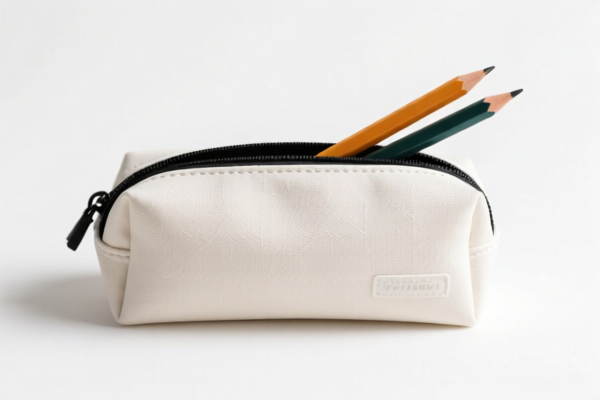
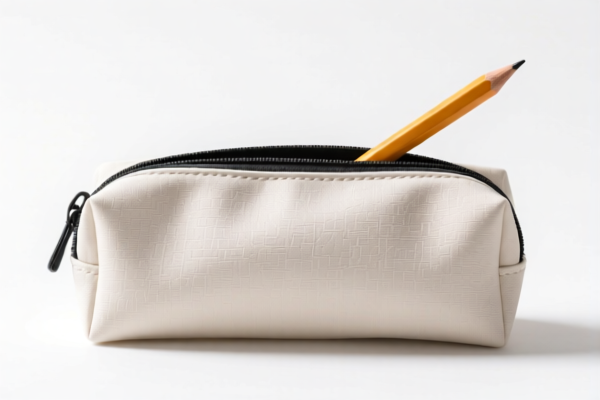
The Minimalist Pencil Case is a compact, portable文具 (stationery) container designed for holding pens, pencils, and small office/school supplies. Its "minimalist" design usually implies a lack of excessive decoration, focusing on functionality and sleek materials.
In international trade, the material composition is the single most critical factor for HS Code classification. A single pencil case can fall into five distinct categories depending on whether it is made of Leather, Plastic, or Textile.
⚠️ Key Classification Distinction: * Leather/Synthetic Leather → Goes to Chapter 42 (High Duty Risk). * Plastic → Goes to Chapter 39 or 4202 (Material Specific). * Textile (Fabric) → Goes to Chapter 4202 (Highest Duty Risk).
📦 II. HS Code Classification Details (Based on Material Composition)
| HS Code | Material Composition | Summary Description | Applicable Scenario |
|---|---|---|---|
| 4205.00.80.00 | Leather / Synthetic Leather | Other articles of leather or of composition leather. | Cases made of genuine leather, faux leather, or PU leather. |
| 3926.10.00.00 | Plastic (Stationery Specific) | Articles of plastics, office or school supplies. | Simple plastic cases designed specifically for school/office use. |
| 4202.32.93.00 | Textile / Artificial Fiber | Other containers with outer surface of textile materials. | Fabric cases, canvas, nylon, or polyester cases (Other man-made fiber). |
| 3926.90.35.00 | Plastic (General) | Other articles of plastics (Not specifically office/school). | Plastic cases classified under general plastic articles. |
| 4202.32.20.00 | Plastic Sheet / Textile | Containers with outer surface of plastic sheeting or textiles. | Cases where the shell is plastic sheeting OR textile, specifically for carrying. |
🔍 Critical Analysis: * 4205.00.80.00: Common for "Premium" minimalist leather cases. * 4202.32.93.00: Most common for "Fabric/Canvas" cases. Highest Risk for High Tariffs. * 3926.10.00.00 / 3926.90.35.00: For hard plastic cases. * 4202.32.20.00: A broad category for cases with plastic/textile shells designed to be carried.
💰 III. 2026 Tariff Rate Breakdown (Including Surcharges & Policy Add-ons)
✅ Applicable Market: United States (US)
✅ Origin: China (CN)
✅ Effective Date: 2025-2026 Tariff Regime (Section 301 & IEEPA)
🎯 1. 4205.00.80.00 — Leather / Synthetic Leather Pencil Case
| Item | Content |
|---|---|
| Base Tariff | 0.0% (Low base) |
| Section 301 Add-on | +25.0% (USITC "China Trade" surcharge) |
| IEEPA Add-on | +10.0% (122 Clause/China specific) |
| Total Tariff Rate | 35.0% |
| Tax Calculation | CIF Value × 35% |
| De Minimis Exemption | ❌ NO (Deny de minimis for this category) |
| Legal Path | IEEPA:9903.01.25 → USITC:4205.00.80.00 → FOOTNOTE:9903.88.01 |
📌 Explanation: Even though the base tariff is low (0%), the 35% combined rate is significant. This applies to cases made of leather or synthetic leather.
🎯 2. 3926.10.00.00 — Plastic (Office/School Supplies)
| Item | Content |
|---|---|
| Base Tariff | 5.3% |
| Section 301 Add-on | 0.0% (No Section 301 surcharge for this specific subheading) |
| IEEPA Add-on | +10.0% (122 Clause/China specific) |
| Total Tariff Rate | 15.3% |
| Tax Calculation | CIF Value × 15.3% |
| De Minimis Exemption | ❌ NO (Deny de minimis) |
| Legal Path | IEEPA:9903.01.25 → USITC:3926.10.00.00 |
📌 Explanation: This is the most tax-efficient classification for plastic cases if they qualify as "Office/School Supplies." The base tariff is low, and the 301 surcharge is waived, leaving only the 10% IEEPA tax.
🎯 3. 4202.32.93.00 — Textile / Other Man-made Fiber
| Item | Content |
|---|---|
| Base Tariff | 17.6% |
| Section 301 Add-on | +25.0% (USITC "China Trade" surcharge) |
| IEEPA Add-on | +10.0% (122 Clause/China specific) |
| Total Tariff Rate | 52.6% |
| Tax Calculation | CIF Value × 52.6% |
| De Minimis Exemption | ❌ NO (Deny de minimis) |
| Legal Path | IEEPA:9903.01.25 → USITC:4202.32.93.00 → FOOTNOTE:9903.88.01 |
📌 Explanation: ⚠️ DANGER ZONE! Fabric pencil cases face the highest possible tax burden (52.6%). The combination of a high base tariff (17.6%) and the 25% Section 301 surcharge makes this very expensive to import.
🎯 4. 3926.90.35.00 — Plastic (Other Articles)
| Item | Content |
|---|---|
| Base Tariff | 6.5% |
| Section 301 Add-on | 0.0% (No 301 surcharge) |
| IEEPA Add-on | +10.0% (122 Clause/China specific) |
| Total Tariff Rate | 16.5% |
| Tax Calculation | CIF Value × 16.5% |
| De Minimis Exemption | ❌ NO (Deny de minimis) |
| Legal Path | IEEPA:9903.01.25 → USITC:3926.90.35.00 |
📌 Explanation: Similar to
3926.10.00.00, but as a general plastic article rather than specific stationery. Still a low-tax option (16.5%) compared to textiles or leather.
🎯 5. 4202.32.20.00 — Plastic Sheet / Textile (Carrying Cases)
| Item | Content |
|---|---|
| Base Tariff | 20.0% |
| Section 301 Add-on | +25.0% (USITC "China Trade" surcharge) |
| IEEPA Add-on | +10.0% (122 Clause/China specific) |
| Total Tariff Rate | 55.0% |
| Tax Calculation | CIF Value × 55.0% |
| De Minimis Exemption | ❌ NO (Deny de minimis) |
| Legal Path | IEEPA:9903.01.25 → USITC:4202.32.20.00 → FOOTNOTE:9903.88.01 |
📌 Explanation: ⚠️ HIGHEST RISK! This code applies when the case is described as having an outer surface of plastic sheeting or textile and is "carried." It combines a massive base tariff (20%) with the 25% surcharge, resulting in a 55.0% total rate.
🛠️ IV. Customs Clearance Practical Advice (Real-World Strategy)
✅ 1. Material Declaration Strategy
| Strategy | Action | Reason |
|---|---|---|
| 🥇 Priority | Declare as Plastic (3926.10.00) | Lowest Tax (15.3%). If the case is rigid plastic, use this. |
| 🥈 Secondary | Declare as Plastic (3926.90.35) | Low Tax (16.5%). Good for flexible plastic cases. |
| 🥉 Avoid | Declare as Textile (4202.32.93) | Highest Tax (52.6%). Only use if 100% fabric and unavoidable. |
| 🥉 Avoid | Declare as Leather (4205.00.80) | High Tax (35.0%). Unless it's genuine luxury leather, avoid. |
| 🚫 Dangerous | Declare as Carrying Case (4202.32.20) | Maximum Tax (55.0%). Avoid "plastic sheeting" descriptions if possible. |
✅ 2. Key Documentation Checklist
To ensure smooth clearance and prevent misclassification:
* Product Specification Sheet: Must clearly state "Plastic Material" (if applicable) or "Synthetic Leather" vs. "Genuine Leather."
* Material Composition Label: A photo of the tag/label inside the case showing the % of materials (e.g., "100% PVC" or "100% Nylon").
* Commercial Invoice: Must be specific.
* ✅ Good: "Pencil Case, Rigid Plastic, Office Stationery"
* ❌ Bad: "Pencil Case" (Vague, invites high tax audit)
* ❌ Bad: "Fabric Case" (Triggers 52.6% tax)
* Structure Diagram: Show if it is a hard shell (plastic) or soft shell (textile).
✅ 3. Classification Pitfalls to Avoid
🔥 The "Fabric Trap": Even a "minimalist" case with a small fabric lining or a fabric exterior will trigger 4202.32.93.00 (52.6%). * Solution: If possible, design cases with 100% plastic exteriors to qualify for 3926.10.00.00.
🔥 The "Carrying Case" Trap: Describing the item as a "bag" or "case for carrying" often pushes it to 4202.32.20.00 (55.0%). * Solution: Use the description "Stationery Holder" or "Office Supply Container" to lean towards 3926.10.00.00.
🔥 Leather Definition: "Synthetic Leather" often falls under 4205.00.80.00 (35.0%), not plastic. * Solution: Ensure the material is PU/Vinyl (Plastic) not "Synthetic Leather" (Chapter 42) if you want the lower tax.
🌍 V. Global Market Comparison (2026 Snapshot)
| Market | Preferred HS Code | Est. Total Duty | Notes |
|---|---|---|---|
| 🇺🇸 USA | 3926.10.00.00 |
15.3% | Avoid Textile/Leather. High risk of 301 surcharge. |
| 🇪🇺 EU | 4202.32.20.00 |
~5-10% | No 301/122 Clause. Lower rates generally. |
| 🇨🇦 Canada | 3926.10.00.00 |
~5-10% | Similar to US but no Section 301. |
| 🇯🇵 Japan | 3926.10.00.00 |
~8% | Low duty, strict material verification. |
📌 Conclusion for US Importers: The Material is King. * If you sell Plastic cases → Profitable (15.3% duty). * If you sell Fabric/Textile cases → Costly (52.6% duty). * If you sell Leather cases → Moderate (35.0% duty).
📌 VI. Quick Action Plan for Exporters
- Audit Your Materials: Check every SKU. Is it plastic, fabric, or leather?
- Rebrand Descriptions:
- ❌ Change "Fabric Pencil Case" to "Textile Container" (Risky).
- ✅ Change "Pencil Holder" to "Plastic Stationery Organizer".
- Pre-Arrival Ruling: File an Advance Ruling with US Customs (CBP) specifically for your exact material composition to lock in the 3926.10.00.00 rate if eligible.
- Supply Chain Shift: If fabric cases are mandatory for design, consider sourcing from Vietnam or Thailand to potentially bypass Section 301 surcharges (subject to current rules).
🎯 Final Verdict:
"Plastic Wins, Fabric Pays the Price!" For Minimalist Pencil Cases, aiming for the Plastic (Chapter 39) classification is the only way to maintain healthy margins in the US market in 2026. Avoid Textile and Leather unless your target market can absorb the 50%+ tax hit.
✨ Smart Shipping, Precise Classification, Maximum Profit!
💼 Your Pencil Case could be worth 40% more in profit if classified correctly.
Customer Reviews
About HS Code Classification
The Harmonized System (HS) is an internationally standardized nomenclature developed by the World Customs Organization (WCO) to classify traded products. Over 200 countries use the HS system as the basis for customs tariffs, trade statistics, and import/export regulations.
Each HS code follows a hierarchical structure:
- Chapter (2 digits) — Broad category of goods (e.g., Chapter 84: Machinery and Mechanical Appliances)
- Heading (4 digits) — More specific grouping within the chapter
- Subheading (6 digits) — Internationally standardized breakdown, used by all WCO member countries
- National subdivisions (8-10 digits) — Country-specific extensions for further classification, such as US HTSUS 10-digit codes
Correct HS code classification is essential for smooth customs clearance, accurate duty payment, and compliance with trade regulations. Misclassification can lead to customs delays, overpayment of duties, or penalties.
When importing from CN to US, the applicable tariff rates may include:
- Most-Favored-Nation (MFN) rate — The standard duty rate applied to WTO members
- General rate — Applied to countries without trade agreements
- Trade remedy duties — Additional tariffs such as Section 301 (anti-dumping), Section 232 (national security), or countervailing duties
The information provided on this page is for reference purposes only. For official classification, please consult with your local customs authority or a licensed customs broker.