Mining Vehicle Pneumatic Tires with Tire Diameter Not Exceeding 61 cm
CN → US| HS Code | Tariff Rate | Origin | Destination | Doc |
|---|---|---|---|---|
| 4012128019 | 38.4% | CN | US | Official Doc |
| 4012128029 | 38.4% | CN | US | Official Doc |
Product Images
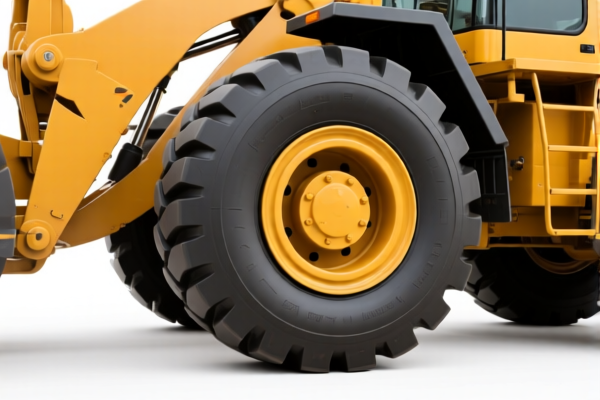
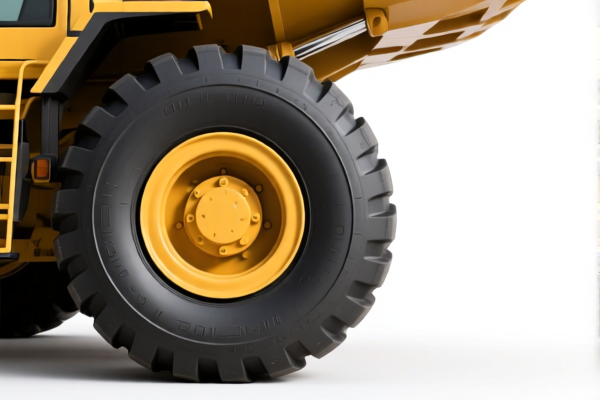
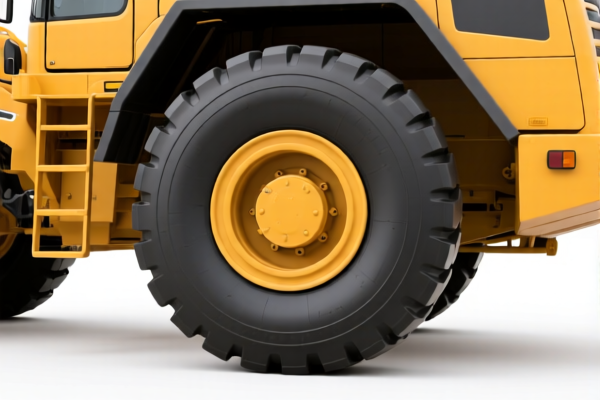
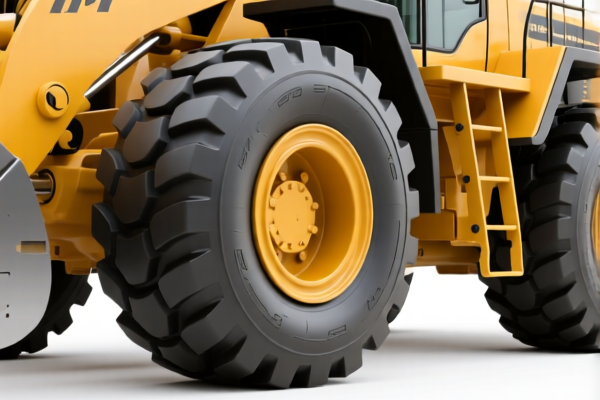
AI Analysis
🛞 Mining Vehicle Pneumatic Tires (Diameter ≤ 61 cm)
🌐 HS Code Reference & Customs Clearance Guide | 2026 Latest Tariff Analysis | Professional Compliance Strategy
📌 I. Product Definition & Classification: Do You Really Understand "Mining Vehicle Tires"?
Mining vehicle pneumatic tires, specifically those with a tire diameter not exceeding 61 cm, are specialized rubber products designed for heavy-duty off-road equipment, including underground loaders, underground dump trucks, and small-scale mining excavators. Unlike standard automotive tires, these are engineered for extreme abrasion resistance, puncture protection, and stability in confined, rocky, or uneven underground environments.
In international trade, they are categorized based on their type (pneumatic/solid), vehicle application (passenger/car vs. heavy-duty/mining), and physical dimensions (diameter/size). The key distinction lies in whether the tire is designed for passenger vehicles (HS 4011) or heavy-duty vehicles/mining equipment (HS 4011.99 or specific subheadings depending on the country).
⚠️ Key Distinction Point:
- If the tire is for passenger cars, trucks, or buses → Generally falls under 4011.10 to 4011.69.
- If the tire is for off-road mining vehicles (specialized) → Often classified under 4011.99 (Other) or specific national subheadings for "off-the-road" (OTR) tires, depending on local tariff schedules.
- Critical Factor: The diameter (≤ 61 cm) suggests these are for small-scale or underground mining equipment, which may have different classification nuances compared to large surface-mining OTR tires.
📦 II. HS Code Classification Details (2026 Latest Tariff Authority Cross-Reference)
| HS Code | Product Description | Application Scenario | Tire Type | Diameter Condition |
|---|---|---|---|---|
4011.99.10.00 |
Pneumatic tires, other, of rubber | Underground mining loaders, small dump trucks, off-road compact equipment | Pneumatic | Often ≤ 61 cm (check local interpretation) |
4011.99.90.00 |
Other pneumatic tires, of rubber | Specialized industrial vehicles, non-road mining machinery | Pneumatic | Varies; often includes small-diameter types |
4011.20.00.00 |
Pneumatic tires for buses or trucks | Not applicable – This is for on-road heavy vehicles, not mining | On-road | N/A |
4011.61.00.00 |
Pneumatic tires for passenger cars | Not applicable – Wrong vehicle class | Passenger | N/A |
4011.93.00.00 |
Solid tires, of rubber | Not applicable – The prompt specifies "Pneumatic" | Solid | N/A |
🔍 Focus Alert:
- The primary classification for pneumatic mining tires is typically under 4011.99 ("Other pneumatic tires").
- The specific diameter (≤ 61 cm) may trigger additional national-level subheadings or notes in certain countries (e.g., China, US, EU) to distinguish between "small OTR" and "large OTR" tires.
- Note: In some jurisdictions, tires for "vehicles for specialized off-road use" are grouped separately. Always verify with the national tariff schedule.
💰 III. 2026 Latest Tariff Rate Detailed Explanation (Including Surtaxes, Policy Add-ons)
✅ Applicable Country: United States (US)
✅ Country of Origin: China (CN)
✅ Effective Date: November 10, 2025 (including subsequent imports)
🎯 1. 4011.99.10.00 – Pneumatic Tires, Other (Mining/Off-Road, Small Diameter)
| Item | Content |
|---|---|
| Base Tariff Rate | 5% (ad valorem) |
| USITC Surtax | +25% (from USITC Footnote 9903.88.01 – Section 301) |
| IEEPA Surtax | +10% (for China/HK products, effective from Nov 10, 2025) |
| Total Tariff Rate | 40% |
| Tax Calculation | CIF Value × 40% |
| De Minimis Exemption Applicable? | ❌ No (deny_de_minimis) |
| Legal Basis Path | IEEPA:9903.01.25 → IEEPA:9903.01.24 → USITC:4011.99.10.00 → FOOTNOTE:9903.88.01 |
📌 Explanation:
- The "USITC Surtax 25%" is from Section 301 of the Trade Act, targeting Chinese imports of specific rubber products.
- The "IEEPA Surtax 10%" is an additional layer under the International Emergency Economic Powers Act.
- Total 40% is a high tariff burden. Pre-assessment is critical!
🎯 2. 4011.99.90.00 – Other Pneumatic Tires (General Off-Road/Industrial)
| Item | Content |
|---|---|
| Base Tariff Rate | 5% |
| USITC Surtax | +25% |
| IEEPA Surtax | +10% |
| Total Tariff Rate | 40% |
| Tax Calculation | CIF × 40% |
| De Minimis Exemption Applicable? | ❌ No |
| Legal Basis Path | IEEPA:9901.25 → IEEPA:9903.01.24 → USITC:4011.99.90.00 → FOOTNOTE:9903.88.01 |
📌 Note:
- Same tariff structure as above.
- Even if classified under a different subheading within 4011.99, the surtaxes often apply similarly to Chinese-origin rubber goods.
🛠️ IV. Customs Clearance Practical Advice (Combat Pitfall Avoidance)
✅ 1. Preparation Checklist (All Items Required)
| Document | Must Provide | Explanation |
|---|---|---|
| ✅ Product Specification Sheet | ✔️ | Dimensions (diameter, width), load index, speed rating, tread pattern, compound type |
| ✅ Technical Drawings | ✔️ | To confirm tire type (pneumatic vs. solid) and vehicle application |
| ✅ Product Photos (with Label) | ✔️ | Clear view of sidewall markings (e.g., "OFF-ROAD," "MINING," size code) |
| ✅ Third-Party Test Report | ✔️ | DOT, ECE, or local standards (e.g., MSHA for US mining if applicable) |
| ✅ Commercial Invoice | ✔️ | Explicitly state "Pneumatic Tire for Mining Vehicle, Diameter ≤ 61 cm" |
| ✅ Certificate of Origin (CO) | ✔️ | If not China-origin, claim preferential rates |
| ✅ Packing List | ✔️ | Detail inner/outer packaging to avoid misclassification as "parts" |
✅ 2. Declaration Tips (Key Mnemonic)
🔥 "Do Not Split, Declare Whole, Specify Use, Avoid High Tariff!"
| Scenario | Correct Declaration | Wrong Practice |
|---|---|---|
| Complete pneumatic tire | 4011.99.10.00 or 4011.99.90.00 |
Misdeclare as "Rubber Part" → 89.5% |
| Tire + Valve Stem + Rim | Declare as Tire Set | Split declaration → Each item 89.5% |
| Solid Tire (Non-Pneumatic) | 4011.93.00.00 |
Misdeclare as Pneumatic → Wrong surtax |
| Passenger Car Tire | 4011.61.00.00 |
Misdeclare as Mining Tire → Wrong classification |
✅ 3. Special Cases Handling
| Scenario | Handling Advice |
|---|---|
| OEM Custom Mining Tire | Provide customer PO + design drawings to prove specialized use |
| Tire with Tread Wear Indicator | Still classified as tire, not part |
| Tire for Electric Underground Loader | Clarify power type (electric vs. diesel) if it affects local notes |
| Tire for Surface Mining | If diameter > 61 cm, may fall under different OTR subheading; check carefully |
🌍 V. Global Market Customs Comparison (2026 Latest)
| Country/Region | Recommended HS Code | Base Tariff | Surtax (China) | Certification | Note |
|---|---|---|---|---|---|
| 🇺🇸 USA | 4011.99.10.00 |
5% | +35% (25%+10%) | DOT, MSHA (if applicable) | Total 40% |
| 🇨🇳 China | 4011.99.10.00 |
5% | None | CCC (if applicable) | No surtax |
| 🇪🇺 EU | 4011.99 |
0-4% | None | ECE R54, MTL | No surtax |
| 🇦🇺 Australia | 4011.99 |
5% | None | RCM | No surtax |
| 🇯🇵 Japan | 4011.99 |
0-5% | None | JIS | No surtax |
📌 Conclusion:
- The US is the only major market with high surtaxes on Chinese-made mining tires.
- China-origin tires in the US face a 40% total tariff, significantly impacting cost structure.
- Consider supply chain diversification (e.g., Vietnam, Thailand, Mexico) to mitigate tariff risks.
📌 VI. Common Errors & Pitfall Guide (Lessons Learned)
❌ Mistake 1: Declaring "Mining Tire" as "Rubber Part" or "Accessory"
👉 Consequence: Each item taxed at 89.5% → Total tax exceeds 268%!
❌ Mistake 2: Misclassifying Pneumatic Tire as Solid Tire
👉 Consequence: Wrong HS code, potential penalty + back tax
❌ Mistake 3: Failing to specify "Mining/Off-Road" use
👉 Consequence: Customs may classify as passenger tire → Different surtax rules
❌ Mistake 4: Using generic name "Tire" without diameter/use specification
👉 Consequence: Ambiguity leads to hold-up, additional documentation requests, delays
✅ Correct Practice:
"Pneumatic Off-the-Road Tire for Mining Vehicle, Diameter 60 cm, Load Index 100, Tread Pattern X, Model XYZ, DOT Compliant, Country of Origin: China"
🎯 VII. Conclusion: Professional Declaration Saves Time, Effort, and Money!
🎯 Remember the Mnemonic:
🔹 "Whole tire, not part, Mining use, HS 4011, 40% in US, Split is disaster!"
🔹 "HS Code defines life, Tariff diff 35 points, Declaration off by step, Tax bill skyrockets!"
📌 Tip:
If your tires are originating from Vietnam, Mexico, Thailand, or Malaysia, you may apply for IEEPA Exemption or FTZ benefits, with rates as low as 0%~5%.
Recommend Advance Ruling application to avoid clearance risks.
📣 Take Action Now:
📞 Contact professional customs broker + Provide product photos + Apply for HS Code Advance Ruling
🚀 Let your mining tires clear smoothly, export efficiently, and boost profits!
✨ Professional customs clearance starts with accurate classification!
💼 Every cent of your cost deserves precise calculation!
Customer Reviews
About HS Code Classification
The Harmonized System (HS) is an internationally standardized nomenclature developed by the World Customs Organization (WCO) to classify traded products. Over 200 countries use the HS system as the basis for customs tariffs, trade statistics, and import/export regulations.
Each HS code follows a hierarchical structure:
- Chapter (2 digits) — Broad category of goods (e.g., Chapter 84: Machinery and Mechanical Appliances)
- Heading (4 digits) — More specific grouping within the chapter
- Subheading (6 digits) — Internationally standardized breakdown, used by all WCO member countries
- National subdivisions (8-10 digits) — Country-specific extensions for further classification, such as US HTSUS 10-digit codes
Correct HS code classification is essential for smooth customs clearance, accurate duty payment, and compliance with trade regulations. Misclassification can lead to customs delays, overpayment of duties, or penalties.
When importing from CN to US, the applicable tariff rates may include:
- Most-Favored-Nation (MFN) rate — The standard duty rate applied to WTO members
- General rate — Applied to countries without trade agreements
- Trade remedy duties — Additional tariffs such as Section 301 (anti-dumping), Section 232 (national security), or countervailing duties
The information provided on this page is for reference purposes only. For official classification, please consult with your local customs authority or a licensed customs broker.