Mint Essential Oil
CN → US| HS Code | Tariff Rate | Origin | Destination | Doc |
|---|---|---|---|---|
| 3301250010 | 17.5% | CN | US | Official Doc |
| 3301240000 | 21.7% | CN | US | Official Doc |
| 2909302000 | 40.5% | CN | US | Official Doc |
| 2915394550 | 39.8% | CN | US | Official Doc |
Product Images
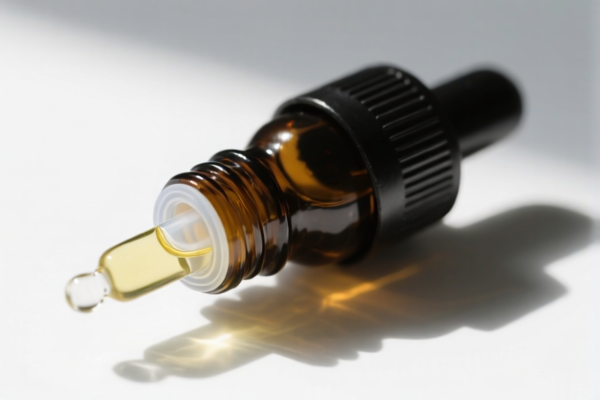

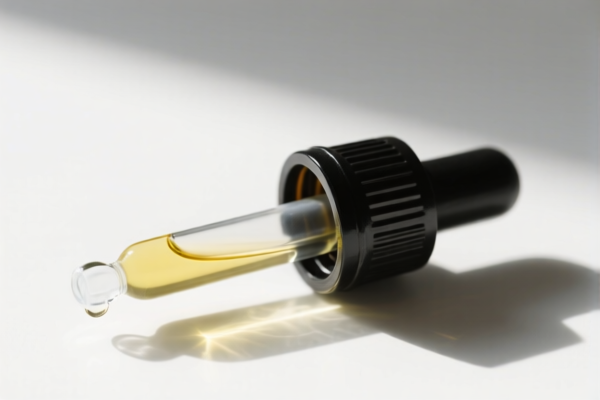
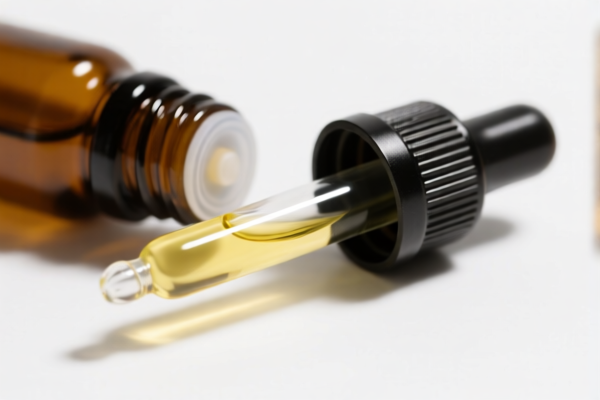
AI Analysis
🌿 Mint Essential Oil (Mentha Piperita & Mentha Arvensis)
🌐 HS Code Reference & Customs Clearance Guide | 2026 Latest Tariff Analysis | Professional Clearance Strategy
📌 I. Product Definition & Classification: Do You Really Understand "Mint Oil"?
Mint Essential Oils are volatile, aromatic liquids obtained from the distillation or extraction of Mentha species. In international trade, they are strictly differentiated by their botanical origin and chemical composition. Misclassification between the two main types leads to significant tariff discrepancies.
Key Distinction: * Cornmint Oil (Peppermint from Mentha arvensis): Often called "Wintergreen Mint" or "Cornmint." Contains specific menthol levels distinct from true peppermint. * True Peppermint Oil (Mentha piperita): The standard commercial peppermint, widely used in flavoring and pharmaceuticals.
⚠️ Critical Classification Point:
- If the oil is derived from Mentha piperita → Must classify under 3301.24.00.00
- If the oil is derived from Mentha arvensis (Cornmint) → Must classify under 3301.25.00.10
- Do not group them together; US Customs (CBP) requires precise botanical identification.
📦 II. HS Code Classification Details (2026 Latest Tariff Authority Comparison)
| HS Code | Product Description | Botanical Origin | Typical Use Case |
|---|---|---|---|
3301.24.00.00 |
Essential oils other than citrus: Of peppermint (Mentha piperita) | Mentha piperita | Standard peppermint oil, high menthol content |
3301.25.00.10 |
Essential oils other than citrus: Of other mints: Of cornmint, including "peppermint" derived from Mentha arvensis | Mentha arvensis | Cornmint oil, wintergreen oil, specific menthol isolates |
🔍 Key Reminder:
- The HS Code 3301.25 covers "Other Mints," but sub-item.10specifically targets Cornmint.
- If the supplier cannot prove the oil is from Mentha arvensis, and it is labeled as "Peppermint," it may be questioned. However, if it is truly M. piperita, it MUST go to3301.24.00.00.
- Do not use generic "Mint Oil" codes; specificity is required for accurate duty assessment.
💰 III. 2026 Latest Tariff Rate Details (Including Additional Duties & Policy Add-ons)
✅ Applicable Country: United States (US)
✅ Origin: China (CN)
✅ Effective Date: From November 10, 2025 onwards (including subsequent imports)
🎯 1. 3301.24.00.00 —— Peppermint Oil (Mentha piperita)
| Item | Content |
|---|---|
| Base Tariff | 0.0% (ad valorem) |
| Section 301 Additional Tariff | 0.0% |
| Total Tariff Rate | 0.0% |
| Tax Calculation | CIF Value × 0.0% = $0 |
| De Minimis Eligibility | ✅ Yes (Generally eligible for $800 de minimis if shipped via courier, subject to CBP enforcement) |
| Legal Basis Path | HTSUS: 3301.24.00.00 → Section 301 Footnote (No surcharge) |
📌 Explanation:
- Peppermint oil (Mentha piperita) is exempt from the major Section 301 tariffs.
- This makes it a low-risk, low-cost item for import into the US compared to many other aromatics.
- Note: Ensure the botanical name is explicitly stated on the invoice.
🎯 2. 3301.25.00.10 —— Cornmint Oil (Mentha arvensis)
| Item | Content |
|---|---|
| Base Tariff | 0.0% (ad valorem) |
| Section 301 Additional Tariff | 7.5% |
| Total Tariff Rate | 7.5% |
| Tax Calculation | CIF Value × 7.5% |
| De Minimis Eligibility | ✅ Yes (Generally eligible, but subject to strict scrutiny on value declarations) |
| Legal Basis Path | HTSUS: 3301.25.00.10 → Section 301 Footnote (7.5% surcharge applies) |
📌 Explanation:
- Cornmint oil is subject to a 7.5% additional tariff under current trade policies.
- While lower than many industrial goods, it is significantly higher than true peppermint oil.
- Cost Impact: On a $10,000 shipment, you pay $750 in additional duties alone.
🧪 Special Note: Related Chemical Derivatives (If Applicable)
If your "Mint Oil" product is actually a chemically defined ether or ester (e.g., isolated menthol derivatives or ether-alcohols), it may fall under different chapters:
| HS Code | Description | Total Tax |
|---|---|---|
2909.30.20.00 |
Aromatic ethers, odoriferous or flavoring compounds | 0.0% |
2915.39.45.50 |
Esters of acetic acid, odoriferous or flavoring compounds | 0.0% |
⚠️ Warning:
- If you are importing pure menthol or chemical derivatives, do not use the essential oil codes (3301.xx).
- Misclassifying a chemical product as an essential oil (or vice versa) can lead to classification errors, audits, and penalties.
- Consult a chemist or customs broker to verify if your product is a "natural extract" (Ch. 33) or a "chemically defined substance" (Ch. 29).
🛠️ IV. Customs Clearance Practical Advice (Practical Pitfall Avoidance Guide)
✅ 1. Required Documentation Checklist (Non-Negotiable)
| Document | Must Provide | Explanation |
|---|---|---|
| ✅ Botanical Name | ✔️ | Must specify Mentha piperita OR Mentha arvensis. Generic "Mint Oil" is insufficient. |
| ✅ GC/MS Report | ✔️ | Gas Chromatography/Mass Spectrometry report proving chemical composition and origin. |
| ✅ Certificate of Analysis (COA) | ✔️ | Verifies purity, menthol content, and absence of contaminants. |
| ✅ Commercial Invoice | ✔️ | Must clearly state "Essential Oil," HS Code, and Botanical Name. |
| ✅ Safety Data Sheet (SDS) | ✔️ | Required for transport and customs safety review. |
| ✅ Letter of Guarantee | ✔️ | If claiming "Cornmint" for the 7.5% rate, ensure documentation supports it. |
✅ 2. Declaration Tips (Key Mnemonics)
🔥 “Botanical Name is King, HS Code Follows Species!”
| Scenario | Correct Declaration | Wrong Practice |
|---|---|---|
| True Peppermint (M. piperita) | 3301.24.00.00 |
Calling it "Mint Oil" without species → Risk of reclassification |
| Cornmint (M. arvensis) | 3301.25.00.10 |
Classifying as Peppermint to avoid 7.5% → Fraud/penalty |
| Chemical Menthol | 2909.30.xx or 2903.xx |
Using Essential Oil code → Classification Error |
| Diluted Oil Carrier | Check Carrier Code | Diluted in fixed oil → May change classification to Ch. 38 or 15 |
✅ 3. Special Case Handling
| Situation | Handling Advice |
|---|---|
| Blended Mint Oils | If blended with carrier oils, classification may shift. Declare as "Essential Oil Blend" with precise composition. |
| Terpene-Less Oils | If terpenes have been removed, it is still an essential oil derivative, but ensure it fits 3301.24 or 3301.25. |
| Concretes/Absolutes | These are NOT essential oils (distillation vs. solvent extraction). They fall under 3301.30. Different tax rules may apply. |
| De Minimis Shipment | For shipments under $800, ensure the CBP entry is filed correctly. Even with 0% tax, documentation must be perfect to avoid holds. |
🌍 V. Global Main Market Clearance Comparison (2026 Latest)
| Country/Region | Recommended HS Code | Tariff Rate (China Origin) | Certification Requirements | Notes |
|---|---|---|---|---|
| 🇺🇸 USA | 3301.24.00.00 (Peppermint)3301.25.00.10 (Cornmint) |
0.0% (Peppermint) 7.5% (Cornmint) |
FDA Registration (if food/contact), SDS | Critical: Botanical specificity is enforced. |
| 🇨🇳 China | 3301.24 / 3301.25 |
Varies (Usually 0-5%) | CIQ Inspection | Domestic standards apply. |
| 🇪🇺 EU | 3301.24 / 3301.25 |
0% (Most FTAs) | IFRA Compliance, REACH | Strict cosmetic/safety regulations. |
| 🇬🇧 UK | 3301.24 / 3301.25 |
0% (Post-Brexit FTAs) | UKCA Marking (if regulated) | Similar to EU standards. |
| 🇦🇺 Australia | 3301.24 / 3301.25 |
0% (ChAFTA) | AICIS Registration | Low tariff, strict biosecurity. |
📌 Conclusion:
- USA is the only major market with a significant tariff gap between Peppermint (0%) and Cornmint (7.5%).
- Accurate botanical declaration is the single most important factor for cost optimization in the US market.
- EU/UK/AU generally have 0% tariffs but strict safety (IFRA/REACH) compliance.
📌 VI. Common Errors & Pitfall Guide (Lessons from Experience)
❌ Error 1: Labeling all mint oil as "Peppermint" to avoid 7.5% tariff
👉 Consequence: If GC/MS reveals Mentha arvensis markers, CBP will reclassify, backdate duties, and impose penalties.
👉 Solution: Test every batch. Use 3301.25.00.10 if it is Cornmint.
❌ Error 2: Using generic "Mint Oil" on Invoice
👉 Consequence: Customs holds shipment for clarification → Delays of 2-4 weeks.
👉 Solution: Always specify "Mentha piperita" or "Mentha arvensis".
❌ Error 3: Confusing "Essential Oil" with "Absolute"
👉 Consequence: Absolutes are processed with solvents and may have different classification nuances (3301.30).
👉 Solution: Verify extraction method. Steam distillation = Essential Oil. Solvent extraction = Absolute/Concreate.
✅ Correct Practice:
"Peppermint Essential Oil, Mentha piperita, GC/MS Purity >95%, CAS # 8006-81-9, HS: 3301.24.00.00"
🎯 VII. Conclusion: Professional Declaration Saves Money!
🎯 Remember the Mantra:
🔹 "Peppermint is Free (0%), Cornmint Costs 7.5%. Botanical Name is Your Best Friend!"
🔹 "If in doubt, test it out. Misclassification hurts your wallet and your timeline."
📌 Pro Tip:
If you are a high-volume importer, consider Advance Ruling (Pre-Classification) with CBP.
Submit your botanical proofs and GC/MS reports to get a binding ruling on whether your oil is3301.24or3301.25. This provides legal certainty and prevents surprise audits.
📣 Immediate Action:
📞 Contact your customs broker today.
📄 Request GC/MS reports from your supplier.
🚀 Ensure your invoice lists the exact Latin binomial name.
Let your mint oil flow through customs smoothly, legally, and cost-effectively!
✨ Professional Clearance Starts with Accurate Classification!
💼 Your Margins Depend on Your HS Code!
Customer Reviews
About HS Code Classification
The Harmonized System (HS) is an internationally standardized nomenclature developed by the World Customs Organization (WCO) to classify traded products. Over 200 countries use the HS system as the basis for customs tariffs, trade statistics, and import/export regulations.
Each HS code follows a hierarchical structure:
- Chapter (2 digits) — Broad category of goods (e.g., Chapter 84: Machinery and Mechanical Appliances)
- Heading (4 digits) — More specific grouping within the chapter
- Subheading (6 digits) — Internationally standardized breakdown, used by all WCO member countries
- National subdivisions (8-10 digits) — Country-specific extensions for further classification, such as US HTSUS 10-digit codes
Correct HS code classification is essential for smooth customs clearance, accurate duty payment, and compliance with trade regulations. Misclassification can lead to customs delays, overpayment of duties, or penalties.
When importing from CN to US, the applicable tariff rates may include:
- Most-Favored-Nation (MFN) rate — The standard duty rate applied to WTO members
- General rate — Applied to countries without trade agreements
- Trade remedy duties — Additional tariffs such as Section 301 (anti-dumping), Section 232 (national security), or countervailing duties
The information provided on this page is for reference purposes only. For official classification, please consult with your local customs authority or a licensed customs broker.