Mirror Wall Sticker
CN → US| HS Code | Tariff Rate | Origin | Destination | Doc |
|---|---|---|---|---|
| 7020006000 | 40.0% | CN | US | Official Doc |
| 7020004000 | 41.6% | CN | US | Official Doc |
| 3919102055 | 40.8% | CN | US | Official Doc |
| 3926903500 | 24.0% | CN | US | Official Doc |
| 3926909989 | 22.8% | CN | US | Official Doc |
| 3919905060 | 40.8% | CN | US | Official Doc |
Product Images
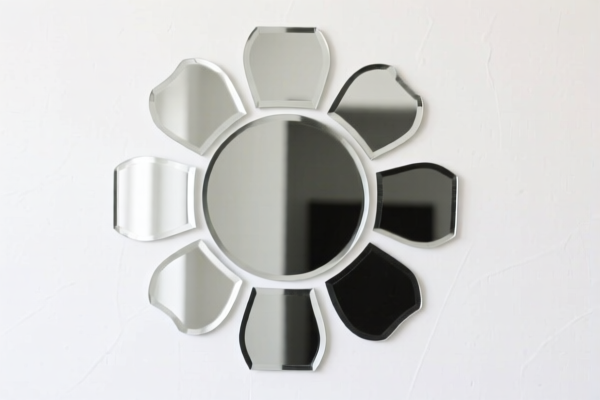
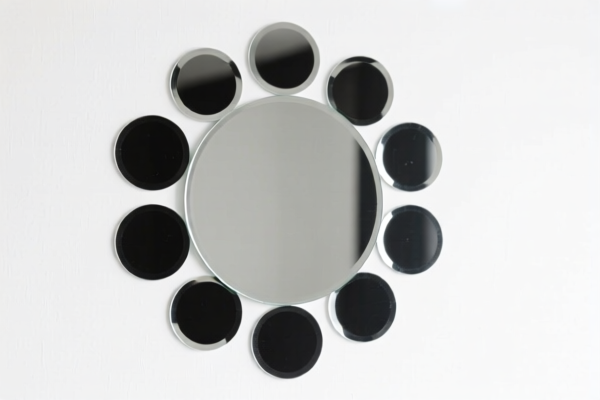
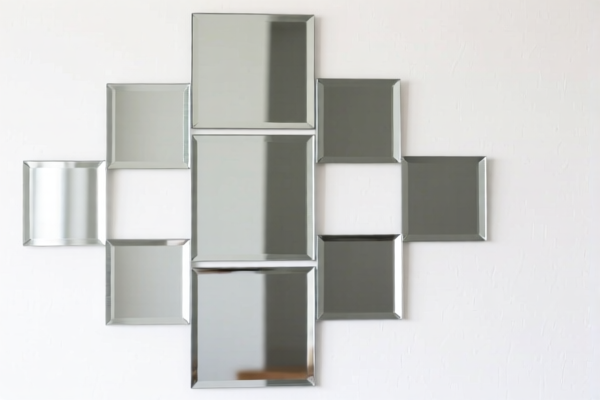
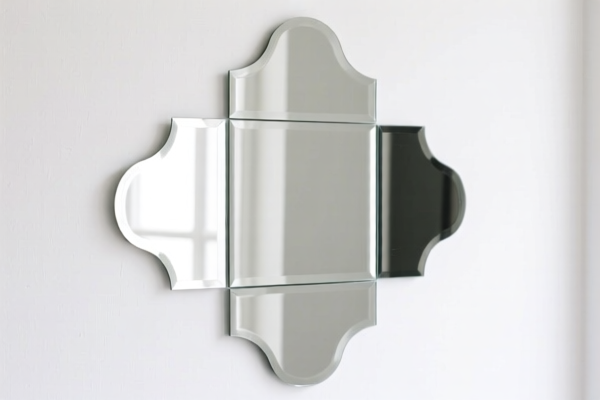
AI Analysis
🪞 Mirror Wall Sticker (Adhesive Mirror Film)
🌐 HS Code Reference & Customs Clearance Guide | 2026 Latest Tariff Analysis | Professional Clearance Strategy
📌 I. Product Definition & Classification: Do You Really Know "Mirror Wall Sticker"?
A "Mirror Wall Sticker" is a decorative accessory used for interior design, typically consisting of a thin, flexible material with a reflective surface. In international trade, its classification hinges on two critical factors:
1. Material: Is it rigid glass or flexible plastic/polymer?
2. Form: Is it a self-adhesive film/roll (flat shape) or a rigid decorative piece?
⚠️ Key Distinction Points:
- If the product is rigid glass shaped for decoration → Classified under Chapter 70 (Glass).
- If the product is flexible plastic/polymer in sheet/film form, especially self-adhesive → Classified under Chapter 39 (Plastics).
- Common Pitfall: Many traders misclassify plastic mirror stickers as glass due to the "mirror" function, leading to higher tariffs and customs delays.
📦 II. HS Code Classification Details (2026 Latest Tariff Authority Comparison)
Based on the provided data, here are the possible HS Codes, ranked by typical market interpretation (Glass vs. Plastic) and tax implications.
| HS Code | Material Inference | Product Description & Match Logic | Total Tax Rate |
|---|---|---|---|
7020.00.60.00 |
Glass (Inferred) | Other glass articles. Match logic: Material reasonably inferred as glass (mirror material); form is decorative glass accessory. No conflict with "other" category. | 40.0% |
7020.00.40.00 |
Glass (Inferred) | Other glass articles. Match logic: Inferred material is glass (mirror attribute); form is other glass article (non-vacuum). No material conflict. | 41.6% |
3919.10.20.55 |
Plastic/Polymer | Self-adhesive plates/sheets/film. Match logic: Form is "sticker" (self-adhesive flat shape); material inferred as plastic/resin (common for mirror stickers). Fits "other" category for plastic self-adhesive flat shapes. | 40.8% |
3919.90.50.60 |
Plastic/Polymer | Other self-adhesive plastic plates/sheets. Match logic: Form is "sticker" (self-adhesive); material inferred as plastic/polymer film. Consistent with plastic self-adhesive flat shape. | 40.8% |
3926.90.35.00 |
Plastic | Other plastic articles. Match logic: Inferred material is plastic; form is decorative small accessory. Fits "other plastic articles" and "other" sub-category. | 24.0% |
3926.90.99.89 |
Plastic | Other plastic articles. Match logic: Material inferred as plastic (common for mirror stickers); form is other plastic article. Matches "other" category. | 22.8% |
🔍 Critical Insight:
- Glass Codes (70xx) carry a 25% Section 301 tariff + 10% IEEPA tariff, resulting in ~40-41.6% total tax.
- Plastic Codes (3926) carry only 7.5% Section 301 tariff + 10% IEEPA tariff, resulting in 22.8% - 24.0% total tax.
- Strategy: If the product is indeed plastic/metallic film (common for wall stickers), classifying under 3926 saves ~18% in duties compared to glass. However, misdeclaration risks severe penalties.
💰 III. 2026 Latest Tariff Rate Breakdown (Including Surcharges & Policy Add-ons)
✅ Applicable Country: United States (US)
✅ Origin: China (CN)
✅ Effective Date: November 10, 2025 onwards
🎯 1. Glass Category: 7020.00.60.00 & 7020.00.40.00
| Item | Details |
|---|---|
| Base Duty | 5.0% (60.00) / 6.6% (40.00) |
| Section 301 Surcharge | +25.0% |
| 122/IIEPA Surcharge | +10.0% |
| Total Tax Rate | 40.0% (60.00) / 41.6% (40.00) |
| Calculation | CIF Value × Total Rate |
| De Minimis Exemption? | ❌ No (deny_de_minimis) |
| Legal Basis Path | IEEPA:9903.01.25 → USITC:7020.xx → Footnote:9903.88.01 |
📌 Explanation:
- The 25% Section 301 tariff applies to most Chinese glass products.
- The 10% IEEPA tariff applies to all Chinese-origin goods (unless exempted).
- Total burden is high. Customs may challenge the "glass" classification if the product is clearly flexible plastic.
🎯 2. Self-Adhesive Plastic Film: 3919.10.20.55 & 3919.90.50.60
| Item | Details |
|---|---|
| Base Duty | 5.8% |
| Section 301 Surcharge | +25.0% |
| 122/IIEPA Surcharge | +10.0% |
| Total Tax Rate | 40.8% |
| Calculation | CIF Value × 40.8% |
| De Minimis Exemption? | ❌ No (deny_de_minimis) |
| Legal Basis Path | IEEPA:9903.01.25 → USITC:3919.xx → Footnote:9903.88.01 |
📌 Note:
- Although these are plastics, they fall under 3919 (Self-adhesive), which often retains the 25% Section 301 rate.
- Thus, the tax rate is similar to glass (~40%), but the legal justification differs.
🎯 3. Other Plastic Articles: 3926.90.35.00 & 3926.90.99.89
| Item | Details |
|---|---|
| Base Duty | 6.5% (35.00) / 5.3% (99.89) |
| Section 301 Surcharge | +7.5% (Lower than 3919/70) |
| 122/IIEPA Surcharge | +10.0% |
| Total Tax Rate | 24.0% (35.00) / 22.8% (99.89) |
| Calculation | CIF Value × Total Rate |
| De Minimis Exemption? | ❌ No (deny_de_minimis) |
| Legal Basis Path | IEEPA:9903.01.25 → USITC:3926.xx → Footnote:9903.97.05 (if applicable) |
📌 Key Advantage:
- These codes benefit from a reduced Section 301 rate of 7.5% (instead of 25%).
- Total tax is significantly lower (22.8% - 24.0%).
- Condition: The product must be clearly identifiable as a "decorative accessory" or "other plastic article," not a self-adhesive film in roll form (which would fall under 3919).
🛠️ IV. Customs Clearance Practical Advice (Real-World Pitfall Guide)
✅ 1. Required Documentation Checklist
| Document | Mandatory? | Purpose |
|---|---|---|
| ✅ Product Photos | ✔️ | Must show flexibility, thickness, and adhesive side. Proves plastic vs. glass. |
| ✅ Product Spec Sheet | ✔️ | Specify material: "PET Film with Aluminum Coating" vs. "Soda-Lime Glass". |
| ✅ Commercial Invoice | ✔️ | Describe accurately: "Self-Adhesive Decorative Plastic Mirror Sticker" |
| ✅ Material Test Report | ✔️ | ASTM D519 or similar to confirm polymer/plastic composition. |
| ✅ Origin Certificate | ✔️ | Proof of China origin for accurate tariff calculation. |
⚠️ Warning:
- If you declare "Glass Mirror" but it is plastic, customs will inspect and reclassify, leading to back taxes + penalties.
- If you declare "Plastic" but it is rigid glass, you face misdeclaration penalties.
✅ 2. Declaration Strategy & Tips
🔥 "Know Your Material, Pick the Right Code!"
| Scenario | Recommended HS Code | Tax Rate | Why? |
|---|---|---|---|
| Rigid Glass Tiles/Shapes | 7020.00.60.00 |
40.0% | Material is glass; form is decorative. |
| Flexible Plastic Roll/Film | 3919.10.20.55 |
40.8% | Self-adhesive plastic sheet. |
| Pre-Cut Plastic Shapes (Not Roll) | 3926.90.99.89 |
22.8% | Best for Cost! Lower 301 rate if not "self-adhesive film". |
| Plastic Decorative Accessories | 3926.90.35.00 |
24.0% | Good alternative if 99.89 is disputed. |
📌 Tip:
- If your product is pre-cut into squares/circles and not sold in rolls, argue for 3926 (Other articles) to get the 7.5% Section 301 rate.
- If sold in rolls or large sheets, it is likely 3919 (Self-adhesive), with 25% Section 301.
✅ 3. Special Cases
| Case | Handling Advice |
|---|---|
| Mixed Materials | If backing is paper and face is plastic, still 3926 or 3919. |
| Metallic Coating | Does not change classification from plastic to metal. Still Chapter 39. |
| LED-Integrated Stickers | If it has electronics, it may fall under Chapter 85, not 39/70. |
🌍 V. Global Market Comparison (2026)
| Country | Recommended HS Code | Tariff (China Origin) | Notes |
|---|---|---|---|
| 🇺🇸 USA | 3926.90.99.89 |
22.8% | Lowest duty if correctly classified as "other plastic article". |
| 🇺🇸 USA | 7020.00.60.00 |
40.0% | High duty if misclassified as glass. |
| 🇪🇺 EU | 3926.90.99 |
~4.5% + VAT | No Section 301. Lower overall cost. |
| 🇨🇳 China | 3926.90.99 |
~5% + VAT | For imported plastic stickers. |
📌 Conclusion:
- USA is the most challenging market due to Section 301 tariffs.
- Correct classification is critical: Plastic3926saves ~18% vs. Glass7020or Adhesive Film3919.
📌 VI. Common Errors & Pitfalls (Lessons Learned)
❌ Error 1: Declaring "Plastic Mirror" under 7020 (Glass)
👉 Consequence: Customs rejects, demands proof of glass content. If plastic, forced to reclassify → Delay & Audit Risk.
❌ Error 2: Declaring "Plastic Sticker" under 3919 when it is pre-cut
👉 Consequence: Taxed at 40.8% instead of 22.8%. Overpaid $18 per $100 CIF value.
❌ Error 3: Failing to provide material proof for "Mirror" function
👉 Consequence: Customs suspects misdeclaration. Samples requested → 2-4 weeks delay.
✅ Correct Approach:
"Decorative Wall Sticker, Material: PET Film with Silver Coating, Self-Adhesive, Pre-cut Shapes, HS Code: 3926.90.99.89"
🎯 VII. Conclusion: Professional Declaration, Cost Optimization
🎯 Remember:
🔹 "Plastic Sticker ≠ Glass Mirror"
🔹 "Pre-Cut Shapes = 7.5% Surcharge (3926)"
🔹 "Rolls/Films = 25% Surcharge (3919)"
🔹 "Glass = 25% Surcharge (7020)"🔹 "Save 18% by choosing the right plastic code!"
📌 Tips:
- If your product is flexible and adhesive, ensure you highlight "Self-Adhesive" in the description.
- If it is rigid plastic pieces, argue for "Other Plastic Articles" (3926) to avoid the 25% surcharge.
- Always provide product photos showing flexibility/material texture.
📣 Immediate Action:
📞 Consult with a customs broker to verify material composition.
📝 Ensure invoices match the HS Code justification (Material + Form).
🚀 Clear customs smoothly, minimize duties, maximize profit!
✨ Professional clearance starts with accurate classification!
💼 Every percentage point counts in duty calculation!
Customer Reviews
About HS Code Classification
The Harmonized System (HS) is an internationally standardized nomenclature developed by the World Customs Organization (WCO) to classify traded products. Over 200 countries use the HS system as the basis for customs tariffs, trade statistics, and import/export regulations.
Each HS code follows a hierarchical structure:
- Chapter (2 digits) — Broad category of goods (e.g., Chapter 84: Machinery and Mechanical Appliances)
- Heading (4 digits) — More specific grouping within the chapter
- Subheading (6 digits) — Internationally standardized breakdown, used by all WCO member countries
- National subdivisions (8-10 digits) — Country-specific extensions for further classification, such as US HTSUS 10-digit codes
Correct HS code classification is essential for smooth customs clearance, accurate duty payment, and compliance with trade regulations. Misclassification can lead to customs delays, overpayment of duties, or penalties.
When importing from CN to US, the applicable tariff rates may include:
- Most-Favored-Nation (MFN) rate — The standard duty rate applied to WTO members
- General rate — Applied to countries without trade agreements
- Trade remedy duties — Additional tariffs such as Section 301 (anti-dumping), Section 232 (national security), or countervailing duties
The information provided on this page is for reference purposes only. For official classification, please consult with your local customs authority or a licensed customs broker.