Mite Killer Dispersant Compound
CN → US| HS Code | Tariff Rate | Origin | Destination | Doc |
|---|---|---|---|---|
| 3307490000 | 41.0% | CN | US | Official Doc |
| 3307900000 | 40.4% | CN | US | Official Doc |
| 3808990800 | 41.5% | CN | US | Official Doc |
Product Images
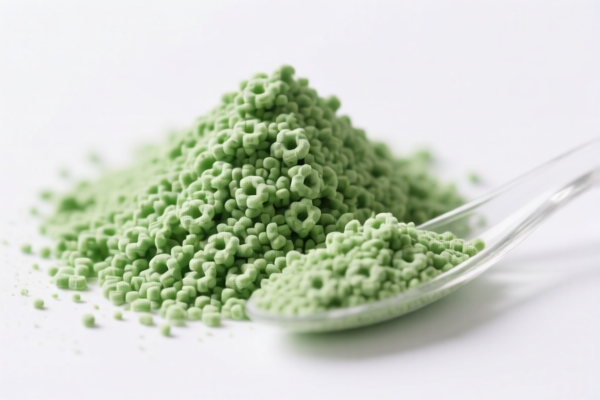
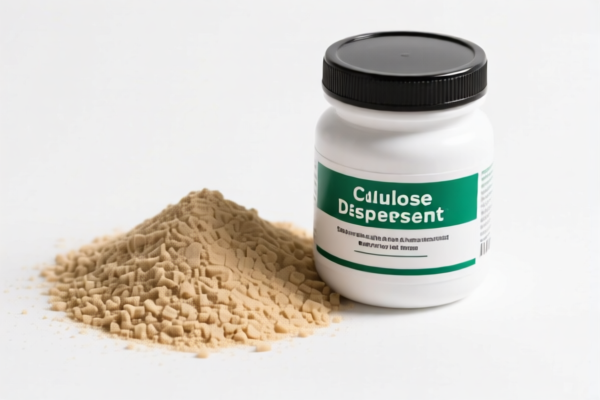
AI Analysis
🦟 Mite Killer Dispersant Compound: HS Code Classification & US Customs Clearance Guide
🌐 HS Code Reference & Customs Clearance Guide | 2026 Latest Tariff Analysis | Professional Entry Strategy
📌 I. Product Definition & Classification: Do You Really Understand "Mite Killer Dispersant"?
A Mite Killer Dispersant Compound is a specialized chemical preparation designed to control and eliminate mites (such as dust mites, bed bugs, or agricultural mites) while serving as a dispersant or carrier for fragrance/deodorant applications. In international trade, its classification depends heavily on its primary function, chemical composition, and physical form.
⚠️ Key Classification Distinction:
- If the product is primarily a pesticide/insecticide (even with fragrance additives) → It falls under Chapter 38 (Insecticides, rodenticides, fungicides, etc.).
- If the product is primarily a perfume/deodorant preparation with incidental mite-fighting claims → It falls under Chapter 33 (Perfumes, cosmetics, toilet preparations).
- If the product is a miscellaneous chemical preparation not specified elsewhere → It falls under Chapter 38 or 33 depending on the dominant characteristic.
📦 II. HS Code Classification Details (2026 Latest Tariff Authority Comparison)
Based on the provided data, here are the three most likely HS Codes for "Mite Killer Dispersant Compound," along with their tax implications:
| HS Code | Product Description | Primary Function | Tax Rate (Total) | Key Tax Components |
|---|---|---|---|---|
3307.49.00.00 |
Aromatic anti-mite mixture for fragrance/deodorant use | Fragrance/Deodorant | 41.0% | Base: 6.0%, Section 301: 25%, Section 122: 10% |
3307.90.00.00 |
Aromatic anti-mite mixture classified as cosmetic/toiletry | Personal Care/Cosmetic | 40.4% | Base: 5.4%, Section 301: 25%, Section 122: 10% |
3808.99.08.00 |
Aromatic anti-mite mixture with insecticidal/bactericidal use | Pesticide/Disinfectant | 41.5% | Base: 6.5%, Section 301: 25%, Section 122: 10% |
🔍 Critical Note:
-3307.49.00.00applies if the product is marketed primarily as an air freshener or room deodorizer with mite-repellent properties.
-3307.90.00.00applies if the product is considered a general toiletry or cosmetic preparation (e.g., for personal hygiene).
-3808.99.08.00applies if the product is primarily an insecticide or disinfectant (mite killer) with aromatic components. This is the most common classification for "mite killer" products unless specifically marketed as perfume.
💰 III. 2026 Latest Tariff Rate Breakdown (Including Additional Taxes & Policy Surcharges)
✅ Applicable Country: United States (US)
✅ Country of Origin: China (CN)
✅ Effective Date: November 10, 2025 (and subsequent imports)
🎯 1. 3307.49.00.00 —— Aromatic Anti-Mite Mixture (Fragrance/Deodorant Focus)
| Item | Details |
|---|---|
| Base Tariff | 6.0% (ad valorem) |
| Section 301 Surcharge | +25% (USITC Footnote 9903.88.01) |
| Section 122 Surcharge | +10% (IEEPA, targeting China/HK products, effective Nov 10, 2025) |
| Total Tax Rate | 41.0% |
| Tax Calculation | CIF Value × 41.0% |
| De Minimis Exemption | ❌ Not Eligible (deny_de_minimis) |
| Legal Authority Path | IEEPA:9903.01.25 → IEEPA:9903.01.24 → USITC:3307.49.00.00 → FOOTNOTE:9903.88.01 |
📌 Explanation:
- The 25% is the standard Section 301 tariff on Chinese goods.
- The 10% is the additional Section 122 tariff imposed specifically on certain Chinese imports.
- Total 41.0% is a high tariff rate, requiring careful cost planning.
🎯 2. 3307.90.00.00 —— Aromatic Anti-Mite Mixture (Cosmetic/Toiletry Focus)
| Item | Details |
|---|---|
| Base Tariff | 5.4% (ad valorem) |
| Section 301 Surcharge | +25% |
| Section 122 Surcharge | +10% |
| Total Tax Rate | 40.4% |
| Tax Calculation | CIF Value × 40.4% |
| De Minimis Exemption | ❌ Not Eligible |
| Legal Authority Path | IEEPA:9903.01.25 → IEEPA:9903.01.24 → USITC:3307.90.00.00 → FOOTNOTE:9903.88.01 |
📌 Note:
- This rate is slightly lower than3307.49.00.00due to a 0.6% lower base tariff.
- Suitable for products marketed as personal care items (e.g., body mists with mite-repellent claims).
🎯 3. 3808.99.08.00 —— Aromatic Anti-Mite Mixture (Insecticide/Disinfectant Focus)
| Item | Details |
|---|---|
| Base Tariff | 6.5% (ad valorem) |
| Section 301 Surcharge | +25% |
| Section 122 Surcharge | +10% |
| Total Tax Rate | 41.5% |
| Tax Calculation | CIF Value × 41.5% |
| De Minimis Exemption | ❌ Not Eligible |
| Legal Authority Path | IEEPA:9903.01.25 → IEEPA:9903.01.24 → USITC:3808.99.08.00 → FOOTNOTE:9903.88.01 |
📌 Note:
- This is the highest tax rate (41.5%) among the three options.
- Applies if the product is regulated as a pesticide by the EPA (Environmental Protection Agency) or similar bodies.
- Must provide EPA registration number if classified under this code.
🛠️ IV. Customs Clearance Practical Advice (Avoid Pitfalls)
✅ 1. Required Documentation Checklist (Mandatory)
| Document | Required | Description |
|---|---|---|
| ✅ Product Specification Sheet | ✔️ | Ingredients, concentration, physical form, intended use |
| ✅ Safety Data Sheet (SDS) | ✔️ | Crucial for chemical products; must comply with GHS standards |
| ✅ Product Photos (with Label) | ✔️ | Clear view of ingredients, warnings, and branding |
| ✅ EPA Registration (if applicable) | ✔️ | Required for 3808.99.08.00 if marketed as insecticide |
| ✅ Commercial Invoice | ✔️ | Clearly state "Mite Killer Dispersant Compound" |
| ✅ Certificate of Origin (CO) | ✔️ | To confirm Chinese origin (triggering Section 301/122) |
| ✅ Packing List | ✔️ | Detail net/gross weight, dimensions, and package count |
✅ 2. Declaration Tips (Key Mantras)
🔥 "Function First, Name Accurate, EPA Check, Tax Avoid!"
| Scenario | Correct Declaration | Error to Avoid |
|---|---|---|
| Marketed as Air Freshener | 3307.49.00.00 |
Mislabeling as "Insecticide" → 41.5% + EPA scrutiny |
| Marketed as Personal Care Mist | 3307.90.00.00 |
Mislabeling as "Perfume" if not compliant → 40.4% |
| Marketed as Mite Insecticide | 3808.99.08.00 |
Mislabeling as "Fragrance" → EPA violation + fines |
| No EPA Reg. + Claiming Kill Mites | HIGH RISK | Illegal marketing → Product seizure |
✅ 3. Special Case Handling
| Situation | Recommendation |
|---|---|
| OEM Private Label | Provide client contract + label design to prove marketing intent |
| Dual Purpose (Fragrance + Kill) | Declare based on primary function; if ambiguous, choose 3307.49.00.00 for lower risk |
| Export to US from China | No de minimis exemption; all shipments subject to 40–41.5% tariffs |
| Re-export from Vietnam/Mexico | Apply for IEEPA Exemption if eligible; may reduce tax to 0–5% |
🌍 V. Global Market Customs Comparison (2026 Latest)
| Country/Region | Recommended HS Code | Tariff | Certification | Notes |
|---|---|---|---|---|
| 🇺🇸 USA | 3808.99.08.00 or 3307.49.00.00 |
41.0%–41.5% | EPA + SDS | High tariffs; strict on pesticide claims |
| 🇨🇳 China | 3808.99.08.00 |
6.5% | EPA/Agri License | No additional surcharges |
| 🇪🇺 EU | 3808.99.08.00 or 3307.49.00.00 |
0–6.5% | REACH + BPR | No Section 301/122; focus on chemical compliance |
| 🇦🇺 Australia | 3808.99.08.00 |
5–10% | APVMA | Pesticide regulations apply |
| 🇯🇵 Japan | 3808.99.08.00 |
0–6.5% | PMD Act | Pesticide registration required |
📌 Conclusion:
- USA is the most costly market due to Section 301 + 122 surcharges.
- EU and Japan focus on chemical safety (REACH, PMD) rather than tariffs.
- China production for US export incurs ~41% tariff, significantly impacting margin.
📌 VI. Common Mistakes & Pitfalls (Lessons Learned)
❌ Mistake 1: Declaring "Mite Killer" as "Perfume" to avoid EPA scrutiny
👉 Consequence: FDA/EPA audit → Product seizure + fines
❌ Mistake 2: Using "Dispersant" without specifying function
👉 Consequence: Customs ambiguity → Delayed clearance + additional testing
❌ Mistake 3: Ignoring Section 122 (10% surcharge) in cost calculation
👉 Consequence: Underestimating landed cost by 10% → Profit loss
❌ Mistake 4: No SDS provided for chemical product
👉 Consequence: Customs rejection → Return or destruction
✅ Correct Practice:
"Mite Killer Dispersant Compound, Aerosol Spray, Contains Pyrethrin <0.1%, Fragrance Added, EPA Est. No. XXXX-XXX, SDS Attached"
🎯 VII. Conclusion: Precise Declaration, Save Time & Money!
🎯 Remember the Mantra:
🔹 "Function defines HS, EPA for pesticides, 41% for US, declare accurately!"
🔹 "HS Code determines destiny, tax difference is 1%, misdeclaration costs thousands!"
📌 Pro Tip:
If your product is re-exported from Vietnam, Mexico, Thailand, or Malaysia, apply for IEEPA Exemption to reduce tariffs to 0–5%.
Recommend Advance Ruling (Pre-classification) from CBP to avoid customs disputes.
📣 Take Action Now:
📞 Contact a professional customs broker + Provide product images + Apply for HS Code Advance Ruling
🚀 Ensure smooth customs clearance, efficient export, and profit maximization!
✨ Professional Customs Clearance Starts with Accurate Classification!
💼 Every cent of your cost deserves precise calculation!
Customer Reviews
About HS Code Classification
The Harmonized System (HS) is an internationally standardized nomenclature developed by the World Customs Organization (WCO) to classify traded products. Over 200 countries use the HS system as the basis for customs tariffs, trade statistics, and import/export regulations.
Each HS code follows a hierarchical structure:
- Chapter (2 digits) — Broad category of goods (e.g., Chapter 84: Machinery and Mechanical Appliances)
- Heading (4 digits) — More specific grouping within the chapter
- Subheading (6 digits) — Internationally standardized breakdown, used by all WCO member countries
- National subdivisions (8-10 digits) — Country-specific extensions for further classification, such as US HTSUS 10-digit codes
Correct HS code classification is essential for smooth customs clearance, accurate duty payment, and compliance with trade regulations. Misclassification can lead to customs delays, overpayment of duties, or penalties.
When importing from CN to US, the applicable tariff rates may include:
- Most-Favored-Nation (MFN) rate — The standard duty rate applied to WTO members
- General rate — Applied to countries without trade agreements
- Trade remedy duties — Additional tariffs such as Section 301 (anti-dumping), Section 232 (national security), or countervailing duties
The information provided on this page is for reference purposes only. For official classification, please consult with your local customs authority or a licensed customs broker.