Mite Killer Stabilizer
CN → US| HS Code | Tariff Rate | Origin | Destination | Doc |
|---|---|---|---|---|
| 2942003500 | 41.5% | CN | US | Official Doc |
| 2942005000 | 38.7% | CN | US | Official Doc |
| 3808591000 | 16.5% | CN | US | Official Doc |
| 3808595000 | 15.0% | CN | US | Official Doc |
| 2942003500 | 41.5% | CN | US | Official Doc |
Product Images
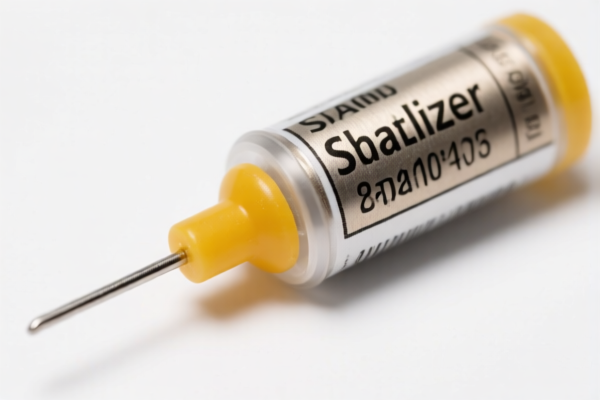
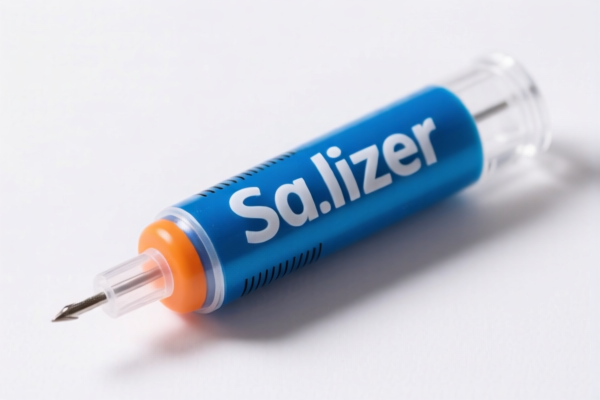
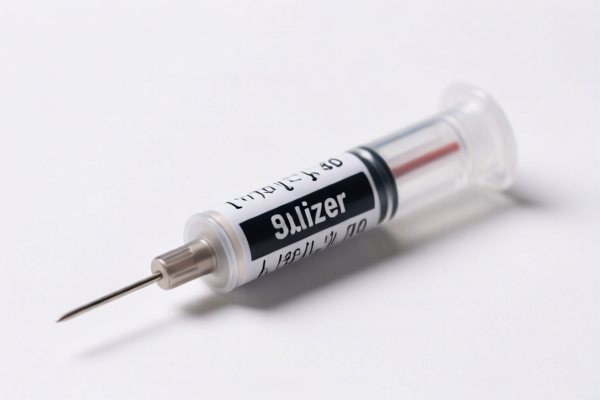
AI Analysis
🕷️ Mite Killer Stabilizer (Chemical Additive/Pesticide Ingredient)
🌐 HS Code Reference & Customs Clearance Guide | 2026 Latest Tariff Analysis | Professional Clearance Strategy 📌 I. Product Definition & Classification: What is a "Mite Killer Stabilizer"?
A "Mite Killer Stabilizer" typically refers to a chemical substance or preparation used in agricultural, horticultural, or industrial pest control. Its classification depends heavily on whether it is a pure chemical compound (active ingredient) or a formulated product (containing surfactants, suspending agents, etc.).
In international trade, it generally falls into two main categories: 1. Chemical Ingredients: Pure organic compounds used as active ingredients or stabilizers in chemical synthesis. 2. Pesticide Preparations: Formulated products containing acaricides (mite killers) and adjuvants (like suspending agents).
⚠️ Key Distinction: - If it is a pure organic compound with specific chemical structure (e.g., aromatic or modified aromatic) → Classified under Chapter 29 (Organic Chemicals). - If it is a pesticide formulation (mixed with carriers, suspending agents, etc.) → Classified under Chapter 38 (Miscellaneous Chemical Products).
📦 II. HS Code Classification Details (2026 Latest Tariff Authority Comparison)
| HS Code | Product Description | Applicable Scenario | Tax Rate (China Origin to US) |
|---|---|---|---|
2942.00.35.00 |
Other organic compounds (Aromatic/Modified Aromatic) | Pure chemical stabilizers or active ingredients fitting Chapter 29 criteria | 41.5% |
2942.00.50.00 |
Other organic compounds (General/Backup) | Pure chemical compounds that don't fit specific sub-headings in 2942.00.35 | 38.7% |
3808.59.10.00 |
Insecticides, rodenticides, fungicides, herbicides... (Other) | Formulated acaricides (mite killers) classified as pesticides | 16.5% |
3808.59.50.00 |
Preparations and articles for pest control | Formulated products where the pesticidal function is secondary to the preparation form | 15.0% |
🔍 Key Note: - Chapter 29 (2942.xxxx): Applies if the product is a single organic chemical substance or a mixture of organic substances where the chemical nature is primary. - Chapter 38 (3808.xxxx): Applies if the product is a pesticide preparation (mixture with other substances for application). Mite killers are typically classified here if they are ready-to-use or formulated mixtures.
💰 III. 2026 Latest Tariff Rate Breakdown (Including Surcharges & Policy Additions)
✅ Applicable Country: United States (US)
✅ Country of Origin: China (CN)
✅ Effective Date: From November 10, 2025 (and subsequent imports)
🎯 1. 2942.00.35.00 —— Other Organic Compounds (Aromatic/Modified)
| Item | Content |
|---|---|
| Base Tariff | 6.5% |
| Section 301 Surcharge | +25.0% |
| IEEPA Surcharge (122) | +10.0% |
| Total Tariff | 41.5% |
| Calculation | CIF Value × 41.5% |
| De Minimis Exemption? | ❌ No (deny_de_minimis) |
| Legal Basis Path | USITC:2942.00.35.00 → FOOTNOTE:9903.88.01 → IEEPA:9903.01.24 |
📌 Explanation: - Base 6.5%: Standard MFN tariff for unspecified organic compounds. - Section 301 +25%: Additional tariff on Chinese imports under US Trade Act Section 301. - IEEPA +10%: Additional tariff under International Emergency Economic Powers Act for specific Chinese goods. - Total 41.5%: Very high cost. Requires careful classification to avoid overpayment if a Chapter 38 code is applicable.
🎯 2. 2942.00.50.00 —— Other Organic Compounds (General)
| Item | Content |
|---|---|
| Base Tariff | 3.7% |
| Section 301 Surcharge | +25.0% |
| IEEPA Surcharge (122) | +10.0% |
| Total Tariff | 38.7% |
| Calculation | CIF Value × 38.7% |
| De Minimis Exemption? | ❌ No (deny_de_minimis) |
| Legal Basis Path | USITC:2942.00.50.00 → FOOTNOTE:9903.88.01 → IEEPA:9903.01.24 |
📌 Note: - Slightly lower base rate than 2942.00.35.00, but still subject to full surcharges. - Use this if the chemical does not fit the "aromatic/modified aromatic" definition of 2942.00.35.00.
🎯 3. 3808.59.10.00 —— Insecticides, Rodenticides, Fungicides, Herbicides (Other)
| Item | Content |
|---|---|
| Base Tariff | 6.5% |
| Section 301 Surcharge | 0.0% (Exempted/Reduced for certain pesticide categories) |
| IEEPA Surcharge (122) | +10.0% |
| Total Tariff | 16.5% |
| Calculation | CIF Value × 16.5% |
| De Minimis Exemption? | ❌ No (deny_de_minimis) |
| Legal Basis Path | USITC:3808.59.10.00 → FOOTNOTE:9903.88.01 → IEEPA:9903.01.24 |
📌 Explanation: - Base 6.5%: Standard tariff for other pesticides. - Section 301 0.0%: Certain pesticide preparations may be exempt from or have reduced Section 301 tariffs depending on specific sub-classifications and trade policies. - IEEPA +10%: Still applies under the 122 clause. - Total 16.5%: Significantly lower than Chapter 29 codes. Ideal for formulated mite killers.
🎯 4. 3808.59.50.00 —— Preparations for Pest Control (Other)
| Item | Content |
|---|---|
| Base Tariff | 5.0% |
| Section 301 Surcharge | 0.0% |
| IEEPA Surcharge (122) | +10.0% |
| Total Tariff | 15.0% |
| Calculation | CIF Value × 15.0% |
| De Minimis Exemption? | ❌ No (deny_de_minimis) |
| Legal Basis Path | USITC:3808.59.50.00 → FOOTNOTE:9903.88.01 → IEEPA:9903.01.24 |
📌 Note: - Base 5.0%: Lowest base rate among the options. - Section 301 0.0%: No additional 301 tariff. - IEEPA +10%: Applies. - Total 15.0%: Most cost-effective for formulated products. Use if the product is clearly a "preparation" or "article" for pest control rather than a pure chemical.
🛠️ IV. Customs Clearance Practical Advice (Avoid Pitfalls)
✅ 1. Required Documents Checklist
| Document | Required | Description |
|---|---|---|
| ✅ Product Specification Sheet | ✔️ | Must detail chemical composition, CAS numbers, and function (stabilizer vs. pesticide). |
| ✅ Technical Data Sheet (TDS) | ✔️ | Shows if it's a pure chemical or a mixture. |
| ✅ MSDS/SDS | ✔️ | Safety Data Sheet is mandatory for chemicals. |
| ✅ Product Photos | ✔️ | Clear images of label, packaging, and container. |
| ✅ Commercial Invoice | ✔️ | Must specify "Mite Killer Stabilizer" or "Organic Chemical Compound" accurately. |
| ✅ Certificate of Origin | ✔️ | Proof of China origin. |
| ✅ Packing List | ✔️ | Weight and dimensions. |
| ✅ EPA Registration Number | ✔️ | If classified as a pesticide (Ch 38), EPA registration is often required. |
✅ 2. Declaration Tips (Key Mnemonic)
🔥 "Pure Chemical? Go Ch 29. Formulated? Go Ch 38. Check Surcharges, Don't Get Caught!"
| Scenario | Correct Classification | Wrong Action | Consequence |
|---|---|---|---|
| Pure chemical powder (active ingredient) | 2942.00.35.00 or 2942.00.50.00 |
Declare as "Pesticide" | May face EPA issues or incorrect tax |
| Formulated liquid/powder (with suspending agents) | 3808.59.10.00 or 3808.59.50.00 |
Declare as "Pure Chemical" | Higher tax (41.5% vs 15-16.5%) |
| Mixture with unknown composition | Consult Expert | Guessing HS Code | Customs delay, penalty, or reclassification |
| Product intended for non-pest use | Exclude Pesticide terms | Using "Killer" in description | Misclassification risk |
✅ 3. Special Handling
| Situation | Recommendation |
|---|---|
| Is it a Stabilizer or Pesticide? | If it stabilizes the pesticide formulation but has no pesticidal action itself, it might be Class 29. If it's the final pesticidal product, Class 38. |
| EPA Registration | For Ch 38 codes, ensure the product is EPA-registered if required for the US market. |
| Labeling | Avoid aggressive terms like "Mite Killer" if it's a chemical intermediate. Use "Organic Compound" or "Stabilizing Agent". |
| Origin | Confirm origin. If from Vietnam/Mexico, IEEPA surcharges may not apply, reducing costs significantly. |
🌍 V. Global Market Clearance Comparison (2026)
| Country/Region | Recommended HS Code | Tariff (China Origin) | Certification | Notes |
|---|---|---|---|---|
| 🇺🇸 USA | 3808.59.50.00 |
15.0% | EPA + IEEPA | Cheapest for formulated products. |
| 🇺🇸 USA | 2942.00.35.00 |
41.5% | None specific | High cost for pure chemicals. |
| 🇨🇳 China | 2942.00.35.00 / 3808.59.50.00 |
5-6.5% | None | Low import duties. |
| 🇪🇺 EU | 3808.94.10 / 2933.99 |
6.5% | REACH + BPR | Different classification system. |
| 🇬🇧 UK | 3808.94 |
5% | UK BPR | Post-Brexit rules apply. |
📌 Conclusion: - US Chapter 38 codes are significantly cheaper for formulated pesticide products. - Chapter 29 codes attract full surcharges and have higher base rates. - Always choose Chapter 38 if the product is a formulated pesticide preparation.
📌 VI. Common Mistakes & Pitfalls (Lessons Learned)
❌ Mistake 1: Classifying a formulated mite killer as a pure chemical (Ch 29)
👉 Consequence: Paying 41.5% instead of 15% → Overpayment of 26.5%!
❌ Mistake 2: Using "Mite Killer" in the declaration for a chemical stabilizer
👉 Consequence: Triggers EPA review, potential delay, or rejection if not registered.
❌ Mistake 3: Ignoring IEEPA 122 Clause
👉 Consequence: Even Ch 38 codes have +10% IEEPA. Total cost is 15-16.5%, not just base rate.
❌ Mistake 4: Assuming De Minimis applies
👉 Consequence: No de minimis for these HS codes from China. All shipments taxed.
✅ Correct Action:
"Organic Compound, Stabilizing Agent, 98% Purity, CAS No. XXXXX-XX-X" (if Ch 29)
OR
"Acaricide Formulation, Mite Control, Ready-to-Use, Contains XXXX" (if Ch 38)
🎯 VII. Conclusion: Precise Classification, Maximize Profit!
🎯 Remember:
🔹 "Formulated? Class 38, Pay Less. Pure? Class 29, Pay More. Check Surcharges, Save More!"
🔹 "HS Code Determines Tax. 15% vs 41.5% is Huge. Declare Correctly!"
📌 Tip:
If your product is formulated and intended for pest control, strongly consider 3808.59.50.00 for the 15% total tax rate. Ensure EPA compliance if required. If it's a pure chemical used in manufacturing, use 2942.00.35.00 or 2942.00.50.00 but budget for ~40% tax.
📣 Immediate Action:
📞 Consult a Customs Broker + Provide SDS & Label + Apply for Advance Ruling if possible.
🚀 Get your Mite Killer Stabilizer through customs smoothly, efficiently, and profitably!
✨ Professional Clearance Starts with Accurate Classification! 💼 Every Percent of Tax Matters!
Customer Reviews
About HS Code Classification
The Harmonized System (HS) is an internationally standardized nomenclature developed by the World Customs Organization (WCO) to classify traded products. Over 200 countries use the HS system as the basis for customs tariffs, trade statistics, and import/export regulations.
Each HS code follows a hierarchical structure:
- Chapter (2 digits) — Broad category of goods (e.g., Chapter 84: Machinery and Mechanical Appliances)
- Heading (4 digits) — More specific grouping within the chapter
- Subheading (6 digits) — Internationally standardized breakdown, used by all WCO member countries
- National subdivisions (8-10 digits) — Country-specific extensions for further classification, such as US HTSUS 10-digit codes
Correct HS code classification is essential for smooth customs clearance, accurate duty payment, and compliance with trade regulations. Misclassification can lead to customs delays, overpayment of duties, or penalties.
When importing from CN to US, the applicable tariff rates may include:
- Most-Favored-Nation (MFN) rate — The standard duty rate applied to WTO members
- General rate — Applied to countries without trade agreements
- Trade remedy duties — Additional tariffs such as Section 301 (anti-dumping), Section 232 (national security), or countervailing duties
The information provided on this page is for reference purposes only. For official classification, please consult with your local customs authority or a licensed customs broker.