Miter Measuring Tool
CN → US| HS Code | Tariff Rate | Origin | Destination | Doc |
|---|---|---|---|---|
| 8205513030 | 38.7% | CN | US | Official Doc |
| 8205517500 | 38.7% | CN | US | Official Doc |
Product Images
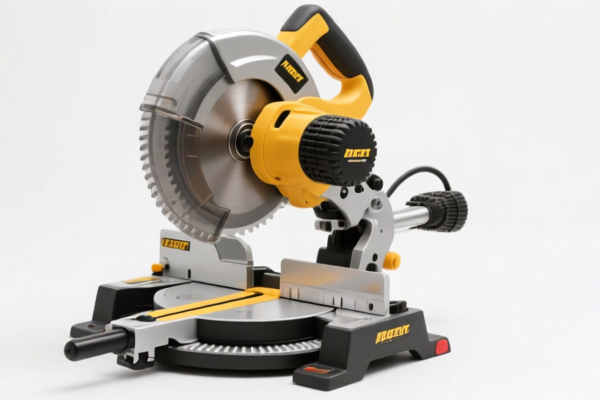
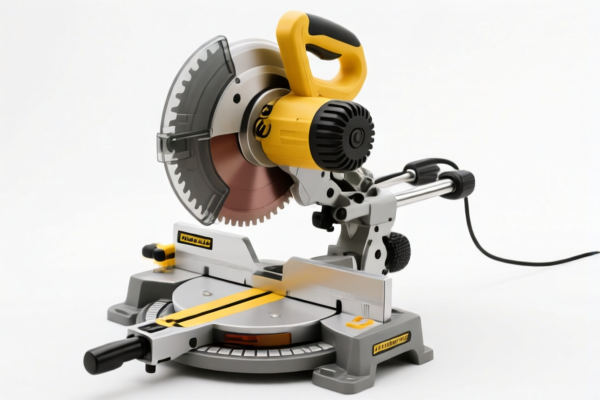
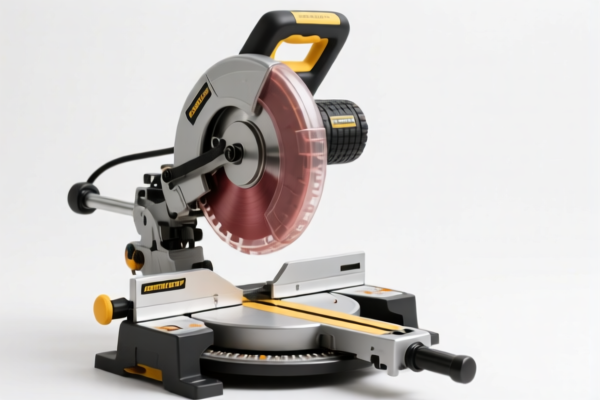
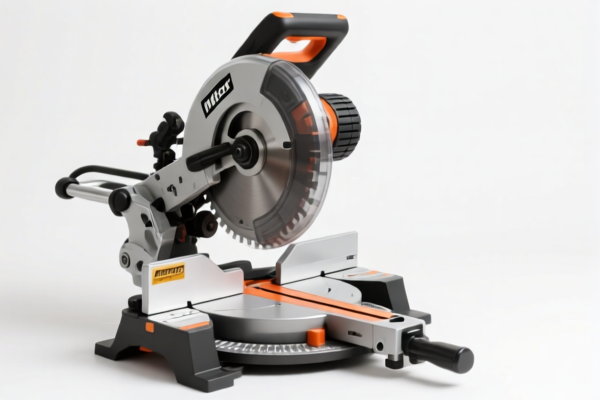
AI Analysis
📐 Miter Measuring Tools (Handtools for Woodworking/Metalworking)
🌐 HS Code Reference & Customs Clearance Guide | 2026 Latest Tariff Analysis | Professional Clearance Strategy
📌 I. Product Definition & Classification: Do You Really Understand "Miter Measuring Tools"?
Miter measuring tools are precision hand instruments used to measure and mark angles (typically 45°, 90°, or custom bevels) for cutting wood, metal, or molding. In international trade, they fall under Chapter 82: Base Metal Cutlery, Hand Tools, and Parts.
They are generally categorized based on their intended use: * Household Tools: Small, non-industrial tools for DIY/home use. * Other Handtools: General-purpose or industrial-grade tools not specified as "household."
⚠️ Key Distinction Point: * If the tool is clearly marked for kitchen/table or general household DIY use →归类 to Household Tools subheading. * If the tool is generic, industrial, or not specifically defined as "household" →归类 to Other subheading.
📦 II. HS Code Classification Details (2026 Latest Tariff Authority Comparison)
Based on the provided data, two primary HS codes apply to miter measuring tools. The correct classification depends on the specific sub-category definition of the tool's origin and intended market.
| HS Code | Product Description | Applicable Scenario | Tax Status |
|---|---|---|---|
8205.51.30.30 |
Household Tools: Kitchen and table implements, and parts thereof, of iron or steel (Other) | Small miter squares, sliding bevels sold in DIY retail kits, explicitly marketed for household/DIY use | High Tax: 28.7% |
8205.51.75.00 |
Other Handtools: Other (not elsewhere specified) | General-purpose miter squares, professional-grade measuring tools, industrial use | Low Tax: 3.7% |
🔍 Important Note: * The critical difference lies in the specificity of the subheading.
8205.51.30.30is a highly specific "catch-all" for household base metal handtools including kitchen/table implements. If your product is considered a "kitchen/table implement" or general household tool, it falls here. *8205.51.75.00is the residual "Other" category for handtools that do not fit into the more specific household or professional subcategories. It is the preferred code for lower taxation if the product does not strictly fall under "kitchen/table."
💰 III. 2026 Latest Tariff Rate Breakdown (Including Additional Duties)
✅ Applicable Country: United States (US)
✅ Origin: China (CN)
✅ Effective Date: Current rates apply (Subject to 301 Tariffs)
🎯 1. 8205.51.30.30 —— Household Tools (Kitchen/Table Implements)
| Item | Content |
|---|---|
| Basic Duty Rate | 3.7% (ad valorem) |
| Additional Duty (Section 301) | +25.0% (Trump-era 301 Tariff) |
| Total Tariff Rate | 28.7% |
| Tax Calculation | CIF Value × 28.7% |
| De Minimis Eligibility | ❌ Not Applicable (Value usually exceeds $800 threshold for formal entry) |
| Legal Basis Path | HTSUS: 8205.51.30.30 → Section 301 Footnote 9903.88.01 → Additional 25% Duty |
📌 Explanation:
This code attracts the standard 301 tariff of 25% because it is a base metal handtool from China. * The 3.7% is the standard US Most Favored Nation (MFN) duty rate. * Total Cost: 28.7% of the declared value. This is a significant cost driver* for high-volume, low-margin items.
🎯 2. 8205.51.75.00 —— Other Handtools
| Item | Content |
|---|---|
| Basic Duty Rate | 3.7% (ad valorem) |
| Additional Duty (Section 301) | +0.0% |
| Total Tariff Rate | 3.7% |
| Tax Calculation | CIF Value × 3.7% |
| De Minimis Eligibility | ❌ Not Applicable |
| Legal Basis Path | HTSUS: 8205.51.75.00 → Exempt from 301 Tariff |
📌 Explanation:
This code is significantly cheaper (3.7% vs 28.7%). * Crucial Strategy: If the product can be legitimately classified under "Other Handtools" (8205.51.75.00) rather than "Household Tools" (8205.51.30.30), you save 25% in duties. * Risk*: Customs may challenge this classification if the product is clearly marketed as a "household" item. Documentation must support "general purpose" or "professional" use.
🛠️ IV. Customs Clearance Practical Advice (Real-World Pitfall Guide)
✅ 1. Documentation Checklist (Must-Have)
| Document | Required? | Explanation |
|---|---|---|
| ✅ Product Specifications | ✔️ | Detail dimensions, material (stainless steel, aluminum, etc.), and precision markings. |
| ✅ Photos | ✔️ | Clear images of the tool, scales, and any branding. Avoid images that explicitly say "For Kitchen Use" if aiming for lower tax. |
| ✅ Commercial Invoice | ✔️ | Description must be generic: "Metal Miter Gauge / Angle Finder" vs "Kitchen Countertop Square." |
| ✅ Packing List | ✔️ | Item count, gross weight, net weight. |
| ✅ Material Composition | ✔️ | Confirm "Base Metal" (Iron/Steel) to ensure Chapter 82 application. |
✅ 2. Declaration Strategy (Key Tips)
🔥 “Describe Function, Not Just Form. Generic Terms Lower Risk!”
| Scenario | Recommended Declaration | Risk Level |
|---|---|---|
| Generic Miter Square | "Miter Measuring Tool, Metal, for General Purpose" | ✅ Low (Aim for 8205.51.75.00 @ 3.7%) |
| Explicitly "Household" | "Household DIY Miter Gauge, For Home Use" | ⚠️ High (Likely 8205.51.30.30 @ 28.7%) |
| Kitchen-Specific | "Countertop Cutting Guide, Kitchen Use" | ❌ Very High (Definitive Household @ 28.7%) |
💡 Strategy: If the tool is not exclusively for kitchen use, declare it as a "General Purpose Handtool" or "Industrial Miter Gauge" to justify classification under
8205.51.75.00.
✅ 3. Special Handling Tips
| Situation | Advice |
|---|---|
| Set Includes Multiple Tools | Declare the set as "Handtools Set" under the highest applicable rate, or split if possible. |
| Packaging Shows Kitchen Imagery | Remove or cover kitchen-specific marketing materials before shipment if targeting the lower tax code. |
| Customs Inquiry | Be prepared to explain that the tool is used in carpentry, construction, or general DIY, not just kitchen cabinetry. |
🌍 V. Global Market Comparison (2026 Update)
| Market | Recommended HS Code | Tariff Rate | Note |
|---|---|---|---|
| 🇺🇸 USA | 8205.51.75.00 |
3.7% | Avoid 8205.51.30.30 (28.7%) if possible. |
| 🇺🇸 USA | 8205.51.30.30 |
28.7% | Only if explicitly "Household/Kitchen." |
| 🇨🇳 China | 8205.51 |
0%~5% | Import duty low; VAT applies. |
| 🇪🇺 EU | 8205.51 |
3.7% | No 301-style additional tariffs. |
| 🇬🇧 UK | 8205.51 |
3.7% | Post-Brexit tariffs align with EU largely. |
📌 Conclusion:
USA is the critical market where classification saves 25%. * EU/UK/China* have stable, low tariffs, so classification is less financially critical but still important for compliance.
📌 VI. Common Mistakes & Pitfalls (Lessons Learned)
❌ Mistake 1: Automatically declaring under 8205.51.30.30 because it looks like a "home tool."
👉 Consequence: Paying 28.7% tax when 3.7% was available.
✅ Fix: Use generic "Handtool" descriptions and ensure marketing materials don't restrict use to "household/kitchen."
❌ Mistake 2: Confusing with "Measuring Instruments" (Chapter 90).
👉 Consequence: Wrong chapter, potential seizure or heavy penalties.
✅ Fix: Miter squares are handtools (Chapter 82), not precision measuring instruments (Chapter 90), unless they contain electronic sensors.
❌ Mistake 3: Inconsistent descriptions between Invoice and Packing List.
👉 Consequence: Customs hold, delays, potential audit.
✅ Fix: Ensure all documents use the same generic product name.
🎯 VII. Conclusion: Precision in Classification Saves Money!
🎯 Key Takeaway:
🔹 "Miter Tool? Don't Say 'Kitchen'! Use 'General Handtool'!"
🔹 Save 25% by choosing8205.51.75.00over8205.51.30.30.
📌 Pro Tip:
If your product is used in carpentry, cabinet making, or construction, emphasize these uses in your product description. Avoid terms like "kitchen," "table," or "home decor" unless absolutely necessary.
📣 Action Plan:
📞 Review Product Packaging: Remove "Kitchen" branding.
📝 Update Invoice Description: Use "Miter Measuring Handtool, Metal, General Purpose."
🚀 Verify HS Code: Confirm8205.51.75.00with your customs broker.
✨ Smart Classification, Smarter Profits!
💼 Don't let 25% tariffs eat your margin.
Customer Reviews
About HS Code Classification
The Harmonized System (HS) is an internationally standardized nomenclature developed by the World Customs Organization (WCO) to classify traded products. Over 200 countries use the HS system as the basis for customs tariffs, trade statistics, and import/export regulations.
Each HS code follows a hierarchical structure:
- Chapter (2 digits) — Broad category of goods (e.g., Chapter 84: Machinery and Mechanical Appliances)
- Heading (4 digits) — More specific grouping within the chapter
- Subheading (6 digits) — Internationally standardized breakdown, used by all WCO member countries
- National subdivisions (8-10 digits) — Country-specific extensions for further classification, such as US HTSUS 10-digit codes
Correct HS code classification is essential for smooth customs clearance, accurate duty payment, and compliance with trade regulations. Misclassification can lead to customs delays, overpayment of duties, or penalties.
When importing from CN to US, the applicable tariff rates may include:
- Most-Favored-Nation (MFN) rate — The standard duty rate applied to WTO members
- General rate — Applied to countries without trade agreements
- Trade remedy duties — Additional tariffs such as Section 301 (anti-dumping), Section 232 (national security), or countervailing duties
The information provided on this page is for reference purposes only. For official classification, please consult with your local customs authority or a licensed customs broker.