Mixed Waste Paper and Cardboard (Sorted)
CN → US| HS Code | Tariff Rate | Origin | Destination | Doc |
|---|---|---|---|---|
| 4707300020 | 35.0% | CN | US | Official Doc |
| 4707900000 | 35.0% | CN | US | Official Doc |
| 4707200040 | 35.0% | CN | US | Official Doc |
| 4707900000 | 35.0% | CN | US | Official Doc |
Product Images
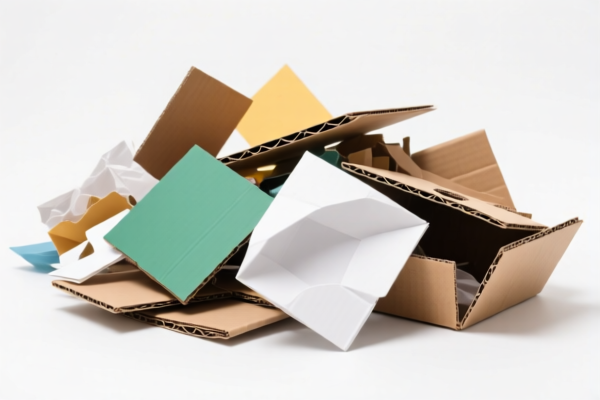


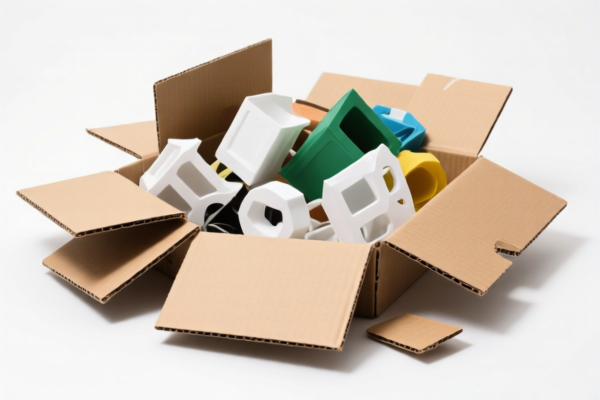
AI Analysis
📦 Mixed Waste Paper and Cardboard (Sorted/Unsorted)
🌐 HS Code Reference & Customs Clearance Guide | 2026 Latest Tariff Analysis | Professional Clearance Strategy
📌 I. Product Definition & Classification: What Exactly is "Waste Paper"?
Recovered paper and paperboard refer to waste paper, scrap paper, and other paper-based waste intended for recycling. In international trade, this category is strictly divided based on the sorting status and pulp composition.
For "Mixed Waste Paper and Cardboard," the critical distinction lies in whether it is sorted or unsorted/other, and whether it contains significant amounts of mechanical pulp (newsprint).
⚠️ Key Classification Point:
- If the waste paper is mixed, unsorted, or contains various grades (e.g., mixed office waste, mixed cardboard) → It falls under 4707.90.
- If it is specifically newsprint (mechanical pulp) and sorted → It falls under 4707.30.
- "Mixed" usually implies unsorted or a blend of grades, pushing it towards the "Other" category (4707.90).
📦 II. HS Code Classification Details (2026 Latest Tariff Authority)
Based on your input "Mixed Waste Paper and Cardboard," here are the two most relevant HS Codes from the provided data:
| HS Code | Product Description | Applicable Scenario | Key Characteristic |
|---|---|---|---|
4707.90.00.00 |
Recovered (waste and scrap) paper and paperboard: Other, including unsorted waste and scrap | Mixed waste, unsorted recyclables, mixed cardboard, mixed office waste. | ✅ Unsorted/Mixed |
4707.30.00.20 |
Recovered (waste and scrap) paper and paperboard: Paper or paperboard made mainly of mechanical pulp (for example, newspapers, journals and similar printed matter) Newsprint | Specifically sorted newsprint, newspapers, journals. | ✅ Sorted Mechanical Pulp |
🔍 Critical Analysis for "Mixed" Waste:
- The term "Mixed" strongly suggests4707.90.00.00. This code covers "Other" recovered paper, explicitly including unsorted waste and scrap.
- If your "Mixed" waste is primarily composed of newspapers and magazines and is sorted from other materials, it might qualify for4707.30.00.20.
- Default Recommendation: For general "mixed waste paper and cardboard,"4707.90.00.00is the safer and more common classification unless you can prove 100% mechanical pulp content and sorting.
💰 III. 2026 Latest Tariff Rate Details (Including Additional Taxes)
✅ Applicable Country: United States (US)
✅ Origin: China (CN) (Note: If origin is not China, base tax may differ, but additional taxes apply to CN origin)
✅ Effective Date: Current as of 2025/2026 tariff schedules
🎯 1. 4707.90.00.00 —— Other Recovered Paper (Including Unsorted)
| Item | Content |
|---|---|
| Base Tariff | 0.0% (ad valorem) |
| Additional Tariff | +25.0% (Section 301 / USITC Footnote) |
| Total Tax Rate | 25.0% |
| Tax Calculation | CIF Value × 25% |
| Legal Basis | USITC Schedule 3, Section 301 Actions |
📌 Explanation:
- Although the base duty is 0%, imported waste paper from China is subject to a 25% additional tariff under current US trade policies.
- This rate applies to both sorted and unsorted mixed waste, provided it is classified under "Other" (4707.90).
🎯 2. 4707.30.00.20 —— Sorted Newsprint (Mechanical Pulp)
| Item | Content |
|---|---|
| Base Tariff | 0.0% (ad valorem) |
| Additional Tariff | +25.0% (Section 301 / USITC Footnote) |
| Total Tax Rate | 25.0% |
| Tax Calculation | CIF Value × 25% |
| Legal Basis | USITC Schedule 3, Section 301 Actions |
📌 Explanation:
- Same tariff structure as above. Even if sorted newsprint has a different HS code, the 25% additional tax remains.
- No difference in total tax burden between sorted newsprint and mixed waste in this specific data set.
🛠️ IV. Customs Clearance Practical Advice (Real-World Pitfall Avoidance)
✅ 1. Preparation Checklist (Must-Have Documents)
| Document | Required? | Notes |
|---|---|---|
| ✅ Commercial Invoice | ✔️ | Must clearly state "Recovered Paper" or "Waste Paper" and grade (e.g., HEMS, OBP). |
| ✅ Packing List | ✔️ | Detail weight, volume, and number of bales/packages. |
| ✅ Bill of Lading | ✔️ | Standard shipping document. |
| ✅ Phytosanitary Certificate | ✔️ | Crucial: Waste paper is considered a potential pest carrier. Many US ports require this. |
| ✅ EPA/USDA Permits | ✔️ | Depending on the type of waste and origin, environmental permits may be required. |
| ✅ Sorting Certificate | ✔️ | If claiming 4707.30.00.20, provide proof of sorting (e.g., no cardboard, only newsprint). |
✅ 2. Declaration Tips (Key Mnemonics)
🔥 “Mixed is ‘Other’, Sorted News is ‘30’, Always Declare Origin, Always Check Phytosanitary!”
| Situation | Correct Declaration | Incorrect Practice |
|---|---|---|
| Mixed cardboard + office paper | 4707.90.00.00 |
Declaring as "Recycled Paper" (vague) |
| Pure newspaper clippings | 4707.30.00.20 |
Declaring as "Mixed Waste" → Higher scrutiny |
| Waste with plastic/contaminants | ❌ Prohibited/Restricted | Attempting to import contaminated waste → Seizure |
| Origin: China | Mention CN in invoice | Hiding origin → Fraud |
✅ 3. Special Handling Cases
| Case | Handling Advice |
|---|---|
| Contaminated Waste | If mixed with food, plastic, or metal, it may be classified as municipal solid waste and banned or heavily restricted. |
| Plastic-Coated Paper | If >50% plastic coating, it may fall under 3901-3914 (Plastics), not paper. |
| Hygiene Products | Used toilet paper, diapers, etc., are not "recovered paper" under HS 4707. They are waste and often banned. |
| De Minimis Exemption? | ❌ Not Eligible. Waste paper under $800 (de minimis) is still subject to phytosanitary checks and potential duties if classified as waste. |
🌍 V. Global Market Clearance Comparison (2026 Latest)
| Country/Region | Recommended HS Code | Total Tax (CN Origin) | Certification Requirements | Notes |
|---|---|---|---|---|
| 🇺🇸 USA | 4707.90.00.00 |
25% | Phytosanitary Certificate, USDA/EPA Permits | High scrutiny for contamination. |
| 🇨🇳 China | 4707.90.00.00 |
0% | N/A (Import Ban on Most Waste) | China has banned most solid waste imports. |
| 🇪🇺 EU | 4707.90.00.00 |
0% (Base) | Waste Shipment Regulation (WSR) | Strict controls on waste imports from non-EU. |
| 🇲🇾 Malaysia | 4707.90.00.00 |
Varies | DOH Permit, Quality Control | Major recycling hub; strict quality checks. |
| 🇻🇳 Vietnam | 4707.90.00.00 |
Varies | MoT Permit, Quality Check | Increasing restrictions on low-quality waste. |
📌 Conclusion:
- The US is one of the few major markets that allows import of waste paper with a 25% tariff for Chinese origin.
- China has largely banned waste paper imports.
- EU and ASEAN countries have strict waste shipment regulations; ensure compliance with local laws.
📌 VI. Common Errors & Pitfalls (Blood & Tears Lessons)
❌ Error 1: Misclassifying contaminated waste as "clean waste paper"
👉 Consequence: Shipment rejected, fined, or destroyed at port.
❌ Error 2: Failing to provide a Phytosanitary Certificate
👉 Consequence: Quarantine delay, storage fees, or re-export at your cost.
❌ Error 3: Declaring "Mixed Paper" but sending only newsprint
👉 Consequence: Customs may still apply 4707.90 (25% tax), but could raise questions. Better to match description exactly.
❌ Error 4: Ignoring plastic contamination
👉 Consequence: If plastic content >10%, it may be reclassified as plastic waste or municipal waste, leading to bans.
✅ Correct Approach:
"Recovered Mixed Paper (HEMS & OBP Grade), Free from Plastics, Food, and Hazardous Materials, Baled, Packed in Jumbo Bags, Certificate of Phytosanitary Inspection Attached."
🎯 VII. Conclusion: Precision Classification Saves Costs!
🎯 Remember the Mantra:
🔹 “Mixed is ‘90’, Sorted News is ‘30’, 25% Tax for China, Phytosanitary is Key!”
🔹 “No Contamination, No Ban, Clean Paper, Easy Plan.”
📌 Pro Tip:
- If your waste paper is not from China, check if free trade agreements (FTAs) apply to reduce or eliminate the 25% additional tariff.
- Pre-shipment inspection is highly recommended to ensure low contamination levels and avoid port rejection.
📣 Immediate Action:
📞 Contact your customs broker + Provide Phytosanitary Certificate + Verify Packing List Accuracy
🚀 Ensure smooth clearance, avoid port delays, and maximize recycling value!
✨ Professional Clearance Starts with Accurate Classification!
💼 Every Percent of Tax Matters in Waste Paper Trade!
Customer Reviews
About HS Code Classification
The Harmonized System (HS) is an internationally standardized nomenclature developed by the World Customs Organization (WCO) to classify traded products. Over 200 countries use the HS system as the basis for customs tariffs, trade statistics, and import/export regulations.
Each HS code follows a hierarchical structure:
- Chapter (2 digits) — Broad category of goods (e.g., Chapter 84: Machinery and Mechanical Appliances)
- Heading (4 digits) — More specific grouping within the chapter
- Subheading (6 digits) — Internationally standardized breakdown, used by all WCO member countries
- National subdivisions (8-10 digits) — Country-specific extensions for further classification, such as US HTSUS 10-digit codes
Correct HS code classification is essential for smooth customs clearance, accurate duty payment, and compliance with trade regulations. Misclassification can lead to customs delays, overpayment of duties, or penalties.
When importing from CN to US, the applicable tariff rates may include:
- Most-Favored-Nation (MFN) rate — The standard duty rate applied to WTO members
- General rate — Applied to countries without trade agreements
- Trade remedy duties — Additional tariffs such as Section 301 (anti-dumping), Section 232 (national security), or countervailing duties
The information provided on this page is for reference purposes only. For official classification, please consult with your local customs authority or a licensed customs broker.