Mixer
CN → US| HS Code | Tariff Rate | Origin | Destination | Doc |
|---|---|---|---|---|
| 8509400015 | 14.2% | CN | US | Official Doc |
| 8509400025 | 14.2% | CN | US | Official Doc |
| 8438800000 | 35.0% | CN | US | Official Doc |
| 8438909090 | 37.8% | CN | US | Official Doc |
| 8479820040 | 35.0% | CN | US | Official Doc |
| 8479820080 | 35.0% | CN | US | Official Doc |
Product Images


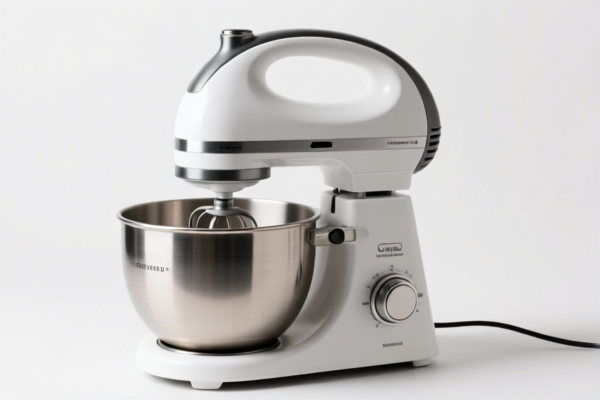
AI Analysis
🥣 Mixer: The Ultimate Guide to HS Codes, Tariffs & Customs Clearance (2026 Edition)
🌐 Global HS Code Reference & Customs Clearance Guide | 2026 Tax Regime Breakdown | Professional Strategy
📌 I. Product Definition & Classification: Do You Really Know Your "Mixer"?
The term "Mixer" is deceptively broad in international trade. It can refer to a domestic kitchen appliance (blender) or a heavy-duty industrial processing machine. Misclassification leads to massive tariff penalties (from 14% to 37.8%) and potential customs holds.
The classification depends entirely on Usage and Power Source:
- Domestic Electric Mixers (Household Blenders): Small appliances with motors used in kitchens for food preparation.
- Target HS Codes: 8509.40.00.15 / 8509.40.00.25
- Industrial Food Preparation Machinery: Large-scale mechanical systems for manufacturing food/beverages.
- Target HS Codes: 8438.80.00.00 / 8438.90.90.90
- General Industrial Mixing/Kneading Machines: Non-food specific industrial mixers (chemicals, construction, etc.).
- Target HS Codes: 8479.82.00.40 / 8479.82.00.80
⚠️ CRITICAL DISTINCTION: - Household? → Look at 8509 (Electro-mechanical appliances). - Industrial/Food Line? → Look at 8438 (Food/Bev Machinery). - Industrial/General? → Look at 8479 (Other Machinery).
📦 II. HS Code Classification Matrix (2026 Tax Data)
| HS Code | Product Description (Summary) | Application Scenario | Tax Rate (Total) | Key Tax Components |
|---|---|---|---|---|
8509.40.00.15 |
Electric Domestic Blender | Household kitchen appliances, portable blenders | 14.2% | Base: 4.2% + 122 Sec: 10% |
8509.40.00.25 |
Food Blender (No Material Conflict) | General food blenders, no conflicting materials | 14.2% | Base: 4.2% + 122 Sec: 10% |
8438.80.00.00 |
Industrial Food/Bev Prep Machine | Commercial dough mixers, large-scale food processors | 35.0% | Base: 0% + Add: 25% + 122 Sec: 10% |
8438.90.90.90 |
Parts/Equipment for Food Machinery | Spare parts for industrial food lines | 37.8% | Base: 2.8% + Add: 25% + 122 Sec: 10% |
8479.82.00.40 |
Mixing, Kneading, Stirring Machines | General industrial mixers (non-food specific) | 35.0% | Base: 0% + Add: 25% + 122 Sec: 10% |
8479.82.00.80 |
Mixers with Kneading/Crushing | Heavy duty mixers with multiple functions | 35.0% | Base: 0% + Add: 25% + 122 Sec: 10% |
🔍 Focus Alert: - Domestic Blenders (8509) enjoy a lower tariff (14.2%) but are strictly regulated by Section 122. - Industrial Mixers (8438/8479) face a 35% tax due to heavy Additional Tariffs (25%) triggered by trade measures.
💰 III. 2026 Tariff Rate Deep Dive (Detailed Breakdown)
✅ Applicable Region: USA (US)
✅ Origin: China (CN)
✅ Effective Date: Based on current 2026 trade data
🎯 A. Household Blenders (8509.40.00.15 & 8509.40.00.25)
The "Sweet Spot" for lower tariffs.
| Component | Rate | Legal Basis / Detail |
|---|---|---|
| Base Tariff (MFN) | 4.2% | Standard Most Favored Nation rate for electric household appliances. |
| Section 122 Tariff | 10.0% | Specific tariff under Section 122 (often related to specific trade actions or recent executive orders targeting consumer electronics/appliances). |
| Additional Tariff | 0.0% | No 301 Section 232/301 penalty applied to these specific sub-headings. |
| 🚀 TOTAL RATE | 14.2% | Calculated on CIF Value. |
📌 Interpretation: - If you are importing a standard electric blender for home use, your cost is 14.2%. - DO NOT miscategorize these as "Industrial" to try and save money; the 8438 rate is 35%.
🎯 B. Industrial Food Machinery (8438.80.00.00 & 8438.90.90.90)
The "Heavy Cost" Zone.
| Component | Rate | Legal Basis / Detail |
|---|---|---|
| Base Tariff (MFN) | 0.0% | No standard tariff for this category. |
| Additional Tariff | 25.0% | CRITICAL: This is likely the Section 301 (301) tariff added by the USTR for industrial machinery. |
| Section 122 Tariff | 10.0% | CRITICAL: Section 122 adds another 10% specifically here. |
| Parts Surcharge | (Varies) | Parts (8438.90...) have a base of 2.8%, pushing total to 37.8%. |
| 🚀 TOTAL RATE | 35.0% - 37.8% | Calculated on CIF Value. |
📌 Interpretation: - Industrial Mixers are heavily penalized (25% + 10%). - Spare Parts (
8438.90.90.90) are even more expensive (37.8%). - This category is high-risk for 301 Section 301 enforcement.
🎯 C. General Industrial Mixers (8479.82.00.40 & 8479.82.00.80)
The "Heavy Duty" Zone.
| Component | Rate | Legal Basis / Detail |
|---|---|---|
| Base Tariff (MFN) | 0.0% | Standard rate is 0%. |
| Additional Tariff | 25.0% | Section 301 Additional Tariff applied to general industrial machinery. |
| Section 122 Tariff | 10.0% | Section 122 surcharge applied. |
| 🚀 TOTAL RATE | 35.0% | Calculated on CIF Value. |
📌 Interpretation: - Even if not for "food," general mixing machines face the 35% barrier. - Functions like "kneading" or "crushing" do not lower the rate.
🛠️ IV. Customs Clearance Strategy (Real-World Action Plan)
✅ 1. Documentation Checklist (Must-Have)
To avoid delays and ensure correct classification:
| Document | Requirement | Why it matters |
|---|---|---|
| Detailed Technical Spec | ✔️ | Must specify Voltage, Power (Watts), Capacity (L), and Intended Use. |
| User Manual / Diagram | ✔️ | Proof of "Domestic" vs. "Industrial" use. |
| Commercial Invoice | ✔️ | CRITICAL: Must match the HS Code description exactly (e.g., "Electric Blender" vs. "Industrial Mixer"). |
| Material Composition | ✔️ | Required for 8509.40.00.25 (to prove "No material conflict"). |
| Origin Certificate | ✔️ | To verify China origin for Section 122/301 calculation. |
✅ 2. Classification Strategy (The "Do's and Don'ts")
| Scenario | CORRECT Approach | WRONG Approach (Risk!) |
|---|---|---|
| Small Kitchen Blender | Declare as 8509.40.00.15 (14.2%) |
Declare as "Mixer" generally → Risk of audit & re-classification to 35%. |
| Commercial Dough Mixer | Declare as 8438.80.00.00 (35%) |
Try to declare as 8509 (Household) → FRAUD RISK / SEIZURE. |
| Spare Parts | Declare as 8438.90.90.90 (37.8%) |
Declare as "Machine" to hide parts tax → Customs Seizure. |
| General Mixer (Chemical) | Declare as 8479.82.00.40 (35%) |
Ignore Section 122 → Underpayment Penalties. |
🔥 Golden Rule: "Home = 8509 (14.2%), Industry = 8438/8479 (35%+)." Do not mix them up!
✅ 3. Section 122 & Additional Tariff Details
- Section 122 (10%): This is a specific surcharge often applied to electronics and appliances from China. It is mandatory for both household and industrial mixers listed in your data.
- Additional Tariff (25%): Applies ONLY to Industrial machinery (
8438and8479). DO NOT apply this to household blenders (8509), which only pay the 10% Section 122.
🌍 V. Quick Comparison: Household vs. Industrial
| Feature | Household Blender (8509) |
Industrial Mixer (8438 / 8479) |
|---|---|---|
| Typical HS Code | 8509.40.00.15 / 25 |
8438.80.00.00 / 8479.82.00.40 |
| Total Tariff | 14.2% | 35.0% - 37.8% |
| Main Tax Driver | Base (4.2%) + Section 122 (10%) | Base (0/2.8%) + Add (25%) + Section 122 (10%) |
| Customs Sensitivity | Moderate | High (Frequent audits) |
| Best Practice | Ensure it looks like a home appliance (plastic housing, low power). | Ensure all industrial specs are documented to avoid misclassification. |
📌 VI. Common Pitfalls & How to Avoid Them
❌ Pitfall 1: "Mixer" is too vague. * Risk: Customs officers may guess the wrong code. * Fix: Use precise descriptions: "Electric Kitchen Blender, 600W" vs. "Industrial Dough Mixer, 5HP".
❌ Pitfall 2: Treating Parts as Main Units.
* Risk: Parts (8438.90.90.90) have a 37.8% rate.
* Fix: Clearly list parts separately if shipped separately.
❌ Pitfall 3: Ignoring Section 122. * Risk: Even if you find a low Base Tariff, the 10% Section 122 is unavoidable. * Fix: Factor the Total 14.2% or 35% into your cost model immediately.
🎯 VII. Conclusion: The Bottom Line
🚀 Summary for Exporters: - Domestic Blenders are your "Low Tax" winners (14.2%). - Industrial Mixers are "High Tax" items (35%+) due to the 25% Additional Tariff. - Never misclassify an industrial machine as a household appliance; the penalties are severe. - Always include Section 122 in your calculations for ALL mixers.
💡 Pro Tip: If you are importing Industrial Mixers, consider sourcing from non-China countries or checking for Exclusions on Section 301 (25%) tariffs, as these are the biggest cost drivers.
📣 Action Required:
Check your product specs NOW! Is it a Kitchen Blender or a Factory Mixer? Pick the right code: 8509 (Save money) or 8438/8479 (Expect high tax).
✨ Accurate Classification = Lower Costs + Faster Clearance 💼 Don't let the "Mixer" label cost you an extra 21% in taxes!
Customer Reviews
About HS Code Classification
The Harmonized System (HS) is an internationally standardized nomenclature developed by the World Customs Organization (WCO) to classify traded products. Over 200 countries use the HS system as the basis for customs tariffs, trade statistics, and import/export regulations.
Each HS code follows a hierarchical structure:
- Chapter (2 digits) — Broad category of goods (e.g., Chapter 84: Machinery and Mechanical Appliances)
- Heading (4 digits) — More specific grouping within the chapter
- Subheading (6 digits) — Internationally standardized breakdown, used by all WCO member countries
- National subdivisions (8-10 digits) — Country-specific extensions for further classification, such as US HTSUS 10-digit codes
Correct HS code classification is essential for smooth customs clearance, accurate duty payment, and compliance with trade regulations. Misclassification can lead to customs delays, overpayment of duties, or penalties.
When importing from CN to US, the applicable tariff rates may include:
- Most-Favored-Nation (MFN) rate — The standard duty rate applied to WTO members
- General rate — Applied to countries without trade agreements
- Trade remedy duties — Additional tariffs such as Section 301 (anti-dumping), Section 232 (national security), or countervailing duties
The information provided on this page is for reference purposes only. For official classification, please consult with your local customs authority or a licensed customs broker.