Mixing or Kneading Machine
CN → US| HS Code | Tariff Rate | Origin | Destination | Doc |
|---|---|---|---|---|
| 8479820040 | 35.0% | CN | US | Official Doc |
| 8438100010 | 17.5% | CN | US | Official Doc |
| 8509400015 | 14.2% | CN | US | Official Doc |
| 8479820080 | 35.0% | CN | US | Official Doc |
| 8509400025 | 14.2% | CN | US | Official Doc |
Product Images
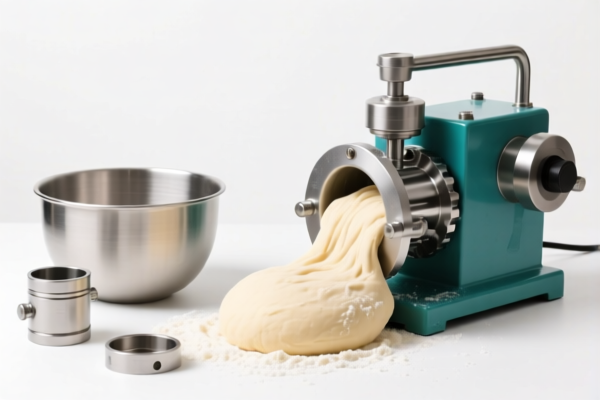
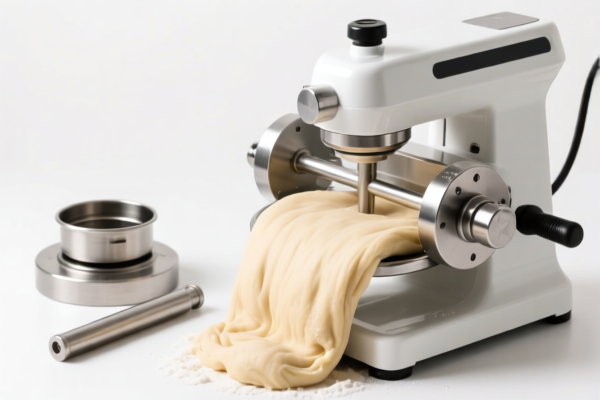
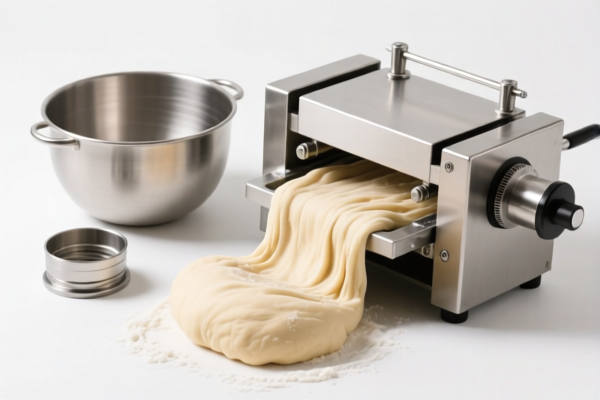
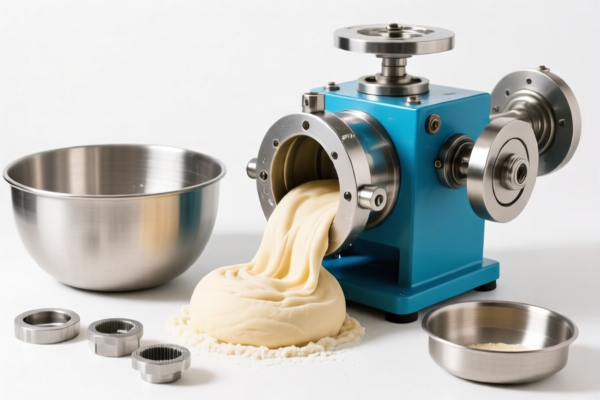
AI Analysis
🏭 Industrial & Household Mixers/Kneaders (Mixing or Kneading Machines)
🌐 HS Code Reference & Customs Clearance Guide | 2026 Latest Tariff Analysis | Professional Clearance Strategy
📌 I. Product Definition & Classification: Do You Really Know Your Mixer?
Mixing and kneading machines are versatile equipment used in both industrial manufacturing and home kitchens. Their classification depends heavily on their primary function, intended use, and technical characteristics.
In international trade, these machines are broadly categorized into: * Industrial Mixers/Kneaders: Used for heavy-duty processing in food production, chemical, or pharmaceutical industries. * Household/Office Appliances: Smaller-scale devices for home cooking or office use.
⚠️ Key Distinction Points:
- If the machine is designed for industrial-scale mixing/kneading (heavy machinery, no domestic appliance features) →归入 8479.82.00 series.
- If the machine is specifically for food processing (e.g., dough kneading in a bakery context) → May fall under 8438.10.00.
- If it is a domestic electric appliance (e.g., kitchen blender/mixer for home use) →归入 8509.40.00 series.
📦 II. HS Code Classification Details (2026 Latest Tariff Authority Comparison)
| HS Code | Product Description | Applicable Scenario | Tax Rate (Total) | Tax Detail Breakdown |
|---|---|---|---|---|
8479.82.00.40 |
Mixers, kneaders, or mixers; function matches mixing, kneading, or stirring machinery | Heavy industrial mixing/kneading equipment; general industrial machinery | 35.0% | Base: 0.0%, Section 301: 25.0%, Section 122: 10% |
8438.10.00.10 |
Mixers, kneaders with food processing function; matches bread-making machinery classification | Bakery equipment, dough kneaders for food production | 17.5% | Base: 0.0%, Section 301: 7.5%, Section 122: 10% |
8509.40.00.15 |
Mixers, kneaders with blender function; matches home electric appliances | Home kitchen blenders, mixers for domestic use | 14.2% | Base: 4.2%, Section 301: 0.0%, Section 122: 10% |
8479.82.00.80 |
Mixers, kneaders with function fully matching HS 8479.82.00.80 definition | Other industrial mixing/kneading machinery not specifically listed elsewhere | 35.0% | Base: 0.0%, Section 301: 25.0%, Section 122: 10% |
8509.40.00.25 |
Mixers, kneaders with food blender function; highly matches food mixer function category | Domestic food mixers/blenders for home use | 14.2% | Base: 4.2%, Section 301: 0.0%, Section 122: 10% |
🔍 Key Reminder:
- Industrial vs. Domestic: The biggest cost difference lies between 35% (industrial) and 14.2%/17.5% (domestic/food-specific).
- Section 122: A 10% surcharge applies to all these codes.
- Section 301 (Trade War Tariff): Varies significantly—25% for general industrial, 7.5% for food machinery, and 0% for home appliances.
💰 III. 2026 Latest Tariff Rate Details (Including Surcharge, Policy Surcharge)
✅ Applicable Country: United States (US)
✅ Origin: China (CN)
✅ Effective Time: From November 10, 2025 (including subsequent imports)
🎯 1. 8479.82.00.40 & 8479.82.00.80 —— Industrial Mixers/Kneaders (General Machinery)
| Item | Content |
|---|---|
| Base Tariff | 0% (ad valorem) |
| Section 301 Surcharge | +25% (USITC Footnote related to Chinese machinery imports) |
| Section 122 Surcharge | +10% (Specific trade policy surcharge) |
| Total Tariff | 35.0% |
| Tax Calculation | CIF Value × 35% |
| De Minimis Exemption? | ❌ No (denied) |
| Legal Basis Path | Section 301: 9903.88.01 → Section 122: 9903.12.01 → USITC: 8479.82.00.xx |
📌 Explanation:
- These are classified as industrial machinery.
- Total 35% is a high tariff burden.
- Section 301 (25%) is the major cost driver here.
- Section 122 (10%) is an additional layer.
🎯 2. 8438.10.00.10 —— Food Processing Mixers/Kneaders (Bakery/Food Machinery)
| Item | Content |
|---|---|
| Base Tariff | 0% |
| Section 301 Surcharge | +7.5% (Reduced rate for certain food processing equipment) |
| Section 122 Surcharge | +10% |
| Total Tariff | 17.5% |
| Tax Calculation | CIF Value × 17.5% |
| De Minimis Exemption? | ❌ No |
| Legal Basis Path | Section 301: 9903.88.01 (partial) → Section 122: 9903.12.01 → USITC: 8438.10.00.10 |
📌 Note:
- This category is for food-specific machinery (e.g., bread dough mixers).
- Total 17.5% is significantly lower than general industrial mixers.
- Section 301 is only 7.5%, not 25%.
🎯 3. 8509.40.00.15 & 8509.40.00.25 —— Domestic Electric Mixers/Blenders (Home Appliances)
| Item | Content |
|---|---|
| Base Tariff | 4.2% |
| Section 301 Surcharge | +0.0% (Exempted for certain home appliances) |
| Section 122 Surcharge | +10% |
| Total Tariff | 14.2% |
| Tax Calculation | CIF Value × 14.2% |
| De Minimis Exemption? | ❌ No |
| Legal Basis Path | Section 301: Exempt → Section 122: 9903.12.01 → USITC: 8509.40.00.xx |
📌 Note:
- These are domestic electric appliances (e.g., kitchen blenders).
- Total 14.2% is the lowest among all options.
- Section 301 is 0%, which is a major advantage.
- Base tariff is 4.2%, which is standard for home appliances.
🛠️ IV. Customs Clearance Practical Advice (实战避坑指南)
✅ 1. Preparation Checklist (No omissions allowed)
| Document | Required | Description |
|---|---|---|
| ✅ Product Specifications | ✔️ | Must include: Type (Industrial/Domestic), Function (Mixing/Kneading/Blending), Capacity, Power |
| ✅ Circuit Diagrams | ✔️ | To prove it is an electric appliance (if claiming 8509) vs. mechanical machine (8479/8438) |
| ✅ Product Photos (with Nameplate) | ✔️ | Clearly show model, brand, input/output parameters, and usage context |
| ✅ Third-Party Test Reports | ✔️ | FCC, CE, UL, GS (if applicable) |
| ✅ Commercial Invoice | ✔️ | Must clearly state "Mixing Machine" or "Kneading Machine" and intended use |
| ✅ Packing List | ✔️ | Detail all components; avoid splitting if it's a complete unit |
✅ 2. Declaration Tips (Key Mnemonic)
🔥 "Domestic Appliances = 14.2%, Food Machinery = 17.5%, Industrial = 35%! Use Function to Decide!"
| Scenario | Correct Declaration | Wrong Practice |
|---|---|---|
| Home Kitchen Blender | 8509.40.00.15 or 8509.40.00.25 |
Misdeclare as Industrial → 35% |
| Bakery Dough Mixer | 8438.10.00.10 |
Misdeclare as General Industrial → 35% |
| Heavy Industrial Mixer | 8479.82.00.40 or 8479.82.00.80 |
Misdeclare as Home Appliance → 14.2% (High Risk of Audit/Penalty) |
| Office Small Mixer | 8509.40.00.15 |
Misdeclare as Industrial → 35% |
✅ 3. Special Cases Handling
| Situation | Handling Advice |
|---|---|
| Multi-purpose Machine | If it can be used for both home and industrial purposes, declare based on primary intended use and provide evidence (e.g., marketing materials, user manual). |
| OEM Custom Mixer | Provide client order + design drawings to avoid being deemed "non-standard" and misclassified. |
| Food Contact Parts | Ensure materials comply with FDA (US) or equivalent food safety standards; include certificates if required. |
| Industrial vs. Domestic Ambiguity | If in doubt, consult with a customs broker. Misclassification can lead to severe penalties. |
🌍 V. Global Main Market Customs Comparison (2026 Latest)
| Country/Region | Recommended HS Code | Tariff | Certification Requirements | Notes |
|---|---|---|---|---|
| 🇺🇸 US | 8509.40.00.15 (Home) |
14.2% | FCC + UL | Industrial (8479) is 35% |
| 🇺🇸 US | 8438.10.00.10 (Food) |
17.5% | NSF/3-A (if food) | Bakery equipment specific |
| 🇺🇸 US | 8479.82.00.40 (Industrial) |
35.0% | N/A | High tariff, no exemption |
| 🇨🇳 China | 8509.40.00.15 |
5% | CCC | No Section 301/122 |
| 🇪🇺 EU | 8509.40.00.15 |
0-4.5% | CE + RoHS | No US-style surcharges |
| 🇦🇺 Australia | 8509.40.00.15 |
5% | RCM | No surcharges |
| 🇯🇵 Japan | 8509.40.00.15 |
0-5% | PSE | No surcharges |
📌 Conclusion:
- The US is the only market with significant Section 301 and Section 122 surcharges.
- Domestic appliances (8509) have the lowest US tariff (14.2%) due to 0% Section 301.
- Industrial machines (8479) face the highest US tariff (35%).
- Food machinery (8438) sits in the middle (17.5%).
- Non-US markets do not apply Section 301/122, so tariffs are much lower.
📌 VI. Common Mistakes & Pitfalls Guide (Lessons Learned)
❌ Mistake 1: Declaring a Home Blender as Industrial Mixer
👉 Consequence: Pay 35% instead of 14.2% → Unnecessary cost increase!
❌ Mistake 2: Declaring a Bakery Dough Mixer as General Industrial Mixer
👉 Consequence: Pay 35% instead of 17.5% → Unnecessary cost increase!
❌ Mistake 3: Not providing Circuit Diagrams for Home Appliances
👉 Consequence: Customs may reclassify as Industrial Machinery → Delay or Penalty!
❌ Mistake 4: Using vague terms like "Mixing Machine" without specifying use
👉 Consequence: Customs cannot determine function → Audit Risk!
✅ Correct Practice:
"Electric Food Blender, Household Use, 500W, 110V, Model XYZ, FCC Certified" →
8509.40.00.15
"Bakery Dough Kneading Machine, Industrial Use, 100kg Capacity, 380V" →8438.10.00.10
"Heavy Duty Chemical Mixing Machine, Industrial Use, 1000L, 380V" →8479.82.00.40
🎯 VII. Conclusion: Professional Declaration, Save Time, Reduce Costs!
🎯 Remember the Mnemonic:
🔹 "Home Blend 14%, Food Dough 17%, Industrial Mix 35%!"
🔹 "HS Code determines life, tariff difference is huge, declaration error costs big!"
📌 Pro Tip:
If your mixer originates from Vietnam, Mexico, Thailand, Malaysia, you may apply for Section 301 Exemption, reducing the tariff significantly.
It is recommended to apply for Advance Ruling before shipment to avoid customs clearance risks.
📣 Immediate Action:
📞 Contact Professional Customs Broker + Provide Product Photos + Apply for HS Code Advance Ruling
🚀 Let your Mixers/Kneaders clear customs smoothly, export efficiently, and double profits!
✨ Professional Customs Clearance Starts with Precise Classification!
💼 Every cent of your cost deserves precise calculation!
Customer Reviews
About HS Code Classification
The Harmonized System (HS) is an internationally standardized nomenclature developed by the World Customs Organization (WCO) to classify traded products. Over 200 countries use the HS system as the basis for customs tariffs, trade statistics, and import/export regulations.
Each HS code follows a hierarchical structure:
- Chapter (2 digits) — Broad category of goods (e.g., Chapter 84: Machinery and Mechanical Appliances)
- Heading (4 digits) — More specific grouping within the chapter
- Subheading (6 digits) — Internationally standardized breakdown, used by all WCO member countries
- National subdivisions (8-10 digits) — Country-specific extensions for further classification, such as US HTSUS 10-digit codes
Correct HS code classification is essential for smooth customs clearance, accurate duty payment, and compliance with trade regulations. Misclassification can lead to customs delays, overpayment of duties, or penalties.
When importing from CN to US, the applicable tariff rates may include:
- Most-Favored-Nation (MFN) rate — The standard duty rate applied to WTO members
- General rate — Applied to countries without trade agreements
- Trade remedy duties — Additional tariffs such as Section 301 (anti-dumping), Section 232 (national security), or countervailing duties
The information provided on this page is for reference purposes only. For official classification, please consult with your local customs authority or a licensed customs broker.