Mixing or Stirring Machine
CN → US| HS Code | Tariff Rate | Origin | Destination | Doc |
|---|---|---|---|---|
| 8479820080 | 35.0% | CN | US | Official Doc |
| 8509400015 | 14.2% | CN | US | Official Doc |
| 8479820040 | 35.0% | CN | US | Official Doc |
| 8509400025 | 14.2% | CN | US | Official Doc |
| 8438909090 | 37.8% | CN | US | Official Doc |
| 8438800000 | 35.0% | CN | US | Official Doc |
Product Images
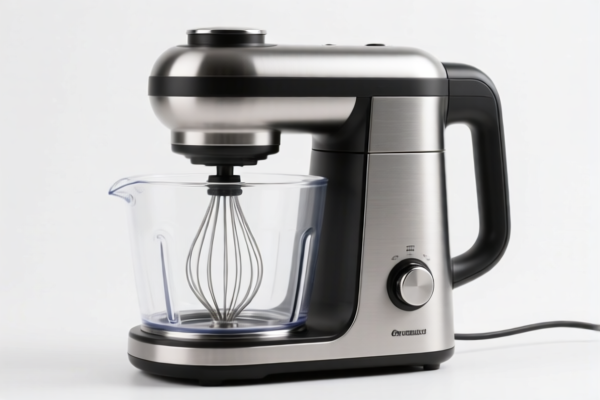
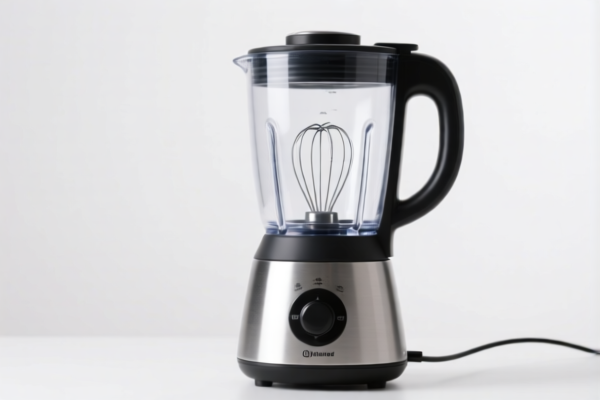
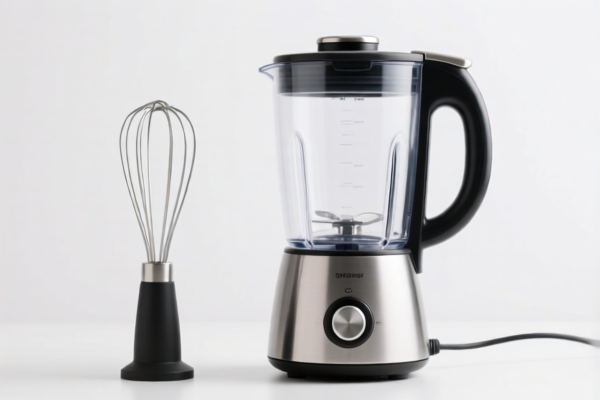
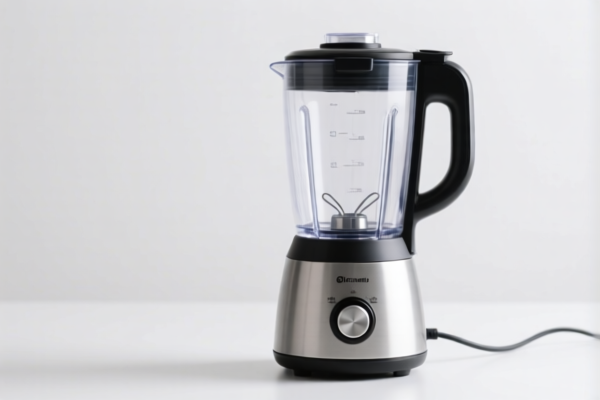
AI Analysis
🌀 Mixing & Stirring Machines (Industrial, Household, and Food Processing)
🌐 HS Code Reference & Customs Clearance Guide | 2026 Latest Tariff Analysis | Professional Clearance Strategy
📌 1. Product Definition & Classification: What Kind of "Stirrer" Are You Declaring?
Mixing and stirring machines are ubiquitous in both industrial manufacturing and home kitchens. However, in international trade, the application context and technical structure determine the HS Code. Misclassification here is critical because the tariff difference can be massive (14.2% vs. 35%+).
There are three main categories based on the <DATA> provided:
- Industrial/Commercial Mixers (Section 84): Heavy-duty machines for mixing, kneading, crushing, grinding, sieving, homogenizing, emulsifying, or stirring.
- Key Feature: High power, industrial use, not "for household use."
- HS Code Range:
8479.82
- Household Food Mixers (Section 85): Electric mixers designed for home kitchen use.
- Key Feature: Lower power, portable or countertop, "Household Use."
- HS Code Range:
8509.40
- Industrial Food Processing Machinery Parts (Section 84): Components specifically for food/beverage manufacturing lines.
- Key Feature: Parts or accessories for larger industrial plants.
- HS Code Range:
8438.90/8438.80
⚠️ Key Distinction Point:
- If it is electric and meant for home/kitchen use → 8509 (Lower Tax ~14.2%)
- If it is mechanical/electric and meant for industrial use → 8479 (Higher Tax ~35.0%)
- If it is a part of a food processing line → 8438 (Higher Tax ~35-37.8%)
📦 2. HS Code Classification Details (2026 Latest Tariff Authority)
Based strictly on the provided <DATA>, here is the precise breakdown for Mixing or Stirring Machines:
| HS Code | Product Description | Application Scenario | Total Tax Rate |
|---|---|---|---|
8509.40.00.15 |
Household Food Mixers with electric motor | Home kitchens, small bakeries (countertop blenders) | 14.2% |
8509.40.00.25 |
Food Mixers (General Food Processing) | Commercial kitchens, food prep lines (non-industrial heavy duty) | 14.2% |
8479.82.00.40 |
Mixing, Kneading, or Stirring Machines | Industrial production lines, large-scale manufacturing | 35.0% |
8479.82.00.80 |
Mixing/Stirring Functions (Homogenizing/Emulsifying/etc.) | Complex industrial mixing, pharmaceutical, chemical, or heavy food processing | 35.0% |
8438.80.00.00 |
Machinery for Food/Preparation | Industrial food/beverage production plants (main units) | 35.0% |
8438.90.90.90 |
Parts/Accessories for Industrial Food Machinery | Spare parts, blades, shafts for industrial food lines | 37.8% |
🔍 Critical Alert:
- Household vs. Industrial: The biggest cost saver is correctly classifying a commercial mixer as8509.40(if it meets household-style electric criteria) rather than8479.82. However, if it is clearly for industrial volume, you MUST use8479.82or8438, despite the higher tax.
- Parts Trap: Do not ship mixer blades or motors separately as "parts" (8438.90) if they are sold with the machine. They must be declared as the main machine to avoid the higher 37.8% rate for parts.
💰 3. 2026 Latest Tariff Rate Breakdown (Including Surtaxes & Policy Add-ons)
✅ Applicable Country: United States (US)
✅ Origin: China (CN)
✅ Effective Time: 2025/2026 Tariff Schedule
🎯 1. 8509.40.00.15 & 8509.40.00.25 —— Household/Commercial Food Mixers
| Item | Content |
|---|---|
| Basic Tariff | 4.2% (MFN Rate) |
| Surtax (301) | 0.0% (Note: Data shows 0% for this category) |
| Section 122 Surcharge | +10.0% |
| Total Effective Rate | 14.2% |
| Calculation | CIF Value × 14.2% |
| De Minimis Eligibility | ❌ Generally subject to full tariff if value exceeds threshold, but check current CBP rules for Section 321. |
| Legal Basis | USITC:8509.40 + Section 122: 10% |
📌 Explanation:
- These codes benefit from 0% Section 301 surtax (as per provided data).
- Only the 10% Section 122 tariff applies on top of the base 4.2%.
- This makes electric household-style mixers significantly cheaper to import than industrial ones.
🎯 2. 8479.82.00.40 & 8479.82.00.80 —— Industrial Mixing/Stirring Machines
| Item | Content |
|---|---|
| Basic Tariff | 0.0% |
| Surtax (301) | 25.0% |
| Section 122 Surcharge | +10.0% |
| Total Effective Rate | 35.0% |
| Calculation | CIF Value × 35.0% |
| De Minimis Eligibility | ❌ High Risk. Section 301 taxes usually negate de minimis benefits for Chinese goods. |
| Legal Basis | USITC:8479.82 + Section 301: 25% + Section 122: 10% |
📌 Explanation:
- 0% Base Rate looks attractive, but the 35% total is brutal.
- The 25% Section 301 surtax is the primary driver.
- Must provide detailed technical specs proving it is an "industrial" machine (e.g., capacity > 50L, stainless steel construction, continuous operation).
🎯 3. 8438.80.00.00 & 8438.90.90.90 —— Food Processing Machinery & Parts
| Item | Content |
|---|---|
| Basic Tariff | 0.0% (8438.80) / 2.8% (8438.90) |
| Surtax (301) | 25.0% |
| Section 122 Surcharge | +10.0% |
| Total Effective Rate | 35.0% (8438.80) / 37.8% (8438.90) |
| Calculation | CIF Value × 35.0% or 37.8% |
| De Minimis Eligibility | ❌ Not Eligible. |
| Legal Basis | USITC:8438 + Section 301: 25% + Section 122: 10% |
📌 Explanation:
- Parts (8438.90) are taxed at 37.8%, the highest in this list.
- Main units for food prep (8438.80) are 35.0%.
- Strategy: If possible, classify the entire machine under8479or8509if it doesn't strictly fit "Food Processing Machinery" definitions, to avoid the 37.8% part rate.
🛠️ 4. Customs Clearance Practical Advice (Battle-Tested Pitfall Guide)
✅ 1. Documentation Checklist (Non-Negotiable)
| Document | Required | Description |
|---|---|---|
| ✅ Product Specification Sheet | ✔️ | Must list: Voltage, Power (Watts), Capacity (Liters), Material (Stainless Steel/Plastic), Motor Type. |
| ✅ Photos (Clear & Labeled) | ✔️ | Show the entire machine, nameplate, control panel, and interior mixing blades. |
| ✅ Commercial Invoice | ✔️ | Must specify "Electric Food Mixer" vs. "Industrial Mixing Machine" clearly. |
| ✅ Packing List | ✔️ | Detail all accessories. Do not list blades separately if they are integral. |
| ✅ Certificate of Origin (CO) | ✔️ | Essential for proving CN origin (triggers surtaxes). |
| ✅ FCC Certification | ✔️ | Required for all electric appliances (Section 85). |
✅ 2. Declaration Strategy (Key Mnemonic)
🔥 "Household Electric = 14%, Industrial Steel = 35%. Don't Split Parts!"
| Scenario | Correct Classification | Wrong Approach | Consequence |
|---|---|---|---|
| Home Blender/KitchenAid-style | 8509.40.00.15 |
Classify as 8479 (Industrial) |
Pay 35% instead of 14.2%. Overpay by ~20%! |
| Commercial Bakery Mixer | 8479.82.00.40 |
Classify as 8509 (Household) |
Customs may reject if capacity/power is too high. Penalty + Retax. |
| Spare Blades/Shafts | 8438.90.90.90 (if sold separately) |
Ship as "Mixer Parts" without CO | 37.8% tax. If sold with machine, include in main HS Code. |
| Industrial Food Line Unit | 8438.80.00.00 |
Classify as 8479 |
If it has specific food-processing features (e.g., heating, cutting), 8438 may be correct. Misclassification risk. |
✅ 3. Special Cases & Mitigation
| Situation | Handling Advice |
|---|---|
| OEM Custom Mixers | Provide design drawings. If the design mimics household use (portable, low power) but is branded for a store, argue for 8509 to save 20% tax. |
| Mixed Containers | If shipping both 8509 (14.2%) and 8479 (35%) items, declare separately. Do not consolidate under one HS Code to save tax; CBP will audit and penalize. |
| "Smart" Mixers | IoT-enabled home mixers still fall under 8509.40. The "smart" aspect doesn't push them to Section 84 unless the primary function is industrial. |
| Import from Third Country | If mixed in Vietnam/Mexico, ensure substantial transformation occurs to avoid "China-origin" surtaxes (Section 301/122). |
🌍 5. Global Market Comparison (2026 Snapshot)
| Market | Recommended HS Code | Est. Total Tax (China Origin) | Key Requirements |
|---|---|---|---|
| 🇺🇸 USA | 8509.40 or 8479.82 |
14.2% or 35.0% | FCC, Section 122 (10%), Section 301 (if applicable) |
| 🇨🇳 China (Import) | 8509.40 or 8479.82 |
~10-13% | CCC Certification, Standard GB |
| 🇪🇺 EU | 8509.40 or 8479.82 |
0-3.5% (MFN) | CE Mark, RoHS, REACH |
| 🇨🇦 Canada | 8509.40 or 8479.82 |
0-5% | ETL/CUL Listing |
📌 Conclusion:
- The US market is the most expensive due to the Section 122 (10%) and Section 301 (25%)叠加.
- Strategy: Maximize the use of8509.40for any appliance that can legally be considered "household" or "light commercial" to save 20.8% in duties.
📌 6. Common Mistakes & Pitfalls (Blood & Tears)
❌ Mistake 1: Declaring a 50L Industrial Mixer as a "Household Mixer" (8509)
👉 Result: CBP inspection reveals industrial specs (wattage, material). Retax + Penalty + Delay.
❌ Mistake 2: Shipping spare blades as "Tools"
👉 Result: Labeled as 8438.90 (37.8%). If they are integral, they should be part of the main machine's invoice.
❌ Mistake 3: Ignoring Section 122
👉 Result: Even if 301 tax is 0% (for 8509), the 10% Section 122 still applies. Always calculate total cost.
❌ Mistake 4: Using generic "Mixing Machine" in description
👉 Result: Customs ambiguity leads to higher duty assessment or request for additional info.
✅ Correct Declaration Example:
"Electric Countertop Food Mixer, 500W, 5L Capacity, Stainless Steel Bowl, Household Use, Model XYZ, FCC Certified" →
8509.40.00.15
"Industrial Industrial Homogenizing & Mixing Machine, 20HP, 500L Capacity, Stainless Steel, For Pharmaceutical Use" →8479.82.00.80
🎯 7. Conclusion: Precision Saves Profits!
🎯 Remember the Golden Rules:
🔹 "Electric + Home = 14.2% (Save $208 per $1000)"
🔹 "Industrial + Steel = 35.0% (Expensive!)"
🔹 "Parts = 37.8% (Avoid!)"
🔹 "Section 122 is always 10%. Don't forget it!"
📌 Pro Tip:
If your mixer is borderline (e.g., small commercial unit), consult a customs broker for a Pre-Ruling to classify under 8509.40 to save the 20% duty differential.
📣 Action Item:
📞 Check your specs: Voltage, Power, Volume.
📄 Match to Table: Is it8509or8479?
🚀 Declare accurately: One mistake = 35% tax instead of 14.2%.
✨ Smart Classification, Higher Margins!
💼 Don't let tariffs stir up trouble!
Customer Reviews
About HS Code Classification
The Harmonized System (HS) is an internationally standardized nomenclature developed by the World Customs Organization (WCO) to classify traded products. Over 200 countries use the HS system as the basis for customs tariffs, trade statistics, and import/export regulations.
Each HS code follows a hierarchical structure:
- Chapter (2 digits) — Broad category of goods (e.g., Chapter 84: Machinery and Mechanical Appliances)
- Heading (4 digits) — More specific grouping within the chapter
- Subheading (6 digits) — Internationally standardized breakdown, used by all WCO member countries
- National subdivisions (8-10 digits) — Country-specific extensions for further classification, such as US HTSUS 10-digit codes
Correct HS code classification is essential for smooth customs clearance, accurate duty payment, and compliance with trade regulations. Misclassification can lead to customs delays, overpayment of duties, or penalties.
When importing from CN to US, the applicable tariff rates may include:
- Most-Favored-Nation (MFN) rate — The standard duty rate applied to WTO members
- General rate — Applied to countries without trade agreements
- Trade remedy duties — Additional tariffs such as Section 301 (anti-dumping), Section 232 (national security), or countervailing duties
The information provided on this page is for reference purposes only. For official classification, please consult with your local customs authority or a licensed customs broker.