Mobile High Shear Mixer
CN → US| HS Code | Tariff Rate | Origin | Destination | Doc |
|---|---|---|---|---|
| 8438800000 | 35.0% | CN | US | Official Doc |
| 8438100090 | 17.5% | CN | US | Official Doc |
| 8479820040 | 35.0% | CN | US | Official Doc |
| 8479820080 | 35.0% | CN | US | Official Doc |
Product Images
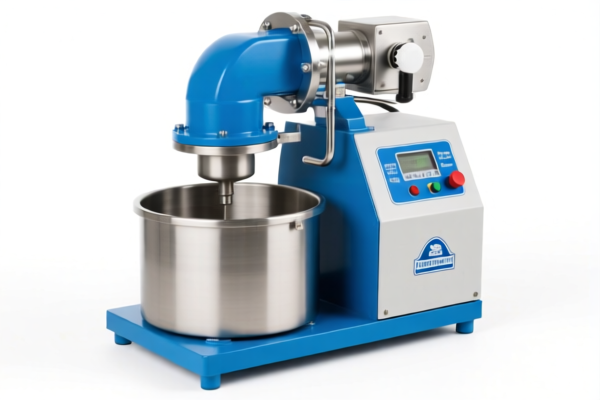
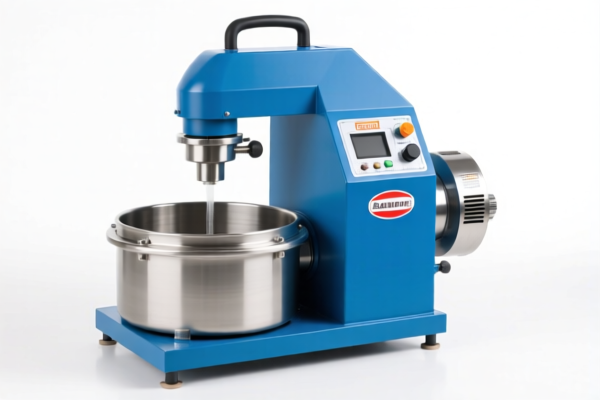
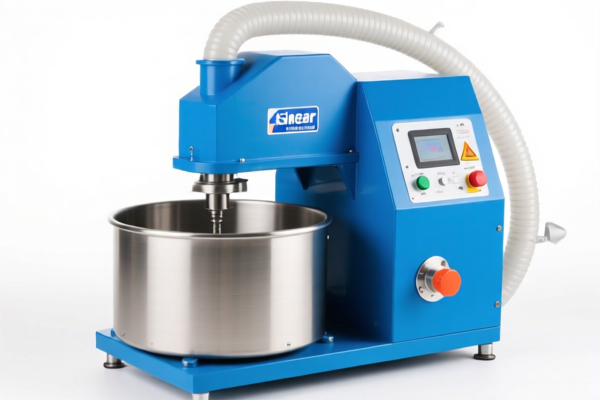
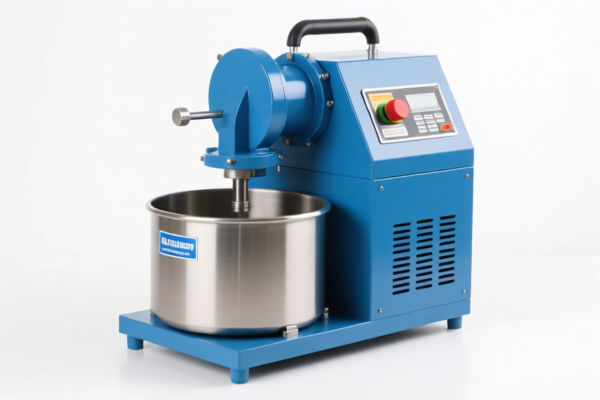
AI Analysis
🌀 Mobile High Shear Mixer (Industrial Food & Beverage Machinery)
🌐 HS Code Classification & Customs Clearance Guide | 2026 Latest Tariff Analysis | Professional Entry Strategy
📌 1. Product Definition: What is a Mobile High Shear Mixer?
A Mobile High Shear Mixer is a critical piece of industrial equipment used in the processing of food and beverage products. Its primary function is to rapidly mix, emulsify, disperse, and homogenize ingredients (such as powders, liquids, and pastes) using high-speed rotating blades (impellers) and stationary slots (stators) to create high shear forces.
Key Characteristics: * "Mobile": Mounted on wheels or a trolley for easy movement within the production facility. * "High Shear": Operates at high RPMs to break down particles and ensure uniform consistency. * "Industrial": Designed for large-scale manufacturing, not household use.
⚠️ Critical Distinction:
- If the machine is specifically designed for food/beverage processing (e.g., mixing dough, sauces, beverages) → It falls under HS Code 8438.
- If the machine is a general-purpose mixer (can mix chemicals, cosmetics, or non-food items) and not specifically stated for food → It falls under HS Code 8479.
- Clarification: The term "High Shear Mixer" in industrial contexts often refers to the general mechanical action. However, the application dictates the HS Code. Based on the provided data, we must distinguish between Food-Specific (8438) and General Mechanical (8479).
📦 2. HS Code Classification Details (2026 Latest Tariff Reference)
Based on the provided <DATA>, here are the two potential HS Code categories for "Mobile High Shear Mixer," depending on its intended use:
| HS Code | Product Description | Application Scenario | Key Differentiator |
|---|---|---|---|
8438.80.00.00 |
Machinery for the industrial preparation or manufacture of food or beverages | Food & Beverage Industry (e.g., mixing sauces, dough, beverages, dairy) |
✅ Specific to Food/Bev If the machine is explicitly designed for food processing, this is the correct classification. |
8479.82.00.40 |
Machines for mixing, kneading, or stirring (General Purpose) | General Industrial Use (e.g., cosmetics, chemicals, paints, or non-food industrial mixes) |
❌ Non-Food Specific If the machine is a general-purpose mixer not exclusively for food, it falls here. |
8479.82.00.80 |
Other machines for mixing, kneading, crushing, or stirring (General Purpose) | Other General Industrial (For functions not covered by 8479.82.00.40) |
❌ Non-Food Specific Alternative general-purpose code if 8479.82.00.40 does not apply. |
🔍 Important Note:
- HS Code 8438 is for machines specifically for food/beverage.
- HS Code 8479 is for general mixing/kneading machines (including high shear mixers) not specifically for food.
- Clarification: Many high-shear mixers are dual-purpose. However, customs authorities often require proof of intended use. If the machine is marketed for food, 8438 is preferred. If it's a general industrial mixer, 8479 applies.
- Given the data, both8438.80.00.00and8479.82.00.40/80are relevant. You must choose based on the specific application stated in the commercial invoice.
💰 3. 2026 Tariff Rate Breakdown (Detailed Tax Clauses)
✅ Applicable Country: United States (US)
✅ Country of Origin: China (CN)
✅ Effective Date: 2025-11-10 onwards (including subsequent imports)
🎯 A. If Classified as Food-Specific Mixer (8438.80.00.00)
| Item | Detail |
|---|---|
| Base Tariff | 0.0% (Ad Valorem) |
| Section 301 Surcharge | +25.0% |
| Section 122 Surcharge | +10.0% |
| Total Tariff Rate | 35.0% |
| Tax Calculation | CIF Value × 35% |
| De Minimis Exemption | ❌ Not Eligible (deny_de_minimis) |
| Legal Basis Path | Section 301: USITC 8438.80.00.00 → Section 122: IEEPA 9903.01.10 |
📌 Explanation:
- Section 301 (25%): Imposed on a wide range of Chinese industrial machinery.
- Section 122 (10%): Imposed on specific items under IEEPA.
- Total 35%: This is a high tariff rate. Proper classification is crucial to avoid overpayment or underpayment.
🎯 B. If Classified as General Purpose Mixer (8479.82.00.40 or 8479.82.00.80)
| Item | Detail |
|---|---|
| Base Tariff | 0.0% (Ad Valorem) |
| Section 301 Surcharge | +25.0% |
| Section 122 Surcharge | +10.0% |
| Total Tariff Rate | 35.0% |
| Tax Calculation | CIF Value × 35% |
| De Minimis Exemption | ❌ Not Eligible (deny_de_minimis) |
| Legal Basis Path | Section 301: USITC 8479.82.00.40/80 → Section 122: IEEPA 9903.01.10 |
📌 Explanation:
- Both general-purpose and food-specific high-shear mixers fall under the same 35% total tariff rate in the provided data.
- The distinction in HS Code matters for regulatory compliance (e.g., FDA requirements for food machinery) but not for the tariff rate in this specific dataset.
🛠️ 4. Customs Clearance Practical Advice (Avoiding Pitfalls)
✅ 1. Documentation Checklist (All Required)
| Document | Must Provide? | Notes |
|---|---|---|
| ✅ Product Specification Sheet | ✔️ | Must clearly state: "High Shear Mixer," "Mobile," "Capacity," "Motor Power," "Intended Use (Food/General)." |
| ✅ Commercial Invoice | ✔️ | Must match the HS Code chosen. Clearly label as "Food Machinery" or "Industrial Mixer." |
| ✅ Packing List | ✔️ | Detail all components (wheels, base, mixing vessel, motor, control panel). |
| ✅ Photos of the Machine | ✔️ | Show the label, brand, model, and any food-grade certifications (e.g., 3-A, FDA compliance). |
| ✅ Certificate of Origin | ✔️ | Required for Section 122 assessment. |
| ✅ FDA Registration (if Food Use) | ✔️ | If classified under 8438, the machine may need to comply with FDA standards for food contact surfaces. |
✅ 2. Declaration Tips (Key Mantra)
🔥 "Be Specific, Declare Clearly, Avoid Ambiguity!"
| Scenario | Correct Declaration | Incorrect Declaration |
|---|---|---|
| Food-Specific Mixer | "Industrial High Shear Mixer for Food Processing, Mobile Type, Model XYZ" | "Mixer" or "Blender" (Too vague) |
| General Purpose Mixer | "Industrial High Shear Mixing Machine for Non-Food Applications, Mobile Type, Model XYZ" | "Food Mixer" (Incorrect if not for food) |
| Mixed Shipment | Split invoices: One for Food Machinery (8438), one for General Machinery (8479) |
Combine under one HS Code (Risk of audit) |
✅ 3. Special Considerations
| Situation | Handling Advice |
|---|---|
| Dual-Use Machine | If the machine can be used for both food and non-food, declare it as Food Machinery (8438) if marketed/sold for food. Otherwise, use 8479. Consistency with marketing materials is key. |
| Mobile Base | Ensure the mobile base is included in the declaration. It is part of the machine, not a separate accessory. |
| FDA Compliance | For 8438, ensure the machine materials (stainless steel, seals) meet FDA food-contact standards. Provide certificates if requested. |
| Section 122 | The 10% surcharge is automatic for Chinese-origin goods under IEEPA. No exemption is available for this category. |
🌍 5. Global Market Comparison (2026 Latest)
| Country/Region | Recommended HS Code | Tariff Rate | Certification Requirements | Notes |
|---|---|---|---|---|
| 🇺🇸 USA | 8438.80.00.00 (Food) or 8479.82.00.40 (General) |
35% | FDA (for Food), CE/UL (Electrical) | High tariffs due to Section 301 & 122. |
| 🇨🇳 China | 8438.80.00.00 or 8479.82.00.40 |
5-10% | CCC (Electrical) | Lower tariffs, no Section 301. |
| 🇪🇺 EU | 8438.80.00 or 8479.80.00 |
0-4% | CE Mark, RoHS | No high surcharges. CE certification is critical. |
| 🇦🇺 Australia | 8438.80.00 or 8479.80.00 |
5% | RCM (Electrical) | Moderate tariffs. |
| 🇯🇵 Japan | 8438.80.00 or 8479.80.00 |
0-4% | PSE (Electrical) | Low tariffs. |
📌 Conclusion:
- USA has the highest effective tariff (35%) due to Section 301 and Section 122.
- EU and Japan offer the most favorable tariff conditions.
- Accurate classification is essential to avoid penalties, especially for food-related machinery in the US.
📌 6. Common Errors & Pitfalls (Lessons Learned)
❌ Error 1: Declaring a food mixer as "General Machinery" to avoid scrutiny
👉 Consequence: Customs may reclassify it as food machinery and apply additional FDA compliance requirements, leading to delays.
❌ Error 2: Not specifying "Mobile" in the description
👉 Consequence: Customs may request additional information to verify if it’s a standalone machine or a component, causing clearance delays.
❌ Error 3: Ignoring Section 122 Surcharge
👉 Consequence: Underpayment of 10% tariff, leading to back taxes and penalties.
❌ Error 4: Using vague terms like "Mixer" without specifying "High Shear" or "Industrial"
👉 Consequence: Risk of misclassification (e.g., as a household blender), leading to incorrect tariff application.
✅ Correct Practice:
"Mobile High Shear Mixer, Stainless Steel, 500L Capacity, for Food Beverage Industry, Model XYZ, CE/UL Certified, Chinese Origin"
🎯 7. Conclusion: Professional Classification, Cost Optimization
🎯 Remember the Mantra:
🔹 "Food vs. General? Check the Application!"
🔹 "HS Code8438for Food,8479for General."
🔹 "35% Total Tariff in the US – Plan Your Cost Accordingly!"
📌 Pro Tip:
If your machine is not exclusively for food, consider classifying it under
8479.82.00.40to align with general industrial standards. However, ensure your marketing materials do not contradict this classification.
For food machinery, ensure FDA compliance is documented to avoid clearance issues in the US.
📣 Immediate Action:
📞 Consult with a licensed customs broker + Provide detailed product specs + Apply for Advance Ruling if uncertain.
🚀 Ensure smooth customs clearance, minimize duties, and maximize profit margins!
✨ Professional Customs Clearance Starts with Accurate Classification!
💼 Every Percent of Tariff Saved is Profit Earned!
Customer Reviews
About HS Code Classification
The Harmonized System (HS) is an internationally standardized nomenclature developed by the World Customs Organization (WCO) to classify traded products. Over 200 countries use the HS system as the basis for customs tariffs, trade statistics, and import/export regulations.
Each HS code follows a hierarchical structure:
- Chapter (2 digits) — Broad category of goods (e.g., Chapter 84: Machinery and Mechanical Appliances)
- Heading (4 digits) — More specific grouping within the chapter
- Subheading (6 digits) — Internationally standardized breakdown, used by all WCO member countries
- National subdivisions (8-10 digits) — Country-specific extensions for further classification, such as US HTSUS 10-digit codes
Correct HS code classification is essential for smooth customs clearance, accurate duty payment, and compliance with trade regulations. Misclassification can lead to customs delays, overpayment of duties, or penalties.
When importing from CN to US, the applicable tariff rates may include:
- Most-Favored-Nation (MFN) rate — The standard duty rate applied to WTO members
- General rate — Applied to countries without trade agreements
- Trade remedy duties — Additional tariffs such as Section 301 (anti-dumping), Section 232 (national security), or countervailing duties
The information provided on this page is for reference purposes only. For official classification, please consult with your local customs authority or a licensed customs broker.