Mobile Phone Anti Slip Mat
CN → US| HS Code | Tariff Rate | Origin | Destination | Doc |
|---|---|---|---|---|
| 3923290000 | 38.0% | CN | US | Official Doc |
| 3926901000 | 20.9% | CN | US | Official Doc |
| 3926904000 | 12.8% | CN | US | Official Doc |
| 3923900080 | 38.0% | CN | US | Official Doc |
| 4016100000 | 35.0% | CN | US | Official Doc |
Product Images

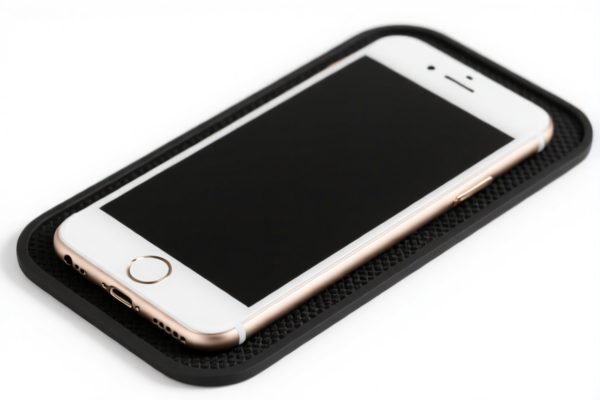
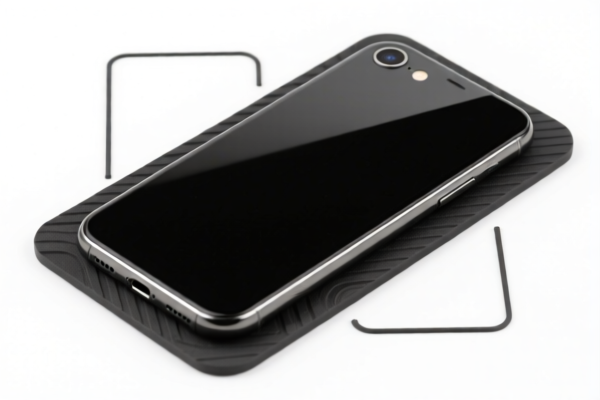
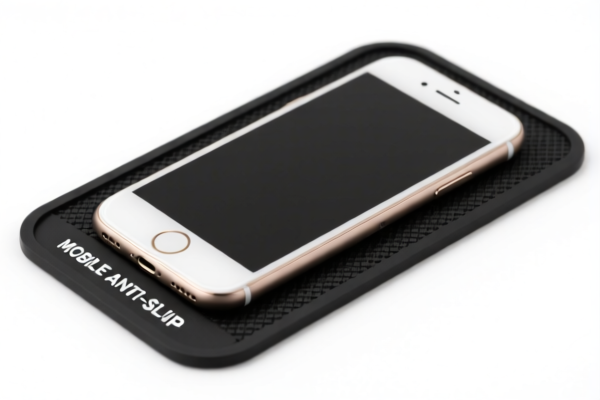
AI Analysis
📱 Mobile Phone Anti-Slip Mat (Silicone Car Mount Mat)
🌐 HS Code Reference & Customs Clearance Guide | 2026 Latest Tariff Analysis | Professional Level Clearance Strategy
📌 Part I: Product Definition & Classification: Do You Really Understand "Anti-Slip Mats"?
A mobile phone anti-slip mat, typically made of silicone or rubber, is designed to hold smartphones securely in car cup holders, dashboards, or center consoles. In international trade, the classification depends heavily on the material composition (plastic vs. rubber) and the function (packaging/support vs. other articles).
⚠️ Key Distinction Point:
- If classified under Chapter 39 (Plastics): It is often viewed as a "closure," "packaging accessory," or "other plastic article."
- If classified under Chapter 40 (Rubber): It is viewed as an "other vulcanized rubber article."
- Crucial Note: Silicone is generally treated as a plastic in tariff headings unless specifically classified under rubber, leading to significant tariff differences due to Section 301 and IEEPA penalties.
📦 Part II: HS Code Classification Details (2026 Latest Tariff Authority Comparison)
| HS Code | Product Description | Applicable Scenario | Total Tax Rate* |
|---|---|---|---|
3923.29.00.00 |
Other plastic packing supplies, articles of plastics for the conveyance or packing of goods | Silicone mat classified as a "closure" or "packing accessory" for phones | 38.0% |
3926.90.10.00 |
Other articles of plastics | Silicone mat classified as a general plastic utility item | 20.9% |
3926.90.40.00 |
Other articles of plastics, n.e.c. (not elsewhere classified) | Silicone mat under a specific sub-category of plastic goods | 12.8% |
3923.90.00.80 |
Other packing materials and accessories of plastics | Silicone mat classified as "packaging or auxiliary support" | 38.0% |
4016.10.00.00 |
Other articles of vulcanized rubber other than hard rubber | Silicone mat classified as a rubber article (Note: Summary says "Baby anti-slip mat" but applied here for comparison) | 35.0% |
* Total Tax Rate includes Base Tariff, Section 301 Additional Tariff, and IEEPA (Section 122) Tariff for Chinese Origin.
🔍 Important Reminder:
- The classification of silicone mats is controversial. Some customs officers treat them as plastic articles (Chapter 39), while others may argue for rubber (Chapter 40) if the silicone content is high.
-3926.90.40.00offers the lowest rate (12.8%), but requires strong justification that it is not a "packing supply."
-3923.29.00.00and3923.90.00.80carry the highest rate (38.0%) because they are deemed "packing materials."
💰 Part III: 2026 Latest Tariff Rate Breakdown (Including Surcharges & Policy Add-ons)
✅ Applicable Country: United States (US)
✅ Origin: China (CN)
✅ Effective Time: November 10, 2025 (and subsequent imports)
🎯 1. 3923.29.00.00 & 3923.90.00.80 —— Plastic Packing Supplies / Accessories
| Item | Detail |
|---|---|
| Base Tariff | 3.0% |
| Section 301 Additional Tariff | +25.0% |
| IEEPA (122 Clause) Additional Tariff | +10.0% |
| Total Tax Rate | 38.0% |
| Tax Calculation | CIF Value × 38% |
| De Minimis Exemption | ❌ Not Available (deny_de_minimis) |
| Legal Basis Path | IEEPA:9903.01.25 → USITC:3923.29.00.00 / 3923.90.00.80 |
📌 Explanation:
- These codes are considered "packing materials." The high tax burden makes them expensive to clear.
- The 10% IEEPA surcharge applies to all goods from China under this category starting in 2025.
🎯 2. 3926.90.10.00 —— Other Plastic Articles
| Item | Detail |
|---|---|
| Base Tariff | 3.4% |
| Section 301 Additional Tariff | +7.5% |
| IEEPA (122 Clause) Additional Tariff | +10.0% |
| Total Tax Rate | 20.9% |
| Tax Calculation | CIF Value × 20.9% |
| De Minimis Exemption | ❌ Not Available |
| Legal Basis Path | IEEPA:9903.01.24 → USITC:3926.90.10.00 |
📌 Note:
- This is a mid-range tariff option.
- It is lower than the "packing supply" codes but higher than3926.90.40.00.
🎯 3. 3926.90.40.00 —— Other Plastic Articles (Specific Sub-category)
| Item | Detail |
|---|---|
| Base Tariff | 2.8% |
| Section 301 Additional Tariff | 0.0% |
| IEEPA (122 Clause) Additional Tariff | +10.0% |
| Total Tax Rate | 12.8% |
| Tax Calculation | CIF Value × 12.8% |
| De Minimis Exemption | ❌ Not Available |
| Legal Basis Path | IEEPA:9903.01.24 → USITC:3926.90.40.00 |
📌 Highlight:
- This is the most cost-effective option among the plastic classifications.
- The Section 301 tariff is 0% for this specific sub-code, which is a huge advantage.
- Risk: You must prove it is not a "packing supply" to avoid being bumped to 38%.
🎯 4. 4016.10.00.00 —— Other Vulcanized Rubber Articles (e.g., Baby Mat)
| Item | Detail |
|---|---|
| Base Tariff | 0.0% |
| Section 301 Additional Tariff | +25.0% |
| IEEPA (122 Clause) Additional Tariff | +10.0% |
| Total Tax Rate | 35.0% |
| Tax Calculation | CIF Value × 35% |
| De Minimis Exemption | ❌ Not Available |
| Legal Basis Path | IEEPA:9903.01.25 → USITC:4016.10.00.00 |
📌 Note:
- Although the base tariff is 0%, the high Section 301 tax (25%) pushes the total to 35%.
- This code is primarily used for rubber products, not silicone. Using it for silicone may be challenged by customs.
🛠️ Part IV: Customs Clearance Practical Advice (Combat Pitfall Guide)
✅ 1. Document Checklist (Mandatory)
| Document | Required | Description |
|---|---|---|
| ✅ Product Specification Sheet | ✔️ | Detail material (e.g., "100% Silicone"), dimensions, weight |
| ✅ Product Photos | ✔️ | Clear images showing the mat, texture, and usage context |
| ✅ Commercial Invoice | ✔️ | Accurate description: "Silicone Car Phone Holder Mat" |
| ✅ Packing List | ✔️ | Confirm contents to avoid "undisclosed goods" flags |
| ✅ Test Reports | ✔️ | SGS, Intertek, or CTi reports confirming material composition |
| ✅ Origin Certificate | ✔️ | Proof of Chinese origin (triggers 122 Clause + 301 Tax) |
✅ 2. Declaration Tips (Key Mantras)
🔥 "Material is King, Function is Queen, Code is Destiny!"
| Scenario | Correct Declaration | Wrong Practice |
|---|---|---|
| Silicone Car Mat | 3926.90.40.00 (if defensible) |
3923.29.00.00 (38% tax) |
| Mat as "Packaging" | Avoid 3923 codes if possible |
Declaring as "gift box insert" |
| Rubber vs. Silicone | Use 3926 for silicone |
Using 4016 (rubber) for silicone → Misclassification risk |
| Description | "Silicone Non-Slip Mat for Automobile" | "Plastic Mat" (too vague) |
✅ 3. Special Situation Handling
| Situation | Handling Advice |
|---|---|
| OEM Custom Mat | Provide design files to prove it's a functional automotive accessory, not a packing supply |
| Silicone vs. Rubber | If material is >90% silicone, stick to Chapter 39. If mixed, consult a specialist |
| High Value Items | Consider Advance Ruling (Pre-classification) to lock in 3926.90.40.00 |
| Mixed Shipments | Ensure invoice separates "Phone Mat" from actual "Packaging Materials" |
🌍 Part V: Global Market Clearance Comparison (2026 Latest)
| Country/Region | Recommended HS Code | Total Tax Rate* | Certification Requirements | Notes |
|---|---|---|---|---|
| 🇺🇸 USA | 3926.90.40.00 |
12.8% | FDA (if food contact), Prop 65 | Highest tax burden globally |
| 🇨🇳 China | 3926.90.40.00 |
3.5% | None | No additional surcharges |
| 🇪🇺 EU | 3926.90.99 |
4.2% | CE, REACH | No Section 301/122 |
| 🇬🇧 UK | 3926.90.99 |
4.2% | UKCA | Post-Brexit rules apply |
| 🇦🇺 Australia | 3926.90.99 |
5.0% | RCM | Low tax environment |
📌 Conclusion:
- USA is the most challenging market due to 38% vs. 12.8% disparity based on code selection.
- EU/UK/AU have stable, low tariffs. Focus on compliance (CE, REACH) rather than tariff arbitrage.
📌 Part VI: Common Errors & Pitfall Guide (Lessons from Blood)
❌ Error 1: Declaring Silicone Mat as 3923.29.00.00 (Packing Supply)
👉 Consequence: 38% Tax vs. 12.8%. Loss of 25.2% profit!
❌ Error 2: Using 4016.10.00.00 (Rubber) for Silicone Mat
👉 Consequence: Customs may reclassify to 3926, apply 301+122 taxes, and demand back payment.
❌ Error 3: Vague Description "Plastic Mat"
👉 Consequence: Customs inspection, delay, potential penalty for inaccurate declaration.
❌ Error 4: Ignoring IEEPA 122 Clause
👉 Consequence: Missing the 10% additional tax calculation leads to underpayment and fines.
✅ Correct Practice:
"Silicone Non-Slip Mat for Automobile, Model XYZ, 100% Silicone, Color Black, Made in China"
🎯 Part VII: Conclusion: Professional Declaration, Time-Saving, Cost Reduction!
🎯 Remember the Mantra:
🔹 "Silicone goes to 3926, avoid 3923 packing trap!"
🔹 "12.8% is the goal, 38% is the pit, choose wisely to stay lit!"
🔹 "HS Code defines destiny, tax difference is massive, declare accurately to save cash!"
📌 Pro Tip:
If your mat is originally from Vietnam, Mexico, or Malaysia, you may qualify for IEEPA Exemption. Tax rate drops to Base Tariff + 0% Additional.
Recommend applying for Advance Ruling (Pre-classification) to secure the 12.8% rate for 3926.90.40.00.
📣 Take Action Now:
📞 Contact Professional Broker + Provide Product Photos + Apply for HS Code Advance Ruling
🚀 Let your Anti-Slip Mat Clear Customs Smoothly, Export Efficiently, and Double Your Profit!
✨ Professional Clearance Starts with Precise Classification!
💼 Every Cent of Your Cost Deserves Precise Calculation!
Customer Reviews
About HS Code Classification
The Harmonized System (HS) is an internationally standardized nomenclature developed by the World Customs Organization (WCO) to classify traded products. Over 200 countries use the HS system as the basis for customs tariffs, trade statistics, and import/export regulations.
Each HS code follows a hierarchical structure:
- Chapter (2 digits) — Broad category of goods (e.g., Chapter 84: Machinery and Mechanical Appliances)
- Heading (4 digits) — More specific grouping within the chapter
- Subheading (6 digits) — Internationally standardized breakdown, used by all WCO member countries
- National subdivisions (8-10 digits) — Country-specific extensions for further classification, such as US HTSUS 10-digit codes
Correct HS code classification is essential for smooth customs clearance, accurate duty payment, and compliance with trade regulations. Misclassification can lead to customs delays, overpayment of duties, or penalties.
When importing from CN to US, the applicable tariff rates may include:
- Most-Favored-Nation (MFN) rate — The standard duty rate applied to WTO members
- General rate — Applied to countries without trade agreements
- Trade remedy duties — Additional tariffs such as Section 301 (anti-dumping), Section 232 (national security), or countervailing duties
The information provided on this page is for reference purposes only. For official classification, please consult with your local customs authority or a licensed customs broker.