Mobile Phone Earpiece
CN → US| HS Code | Tariff Rate | Origin | Destination | Doc |
|---|---|---|---|---|
| 8518301000 | 17.5% | CN | US | Official Doc |
| 8517710000 | 67.5% | CN | US | Official Doc |
| 8517790000 | 67.5% | CN | US | Official Doc |
| 8518302000 | 10.0% | CN | US | Official Doc |
| 8518301000 | 17.5% | CN | US | Official Doc |
Product Images
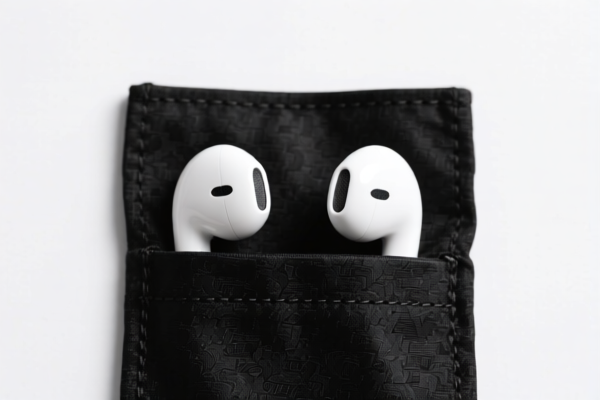

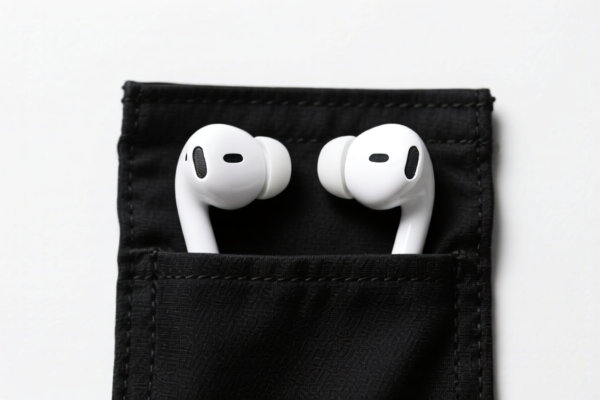

AI Analysis
🎧 Mobile Phone Earpiece (Receiver/Audio Component)
🌐 HS Code Reference & Customs Clearance Guide | 2026 Latest Tariff Analysis | Professional-Level Strategy
📌 1. Product Definition & Classification: Do You Really Understand "Mobile Phone Earpiece"?
The mobile phone earpiece (often referred to as a "receiver" in technical manuals) is a critical audio output component for mobile communication devices. In international trade, its classification depends heavily on whether it is viewed as a standalone telecommunication accessory or an internal component of a handset.
Based on the provided DATA, here are the valid classifications and their corresponding tariff structures.
⚠️ Key Distinction:
- If classified as a standalone telephone receiver or speaker assembly: Lower base tariffs, but subject to specific 122-clause tariffs.
- If classified as a communication device component (specifically involving steel, aluminum, or copper): Significantly higher tariffs due to material-based surcharges.
📦 2. HS Code Classification Details (2026 Latest Tariff Authority对照)
| HS Code | Product Description | Match Summary | Total Tax Rate |
|---|---|---|---|
8518.30.10.00 |
Mobile Phone Earpiece falls under Telephone Receivers | ✅ Match Success | 17.5% |
8517.71.00.00 |
Mobile Phone Earpiece falls under Audio Components of Mobile Communication Equipment | ✅ Match Success | 67.5% |
8517.79.00.00 |
Mobile Phone Earpiece falls under Spare Parts of Communication Equipment | ✅ Match Success | 67.5% |
8518.30.20.00 |
Mobile Phone Earpiece falls under Speaker Assemblies | ✅ Match Success | 10.0% |
8518.30.10.00 |
Wireless Earphones fall under the Headphone category | ✅ Match Success | 17.5% |
🔍 重点提醒 (Key Reminders):
-8518.30.10.00(Telephone Receiver) and8518.30.20.00(Speaker Assembly) generally carry lower total tariffs (17.5% and 10.0% respectively) compared to component-specific codes.
-8517.71.00.00and8517.79.00.00trigger massive surcharges if the components contain Steel, Aluminum, or Copper, leading to a total rate of 67.5%.
- Wireless Earphones (Bluetooth/AirPods style) are distinct from wired phone receivers and are classified under8518.30.10.00as headphones, with a 17.5% rate.
💰 3. Detailed Tariff Rate Breakdown (Including Surcharges & Policy Additions)
✅ Applicable Country: United States (US)
✅ Origin: China (CN)
✅ Effective Time: Current applicable rates (Includes Section 301/122 clause implications as per DATA)
🎯 1. 8518.30.10.00 —— Telephone Receivers / Wireless Earphones
| Item | Content |
|---|---|
| Base Duty | 0.0% |
| Retaliatory Tariff (Section 301) | +7.5% |
| Section 122 Tariff | +10% |
| Total Rate | 17.5% |
| Tax Calculation | CIF Value × 17.5% |
| De Minimis Exemption? | ❌ No (Subject to full tariff) |
📌 Explanation:
- This code is used for both traditional wired Telephone Receivers and Wireless Earphones (Headphones).
- The 17.5% is derived from the 7.5% Section 301 surcharge + 10% Section 122 tariff.
- Crucial: There are NO material-based surcharges (steel/aluminum/copper) attached to this specific code in the provided DATA.
🎯 2. 8518.30.20.00 —— Speaker Assemblies
| Item | Content |
|---|---|
| Base Duty | 0.0% |
| Retaliatory Tariff (Section 301) | 0.0% |
| Section 122 Tariff | +10% |
| Total Rate | 10.0% |
| Tax Calculation | CIF Value × 10.0% |
| De Minimis Exemption? | ❌ No |
📌 Explanation:
- This is the most cost-effective classification among the options provided (10.0%).
- It applies when the earpiece is categorized broadly as a "Speaker Assembly."
- Unlike the8517codes, it does not include the 50% material surcharge.
🎯 3. 8517.71.00.00 & 8517.79.00.00 —— Communication Device Components / Spare Parts
| Item | Content |
|---|---|
| Base Duty | 0.0% |
| Retaliatory Tariff (Section 301) | +7.5% |
| Section 122 Tariff | +10% |
| Material Surcharge (Steel/Alu/Cu) | +50% |
| Total Rate | 67.5% |
| Tax Calculation | CIF Value × 67.5% |
📌 Critical Warning:
- These codes (8517.71and8517.79) classify the earpiece as a spare part or internal component of a phone.
- IF the earpiece contains Steel, Aluminum, or Copper, an additional 50% surcharge is applied.
- Total Tax: 67.5%. This is a high-risk classification due to the material-based penalty.
- Legal Path:Section 301 (7.5%)+Section 122 (10%)+Material Surcharge (50%).
🛠️ 4. Customs Clearance Practical Advice (Combat Pitfall Guide)
✅ 1. Material Declaration is Key (Especially for Steel/Aluminum/Copper)
If you choose to classify under 8517.71.00.00 or 8517.79.00.00, you MUST accurately declare the material composition.
- Risk: If the earpiece contains magnetic materials (often steel or iron-based) and is misclassified, the 50% surcharge may still apply or trigger audits.
- Strategy: If possible, prefer 8518.30.20.00 (Speaker Assembly) or 8518.30.10.00 (Receiver/Headphone) to avoid the 50% material surcharge, provided the product description supports this classification.
✅ 2. Product Description Optimization
| Scenario | Recommended HS Code | Reason |
|---|---|---|
| Wired Earpiece / Receiver | 8518.30.10.00 |
Classified as "Telephone Receiver." Lower tax (17.5%). |
| Wireless Earbuds / AirPods | 8518.30.10.00 |
Classified as "Headphones." Lower tax (17.5%). |
| Internal Component (Raw) | 8517.71.00.00 |
Only if sold as a spare part. High Risk (67.5% if metallic). |
| Speaker Assembly Unit | 8518.30.20.00 |
Best Rate (10.0%) if legally justifiable as a "Speaker Assembly." |
🔥 Golden Rule:
“Classify by Function, Not Just Component!”
- If the product is a standalone receiver or speaker, use 8518.
- Avoid 8517 unless it is clearly an internal spare part and you are prepared for the 67.5% tax burden due to materials.
✅ 3. Documentation Requirements
| Document | Requirement | Note |
|---|---|---|
| Commercial Invoice | Must specify "Earpiece" or "Speaker Assembly" | Avoid vague terms like "Phone Part" |
| Product Specification | Detail material composition (e.g., "Plastic housing, Copper coil") | Crucial for 8517 codes to determine surcharge |
| Photo of Product | Show labels, model number, and connections | Helps Customs verify if it's a standalone unit or internal part |
| Bill of Lading | Clear description of goods | Match invoice exactly |
🌍 5. Global Market Comparison (2026 Latest)
| Country/Region | Recommended HS Code | Estimated Total Tax | Notes |
|---|---|---|---|
| 🇺🇸 USA | 8518.30.20.00 |
10.0% | Best rate for Speaker Assemblies. Avoid 8517 due to 50% surcharge. |
| 🇺🇸 USA | 8518.30.10.00 |
17.5% | For Receivers/Headphones. Safe alternative to 8517. |
| 🇺🇸 USA | 8517.71.00.00 |
67.5% | Avoid if possible. High risk due to material surcharges. |
| 🇨🇳 China | 8518.30.10.00 |
~8-10% (VAT + Duty) | Standard import rates. No Section 122/301. |
| 🇪🇺 EU | 8518.30.10.00 |
0-4% | Generally low duty. No US-style surcharges. |
📌 Conclusion:
- For US Imports, the 10.0% (8518.30.20.00) and 17.5% (8518.30.10.00) rates are significantly more favorable than the 67.5% rate.
- The 67.5% rate is a penalty zone for metallic components classified as general communication parts.
📌 6. Common Mistakes & Pitfall Guide
❌ Mistake 1: Classifying a Speaker Assembly under 8517.79.00.00 (Spare Parts).
👉 Consequence: You pay 67.5% instead of 10.0%.
👉 Solution: Use 8518.30.20.00.
❌ Mistake 2: Mislabeling Wireless Earphones as Telephone Receivers.
👉 Consequence: While both are 17.5%, functional mismatch may trigger customs audits.
👉 Solution: Clearly state "Wireless Earphones" for 8518.30.10.00.
❌ Mistake 3: Ignoring Material Composition for 8517 codes.
👉 Consequence: If copper/aluminum/steel is present but not declared, the 50% surcharge may be applied retroactively, plus penalties.
👉 Solution: Declare materials accurately or avoid 8517 codes entirely.
✅ Correct Action:
“Mobile Phone Earpiece (Speaker Assembly), Model XYZ, Plastic/Copper Components, For Replacement Use”
→ Classify under8518.30.20.00(10.0%) or8518.30.10.00(17.5%).
🎯 7. Conclusion: Professional Declaration, Save Costs!
🎯 Remember the Mantra:
🔹 “Speaker Assembly is 10%, Receiver is 17.5%, Part is 67.5%!”
🔹 “Avoid 8517 for Metallic Components!”
🔹 “HS Code Choice Saves Thousands!”
📌 Pro Tip:
If your earpiece is a standalone product (e.g., wired receiver or wireless bud), DO NOT classify it as a "spare part" (8517). Use the 8518 series to benefit from lower tariffs and avoid the 50% material surcharge.
📣 Immediate Action:
📞 Consult with a professional customs broker.
📝 Provide product specs and material composition.
🚀 Choose8518.30.20.00(10%) or8518.30.10.00(17.5%) to minimize tax burden.
✨ Professional Clearance, Precise Classification!
💼 Every Dollar Saved Counts!
Customer Reviews
About HS Code Classification
The Harmonized System (HS) is an internationally standardized nomenclature developed by the World Customs Organization (WCO) to classify traded products. Over 200 countries use the HS system as the basis for customs tariffs, trade statistics, and import/export regulations.
Each HS code follows a hierarchical structure:
- Chapter (2 digits) — Broad category of goods (e.g., Chapter 84: Machinery and Mechanical Appliances)
- Heading (4 digits) — More specific grouping within the chapter
- Subheading (6 digits) — Internationally standardized breakdown, used by all WCO member countries
- National subdivisions (8-10 digits) — Country-specific extensions for further classification, such as US HTSUS 10-digit codes
Correct HS code classification is essential for smooth customs clearance, accurate duty payment, and compliance with trade regulations. Misclassification can lead to customs delays, overpayment of duties, or penalties.
When importing from CN to US, the applicable tariff rates may include:
- Most-Favored-Nation (MFN) rate — The standard duty rate applied to WTO members
- General rate — Applied to countries without trade agreements
- Trade remedy duties — Additional tariffs such as Section 301 (anti-dumping), Section 232 (national security), or countervailing duties
The information provided on this page is for reference purposes only. For official classification, please consult with your local customs authority or a licensed customs broker.