Mobile Phone and Tablet Stand
CN → US| HS Code | Tariff Rate | Origin | Destination | Doc |
|---|---|---|---|---|
| 3926902500 | 24.0% | CN | US | Official Doc |
| 3926909989 | 22.8% | CN | US | Official Doc |
| 7326908688 | 87.9% | CN | US | Official Doc |
| 7326200090 | 88.9% | CN | US | Official Doc |
| 8529909800 | 35.0% | CN | US | Official Doc |
| 8529907700 | 35.0% | CN | US | Official Doc |
Product Images


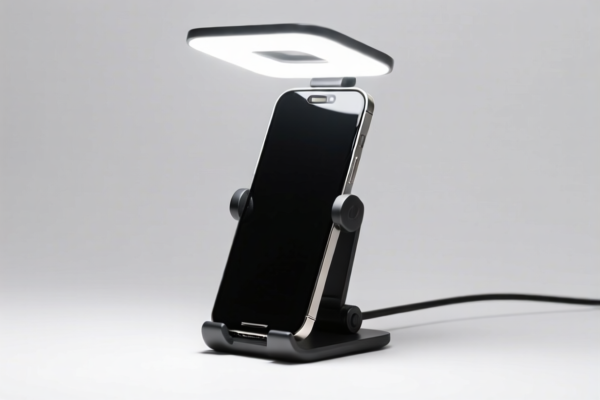
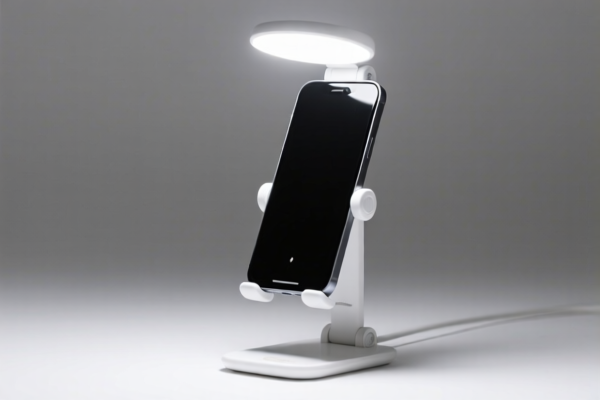
AI Analysis
📱 Mobile & Tablet Stands (The Ultimate Clearance Guide)
🌐 HS Code Reference & Customs Clearance Strategy | 2026 Latest Tariff Analysis | Professional Import Tactics
📌 I. Product Definition: What Exactly is a "Stand"?
A Mobile or Tablet Stand is a peripheral accessory designed to support smartphones or tablets. In international trade, the critical factor determining classification and tax liability is MATERIAL COMPOSITION and FUNCTIONAL PURPOSE.
Two Main Categories: 1. Plastic/Mixed Material Stands: Usually simple passive holders. Classified under Chapter 39 (Plastics) or Chapter 85 (Electrical Parts). 2. Metal (Steel/Iron) Stands: Heavy-duty or aesthetic stands. Classified under Chapter 73 (Articles of Iron/Steel).
⚠️ Key Distinction:
- If it is purely plastic or mixed material without specific electronic integration → Chapter 39 or 85.
- If it is made of Steel/Iron → Chapter 73 (Subject to HIGHEST tariffs).
- Do not confuse with "Cases" or "Cover"; stands are structural supports.
📦 II. HS Code Classification Matrix (2026 Latest Tariff Data)
Based on the provided data, here is the precise breakdown. Note: Tariffs listed include Base, Section 301, and Section 122 duties.
| HS Code | Material/Type | Description Summary | Total Tax Rate (CN→US) | Key Risk Factor |
|---|---|---|---|---|
| 3926.90.25.00 | Plastic | Plastic phone stand (Catch-all for plastics) | 24.0% | Lower risk, standard plastic duties |
| 3926.90.99.89 | Plastic/Metal | Plastic/Metal stand (Catch-all for plastics) | 22.8% | Slightly lower base duty, but still high total |
| 7326.90.86.88 | Steel/Iron | Iron/Steel stand (Other articles of iron/steel) | 87.9% | ⛔ HIGH RISK: Steel + Al/Cu surcharge applies |
| 7326.20.00.90 | Steel/Iron | Iron/Steel stand (Base catch-all for metals) | 88.9% | ⛔ HIGHEST RISK: Full metal surcharge stack |
| 8529.90.98.00 | Metal/Plastic | Part of apparatus (Generic electrical part) | 35.0% | Mid-range; relies on "part of apparatus" logic |
| 8529.90.77.00 | Metal/Plastic | Component/Part (Generic electrical part) | 35.0% | Mid-range; similar to above, specific subheading |
🔍 Critical Analysis:
- Plastic Stands (39xx): Best for cost efficiency (~23-24% total).
- Metal Stands (73xx): Avoid if possible. Tariffs exceed 87% due to the cumulative effect of Base, 301, 122, and the specific "Steel, Aluminum, Copper Products Surcharge (50%)".
- Electrical Parts (85xx): A viable middle ground (~35%) if the stand is considered a "part" of an electronic device, but requires strong justification that it is not merely a passive holder.
💰 III. Detailed Tariff Breakdown & Legal Basis
✅ Applicable Market: United States (US)
✅ Origin: China (CN)
✅ Status: All rates include cumulative surcharges effective 2026.
🎯 1. The "Plastic" Route (HS Codes: 3926.90.25.00 / 3926.90.99.89)
Example: 3926.90.25.00 (Plastic Stand)
| Component | Rate | Legal/Policy Basis |
|---|---|---|
| Base Duty | 6.5% | HTSUS General Rate |
| Section 301 | 7.5% | Trade Act Section 301 List 3/4 |
| Section 122 | 10.0% | Specific Section 122 Surcharge (China-specific) |
| Total Effective | 24.0% | Calculated Cumulatively |
Example: 3926.90.99.89 (Plastic/Metal Mix)
| Component | Rate | Legal/Policy Basis |
|---|---|---|
| Base Duty | 5.3% | HTSUS General Rate |
| Section 301 | 7.5% | Trade Act Section 301 List 3/4 |
| Section 122 | 10.0% | Specific Section 122 Surcharge |
| Total Effective | 22.8% | Calculated Cumulatively |
📌 Explanation:
- These codes are "catch-all" for plastics.
- The 122 Clause is a significant additive tax specifically targeting certain Chinese imports.
- Strategy: If the stand is >50% plastic by weight/value, prioritize these codes for lower duty.
🎯 2. The "Metal/Steel" Route (HS Codes: 7326.90.86.88 / 7326.20.00.90)
Example: 7326.90.86.88 (Steel Stand)
| Component | Rate | Legal/Policy Basis |
|---|---|---|
| Base Duty | 2.9% | HTSUS General Rate |
| Section 301 | 25.0% | Trade Act Section 301 List 1/2 |
| Section 122 | 10.0% | Specific Section 122 Surcharge |
| Steel/Al/Cu Surcharge | 50.0% | Special Metal Tariff |
| Total Effective | 87.9% | Extremely High |
📌 Explanation:
- Why so high? The 50% surcharge is applied to Steel, Aluminum, and Copper products. This is a punitive tariff layer on top of standard trade war tariffs.
- Warning: Do not declare a steel stand as "Plastic" to avoid this. CBP (Customs) will inspect material composition. Misclassification leads to seizures, fines, and penalties.
🎯 3. The "Electrical Part" Route (HS Codes: 8529.90.98.00 / 8529.90.77.00)
Example: 8529.90.98.00 (Part of Apparatus)
| Component | Rate | Legal/Policy Basis |
|---|---|---|
| Base Duty | 0.0% | HTSUS Free Rate |
| Section 301 | 25.0% | Trade Act Section 301 |
| Section 122 | 10.0% | Specific Section 122 Surcharge |
| Total Effective | 35.0% | Moderate Risk |
📌 Explanation:
- This classification assumes the stand is a part/component of an electronic device (e.g., part of a phone system).
- Risk: CBP may argue that a standalone stand is not a "part" of the apparatus but an accessory. If rejected, they may revert to 73xx or 39xx.
- Strategy: Use only if you can prove it is sold as a bundled part or integral to the electronic device's function.
🛠️ IV. Customs Clearance Practical Advice (Battle-Tested Strategies)
✅ 1. Material Declaration is Paramount
| Material Claim | HS Code Risk | Duty Risk | Clearance Success Probability |
|---|---|---|---|
| Plastic (>90%) | 3926.xx.xx | ~23% | ✅ High (Standard procedure) |
| Mixed (Plastic/Metal) | 3926.99.89 or 8529.xx | ~23-35% | ⚠️ Medium (May trigger inspection) |
| Steel/Iron | 7326.xx.xx | ~88% | ✅ High (But expensive) |
| Misdeclared Steel as Plastic | 3926.xx.xx | ~23% | ❌ Zero (Seizure + 3x Penalty) |
🚨 CRITICAL: Do not attempt to under-declare material. CBP uses X-rays and physical inspection. If a "plastic" stand is heavy and magnetic, it will be flagged as Steel.
✅ 2. Optimal Classification Strategy
Scenario A: Standard Plastic Stand
- Recommendation: Use 3926.90.25.00 or 3926.90.99.89.
- Reason: Lowest effective tax rate (~23-24%).
- Documentation: Clearly state "Polymer Plastic Stand, No Electronic Components."
Scenario B: Aluminum/Mixed Stand
- Recommendation: Avoid 7326 (Steel) codes.
- If Aluminum: Check if it qualifies for 8529 (Electrical Part) if bundled, or 7616 (Other Aluminum Articles) if not listed in data. Note: Data provided does not list Aluminum specific codes, but 73xx specifically mentions Steel/Iron surcharge. If it is pure Aluminum, it might avoid the 50% Steel surcharge, but check 7616.
- If Mixed Metal/Plastic: Consider 8529.90.98.00 if it can be justified as a part of the device. Rate is 35%, which is safer than 88%.
Scenario C: Heavy-Duty Metal Stand
- Recommendation: Accept 7326.90.86.88 or 7326.20.00.90.
- Reason: No legal way to avoid the 50% steel surcharge if it is steel.
- Mitigation: Increase CIF value carefully? No, duty is ad valorem. Consider raising retail price or sourcing non-Chinese steel if possible.
✅ 3. Documentation Checklist
| Document | Requirement | Note |
|---|---|---|
| Commercial Invoice | Must specify Material Composition (e.g., "90% ABS Plastic, 10% Steel Hinge") | Vague terms like "Stand" cause delays |
| Product Photos | High-res images showing texture, joints, and packaging | Prove it's not a "device" but a "holder" |
| Bill of Materials (BOM) | List of components and weights | Essential for proving plastic vs. metal ratio |
| Labeling | Country of Origin Marking ("Made in China") | Mandatory for US entry |
🌍 V. Global Market Comparison (2026)
| Destination | Preferred HS Code | Est. Total Duty (CN Origin) | Key Constraint |
|---|---|---|---|
| 🇺🇸 USA | 3926.90.25.00 (Plastic) | 24.0% | High Section 301 + 122 tariffs |
| 🇺🇸 USA | 7326.90.86.88 (Steel) | 87.9% | Steel Surcharge makes it unprofitable |
| 🇪🇺 EU | 3926.90.99.00 | ~4-6% | No Section 301/122. CE Marking required. |
| 🇨🇳 China | 3926.90.99.00 | ~5-7% | Low import duty, standard VAT. |
📌 Insight:
The US market is uniquely punitive for these goods due to the layered tariff structure (Base + 301 + 122 + Metal Surcharge).
European markets are significantly cheaper but require strict CE compliance and packaging waste regulations.
📌 VI. Common Pitfalls & Avoidance (Lessons Learned)
❌ Mistake 1: Declaring a Steel Stand as "Plastic" to save 65% in duty.
👉 Result: CBP inspection, seizure, and 300% penalty.
👉 Solution: Be honest. Use 7326 codes. Budget for 88% tax.
❌ Mistake 2: Using 8529 for a simple passive stand without justification.
👉 Result: CBP may reject the "part of apparatus" classification and revert to 39xx or 73xx.
👉 Solution: Only use 8529 if the stand is sold as a kit with the device or has active electronic components (e.g., wireless charging pad integration).
❌ Mistake 3: Ignoring the "122 Clause".
👉 Result: Underpayment of duties.
👉 Solution: Ensure your HS Code consultant includes the 10% Section 122 in all calculations for China-origin goods.
🎯 VII. Conclusion: Strategic Recommendations
🎯 For Importers: 1. Switch to Plastic: If design allows, use 100% plastic or high-grade polymer. This reduces tax from ~88% to ~24%. 2. Avoid Steel: If you must use metal, use Aluminum (check 7616) rather than Steel to potentially avoid the 50% steel surcharge (requires verification with current HTS). 3. Bundle Smartly: If the stand is essential to the device, explore 8529 (35% tax) as a compromise between Plastic (24%) and Steel (88%).
📞 Immediate Action:
📄 Request a CBP Binding Ruling for your specific product design before shipment.
🧪 Send material samples to a customs broker for classification verification.
💰 Calculate Landed Cost including the full 87.9% (Steel) or 24.0% (Plastic) tax to ensure profitability.
✨ Precision Classification = Maximum Profit.
💼 Don't let tariffs destroy your margin. Choose the right HS Code!
Customer Reviews
About HS Code Classification
The Harmonized System (HS) is an internationally standardized nomenclature developed by the World Customs Organization (WCO) to classify traded products. Over 200 countries use the HS system as the basis for customs tariffs, trade statistics, and import/export regulations.
Each HS code follows a hierarchical structure:
- Chapter (2 digits) — Broad category of goods (e.g., Chapter 84: Machinery and Mechanical Appliances)
- Heading (4 digits) — More specific grouping within the chapter
- Subheading (6 digits) — Internationally standardized breakdown, used by all WCO member countries
- National subdivisions (8-10 digits) — Country-specific extensions for further classification, such as US HTSUS 10-digit codes
Correct HS code classification is essential for smooth customs clearance, accurate duty payment, and compliance with trade regulations. Misclassification can lead to customs delays, overpayment of duties, or penalties.
When importing from CN to US, the applicable tariff rates may include:
- Most-Favored-Nation (MFN) rate — The standard duty rate applied to WTO members
- General rate — Applied to countries without trade agreements
- Trade remedy duties — Additional tariffs such as Section 301 (anti-dumping), Section 232 (national security), or countervailing duties
The information provided on this page is for reference purposes only. For official classification, please consult with your local customs authority or a licensed customs broker.