Modak Acrylic Short Fiber Blended Bed Sheet Fabric
CN → US| HS Code | Tariff Rate | Origin | Destination | Doc |
|---|---|---|---|---|
| 5903102090 | 35.0% | CN | US | Official Doc |
| 5903102500 | 42.5% | CN | US | Official Doc |
| 6302321040 | 24.9% | CN | US | Official Doc |
| 6302322030 | 21.4% | CN | US | Official Doc |
| 5407810020 | 49.9% | CN | US | Official Doc |
| 5407820020 | 49.9% | CN | US | Official Doc |
Product Images
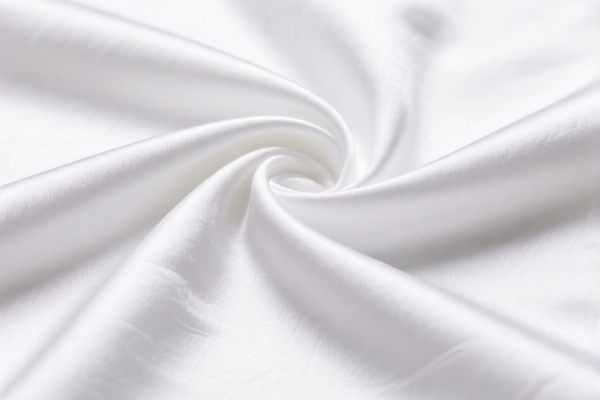
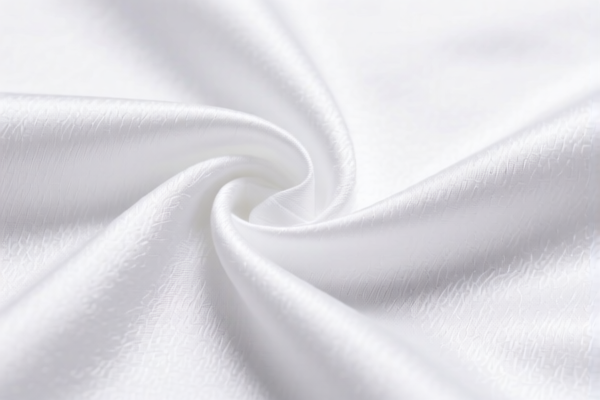
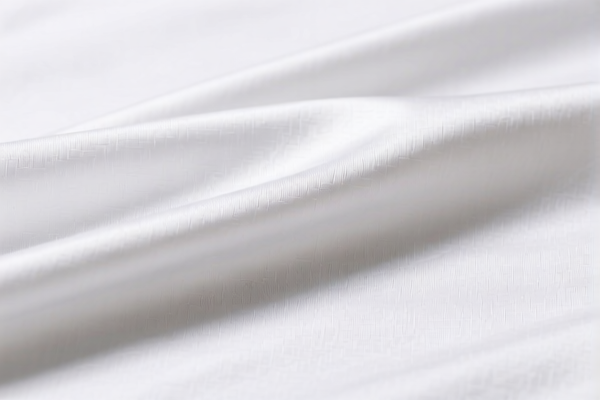

AI Analysis
🛏️ Modak Acrylic Short Fiber Blended Bed Sheet Fabric (Woven Textiles & Bed Linen)
🌐 HS Code Reference & Customs Clearance Guide | 2026 Latest Tariff Analysis | Professional Clearance Strategy
📌 I. Product Definition & Classification: What is "Modak" and why does it matter?
Modak Fabric is a specialized textile term, primarily referring to a plastic-impregnated, coated, covered, or laminated fabric. Unlike standard woven textiles, Modak fabric often involves a synthetic base (like man-made fibers) treated with plastics (such as Polyvinyl Chloride - PVC) to create durability, water resistance, or specific textures.
In international trade, the classification depends heavily on: 1. The Base Material: Is it man-made fibers (synthetic)? 2. The Treatment: Is it impregnated/coated with plastics (especially PVC)? 3. The End Use: Is it specifically made into bed sheets?
⚠️ Critical Distinction:
- If the fabric is unwoven/non-woven or heavily coated such that it loses textile character → It may fall under Chapter 59 (Impregnated Textiles).
- If it remains a woven textile and is later made into sheets → It may fall under Chapter 54 (Woven Fabrics) or Chapter 63 (Bed Linen).
- Key Trigger: The term "Modak" strongly suggests Chapter 59 (Plastics-laminated/impregnated) due to the common use of PVC coating in Modak production.
📦 II. HS Code Classification Details (2026 Latest Tariff Reference)
Based on the specific characteristics of Modak Acrylic Short Fiber Blended Bed Sheet Fabric, the following HS Codes from your data are most relevant. Note that "Acrylic" falls under Man-Made Fibers.
| HS Code | Product Description | Key Characteristics | Tax Rate (Total) |
|---|---|---|---|
| 5903.10.20.90 | Textile fabrics impregnated/coated/laminated with plastics (PVC): Of man-made fibers: Other: Over 70% by weight of rubber or plastics |
✅ High Plastic Content: If the Modak fabric has >70% PVC/plastic by weight. ✅ Man-Made Fiber Base: Acrylic is a man-made fiber. ⚠️ High Tariff: Subject to significant duties. |
25.0% (Base 0% + Add-on 25%) |
| 5903.10.25.00 | Textile fabrics impregnated/coated/laminated with plastics (PVC): Of man-made fibers: Other: Other (Includes <70% plastic content) |
✅ Low Plastic Content: If the coating is light or <70% by weight. ✅ Man-Made Fiber Base. 💡 Low Tariff: Preferential rate. |
0.0% (Base 0% + Add-on 0%) |
| 6302.32.10.40 | Bed Linen: Of man-made fibers: Containing embroidery/lace/etc. Sheets: Not napped |
✅ Finished Product: Only applies if sold as finished bed sheets. ✅ No Napping: Smooth surface. ✅ Decorative: Requires embroidery, lace, etc. |
0.0% |
| 6302.32.20.30 | Bed Linen: Of man-made fibers: Other Sheets: Napped |
✅ Finished Product: Only applies if sold as finished bed sheets. ✅ Napped: Brushed/fuzzy texture. ❌ Not Fabric: This is for finished sheets, not raw fabric. |
0.0% |
| 5407.81.00.20 | Woven Fabrics of Synthetic Filament Yarn: Containing <85% synthetic filaments, mixed mainly with cotton: Unbleached Sheeting |
⚠️ Mismatch: "Modak" usually implies coating (Ch 59) or specific blends, not simple cotton/synthetic blends. Only use if it's a simple unbleached woven fabric. | 0.0% |
| 5407.82.00.20 | Woven Fabrics of Synthetic Filament Yarn: Containing <85% synthetic filaments, mixed mainly with cotton: Dyed Sheeting |
⚠️ Mismatch: Similar to above. Only for simple dyed cotton/synthetic blends. | 0.0% |
🔍 Priority Analysis:
1. If selling RAW FABRIC (rolls): The core classification is likely 5903.10.20.90 or 5903.10.25.00 because "Modak" implies plastic impregnation.
2. If selling FINISHED SHEETS: The classification shifts to 6302.32.10.40 or 6302.32.20.30.
3. 5407 Codes are likely incorrect for Modak fabric, as Modak is typically a specialized coated textile, not a standard woven sheeting of cotton/synthetic blend.
💰 III. 2026 Latest Tariff Rate Details (With Add-On Taxes & Policy Additions)
✅ Applicable Country: United States (US)
✅ Country of Origin: China (CN) (Assumed based on typical Modak production hubs)
✅ Effective Date: 2025 November 10 onwards (includes subsequent imports)
🎯 1. 5903.10.20.90 —— Impregnated/Coated Textiles (PVC) with >70% Plastic
| Item | Detail |
|---|---|
| Base Tariff | 0% (Ad Valorem) |
| USITC Add-On Tariff | +25% (From USITC Footnote 9903.88.01 / Section 301) |
| IEEPA Add-On Tariff | +0% (Not explicitly listed in your data for this specific code, but check IEEPA lists. Your data shows total 25%, implying only the 25% add-on applies here). |
| Total Tariff Rate | 25.0% |
| Tax Calculation | CIF Value × 25% |
| De Minimis Exemption | ❌ No (High tariffs usually deny de minimis for Section 301 goods) |
| Legal Basis Path | USITC:5903.10.20.90 → FOOTNOTE:9903.88.01 |
📌 Explanation:
- This code attracts the 25% Section 301 tariff because it is a textile product impregnated with PVC from China.
- Even though the base duty is 0%, the 25% additional duty makes it expensive.
- Risk: High scrutiny on "weight percentage" of plastic. If you claim <70%, you move to the 0% code.
🎯 2. 5903.10.25.00 —— Impregnated/Coated Textiles (PVC) with <70% Plastic or "Other"
| Item | Detail |
|---|---|
| Base Tariff | 0% |
| USITC Add-On Tariff | 0% (Not subject to 25% add-on in your data) |
| IEEPA Add-On Tariff | 0% |
| Total Tariff Rate | 0.0% |
| Tax Calculation | CIF Value × 0% |
| De Minimis Exemption | ✅ Yes (Likely eligible for de minimis if under $800) |
| Legal Basis Path | USITC:5903.10.25.00 |
📌 Strategy:
- If your Modak fabric has less than 70% plastic by weight, you can classify it under 5903.10.25.00 to pay 0% duty.
- Caution: You must be able to prove the plastic content is <70%. Misclassification can lead to audits and back taxes.
🎯 3. 6302.32.10.40 / 6302.32.20.30 —— Finished Bed Linen
| Item | Detail |
|---|---|
| Base Tariff | 0% |
| USITC Add-On Tariff | 0% |
| Total Tariff Rate | 0.0% |
| Note | Only for finished sheets. |
📌 Strategy:
- If you are selling finished bed sheets (not fabric rolls), these codes are 0% duty.
- This is significantly cheaper than importing the raw fabric under 5903.10.20.90.
- Condition: Must be "Of man-made fibers" (Acrylic qualifies) and meet the description (embroidered/lace or napped).
🛠️ IV. Customs Clearance Practical Advice (Avoid Pitfalls)
✅ 1. Preparation Checklist (Mandatory)
| Document | Required | Reason |
|---|---|---|
| ✅ Product Specification Sheet | ✔️ | Must state: "Woven/Knitted Fabric", "Plastic Impregnation (PVC)", "Plastic Weight %". |
| ✅ Composition Label | ✔️ | Acrylic % + Plastic % + Base Fiber %. Crucial for 5903.10.20.90 vs .25.00. |
| ✅ Photos of Product | ✔️ | Show texture, coating, and any labels. |
| ✅ Commercial Invoice | ✔️ | Clearly describe as "Modak Fabric" or "Impregnated Textile", NOT just "Bed Sheet" if selling raw fabric. |
| ✅ Packing List | ✔️ | Weight and volume details. |
| ✅ Third-Party Test Report | ✔️ | Proof of Plastic Content %. If claiming 0% duty under 5903.10.25.00, a lab report showing <70% plastic is vital. |
✅ 2. Declaration Tips (Key Mnemonics)
🔥 "Coating >70%? Pay 25%. Coating <70%? Pay 0%. Finished Sheets? Pay 0%."
| Scenario | Correct HS Code | Error Risk |
|---|---|---|
| Raw Modak Fabric (Plastic >70%) | 5903.10.20.90 |
If declared as "Bed Sheet" → Penalty for Misclassification. |
| Raw Modak Fabric (Plastic <70%) | 5903.10.25.00 |
If declared as 5903.10.20.90 → Overpay 25%. |
| Finished Bed Sheets | 6302.32.10.40 or .30 |
If declared as Raw Fabric → Unnecessary 25% duty. |
| Simple Woven Fabric (No Plastic) | 5407.81.00.20 |
Only if NO plastic coating. Modak usually has plastic. |
✅ 3. Special Case Handling
| Case | Recommendation |
|---|---|
| Ambiguous Plastic Content | Conduct a lab test to determine the exact weight percentage of PVC/plastic. Use this data to choose between .20.90 (25%) and .25.00 (0%). |
| Mix of Raw Fabric & Finished Sheets | Declare Separately. Do not mix HS Codes on one invoice line item. |
| "Modak" Brand Name | Use "Modak" as a description, not the HS Code. Customs does not recognize brand names for classification. |
| Acrylic vs. Synthetic | Acrylic is a man-made fiber. Ensure the description matches "Of man-made fibers". |
🌍 V. Global Market Clearance Comparison (2026 Latest)
| Country/Region | Recommended HS Code | Tariff | Certification | Note |
|---|---|---|---|---|
| 🇺🇸 USA | 5903.10.20.90 or 5903.10.25.00 |
25% or 0% | None specific | High scrutiny on plastic content. |
| 🇨🇳 China | 5903.10.20.90 |
Varies | CCC (if applicable) | Import duties may differ. |
| 🇪🇺 EU | 5903.10.90 |
Varies (Often 0-4%) | REACH | PVC restrictions may apply. |
| 🇬🇧 UK | 5903.10.00 |
Varies | UKCA | Post-Brexit rules apply. |
📌 Conclusion:
- The USA is the most critical market for tariff optimization.
- Proving <70% plastic content can save you 25% on every shipment.
- Selling finished sheets avoids the 25% duty entirely if classified under 6302.
📌 VI. Common Errors & Pitfalls (Lessons Learned)
❌ Error 1: Declaring Raw Modak Fabric as "Bed Sheets".
👉 Consequence: Customs may reject the declaration because "Bed Sheets" implies finished goods. Penalties for misdeclaration.
❌ Error 2: Assuming all Modak is <70% Plastic.
👉 Consequence: If you declare 5903.10.25.00 but actual content is >70%, you owe 25% back duties + fines.
❌ Error 3: Mixing Finished Sheets and Raw Fabric in one HS Code.
👉 Consequence: Clearance delay. Customs may hold the entire shipment for inspection.
✅ Correct Approach:
"Modak Fabric, Woven, Acrylic Base, PVC Impregnated, Plastic Content: 65% by weight. Intended for: Bed Linen Manufacturing."
🎯 VII. Conclusion: Precise Classification, Cost Savings, Smooth Clearance!
🎯 Remember the Mnemonic:
🔹 "Raw Fabric + High Plastic = 25% Duty."
🔹 "Raw Fabric + Low Plastic = 0% Duty."
🔹 "Finished Sheets = 0% Duty (if Man-Made)."
🔹 "Don't Guess Plastic Content, Test It!"
📌 Pro Tip:
If your Modak fabric has plastic content between 60-75%, consider blending or coating adjustment to stay under the 70% threshold if possible, to qualify for the 0% tariff under 5903.10.25.00. Always request a Certificate of Analysis from your supplier.
📣 Immediate Action:
📞 Contact your customs broker BEFORE shipping.
📄 Provide Lab Test Reports for plastic content.
🚀 Optimize your HS Code to save 25% on every shipment!
✨ Professional Clearance Starts with Precise Classification!
💼 Your Cost Savings Are Worth the Extra Documentation!
Customer Reviews
About HS Code Classification
The Harmonized System (HS) is an internationally standardized nomenclature developed by the World Customs Organization (WCO) to classify traded products. Over 200 countries use the HS system as the basis for customs tariffs, trade statistics, and import/export regulations.
Each HS code follows a hierarchical structure:
- Chapter (2 digits) — Broad category of goods (e.g., Chapter 84: Machinery and Mechanical Appliances)
- Heading (4 digits) — More specific grouping within the chapter
- Subheading (6 digits) — Internationally standardized breakdown, used by all WCO member countries
- National subdivisions (8-10 digits) — Country-specific extensions for further classification, such as US HTSUS 10-digit codes
Correct HS code classification is essential for smooth customs clearance, accurate duty payment, and compliance with trade regulations. Misclassification can lead to customs delays, overpayment of duties, or penalties.
When importing from CN to US, the applicable tariff rates may include:
- Most-Favored-Nation (MFN) rate — The standard duty rate applied to WTO members
- General rate — Applied to countries without trade agreements
- Trade remedy duties — Additional tariffs such as Section 301 (anti-dumping), Section 232 (national security), or countervailing duties
The information provided on this page is for reference purposes only. For official classification, please consult with your local customs authority or a licensed customs broker.