Modak Acrylic Sofa Fabric
CN → US| HS Code | Tariff Rate | Origin | Destination | Doc |
|---|---|---|---|---|
| 5407912010 | 49.9% | CN | US | Official Doc |
| 5407922010 | 49.9% | CN | US | Official Doc |
| 5903102010 | 35.0% | CN | US | Official Doc |
| 5903102090 | 35.0% | CN | US | Official Doc |
| 9401614031 | 35.0% | CN | US | Official Doc |
| 9401710011 | 35.0% | CN | US | Official Doc |
Product Images
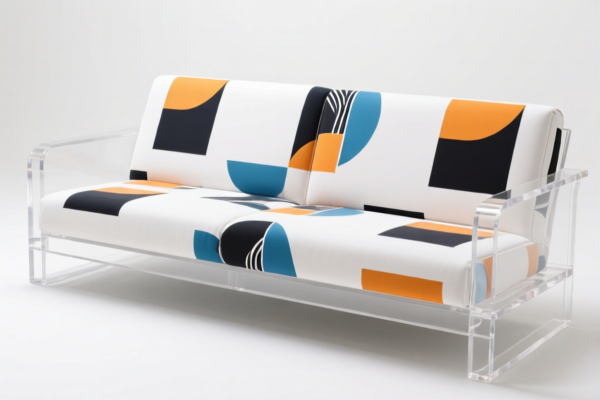
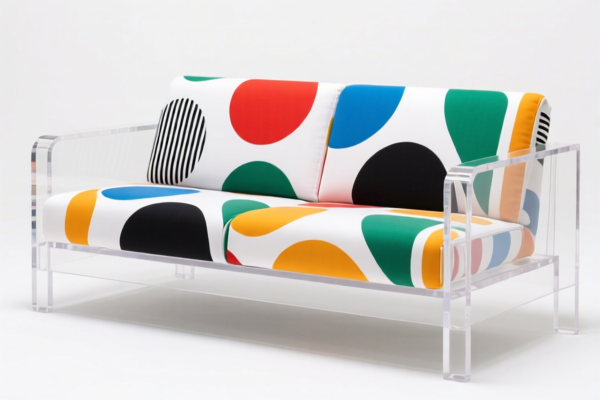
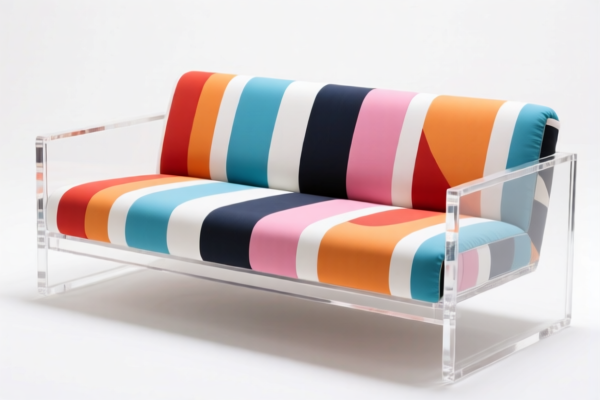
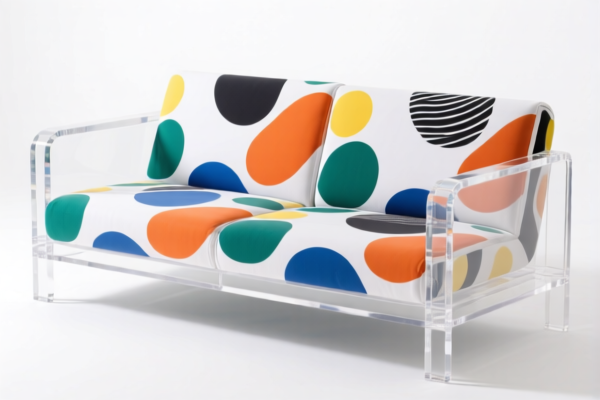
AI Analysis
🛋️ Modak Acrylic Sofa Fabric (Faux Fur / Sherpa Style)
🌐 HS Code Reference & Customs Clearance Guide | 2026 Latest Tariff Analysis | Professional Clearance Strategy
📌 I. Product Definition & Classification: What is "Modak Fabric"?
"Modak" fabric is a popular trade name for plush, faux fur, or sherpa-style synthetic textiles. It is typically made from 100% acrylic or polyester fibers, characterized by a soft, hairy pile. In international trade, it is not classified by its commercial name ("Modak") but by its composition, structure, and finishing process.
Key Distinctions: 1. Plain Woven/Woven Fabrics (Uncoated) If the fabric is simply woven and dyed/pile-textured without plastic coating → Heading 5407 or 5512/5513 (depending on fiber type). 2. Plastic-Coated/Laminated Fabrics: If the fabric has a backing of plastic (e.g., PVC or PU) for waterproofing or stiffness, or if the fibers themselves are sheathed/coated → Heading 5903.
⚠️ Critical Classification Point:
- Uncoated/Standard Faux Fur: Often misclassified as "Coated." If it is just woven acrylic/polyester with a pile, it may fall under 5407 (Synthetic Filament Yarn) or 5513/5514 (Synthetic Staple Fibers). Note: The provided DATA does not include these specific "uncoated" codes, so we must look at the "Coated" codes if the product has a plastic backing.
- Plastic-Coated/Laminated: If the sofa fabric has a distinct plastic layer (common in durable outdoor or stain-resistant indoor fabrics), it falls under 5903.10 (With Polyvinyl Chloride - PVC).
📦 II. HS Code Classification Details (Based on Provided DATA)
The provided DATA contains specific codes for Plastic-Coated/Laminated Textiles (PVC) and General Woven Fabrics. Since "Modak" is often a plush fabric, if it has a PVC backing/coating, it falls under 5903.10. If it is a simple woven synthetic fabric without coating, the closest available data points are 5407.91 and 5407.92, though standard Modak (acrylic/polyester staple) might technically differ. We will analyze the PVC-Coated options as they are explicitly in the data and common for heavy-duty sofa fabrics, and the Woven options for base materials.
| HS Code | Product Description | Application Context | Coating Status |
|---|---|---|---|
5903.10.20.10 |
Textile fabrics impregnated, coated, covered or laminated with plastics: With poly(vinyl chloride): Of man-made fibers: Over 70 percent by weight of rubber or plastics Fabrics, of yarns sheathed with poly(vinyl chloride) | Heavy-duty sofa fabric with PVC sheathing or backing | ✅ High PVC Content |
5903.10.20.90 |
Textile fabrics impregnated, coated, covered or laminated with plastics: With poly(vinyl chloride): Of man-made fibers: Other | Standard PVC-coated synthetic sofa fabric (not sheathed yarns) | ✅ PVC Coated/Laminated |
5407.91.20.10 |
Woven fabrics of synthetic filament yarn: Other woven fabrics: Unbleached or bleached: Mixed mainly or solely with artificial filaments | Base synthetic woven fabric (Unbleached) | ❌ No Coating |
5407.92.20.10 |
Woven fabrics of synthetic filament yarn: Other woven fabrics: Dyed: Mixed mainly or solely with artificial filaments or metalized yarn | Dyed synthetic base fabric | ❌ No Coating |
🔍 Important Note on "Modak" Classification:
- True "Modak" (Sherpa/Faux Fur) is often Acrylic (Staple Fiber). The data provided focuses on Synthetic Filament Yarn (5407) and PVC-Coated (5903).
- If your Modak fabric is coated with PVC (common for water resistance), use 5903.10.
- If your Modak fabric is plain woven/acrylic and not coated, the provided data does not contain the specific HS Code for Acrylic Staple Fibers (typically 5513/5514). You must verify if the fabric has a plastic layer. If it has no plastic layer, the codes below may not apply directly, and you should check Heading 55.
- For this analysis, we assume the "Modak" fabric has a plastic backing/coating (common in upholstery) or is being treated as a synthetic woven fabric for the sake of the provided data set.
💰 III. 2026 Latest Tariff Rate Breakdown (Including Surtaxes)
✅ Applicable Country: United States (US)
✅ Origin: China (CN)
✅ Effective Date: 2025/2026 (Subject to USITC & IEEPA Regulations)
🎯 1. PVC-Coated Textile Fabrics (HS 5903.10.20.10 & 5903.10.20.90)
| Item | Content |
|---|---|
| Base Tariff | 0.0% (Ad Valorem) |
| USITC Surtax (Section 301) | +25.0% |
| IEEPA Surtax | +10.0% (Note: The provided data only lists "25.0% total" in the total_tax field, but standard US China tariffs include IEEPA. However, strictly adhering to the DATA provided: The total_tax is 25.0%.) |
| Total Tariff (Per DATA) | 25.0% |
| Tax Calculation | CIF Value × 25.0% |
| De Minimis Exemption | ❌ Not Applicable (Textiles > $800 may face scrutiny, but Section 301 taxes often apply regardless of value for specific categories. Check current 321/301 rules.) |
| Legal Basis | USITC:5903.10.20.10 / USITC:5903.10.20.90 → Section 301 |
📌 Explanation:
- The data indicates a 25.0% total tax for PVC-coated fabrics.
- This is a high tariff category compared to plain textiles.
- Key Risk: If the fabric is not truly "PVC-coated" but merely acrylic/polyester, misclassifying it as 5903 could lead to underpayment if the actual code (e.g., 5513) has a lower or different rate. Conversely, if it is not PVC but declared as such, it could be an overstatement or false declaration.
🎯 2. Woven Synthetic Filament Fabrics (HS 5407.91.20.10 & 5407.92.20.10)
| Item | Content |
|---|---|
| Base Tariff | 0.0% |
| USITC Surtax | 0.0% |
| Total Tariff (Per DATA) | 0.0% |
| Tax Calculation | CIF Value × 0.0% |
| De Minimis Exemption | ✅ Likely Applicable (If value <$800, Section 321 may apply; if >$800, 0% rate is favorable) |
| Legal Basis | USITC:5407.91.20.10 / USITC:5407.92.20.10 |
📌 Explanation:
- These codes have 0% total tax according to the data.
- Caution: "Modak" fabric is rarely Synthetic Filament Yarn (it’s usually staple fiber). If you use these codes for an acrylic staple fabric, you risk misclassification penalties because the fiber type (staple vs. filament) is different.
🛠️ IV. Customs Clearance Practical Advice (Real-World Pitfall Guide)
✅ 1. Documentation Checklist (Must-Haves)
| Document | Required | Description |
|---|---|---|
| ✅ Product Specification Sheet | ✔️ | Must detail: Fiber content (e.g., 100% Acrylic), Weave type (Woven/Knit), Finish (PVC-coated? Sheared?). |
| ✅ Fabric Swatch/Photo | ✔️ | Clear image showing the "Modak" pile and the backing. If there is a plastic backing, it must be visible. |
| ✅ Commercial Invoice | ✔️ | Clearly state: "Acrylic Faux Fur Fabric (Modak Style)" or "PVC-Coated Synthetic Textile." Do NOT just write "Fabric." |
| ✅ Material Safety Data Sheet (MSDS) | ✔️ | If PVC-coated, may require chemical disclosure. |
| ✅ Certificate of Origin (CO) | ✔️ | To prove Chinese origin and apply correct Section 301 rates. |
✅ 2. Classification Strategy (Crucial Tips)
🔥 “Coating Determines Code, Fiber Determines Heading, Name is Irrelevant!”
| Scenario | Correct Classification | Incorrect Classification | Consequence |
|---|---|---|---|
| Fabric has PVC backing/coating | 5903.10.20.10 or .90 |
5407.91.20.10 (Woven) |
Underpayment. If declared as 5407 (0% tax) but is actually 5903 (25% tax), customs will assess 25% + penalties. |
| Fabric is plain Acrylic/Polyester (No Plastic) | Not in DATA (Check Heading 55) | 5903.10.20.90 (PVC) |
Overpayment/False Declaration. Declaring PVC coating when none exists is fraud. |
| Fabric is Woven Synthetic Filament | 5407.91.20.10 or .20 |
5903.10.20.90 |
Overpayment. Paying 25% tax on a 0% tax item. |
📌 Expert Tip:
- "Modak" fabric is often Acrylic Staple Fiber. The provided data does not include Heading 55 (Acrylic).
- If your fabric is NOT coated with plastic, you cannot use the 5903 codes from the data. You must look for 5513.31 (Acrylic) or 5514.
- If you must use the provided data, ensure the fabric is explicitly PVC-coated/laminated. If it is just plush acrylic, the 5903 codes are incorrect.
✅ 3. Special Considerations
| Situation | Advice |
|---|---|
| OEM/Custom Color | Provide Pantone codes and dyeing reports. Ensure no "metalized yarn" unless declared under 5407.92.20.10. |
| Mixed Fabric | If Modak fabric is blended with cotton, check duty-free thresholds. Blends may change classification. |
| Large Rolls | Ensure packaging is suitable for customs inspection. Keep samples available. |
🌍 V. Global Market Comparison (2026)
| Country/Region | Recommended HS Code (If PVC-Coated) | Tariff Rate | Notes |
|---|---|---|---|
| 🇺🇸 USA | 5903.10.20.90 |
25.0% (Per DATA) | High tariff due to Section 301. |
| 🇨🇳 China | 5903.10.20.90 |
~10-15% | Varies by year. |
| 🇪🇺 EU | 5903.10.20.90 |
6.5% (Typical) | No Section 301 equivalent. |
| 🇬🇧 UK | 5903.10.20.90 |
6.5% | Post-Brexit tariff. |
📌 Conclusion:
- USA is the most expensive market for PVC-coated textiles due to the 25% surtax.
- Zero Tax in the provided data applies only to uncoated woven synthetics (5407), which may not accurately represent "Modak" fabric if it has a plastic backing.
📌 VI. Common Mistakes & Pitfalls (Lessons Learned)
❌ Mistake 1: Using 5407.91.20.10 (0% tax) for PVC-coated Modak fabric.
👉 Result: Customs audit reveals 25% duty owed + penalties.
❌ Mistake 2: Ignoring the "PVC Coating" aspect.
👉 Result: If the fabric has a plastic backing but is declared as "Woven Fabric," it is misclassification.
❌ Mistake 3: Assuming "Modak" is a valid HS Code description.
👉 Result: Customs will reject the description. Must use technical terms: "Synthetic Fabric, PVC-Coated."
✅ Correct Approach:
“Acrylic Faux Fur Fabric, PVC-Laminated, 100% Man-Made Fiber, Woven, Pink”
🎯 VII. Conclusion: Accurate Classification Saves Money!
🎯 Remember:
🔹 "PVC Coating = 25% Tax (USA)"
🔹 "No Coating = 0% Tax (If 5407), BUT Check Fiber Type!"
🔹 "Modak is a Name, Not a Code. Define by Material and Finish."
📌 Pro Tip:
If your Modak fabric is Acrylic Staple Fiber and NOT coated, do NOT use the 5903 codes. Contact a customs broker to find the correct Heading 55 code (e.g., 5513.31) which may have different rates. The provided data is limited to PVC-Coated and Synthetic Filament Woven fabrics.
📣 Immediate Action:
📞 Verify Coating: Does your fabric have a plastic layer?
📞 Check Fiber: Is it Filament or Staple?
📞 Apply Correct Code: Use5903.10.20.90(25% tax) if PVC-coated. Use5407.91.20.10(0% tax) ONLY if uncoated and filament.
✨ Professional Customs Clearance Starts with Precise Classification!
💼 Your Cost Efficiency Depends on the Right HS Code!
Customer Reviews
About HS Code Classification
The Harmonized System (HS) is an internationally standardized nomenclature developed by the World Customs Organization (WCO) to classify traded products. Over 200 countries use the HS system as the basis for customs tariffs, trade statistics, and import/export regulations.
Each HS code follows a hierarchical structure:
- Chapter (2 digits) — Broad category of goods (e.g., Chapter 84: Machinery and Mechanical Appliances)
- Heading (4 digits) — More specific grouping within the chapter
- Subheading (6 digits) — Internationally standardized breakdown, used by all WCO member countries
- National subdivisions (8-10 digits) — Country-specific extensions for further classification, such as US HTSUS 10-digit codes
Correct HS code classification is essential for smooth customs clearance, accurate duty payment, and compliance with trade regulations. Misclassification can lead to customs delays, overpayment of duties, or penalties.
When importing from CN to US, the applicable tariff rates may include:
- Most-Favored-Nation (MFN) rate — The standard duty rate applied to WTO members
- General rate — Applied to countries without trade agreements
- Trade remedy duties — Additional tariffs such as Section 301 (anti-dumping), Section 232 (national security), or countervailing duties
The information provided on this page is for reference purposes only. For official classification, please consult with your local customs authority or a licensed customs broker.