Modal Blend Decorative Fabric
CN → US| HS Code | Tariff Rate | Origin | Destination | Doc |
|---|---|---|---|---|
| 5408229030 | 49.9% | CN | US | Official Doc |
| 5408229060 | 49.9% | CN | US | Official Doc |
| 5407309000 | 43.0% | CN | US | Official Doc |
| 5407912090 | 49.9% | CN | US | Official Doc |
| 6004100085 | 47.3% | CN | US | Official Doc |
Product Images

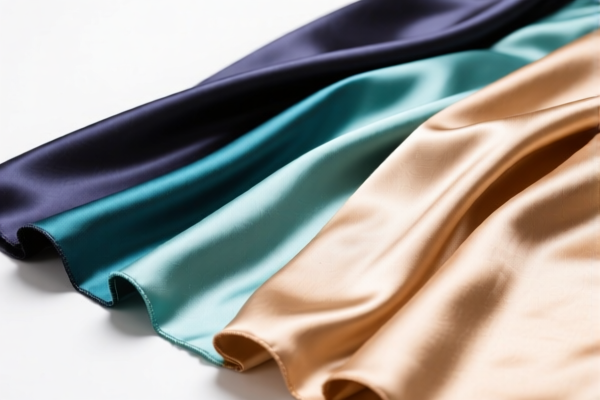
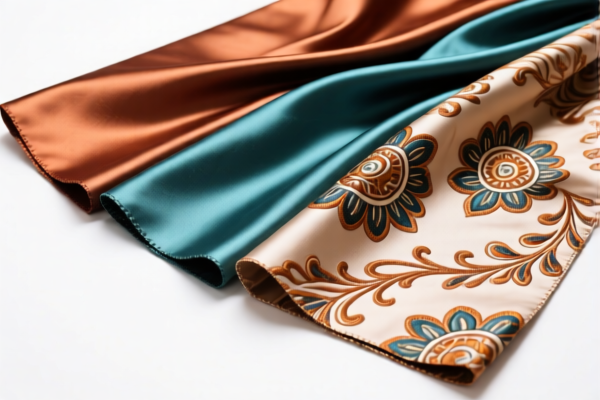
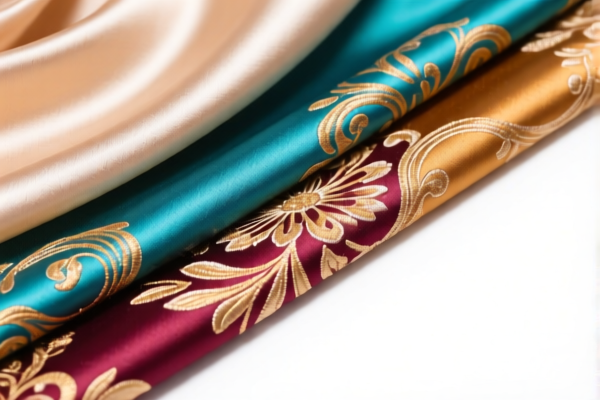
AI Analysis
🌟 Modal Blend Decorative Fabric
🌐 HS Code & Tariff Guide | 2026 U.S. Trade Compliance Deep Dive | Strategic Import Planning
📌 One Product, Multiple Codes — Know Exactly Where It Belongs!
📦 I. Product Definition & Classification Breakdown
Modal Blend Decorative Fabric refers to woven or knitted textiles containing modal fibers (a regenerated cellulose fiber derived from wood pulp), used primarily for interior decoration, upholstery, curtains, drapes, and fashion accessories.
⚠️ Key Classification Insight:
- Modal is classified as "artificial fiber" under U.S. Harmonized Tariff Schedule (HTSUS).
- If the fabric is woven or knitted, and the modal content is in filament form, it falls under "artificial filament fabrics" — not general textile categories.
- Decorative use does not change the classification — functionality is secondary to fiber type and construction.
📊 II. HS Code Classification Matrix (2026 U.S. Tariff Authority)
| HS Code | Product Description | Key Features | Tax Rate | Applicable? |
|---|---|---|---|---|
5408.22.90.30 |
Modal (artificial fiber) fabric, fits artificial filament/fiber woven fabric category | Woven, contains modal filaments, decorative use | 49.9% | ✅ Yes |
5408.22.90.60 |
Modal (artificial fiber/long filament) fabric, based on other category logic | Same as above — alternative classification path | 49.9% | ✅ Yes |
5407.30.90.00 |
Modal (artificial/synthetic fiber) fabric, fits synthetic filament fabric category | Contains synthetic-like modal, woven | 43.0% | ✅ Yes |
5407.91.20.90 |
Modal (artificial fiber) fabric, fits synthetic/artificial fiber woven category | General artificial fiber fabric, non-specific | 49.9% | ✅ Yes |
6004.10.00.85 |
Modal fiber knitted or woven fabric, meets width & composition criteria | Knitted or woven, width & fiber composition match | 47.3% | ✅ Yes |
🔍 Why Multiple Codes?
- The U.S. Customs and Border Protection (CBP) allows multiple acceptable HS codes for similar products based on construction, fiber form, and usage.
- No single "perfect" code — but all lead to high tariff exposure due to U.S. trade policy.
💰 III. 2026 U.S. Tariff Breakdown (Detailed & Legal-Compliant)
✅ Applicable to: China-origin (CN) goods
✅ Effective Date: November 10, 2025 (including subsequent imports)
✅ Legal Basis: IEEPA + USITC Section 301 + Footnote 9903.88.01
🎯 1. 5408.22.90.30 & 5408.22.90.60 — Modal Fabric (Artificial Filament)
| Component | Detail |
|---|---|
| Base Duty | 14.9% (ad valorem) |
| Section 301 (USITC) Additional Tariff | +25.0% |
| IEEPA (International Emergency Economic Powers Act) Tariff | +10.0% |
| Total Effective Duty | 49.9% |
| Tax Calculation | CIF Value × 49.9% |
| De Minimis Exemption? | ❌ No (denied under U.S. law) |
| Legal Pathway | IEEPA:9903.01.25 → IEEPA:9903.01.24 → USITC:5408.22.90.30/60 → FOOTNOTE:9903.88.01 |
📌 Explanation:
- Section 301 (25%): Imposed under the U.S. Trade Representative’s investigation into China’s unfair trade practices.
- IEEPA (10%): Enacted under national emergency powers, targeting Chinese-origin goods.
- Combined with 14.9% base → 49.9% total — one of the highest tariffs in the textile sector.
🎯 2. 5407.30.90.00 — Modal Fabric (Synthetic Filament Category)
| Component | Detail |
|---|---|
| Base Duty | 8.0% |
| Section 301 (USITC) Additional Tariff | +25.0% |
| IEEPA Tariff | +10.0% |
| Total Effective Duty | 43.0% |
| Tax Calculation | CIF × 43.0% |
| De Minimis Exemption? | ❌ No |
| Legal Pathway | IEEPA:9901.25 → IEEPA:9903.01.24 → USITC:5407.30.90.00 → FOOTNOTE:9903.88.01 |
📌 Why Lower?
- Lower base rate (8.0%) due to classification under "synthetic filament fabrics" — a slightly more favorable category.
- But still subject to 25% + 10% — so only 6.9% lower than the 49.9% rate.
🎯 3. 5407.91.20.90 — General Artificial Fiber Fabric
| Component | Detail |
|---|---|
| Base Duty | 14.9% |
| Section 301 | +25.0% |
| IEEPA | +10.0% |
| Total | 49.9% |
| De Minimis? | ❌ No |
| Legal Pathway | IEEPA:9903.01.25 → IEEPA:9903.01.24 → USITC:5407.91.20.90 → FOOTNOTE:9903.88.01 |
📌 Note: This code is a "catch-all" for artificial fiber fabrics — often used when the fabric doesn’t fit a more specific subcategory.
🎯 4. 6004.10.00.85 — Knitted or Woven Modal Fabric (Width & Composition Match)
| Component | Detail |
|---|---|
| Base Duty | 12.3% |
| Section 301 | +25.0% |
| IEEPA | +10.0% |
| Total | 47.3% |
| De Minimis? | ❌ No |
| Legal Pathway | IEEPA:9903.01.25 → IEEPA:9903.01.24 → USITC:6004.10.00.85 → FOOTNOTE:9903.88.01 |
📌 Why This Code?
- Applies only if the fabric is knitted or woven, and meets width and composition criteria (e.g., >30 cm width, modal content ≥ 85%).
- Slightly lower than 49.9% — but still extremely high.
🛠️ IV. Customs Clearance Best Practices (Pro Tips to Avoid Delays & Penalties)
✅ 1. Must-Have Documentation (Non-Negotiable)
| Document | Why It Matters |
|---|---|
| ✅ Product Specification Sheet | Shows fiber content (e.g., 70% modal, 30% polyester), construction (woven/knitted), width, weight |
| ✅ Technical Drawings / Fabric Structure Diagram | Proves modal is in filament form, not staple fiber |
| ✅ High-Resolution Product Photos | Shows weave pattern, label, brand, and composition |
| ✅ Third-Party Lab Test Report | Confirms fiber content (e.g., ASTM D5113, AATCC 20) |
| ✅ Commercial Invoice | Must state: “Modal Blend Decorative Fabric, Woven, 100% Modal Filament, for Upholstery” |
| ✅ Certificate of Origin (CO) | Critical — if not from China, no IEEPA/Section 301 tariffs apply |
| ✅ Packing List | Shows units, weight, and packaging — avoids suspicion of hidden components |
✅ 2.申报技巧 (申报口诀)
🔥 “Fiber First, Construction Second, Use Last — One Code, One Tax, No Mistakes!”
| Scenario | Correct HS Code | Wrong Approach |
|---|---|---|
| Woven modal fabric, 100% filament | 5408.22.90.30 or 5408.22.90.60 |
5407.91.20.90 → higher risk |
| Knitted, wide width, high modal content | 6004.10.00.85 |
5407.30.90.00 → may be rejected |
| Mixed fiber (modal + polyester) | 5407.30.90.00 (if synthetic-like) |
5408.22.90.30 → incorrect |
| Fabric used in curtains, not clothing | Still use same HS Code | "Decorative" ≠ different tariff |
✅ 3. Special Cases & Risk Mitigation
| Scenario | Recommended Action |
|---|---|
| Non-China origin (e.g., Vietnam, India, Turkey) | Apply for IEEPA exemption — 0% additional tariff |
| Modal content < 85% | May fall under "other artificial fiber fabrics" → higher risk of audit |
| Fabric with metallic thread or foil | May trigger "special category" — consult CBP pre-ruling |
| Custom-designed fabric for luxury brand | Apply for Advance Ruling (Pre-Approval) — avoid post-import disputes |
🌍 V. Global Market Tariff Comparison (2026)
| Country/Region | Recommended HS Code | Base Duty | Additional Taxes | Notes |
|---|---|---|---|---|
| 🇺🇸 United States | 5408.22.90.30 |
14.9% | +25% +10% → 49.9% | Highest in class |
| 🇨🇳 China | 5408.22.90.30 |
5% | None | No IEEPA/301 |
| 🇪🇺 European Union | 5408.22.90.30 |
0% (if CE) | None | No 301/IEEPA |
| 🇦🇺 Australia | 5408.22.90.30 |
5% | None | No extra tariffs |
| 🇯🇵 Japan | 5408.22.90.30 |
0% | None | No 301/IEEPA |
📌 Key Insight:
- Only the U.S. imposes 49.9% tariffs on Chinese-origin modal fabrics.
- All other major markets are tariff-friendly — consider re-routing via third countries.
📌 VI. Common Mistakes & How to Avoid Them (Avoid Costly Penalties!)
❌ Mistake 1: Using “decorative fabric” as the sole description
👉 Result: CBP may misclassify as general textile → higher risk of audit & penalties
❌ Mistake 2: Not specifying “modal filament” in invoice
👉 Result: CBP assumes staple fiber → incorrect HS Code → 49.9% vs. 43.0% → overpayment
❌ Mistake 3: Shipping from China to U.S. via Mexico (transshipment)
👉 Result: Still subject to 49.9% — IEEPA applies to all China-origin goods, regardless of route
❌ Mistake 4: Not applying for pre-ruling on new fabric design
👉 Result: Post-import audit → back taxes + interest + penalties
✅ Correct Approach:
“Woven Modal Blend Fabric, 85% Modal (Filament), 15% Polyester, 140 cm Width, for Upholstery, 100% China-Origin, Invoice No. XYZ, CBP Pre-Ruling: Pending”
🎯 VII. Final Verdict: Smart Import Strategy = Profit Protection
🎯 Remember the Golden Rule:
🔹 "Fiber Type > Use > Design — HS Code is King!"
🔹 "One wrong code = 49.9% tax on every dollar"
🔹 "China origin = 49.9% — unless you re-route or re-source"
📣 Call to Action: Protect Your Profit Margin Today!
📞 Contact a U.S. Customs Broker + Request HS Code Pre-Ruling
🚀 Apply for IEEPA Exemption if from Vietnam/India/Turkey
📊 Use 3rd-party lab testing to prove fiber content
🌐 Consider shifting production to non-China countries for tariff relief
✨ Professional Compliance Starts Here!
💼 Your fabric’s classification isn’t just paperwork — it’s your bottom line.
🔐 Get it right once. Save thousands. Ship with confidence.
Customer Reviews
About HS Code Classification
The Harmonized System (HS) is an internationally standardized nomenclature developed by the World Customs Organization (WCO) to classify traded products. Over 200 countries use the HS system as the basis for customs tariffs, trade statistics, and import/export regulations.
Each HS code follows a hierarchical structure:
- Chapter (2 digits) — Broad category of goods (e.g., Chapter 84: Machinery and Mechanical Appliances)
- Heading (4 digits) — More specific grouping within the chapter
- Subheading (6 digits) — Internationally standardized breakdown, used by all WCO member countries
- National subdivisions (8-10 digits) — Country-specific extensions for further classification, such as US HTSUS 10-digit codes
Correct HS code classification is essential for smooth customs clearance, accurate duty payment, and compliance with trade regulations. Misclassification can lead to customs delays, overpayment of duties, or penalties.
When importing from CN to US, the applicable tariff rates may include:
- Most-Favored-Nation (MFN) rate — The standard duty rate applied to WTO members
- General rate — Applied to countries without trade agreements
- Trade remedy duties — Additional tariffs such as Section 301 (anti-dumping), Section 232 (national security), or countervailing duties
The information provided on this page is for reference purposes only. For official classification, please consult with your local customs authority or a licensed customs broker.