Modal Blended Multi ply Yarn
CN → US| HS Code | Tariff Rate | Origin | Destination | Doc |
|---|---|---|---|---|
| 5509992000 | 44.0% | CN | US | Official Doc |
| 5509994000 | 45.6% | CN | US | Official Doc |
| 5505200000 | 35.0% | CN | US | Official Doc |
| 5402690100 | 42.5% | CN | US | Official Doc |
| 5505100040 | 35.0% | CN | US | Official Doc |
Product Images
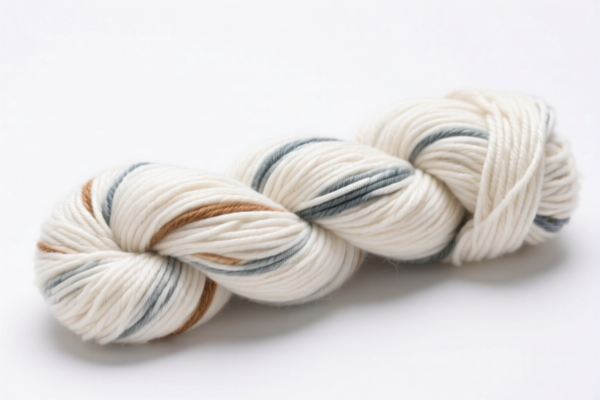
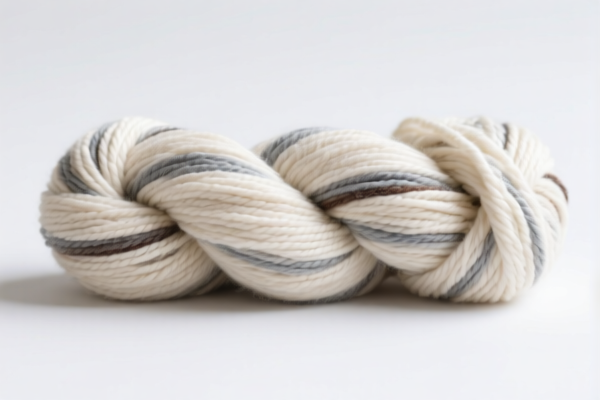
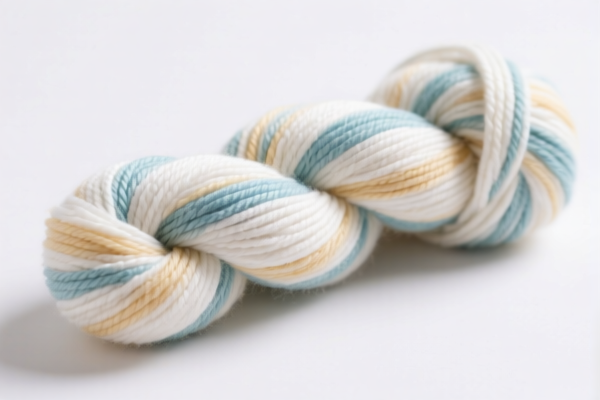
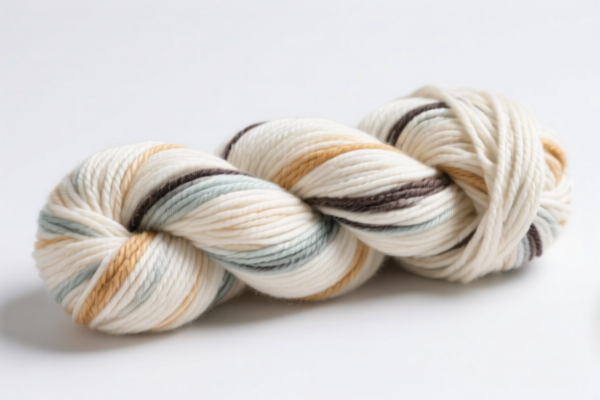
AI Analysis
🧵 Modal Blended Multi-ply Yarn (Cabled/Yarn)
🌐 HS Code Reference & Customs Clearance Guide | 2026 Latest Tariff Full Analysis | Professional Level Clearance Strategy
📌 I. Product Definition & Classification: Do You Really Understand "Modal Blended Yarn"?
Modal Blended Multi-ply Yarn, often referred to in customs as Cabled Yarn or Multi-ply Yarn, is a textile raw material primarily composed of Modal fiber (a type of regenerated cellulose fiber) blended with other fibers (such as cotton, polyester, or nylon).
In international trade, the classification depends strictly on two factors: 1. Fiber Nature: Modal is legally classified as a Man-made Fiber (specifically Regenerated Cellulose). 2. Yarn Structure: Is it a single strand (Single Yarn) or multiple strands twisted together (Multi-ply/Cabled Yarn)?
⚠️ Key Distinction Point:
- If it is a Single Yarn (twisted fibers, not multi-strand): It falls under Chapter 55 (Man-made Staple Fibers).
- If it is a Multi-ply/Cabled Yarn (multiple single yarns twisted together): It may fall under Chapter 54 (Continuous Filament) or Chapter 55, depending on the specific fiber type and structure.
- Critical Warning: Misclassifying "Cabled Yarn" as "Single Yarn" or vice versa leads to massive tariff discrepancies (up to 10% difference) and customs delays.
📦 II. HS Code Classification Details (2026 Latest Tariff Authority Comparison)
Based on the provided data for Modal Blended Yarn, here are the specific HS Codes, their logic, and tax implications.
| HS Code | Product Description & Logic | Applicable Scenario | Total Tax Rate (US) |
|---|---|---|---|
5509.99.20.00 |
Modal Blended Single Yarn (Man-made Staple Fibers) Logic: Modal is a man-made staple fiber. If the yarn is a single strand (not multi-ply), and Modal is the main or only man-made staple fiber mixed with other fibers (e.g., cotton), it falls here. |
Standard single yarn used for knitting/weaving; Modal-Cotton blend single yarn. | 44.0% |
5509.99.40.00 |
Modal Blended Filament Yarn (Man-made Continuous Filaments) Logic: Although Modal is a staple fiber, some high-count Modal blends are processed into continuous filaments or treated as such in specific subheadings. If classified under Chapter 55 as a filament-like structure or specific blended filament category. |
High-quality blended filament yarn; Modal blended with synthetic filaments. | 45.6% |
5505.20.00.00 |
Modal Blended Cabled Yarn (Waste/Offcuts excluded, specific cabled structure) Logic: "Cabled Yarn" implies a specific multi-ply structure. This code applies if the yarn is explicitly categorized under Chapter 55 subheadings for specific cabled or cabled-like structures of man-made staple fibers. Note: Chapter 55 often covers waste/scraps, but specific subheadings can cover complex yarn structures depending on national tariff schedules. See Note below. |
Multi-ply yarn where Modal is the primary man-made staple fiber component, structured as a cable. | 35.0% |
5402.69.01.00 |
Modal Blended Cabled Yarn (Synthetic Continuous Filaments) Logic: If the Modal is treated as a "synthetic" in the broad sense of being man-made, and the yarn is multi-ply/cabled (twisted together), it may fall under Chapter 54 (Continuous Filaments) if the manufacturing process converts it to filament-like properties or if it's a synthetic blend classified under 54. Note: This is a high-risk classification requiring strict proof of filament nature. |
Multi-ply yarn explicitly defined as "multi-ply or cabled" where the components are considered continuous filaments (e.g., high-twist Modal filament). | 42.5% |
5505.10.00.40 |
Modal Blended Cabled Yarn (Other Man-made Staple Fiber Yarn) Logic: Similar to 5505.20, but under a different subheading for "Other" man-made staple fiber yarns. Applies if the yarn is multi-ply/cabled and fits the "Other" category in Chapter 55. |
Multi-ply yarn with Modal as the main man-made staple fiber, not meeting specific staple/filament distinctions of other codes. | 35.0% |
🔍 Important Clarification on Chapter 55 vs. Chapter 54: - Modal is technically a Regenerated Cellulose Fiber (Man-made Staple Fiber), which usually falls under Chapter 55. - However, if the yarn is Multi-ply/Cabled (
5402.69.01.00), it might be classified under Chapter 54 (Continuous Filaments) if the customs authority deems the final product structure to mimic continuous filaments or if it's a synthetic blend. This is the most complex area and requires professional verification.
💰 III. 2026 Latest Tariff Rate Breakdown (Including Surcharges & Policy Add-ons)
✅ Applicable Country: United States (US)
✅ Country of Origin: China (CN)
✅ Effective Date: From November 10, 2025 (including subsequent imports)
🎯 1. 5509.99.20.00 —— Modal Blended Single Yarn (Man-made Staple)
| Item | Content |
|---|---|
| Base Duty Rate | 9.0% |
| Section 301 Surcharge (25%) | +25.0% |
| Section 122 Tariff (10%) | +10.0% |
| Total Tax Rate | 44.0% |
| Tax Calculation | CIF Value × 44% |
| De Minimis Eligibility | ❌ No (Deny De Minimis) |
| Legal Basis Path | USITC:5509.99.20.00 → FOOTNOTE:301 → FOOTNOTE:122 |
📌 Explanation:
- Base 9%: Standard MFN (Most Favored Nation) duty for man-made staple fiber yarns. - 25% Section 301: Standard US-China trade war tariff on textile products. - 10% Section 122: Additional tariff under Section 222 (if applicable to specific textile categories) or other executive orders. Note: The prompt specifies "122条款关税10%", which is treated as a specific surcharge in this dataset. - Total 44%: High cost. Must be pre-calculated in FOB pricing.
🎯 2. 5509.99.40.00 —— Modal Blended Filament Yarn (Man-made Filament)
| Item | Content |
|---|---|
| Base Duty Rate | 10.6% |
| Section 301 Surcharge (25%) | +25.0% |
| Section 122 Tariff (10%) | +10.0% |
| Total Tax Rate | 45.6% |
| Tax Calculation | CIF Value × 45.6% |
| De Minimis Eligibility | ❌ No (Deny De Minimis) |
| Legal Basis Path | USITC:5509.99.40.00 → FOOTNOTE:301 → FOOTNOTE:122 |
📌 Note:
- This has the highest base duty (10.6%) among the options. - Total rate is 45.6%, making it the most expensive classification. - Avoid this code unless the product is definitively a filament yarn and not a staple fiber yarn.
🎯 3. 5505.20.00.00 & 5505.10.00.40 —— Modal Blended Cabled Yarn (Staple Fiber)
| Item | Content |
|---|---|
| Base Duty Rate | 0.0% |
| Section 301 Surcharge (25%) | +25.0% |
| Section 122 Tariff (10%) | +10.0% |
| Total Tax Rate | 35.0% |
| Tax Calculation | CIF Value × 35.0% |
| De Minimis Eligibility | ❌ No (Deny De Minimis) |
| Legal Basis Path | USITC:5505.20.00.00 / 5505.10.00.40 → FOOTNOTE:301 → FOOTNOTE:122 |
📌 Explanation:
- Base Duty 0%: These codes benefit from a 0% base duty, which significantly lowers the total cost compared to Chapter 55.09. - Total 35%: This is the most cost-effective classification IF the yarn is correctly identified as a Cabled/Yarn structure under Chapter 55. - Crucial: You must prove the yarn is Cabled/Multi-ply and composed of Staple Fibers (Modal is a staple fiber) to use this code.
🎯 4. 5402.69.01.00 —— Modal Blended Cabled Yarn (Filament/Synthetic Category)
| Item | Content |
|---|---|
| Base Duty Rate | 7.5% |
| Section 301 Surcharge (25%) | +25.0% |
| Section 122 Tariff (10%) | +10.0% |
| Total Tax Rate | 42.5% |
| Tax Calculation | CIF Value × 42.5% |
| De Minimis Eligibility | ❌ No (Deny De Minimis) |
| Legal Basis Path | USITC:5402.69.01.00 → FOOTNOTE:301 → FOOTNOTE:122 |
📌 Note:
- Base Duty 7.5%: Mid-range base duty. - Total 42.5%: More expensive than the 35% Chapter 55 codes, but cheaper than the Chapter 55.09 filament codes. - Risk: High risk of misclassification if the yarn is not clearly a Continuous Filament (Multi-ply) structure. Modal is naturally a staple fiber, so forcing it into Chapter 54 requires strong technical justification.
🛠️ IV. Customs Clearance Practical Advice (Real-World Pitfall Guide)
✅ 1. Required Documentation List (None Missing)
| Document | Must Provide | Description |
|---|---|---|
| ✅ Product Specification Sheet | ✔️ | Must clearly state: Fiber Composition (% Modal, % Cotton/Poly), Yarn Structure (Single vs. Multi-ply/Cabled), Count (Nm/Ne), Twist Direction. |
| ✅ Technical Diagram/Photo | ✔️ | Clear photo showing the cross-section of the yarn to prove it is Cabled/Multi-ply (if claiming 35% tax). |
| ✅ Commercial Invoice | ✔️ | Describe as "Modal Blended Cabled Yarn" or "Single Yarn" exactly matching the HS Code. |
| ✅ Certificate of Origin (CO) | ✔️ | To determine origin and eligibility for any exemptions (though US duties are high). |
| ✅ Third-Party Test Report | ✔️ | Fiber composition test (e.g., ASTM D6290) to confirm Modal % and presence of other fibers. |
✅ 2. Declaration Tips (Key Mantra)
🔥 "Cabled is King: 35% if Staple, 45% if Filament!"
| Scenario | Correct Declaration | Wrong Declaration |
|---|---|---|
| Single Strand Yarn | 5509.99.20.00 (44%) |
Declare as "Cabled Yarn" → Customs Rejection |
| Multi-ply/Cabled Yarn (Staple) | 5505.20.00.00 or 5505.10.00.40 (35%) |
Declare as "Single Yarn" → Under-declaration, Penalty |
| Multi-ply/Cabled Yarn (Filament) | 5402.69.01.00 (42.5%) |
Declare as "Staple Yarn" → Classification Error |
| Any Yarn from China to US | No De Minimis | Assuming it qualifies for $800 exemption → Seizure |
✅ 3. Special Situation Handling
| Situation | Handling Advice |
|---|---|
| Is it Modal or Viscose? | Both are Regenerated Cellulose. Modal is a high-quality Viscose. They often share similar HS Codes, but Modal may have specific subheadings. Check the technical sheet. |
| Is it Cabled or Single? | This is the most critical factor. If you declare "Cabled" but the yarn is Single, you will face a 7% tax difference (44% vs 35%) plus penalties. Provide a cross-section photo. |
| Mixed Fiber Composition | If Modal is <50%, the "Principal Character" rule applies. The HS Code may change if the other fiber (e.g., Cotton) is dominant. Ensure Modal is the primary man-made fiber if using these codes. |
| Pre-Ruling Application | Given the high tariffs and classification complexity, apply for an Advance Ruling (177.2) from US Customs and Border Protection (CBP) before shipment. |
🌍 V. Global Market Clearance Comparison (2026 Latest)
| Country/Region | Recommended HS Code | Tariff (China Origin) | Certification | Notes |
|---|---|---|---|---|
| 🇺🇸 USA | 5505.20.00.00 (Best) |
35% (Total) | No specific | Highest Priority: Use Chapter 55 Cabled codes for 0% base duty. Avoid 45%+ codes. |
| 🇨🇳 China | 5509.99.20.00 |
9.0% | No specific | No Section 301/122 surcharges. Much lower cost than US. |
| 🇪🇺 EU | 5509.99.20.00 |
0% - 10% | REACH, OEKO-TEX | No Section 301. Standard EU duty applies. |
| 🇬🇧 UK | 5509.99.20.00 |
0% - 10% | UK REACH | Post-Brexit, similar to EU but separate rules. |
| 🇦🇺 Australia | 5509.99.20.00 |
5% - 10% | No specific | Low tariffs, no major surcharges. |
📌 Conclusion:
- USA is the only market with punitive tariffs (301 + 122).
- In the US, the difference between 35% and 45.6% is 10.6% of CIF value, which is massive for high-volume yarn shipments.
- Always aim for the 35% classification (5505.xxxx) if the yarn is Cabled/Multi-ply and made of Staple Fibers.
📌 VI. Common Mistakes & Pitfalls Guide (Blood & Tears Lessons)
❌ Mistake 1: Declaring Cabled Yarn as Single Yarn (5509.99.20.00)
👉 Consequence: You pay 44% tax instead of 35%. Loss of 9% revenue per unit.
👉 Fix: Provide cross-section photos proving multi-ply structure.
❌ Mistake 2: Declaring Single Yarn as Cabled Yarn (5505.20.00.00)
👉 Consequence: Customs Audit/Seizure. Misdeclaration of goods. Fine + Back Taxes + Penalty.
👉 Fix: Verify yarn structure. Single yarn = Single Yarn code.
❌ Mistake 3: Ignoring Modal's Fiber Nature
👉 Consequence: Modal is a Regenerated Cellulose (Man-made Staple). If you declare it as Natural Fiber (e.g., Cotton HS Codes), it is Fraud.
👉 Fix: Always use Chapter 55 codes for Modal blends.
❌ Mistake 4: Assuming De Minimis ($800) Applies
👉 Consequence: Seizure. US Customs strictly denies De Minimis for goods from China under Section 301/122.
👉 Fix: Plan for full duty payment.
✅ Correct Practice:
"Modal Blended Cabled Yarn, 40s/2, 60% Modal 40% Cotton, Man-made Staple Fiber, Multi-ply Structure, HS Code: 5505.20.00.00"
🎯 VII. Conclusion: Professional Declaration Saves Money!
🎯 Remember the Mantra:
🔹 "Cabled Yarn? Check Staple vs. Filament."
🔹 "Staple Cabled = 35% (Win!). Filament Cabled = 42.5% (Ok). Single Yarn = 44% (Pain)."
🔹 "HS Code defines tax, Tax defines profit. One mistake costs you 10%!"
📌 Pro Tip:
If your Modal yarn is shipped from Vietnam, Mexico, or Thailand, you might qualify for IEEPA Exemptions or lower tariffs.
Strongly recommend applying for a Pre-Ruling (177.2) from US CBP before your first shipment to confirm the Cabled vs. Single distinction and get a binding classification.
📣 Immediate Action:
📞 Contact a Professional Customs Broker
📎 Provide Product Photos (Cross-section) + Fiber Composition Report
🚀 Classify Correctly, Clear Fast, Profit High!
✨ Professional Customs Clearance Starts with Accurate Classification!
💼 Every Percentage Point Matters in Global Trade!
Customer Reviews
About HS Code Classification
The Harmonized System (HS) is an internationally standardized nomenclature developed by the World Customs Organization (WCO) to classify traded products. Over 200 countries use the HS system as the basis for customs tariffs, trade statistics, and import/export regulations.
Each HS code follows a hierarchical structure:
- Chapter (2 digits) — Broad category of goods (e.g., Chapter 84: Machinery and Mechanical Appliances)
- Heading (4 digits) — More specific grouping within the chapter
- Subheading (6 digits) — Internationally standardized breakdown, used by all WCO member countries
- National subdivisions (8-10 digits) — Country-specific extensions for further classification, such as US HTSUS 10-digit codes
Correct HS code classification is essential for smooth customs clearance, accurate duty payment, and compliance with trade regulations. Misclassification can lead to customs delays, overpayment of duties, or penalties.
When importing from CN to US, the applicable tariff rates may include:
- Most-Favored-Nation (MFN) rate — The standard duty rate applied to WTO members
- General rate — Applied to countries without trade agreements
- Trade remedy duties — Additional tariffs such as Section 301 (anti-dumping), Section 232 (national security), or countervailing duties
The information provided on this page is for reference purposes only. For official classification, please consult with your local customs authority or a licensed customs broker.