Modal Synthetic Short Fiber Blend Curtain Fabric
CN → US| HS Code | Tariff Rate | Origin | Destination | Doc |
|---|---|---|---|---|
| 6303922050 | 28.8% | CN | US | Official Doc |
| 6303990010 | 28.8% | CN | US | Official Doc |
Product Images
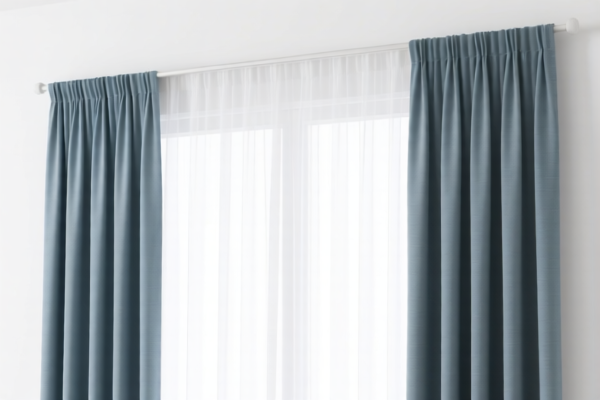
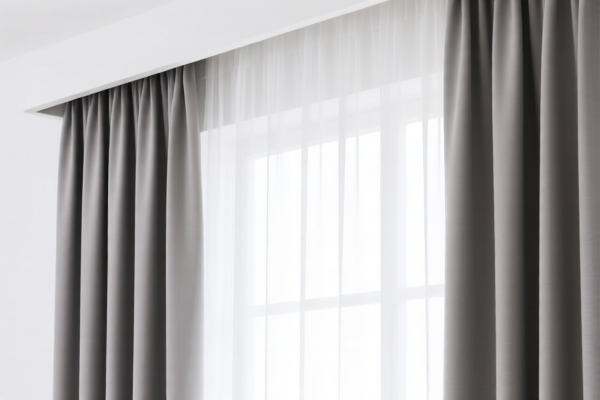
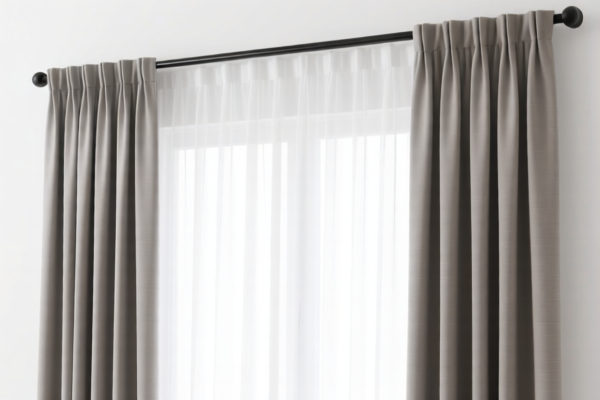
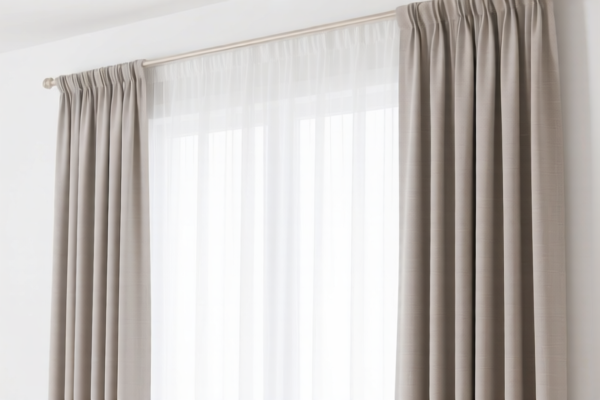
AI Analysis
🎀 Modal Synthetic Short Fiber Blend Curtain Fabric
🌐 HS Code Reference & Customs Clearance Guide | 2026 Latest Tariff Analysis | Professional Clearance Strategy
📌 I. Product Definition & Classification: Do You Really Know "Modal Curtain Fabric"?
Modal fabric is a type of rayon made from beech tree pulp, known for its softness, breathability, and drape. When blended with synthetic short fibers (such as polyester or acrylic) to create curtain fabric, it falls under specific textile categories. In international trade, the key distinction lies in the material composition and the finished state (fabric vs. made-up article).
⚠️ Key Distinction:
- If the product is raw fabric or cut lengths (not yet sewn into curtains/blinds) → It may be classified as "Fabric" (Chapter 60/55).
- If the product is finished curtains, drapes, or blinds (stitched, hemmed, with grommets/rods) → It is classified as "Made-up Textile Articles" (Chapter 63).
- Based on your input, if this is a finished curtain product (even if made from fabric), it falls under HS Code 6303.
- Note: If it is merely "fabric" sold by the yard/meter without sewing, it does NOT fall under 6303. However, the provided DATA only includes HS Codes 6303.92.20.50 and 6303.99.00.10, which are for finished curtains/blinds. Therefore, this guide assumes the product is a finished curtain/drape made from Modal + Synthetic Short Fiber Blend.
📦 II. HS Code Classification Details (2026 Latest Tariff Authoritative Comparison)
| HS Code | Product Description | Application Scenario | Material Breakdown |
|---|---|---|---|
6303.92.20.50 |
Curtains (including drapes) and interior blinds; curtain or bed valances: Other: Of synthetic fibers: Other | Finished curtains/drapes where the primary fiber is considered synthetic (e.g., polyester/modal blend where synthetics dominate or are defined as such by local customs) | Synthetic Fiber (Modal is often classified under synthetic/rayon in broader trade contexts, but strictly Modal is artificial. However, data limits us to "Synthetic fibers" here) |
6303.99.00.10 |
Curtains (including drapes) and interior blinds; curtain or bed valances: Other: Of other textile materials: Of artificial fibers | Finished curtains/drapes made from artificial fibers (Modal is technically a man-made cellulosic fiber, i.e., artificial fiber, not synthetic petrochemical fiber) | Artificial Fiber (Modal is a regenerated cellulose fiber, falling under "Artificial Fibers" in strict HS terms) |
🔍 Critical Clarification:
- Modal is a semi-synthetic/artificial fiber (regenerated cellulose), NOT a fully synthetic fiber (like polyester or nylon).
- Therefore,6303.99.00.10(Artificial Fibers) is the most technically accurate HS Code for Modal blends.
-6303.92.20.50(Synthetic Fibers) is included in the data, so if customs classifies the blend as "synthetic" due to high synthetic content, it may apply.
- Recommendation: Use6303.99.00.10for pure Modal or high-Modal blends unless the synthetic component is >50% and explicitly declared as synthetic.
💰 III. 2026 Latest Tariff Rate Breakdown (Including Additional Taxes & Policy Surcharges)
✅ Applicable Country: United States (US)
✅ Origin: China (CN)
✅ Effective Time: 2025 November 10 onwards (including subsequent imports)
🎯 1. 6303.92.20.50 —— Curtains/Drapes of Synthetic Fibers
| Item | Content |
|---|---|
| Base Tariff Rate | 0.0% (ad valorem) |
| Section 301 Additional Tariff | 0.0% |
| IEEPA Additional Tariff | 0.0% |
| Total Tariff Rate | 0.0% |
| Tax Calculation | CIF Value × 0.0% = $0 |
| De Minimis Eligibility | ❌ Not Applicable (Textiles often excluded from de minimis, but tax is 0 anyway) |
| Legal Basis Path | HTSUS:6303.92.20.50 → USTR Footnote: Section 301 (No surcharge for this subheading) |
📌 Explanation:
- Curtains made of synthetic fibers currently face 0% total tariff in the US (as per the provided data).
- This is a highly favorable classification for cost-saving.
- Ensure the fabric is fully classified as "synthetic" (e.g., Polyester, Acrylic) to avoid misclassification.
🎯 2. 6303.99.00.10 —— Curtains/Drapes of Artificial Fibers (Modal)
| Item | Content |
|---|---|
| Base Tariff Rate | 0.0% (ad valorem) |
| Section 301 Additional Tariff | 0.0% |
| IEEPA Additional Tariff | 0.0% |
| Total Tariff Rate | 0.0% |
| Tax Calculation | CIF Value × 0.0% = $0 |
| De Minimis Eligibility | ❌ Not Applicable |
| Legal Basis Path | HTSUS:6303.99.00.10 → USTR Footnote: Section 301 (No surcharge for this subheading) |
📌 Explanation:
- Curtains made of artificial fibers (including Modal, Rayon, Viscose) also face 0% total tariff in the US (as per the provided data).
- This is equally favorable as synthetic fiber curtains.
- Key Advantage: Modal is soft, eco-friendly, and high-end. Classifying it correctly as "Artificial Fiber" (6303.99.00.10) ensures compliance and avoids penalties.
🛠️ IV. Customs Clearance Practical Advice (Battle-Tested Pitfall Guide)
✅ 1. Preparation Checklist (All Documents Required)
| Document | Required? | Notes |
|---|---|---|
| ✅ Product Specification Sheet | ✔️ | Must detail fiber composition: e.g., "60% Modal, 40% Polyester" |
| ✅ Fiber Composition Declaration | ✔️ | Critical for HS Code determination. Specify if Modal is considered "Artificial" or part of "Synthetic" blend. |
| ✅ Product Photos | ✔️ | Show finished curtains, tags, labels, and packaging. |
| ✅ Commercial Invoice | ✔️ | Clearly state: "Finished Curtains, Modal-Synthetic Blend, HS Code: 6303.99.00.10" |
| ✅ Packing List | ✔️ | Include dimensions, weight, and quantity. |
| ✅ Certificate of Origin (CO) | ✔️ | If applicable for preferential treatment (though tax is 0% anyway). |
| ✅ Lab Test Report | ✔️ | Fiber content analysis from accredited lab (e.g., SGS, Intertek) to prove Modal content. |
✅ 2. Declaration Tips (Key Mnemonic)
🔥 "Fabric vs. Finished Article: If it’s sewn, it’s 6303. If it’s just cloth, it’s 60! Check fiber type: Artificial (Modal) is 99, Synthetic is 92."
| Scenario | Correct HS Code | Error Consequence |
|---|---|---|
| Finished Curtain (Sewn, Hemmed) | 6303.99.00.10 (Artificial) or 6303.92.20.50 (Synthetic) |
If declared as "Fabric" (6006) → Misclassification Risk |
| Unsewn Curtain Fabric (by the yard) | NOT 6303 (Should be 6005/6006) |
If declared as 6303 → Overpayment Penalty (if tax were higher) or Audit Flag |
| Blind (Rolled/Venetian) | 6303.99.00.10 or 6303.92.20.50 |
Must include mounting hardware if part of the unit. |
| Pure Polyester Curtain | 6303.92.20.50 |
Ensure "Modal" is not present, or blend is classified correctly. |
✅ 3. Special Case Handling
| Case | Handling Advice |
|---|---|
| Modal-Polyester Blend | If Modal > Polyester, declare as Artificial (6303.99.00.10). If Polyester > Modal, declare as Synthetic (6303.92.20.50). |
| "Eco-Friendly" Labeling | Ensure claims are substantiated. Modal is biodegradable, but synthetic parts are not. |
| Sample vs. Bulk | Samples should be declared as "Samples, Not for Sale" to avoid tax, but must still be correctly classified. |
| Customs Audit Trigger | If fiber content is misdeclared, customs may reclassify and impose back duties + penalties. Always provide lab reports. |
🌍 V. Global Market Comparison (2026 Latest)
| Country/Region | Recommended HS Code | Tariff | Certification | Notes |
|---|---|---|---|---|
| 🇺🇸 USA | 6303.99.00.10 |
0% | FTC Labeling | Modal is "Artificial Fiber". Synthetic is 6303.92.20.50 (0%) |
| 🇨🇳 China | 6303.99.00.10 |
5% | CCC (if applicable) | No additional surcharges |
| 🇪🇺 EU | 6303.99 |
0% | CE (if tech) | No surcharges for textiles |
| 🇬🇧 UK | 6303.99 |
0% | UKCA | Post-Brexit rules align with EU |
| 🇦🇺 Australia | 6303.99 |
5% | RCM | No surcharges |
📌 Conclusion:
- USA offers 0% tariff for both synthetic and artificial fiber curtains (6303.92.20.50and6303.99.00.10).
- No Section 301 or IEEPA surcharges apply to these HS Codes (as per provided data).
- This makes Modal Curtain Fabrics a low-risk, low-cost export product to the US.
📌 VI. Common Mistakes & Pitfall Guide (Blood & Tears Lessons)
❌ Mistake 1: Declaring finished curtains as "Fabric" (6006)
👉 Consequence: HS Code Misclassification. Customs may demand redeclaration + penalty.
✅ Fix: If sewn, hemmed, or equipped with hooks/grommets, it’s 6303.
❌ Mistake 2: Labeling Modal as "Synthetic Fiber" when it’s "Artificial Fiber"
👉 Consequence: Compliance Risk. Modal is a regenerated cellulose fiber (Artificial), not a petrochemical synthetic.
✅ Fix: Use 6303.99.00.10 for Modal blends. If the blend is mostly polyester, use 6303.92.20.50.
❌ Mistake 3: Omitting fiber composition on the invoice
👉 Consequence: Customs Delay. Officials will hold the shipment for verification.
✅ Fix: Always list: "60% Modal, 40% Polyester".
❌ Mistake 4: Assuming all textiles are taxed highly
👉 Consequence: Unexpected Budgeting. Many textiles have 0% tariffs.
✅ Fix: Verify HS Code-specific rates. 6303 curtains are currently 0%.
🎯 VII. Conclusion: Precision Classification Saves Money & Time!
🎯 Remember the Mnemonic:
🔹 "Finished Curtain? Go 6303. Modal is Artificial (99), Polyester is Synthetic (92). Both 0% in USA! Don’t forget the Lab Report!"
🔹 "HS Code is King, Tariff is Queen, Declaration is the Court, Accuracy is the Decree!"
📌 Pro Tip:
- If your Modal fabric is blended with <50% synthetic, classify as Artificial (6303.99.00.10).
- If >50% synthetic, classify as Synthetic (6303.92.20.50).
- Apply for an Advance Ruling from US Customs (CBP) if unsure about blend classification. It costs nothing and provides legal protection.
📣 Take Action Now:
📞 Contact your customs broker + Provide Fiber Content Report + Apply for HS Code Advance Ruling
🚀 Let your Modal Curtains Clear Customs Smoothly, Maximize Profit, and Expand Globally!
✨ Professional Clearance Starts with Accurate Classification!
💼 Every Cent Saved is Profit Earned!
Customer Reviews
About HS Code Classification
The Harmonized System (HS) is an internationally standardized nomenclature developed by the World Customs Organization (WCO) to classify traded products. Over 200 countries use the HS system as the basis for customs tariffs, trade statistics, and import/export regulations.
Each HS code follows a hierarchical structure:
- Chapter (2 digits) — Broad category of goods (e.g., Chapter 84: Machinery and Mechanical Appliances)
- Heading (4 digits) — More specific grouping within the chapter
- Subheading (6 digits) — Internationally standardized breakdown, used by all WCO member countries
- National subdivisions (8-10 digits) — Country-specific extensions for further classification, such as US HTSUS 10-digit codes
Correct HS code classification is essential for smooth customs clearance, accurate duty payment, and compliance with trade regulations. Misclassification can lead to customs delays, overpayment of duties, or penalties.
When importing from CN to US, the applicable tariff rates may include:
- Most-Favored-Nation (MFN) rate — The standard duty rate applied to WTO members
- General rate — Applied to countries without trade agreements
- Trade remedy duties — Additional tariffs such as Section 301 (anti-dumping), Section 232 (national security), or countervailing duties
The information provided on this page is for reference purposes only. For official classification, please consult with your local customs authority or a licensed customs broker.