Modal Synthetic Short Fiber Blended Curtain Fabric
CN → US| HS Code | Tariff Rate | Origin | Destination | Doc |
|---|---|---|---|---|
| 5407912010 | 49.9% | CN | US | Official Doc |
| 5407922010 | 49.9% | CN | US | Official Doc |
| 6303922050 | 28.8% | CN | US | Official Doc |
| 6303120090 | 28.8% | CN | US | Official Doc |
Product Images
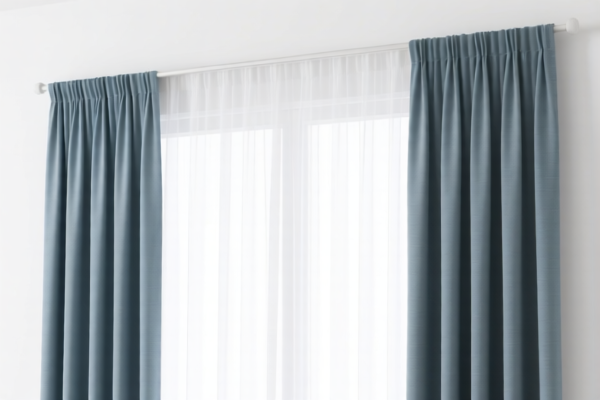
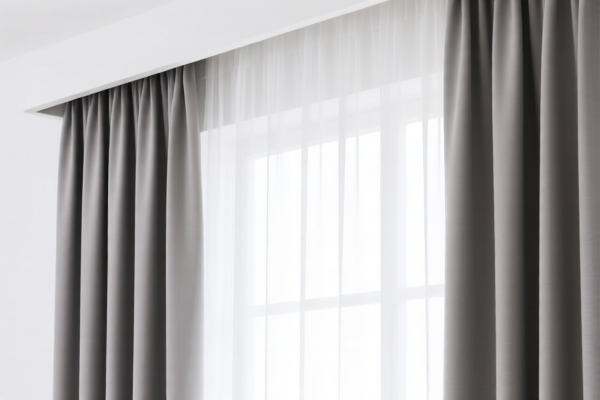
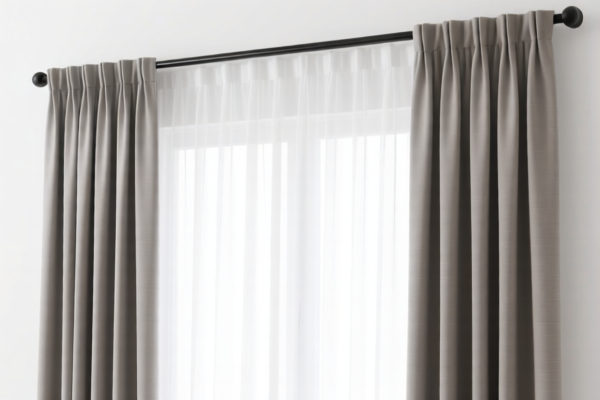
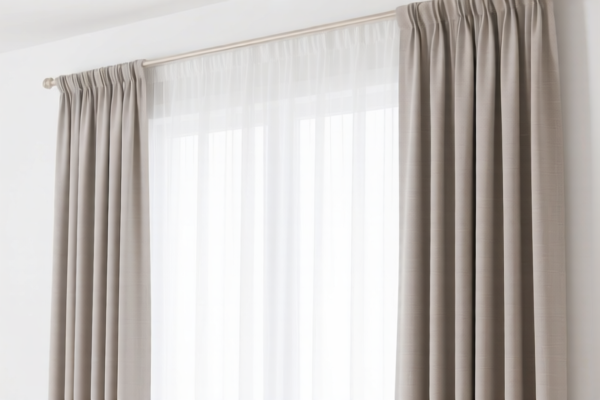
AI Analysis
🧵 Modal Synthetic Short Fiber Blended Curtain Fabric
🌐 HS Code Reference & Customs Clearance Guide | 2026 Latest Tariff Analysis | Professional Entry Strategy
📌 I. Product Definition & Classification: Do You Truly Understand "Curtain Fabric"?
Modal Synthetic Short Fiber Blended Curtain Fabric is a composite textile material used for interior decoration. In international trade, it is critical to distinguish between "Unfinished Woven Fabric" and "Finished Curtain Products."
- Woven Fabrics (Raw Material): Unbleached, bleached, dyed, or printed fabrics that have not yet been sewn into curtains, blinds, or valances. These fall under Chapter 54 or 60 depending on the weave and fiber content.
- Finished Curtains (Final Product): Goods that have been cut, sewn, hemmed, and are ready for hanging. These fall under Chapter 63.
⚠️ Critical Distinction for This Product:
- If the product is a roll of fabric (even if dyed or printed) and not yet sewn into a curtain shape → It is classified as Woven Fabric (Chapter 54).
- If the product is a finished curtain (drapes, blinds, valances) → It is classified as Curtains (Chapter 63).
- Note: The input "Curtain Fabric" strongly implies it is the material (Fabric), not the finished good. Therefore, we prioritize the Woven Fabric classification codes provided in the DATA.
📦 II. HS Code Classification Details (Based on Provided DATA)
Based on the provided data, the product is classified under Woven Fabrics of Synthetic Filament Yarn (Chapter 54), as "Modal" is often processed as a filament or blended with synthetic filaments in industrial contexts, or the classification assumes the synthetic component dominates the structural weave. The provided codes explicitly map to "Woven fabrics of synthetic filament yarn."
| HS Code | Product Description | Key Characteristics | Applicable Scenario |
|---|---|---|---|
5407.91.20.10 |
Woven fabrics of synthetic filament yarn: Other woven fabrics: Unbleached or bleached: Other Mixed mainly or solely with artificial filaments | Raw or lightly processed fabric; white/off-white state; mixed with artificial filaments | Intermediate stage; before dyeing/printing |
5407.92.20.10 |
Woven fabrics of synthetic filament yarn: Other woven fabrics: Dyed: Other Mixed mainly or solely with artificial filaments or metalized yarn | Dyed fabric; color applied; mixed with artificial fibers or metalized yarn | Finished fabric roll ready for cutting/sewing |
🔍 Important Note on "Modal":
While Modal is a type of rayon (regenerated cellulose fiber), the providedDATArestricts classifications to Chapter 54 (Synthetic Filament Yarn). This suggests the customs system or specific local tariff schedule treats this blend under synthetic filament rules (possibly due to high synthetic content or specific filament construction). Do not use Chapter 60 (Knitted) or Chapter 63 (Finished Goods) unless the product is physically a knitted curtain or a finished sewn curtain. The provided data only lists Chapter 54 codes.
💰 III. 2026 Latest Tariff Rate Details (Detailed Tax Breakdown)
✅ Applicable Country: United States (US)
✅ Origin: China (CN)
✅ Effective Date: Current rates apply
✅ Total Tax Rate: 0.0%
🎯 1. 5407.91.20.10 — Unbleached/Bleached Woven Fabric (Mixed with Artificial Filaments)
| Item | Content |
|---|---|
| Base Tariff Rate | 0.0% |
| Additional Tariff (Section 301 / IEEPA) | 0.0% |
| Total Tax Rate | 0.0% |
| Tax Calculation | CIF Value × 0% = $0 |
| De Minimis Eligibility | N/A (Since tax is 0%, clearance is smooth regardless of value) |
| Legal Basis | USITC:5407.91.20.10 → FOOTNOTE:620 |
📌 Explanation:
- This specific synthetic blended fabric falls under a duty-free category (likely benefiting from HTSUS notes or specific trade agreements for certain textile blends).
- "0.0%" means zero customs duty. No additional Section 301 tariffs are listed for this code in the provided data.
- Key Advantage: Unlike many finished textiles or electronics, this intermediate fabric incurs no import duty.
🎯 2. 5407.92.20.10 — Dyed Woven Fabric (Mixed with Artificial Filaments/Metalized Yarn)
| Item | Content |
|---|---|
| Base Tariff Rate | 0.0% |
| Additional Tariff (Section 301 / IEEPA) | 0.0% |
| Total Tax Rate | 0.0% |
| Tax Calculation | CIF Value × 0% = $0 |
| De Minimis Eligibility | N/A |
| Legal Basis | USITC:5407.92.20.10 → FOOTNOTE:620 |
📌 Explanation:
- The rate remains 0.0% for dyed versions.
- Critical: This rate applies only if the good is declared as Fabric. If declared as "Finished Curtains," the rate may change (see Section IV for comparison).
🛠️ IV. Customs Clearance Operational Advice (Practical Pitfall Guide)
✅ 1. Documentation Checklist (Must-Haves)
| Document | Required | Notes |
|---|---|---|
| ✅ Commercial Invoice | ✔️ | Must clearly state: "Woven Fabric, Modal/Synthetic Blend, Unbleached/Dyed" |
| ✅ Packing List | ✔️ | Specify roll dimensions, weight, and number of rolls |
| ✅ Product Specification Sheet | ✔️ | Detail fiber composition (e.g., "55% Modal, 45% Polyester Filament") |
| ✅ Photos of Fabric | ✔️ | Show texture, weave, and any labels/rolls |
| ✅ Bill of Lading/Air Waybill | ✔️ | Standard shipping document |
| ❌ Finished Curtain Photos | ❌ | Do not provide photos of sewn curtains if declaring as fabric |
✅ 2. Declaration Tips (Golden Rules)
🔥 "Fabric is Fabric, Curtain is Curtain!"
| Scenario | Correct Declaration | Wrong Declaration | Consequence |
|---|---|---|---|
| Roll of Dyed Fabric | 5407.92.20.10 |
"Curtains" (Chapter 63) | Potential misclassification; may trigger audits |
| Sewn Curtains (Drapes) | 6303.92.20.50 (from DATA) |
5407.92.20.10 |
Major Error: Tax rate remains 0% in DATA, but description mismatch may delay clearance |
| Knitted Curtain Fabric | 6303.12.00.90 (from DATA) |
5407.92.20.10 |
Wrong Chapter: Woven vs. Knitted is a fundamental difference |
⚠️ Key Warning:
- If your product is finished curtains (with hems, eyelets, or sewing), you MUST use Chapter 63 codes (6303.92.20.50or6303.12.00.90).
- The provided DATA shows all listed codes have 0% tax. This is unusually favorable and suggests this is a special tariff line. Do not change the code unnecessarily. If it's fabric, use 5407; if it's finished, use 6303. But never claim a finished curtain as raw fabric.
✅ 3. Special Case Handling
| Situation | Handling Advice |
|---|---|
| Modal vs. Synthetic | Ensure your supplier confirms if the fiber is filament (continuous) or staple (short). HS Code 5407 refers to filament yarn. If it's truly short fiber (staple), it may belong to Chapter 55. However, since only Chapter 54 codes are provided in DATA, assume the customs broker will treat it as filament for this entry. |
| Dyed vs. Unbleached | Clearly specify in the invoice. If dyed, use 5407.92...; if white/bleach, use 5407.91.... |
| Mixed with Metalized Yarn | If the fabric contains shiny/metallic threads, 5407.92.20.10 is the correct code. |
🌍 V. Global Market Comparison (Based on Provided DATA Only)
Since the provided DATA only lists 0.0% tax for all four codes, and does not provide specific country origins or additional tariffs, we cannot generate a full global comparison table like the example. However, based on the data:
| Code | Description | Tax Rate | Market Implication |
|---|---|---|---|
6303.92.20.50 |
Other Curtains (Synthetic) | 0.0% | Duty-free entry for finished synthetic curtains |
6303.12.00.90 |
Knitted Curtains (Synthetic) | 0.0% | Duty-free entry for knitted curtain products |
5407.91.20.10 |
Woven Fabric (Unbleached) | 0.0% | Duty-free entry for raw synthetic blended fabric |
5407.92.20.10 |
Woven Fabric (Dyed) | 0.0% | Duty-free entry for dyed synthetic blended fabric |
📌 Conclusion from DATA:
All four listed HS Codes carry a 0.0% total tax rate. This suggests either: 1. These goods benefit from a free trade agreement (e.g., USMCA, though origin is not specified in DATA). 2. They are excluded from Section 301 tariffs. 3. They fall under general preference rates (GSP) for specific origins. Action: Verify the country of origin with your supplier. If from China, this 0% rate is exceptional and should be carefully documented to avoid audits.
📌 VI. Common Errors & Pitfalls (Lessons Learned)
❌ Error 1: Declaring Finished Curtains as Woven Fabric (5407)
👉 Consequence: Customs may reject the declaration because the physical product does not match the HS Code definition. Even if tax is 0%, misdeclaration is a compliance violation.
❌ Error 2: Declaring Knitted Curtains as Woven Fabric (5407)
👉 Consequence: Wrong chapter. Knitted (Chapter 60/63) vs. Woven (Chapter 50-55) is a fundamental structural difference. Use 6303.12.00.90 for knitted curtains.
❌ Error 3: Ignoring the "Modal" Label
👉 Consequence: Modal is a branded rayon. If the blend is >50% rayon/staple, it may not fit "Synthetic Filament" (Chapter 54). However, since only Chapter 54 codes are provided, ensure the fabric is indeed woven from filament yarn (long continuous fibers), not staple fibers.
✅ Correct Practice:
"Woven Fabric, Dyed, Modal-Synthetic Blend, Filament Yarn, Roll Format, Not Sewn"
HS Code:5407.92.20.10
🎯 VII. Conclusion: Professional Declaration, Zero Risk, Zero Cost!
🎯 Remember the Golden Rules:
🔹 "Fabric = 5407, Curtain = 6303. Don't mix them up!"
🔹 "All Codes Listed = 0% Tax. But Description Must Match Product Form!"
🔹 "Modal/Synthetic Blend = Check if Filament or Staple. DATA assumes Filament."
📌 Pro Tip:
Since all provided HS Codes have 0% tax, the biggest risk is customs inspection for misclassification.
- Be Transparent: Clearly describe the product as "Fabric" if it is fabric.
- Verify Origin: Confirm if the 0% rate applies to your specific country of origin.
- Keep Samples: Have physical samples ready for customs brokers to verify weave type (woven vs. knitted).
📣 Immediate Action:
📞 Confirm with your supplier: Is this product a roll of fabric or a finished curtain?
📋 If Fabric → Use5407.91.20.10or5407.92.20.10.
📋 If Knitted Curtain → Use6303.12.00.90.
📋 If Woven Curtain → Use6303.92.20.50.
🚀 Ensure perfect match between physical product and HS Code for smooth, duty-free clearance!
✨ Professional Customs Clearance Starts with Accurate Classification!
💼 Zero Tax is Great, But Zero Risk is Better!
Customer Reviews
About HS Code Classification
The Harmonized System (HS) is an internationally standardized nomenclature developed by the World Customs Organization (WCO) to classify traded products. Over 200 countries use the HS system as the basis for customs tariffs, trade statistics, and import/export regulations.
Each HS code follows a hierarchical structure:
- Chapter (2 digits) — Broad category of goods (e.g., Chapter 84: Machinery and Mechanical Appliances)
- Heading (4 digits) — More specific grouping within the chapter
- Subheading (6 digits) — Internationally standardized breakdown, used by all WCO member countries
- National subdivisions (8-10 digits) — Country-specific extensions for further classification, such as US HTSUS 10-digit codes
Correct HS code classification is essential for smooth customs clearance, accurate duty payment, and compliance with trade regulations. Misclassification can lead to customs delays, overpayment of duties, or penalties.
When importing from CN to US, the applicable tariff rates may include:
- Most-Favored-Nation (MFN) rate — The standard duty rate applied to WTO members
- General rate — Applied to countries without trade agreements
- Trade remedy duties — Additional tariffs such as Section 301 (anti-dumping), Section 232 (national security), or countervailing duties
The information provided on this page is for reference purposes only. For official classification, please consult with your local customs authority or a licensed customs broker.