Modified Acrylic Blended Cable Yarn
CN → USProduct Images
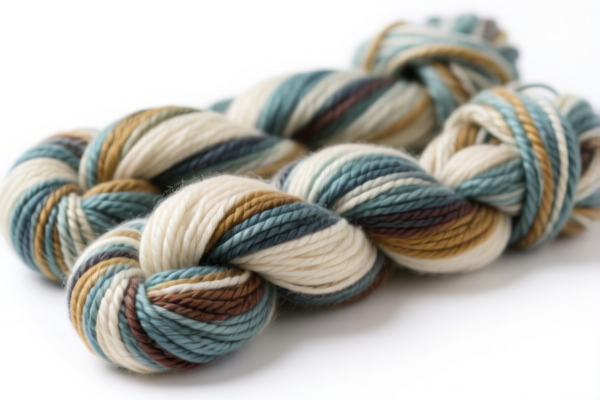
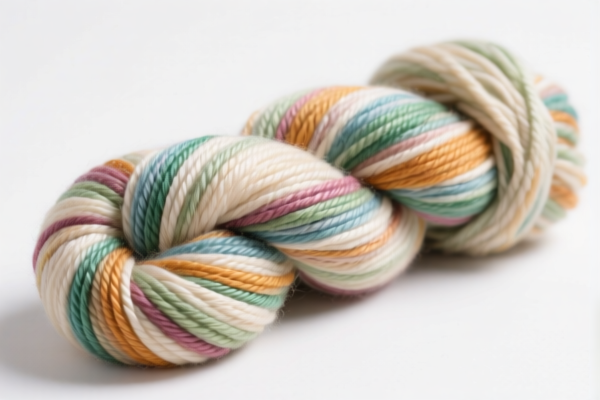
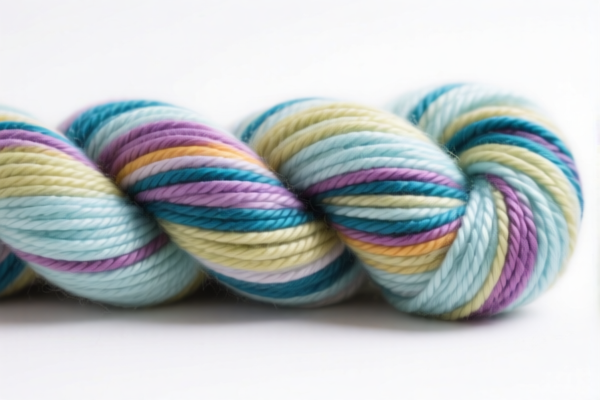
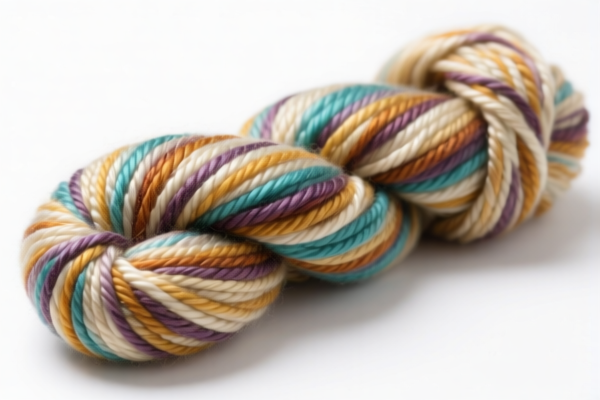
AI Analysis
🧶 Modified Acrylic Blended Cable Yarn (Knitting Yarn)
🌐 HS Code Reference & Customs Clearance Guide | 2026 Latest Tariff Analysis | Professional通关 Strategy
📌 I. Product Definition & Classification: Do You Really Understand "Cable Yarn"?
Modified Acrylic Blended Cable Yarn is a specialized type of knitting yarn characterized by its textured, twisted structure (cable pattern) and composite material composition. In international trade, classification depends heavily on the fiber content percentage and the specific modification of the acrylic fibers.
Key Characteristics: 1. Material: A blend where Acrylic fibers are "modified" (e.g., heat-set, dyed with special dispersion dyes, or blended with wool, polyester, or nylon) to enhance softness, shrinkage resistance, or dyeability. 2. Structure: "Cable" refers to the yarn's physical twist and bulkiness, typically used for high-end sweaters, scarves, and winter wear. 3. Processing: It is a finished knitting yarn, not a raw fiber or a woven fabric.
⚠️ Critical Distinction:
- If Acrylic constitutes ≥ 50% of the total weight by weight → Classified under Chapter 55 (Man-made Staple Fibers).
- If Acrylic constitutes < 50% and Wool/Cashmere is dominant → Classified under Chapter 51 (Wool).
- Note: The term "Modified Acrylic" usually implies it is still primarily an acrylic-based product, so we assume Acrylic is the principal fiber for the main classification below.
📦 II. HS Code Classification Details (2026 Latest Tariff Authority Comparison)
| HS Code | Product Description | Applicable Scenario | Acrylic Content |
|---|---|---|---|
5509.31.00.00 |
Acrylic yarn (not from recycled fibers), single ply, weigh ≤ 200 decitex | Fine gauge cable yarn, high-quality knitting yarn | ✅ ≥ 85% Acrylic |
5509.32.00.00 |
Acrylic yarn (not from recycled fibers), single ply, weigh > 200 decitex | Thick cable yarn, bulky sweaters, heavy winter wear | ✅ ≥ 85% Acrylic |
5509.41.00.00 |
Acrylic yarn blended mainly with synthetic staple fibers (e.g., Polyester), < 85% Acrylic | Acrylic/Polyester blends, common for cost-effective cable yarn | ⚠️ < 85% Acrylic |
5509.42.00.00 |
Acrylic yarn blended mainly with natural fibers (e.g., Wool), < 85% Acrylic | Acrylic/Wool blends, premium "soft-touch" cable yarn | ⚠️ < 85% Acrylic |
5110.00.00.00 |
Wool, fine or coarse animal hair, yarn | If Wool content > Acrylic (even if labeled "Acrylic Blend") | ❌ Wool Dominant |
🔍 Key Reminder:
- "Cable" structure does not change the HS Code. It is still classified by fiber content.
- "Modified" acrylic is still Acrylic. The "modification" (heat setting, anti-pilling) does not move it to a different chapter.
- Blend Ratio is King: If the blend is 50% Acrylic / 50% Wool, it usually falls under Acrylic (Chapter 55) because Acrylic is the first-named fiber in the blend description, but customs may require a detailed lab test to prove the "principal fiber."
💰 III. 2026 Latest Tariff Rate Details (Including Surtaxes & Policy Add-ons)
✅ Target Market: United States (US)
✅ Origin: China (CN)
✅ Effective Date: November 10, 2025 (and onwards)
🎯 1. 5509.31.00.00 & 5509.32.00.00 —— Acrylic Yarn (Single Ply, ≥ 85% Acrylic)
| Item | Content |
|---|---|
| Base Tariff Rate | 8.5% (ad valorem) |
| USITC Surcharge (Section 301) | +7.5% (Footnote 9903.88.03) |
| IEEPA Surcharge | +10% (For Chinese/HK products, effective Nov 10, 2025) |
| Total Tariff Rate | 26.0% |
| Tax Calculation | CIF Value × 26% |
| De Minimis Eligibility | ❌ No (deny_de_minimis applies to most textile/footwear/electronics) |
| Legal Basis Path | IEEPA:9903.01.25 → USITC:5509.31.00.00 → FOOTNOTE:9903.88.03 |
📌 Explanation:
- Acrylic yarn is considered a "textile raw material."
- The 7.5% Section 301 surcharge is standard for most textile yarns from China.
- The 10% IEEPA surcharge adds significant cost.
- Total 26% is moderate-high. Compared to finished garments (which can be 15-30% base + surcharges), yarn is a mid-tier risk product.
🎯 2. 5509.41.00.00 & 5509.42.00.00 —— Acrylic Blended Yarn (< 85% Acrylic)
| Item | Content |
|---|---|
| Base Tariff Rate | 8.5% (ad valorem) |
| USITC Surcharge (Section 301) | +7.5% |
| IEEPA Surcharge | +10% |
| Total Tariff Rate | 26.0% |
| Tax Calculation | CIF Value × 26% |
| De Minimis Eligibility | ❌ No |
| Legal Basis Path | IEEPA:9903.01.25 → USITC:5509.41.00.00 → FOOTNOTE:9903.88.03 |
📌 Note:
- Blended acrylic yarns face the same total rate (26%) as pure acrylic yarn.
- No additional benefit for blending with polyester or wool in terms of US tariff reduction for Chinese origin.
🛠️ IV. Customs Clearance Practical Advice (Combat Pitfall Guide)
✅ 1. Preparation Checklist (Non-negotiable)
| Document | Mandatory? | Description |
|---|---|---|
| ✅ Fiber Composition Label | ✔️ | Must state exact % (e.g., "85% Modified Acrylic, 15% Nylon"). |
| ✅ Test Report | ✔️ | Third-party lab report (SGS, BV, Intertek) confirming fiber content. |
| ✅ Product Photos | ✔️ | Close-up of yarn texture, ball/package labeling, and scale. |
| ✅ Commercial Invoice | ✔️ | Clearly state "Knitting Yarn, Cable Style, Acrylic Blend." |
| ✅ Packing List | ✔️ | Gross/Net weight, number of cones/balls. |
| ✅ IEEPA Compliance Statement | ✔️ | Declare origin clearly as China. |
✅ 2. Declaration Techniques (Key Mantra)
🔥 "Fiber Content is Law, Structure is Irrelevant, Name it 'Yarn', Not 'Fabric'!"
| Situation | Correct Declaration | Wrong Practice |
|---|---|---|
| Pure Acrylic Cable Yarn | 5509.31.00.00 (Fine) or 5509.32.00.00 (Thick) |
Mislabeling as "Fabric" → 20%+ penalty |
| Acrylic/Wool Blend | 5509.42.00.00 (If Acrylic > Wool) |
Mislabeling as Wool Yarn → Potential fraud |
| Recycled Acrylic | 5509.51.00.00 (If applicable) |
Using standard code → Incorrect surcharge |
| Yarn in Bulk Cones | Declare as "Yarn" | Declaring as "Textile Parts" → Higher scrutiny |
✅ 3. Special Circumstances Handling
| Situation | Handling Advice |
|---|---|
| "Modified" Acrylic | Provide technical datasheet explaining the modification (e.g., heat-setting process) to prove it's still Acrylic, not a different chemical fiber. |
| Blend Ratio Dispute | Customs may re-test. If test shows Wool > Acrylic, HS Code changes to 5110, but tariff rate remains similar (~26%). No huge saving, but compliance is key. |
| Small Samples (De Minimis) | Do not ship under $800. Textile yarns are largely excluded from de minimis. Expect full duty + brokerage fees. |
| Private Label / OEM | Invoice must match the buyer's name. Avoid "Generic Yarn" descriptions. |
🌍 V. Global Market Comparison (2026 Latest)
| Country/Region | Recommended HS Code | Tariff (China Origin) | Certification Req. | Notes |
|---|---|---|---|---|
| 🇺🇸 USA | 5509.31/32/41/42 |
26% | N/A (No special cert) | High tariff due to 301 + IEEPA |
| 🇨🇳 China | 5509.31.00.00 |
5-8% | N/A | Lower duty for domestic processing |
| 🇪🇺 EU | 5509.31 |
8.5% (MFN) | REACH (Chemical Compliance) | No IEEPA surcharge, but strict REACH |
| 🇬🇧 UK | 5509.31 |
8.5% | UKCA (if applicable) | Post-Brexit rules apply |
| 🇯🇵 Japan | 5509.31 |
7.5% | N/A | FTAA may apply if origin is ASEAN |
📌 Conclusion:
- USA is the most expensive market for Chinese acrylic yarn due to the 26% combined tariff.
- EU and Japan are more cost-effective, but EU REACH regulations on "modified" chemicals can be a hurdle.
- Strategy: Consider transshipping through Vietnam or Mexico (if substantial transformation occurs) to mitigate US tariffs, but be wary of anti-circumvention laws.
📌 VI. Common Errors & Pitfalls (Blood & Tears Lessons)
❌ Error 1: Declaring "Cable Yarn" as "Fabric" or "Knitting Material"
👉 Consequence: Wrong HS Code, potential 50% penalty for misdeclaration.
❌ Error 2: Ignoring "Modified" Chemical Composition
👉 Consequence: If the modification involves restricted chemicals, REACH (EU) or TSCA (US) violations.
❌ Error 3: Assuming De Minimis ($800) applies
👉 Consequence: Yarn is often excluded. Package seized, duties + storage fees.
❌ Error 4: Wrong Decitex Classification
👉 Consequence: Mixing 5509.31 (≤200 dtex) and 5509.32 (>200 dtex). Minor error, but can cause delays.
👉 Tip: 200 dtex ≈ 500 Denier. Cable yarn is often >200 dtex, so 5509.32 is more common for thick cable yarn.
✅ Correct Practice:
"Knitting Yarn, Cable Structure, 85% Modified Acrylic, 15% Nylon, 300 Decitex, 100% New, Not Recycled, Model: CAB-001, Made in China"
🎯 VII. Conclusion: Professional Declaration, Cost Control, Efficiency!
🎯 Remember the Mantra:
🔹 "Fiber is King, Structure is Decor."
🔹 "US Tariff 26%, No De Minimis, Test Report is Key."
🔹 "Modified Acrylic = Acrylic, Don't Get Cute with HS Codes."
📌 Pro Tip:
If your yarn is blended with Wool (>50% Acrylic), ensure the Acrylic percentage is clearly stated. Some buyers try to label it as "Wool Yarn" to confuse customs, but if Acrylic is principal, it's Chapter 55.
For US Market, calculate the Landed Cost with 26% tariff. If margin is thin, consider sourcing acrylic yarn from Vietnam (if manufactured there) to potentially avoid IEEPA surcharges, but ensure substantial transformation occurs.
📣 Immediate Action:
📞 Contact your freight forwarder + Provide Fiber Test Report + Verify Decitex/Denier
🚀 Let your yarn cross borders smoothly, legally, and profitably!
✨ Professional Customs Clearance Starts with Precise Classification!
💼 Your every cent of cost is worth precise calculation!
Customer Reviews
About HS Code Classification
The Harmonized System (HS) is an internationally standardized nomenclature developed by the World Customs Organization (WCO) to classify traded products. Over 200 countries use the HS system as the basis for customs tariffs, trade statistics, and import/export regulations.
Each HS code follows a hierarchical structure:
- Chapter (2 digits) — Broad category of goods (e.g., Chapter 84: Machinery and Mechanical Appliances)
- Heading (4 digits) — More specific grouping within the chapter
- Subheading (6 digits) — Internationally standardized breakdown, used by all WCO member countries
- National subdivisions (8-10 digits) — Country-specific extensions for further classification, such as US HTSUS 10-digit codes
Correct HS code classification is essential for smooth customs clearance, accurate duty payment, and compliance with trade regulations. Misclassification can lead to customs delays, overpayment of duties, or penalties.
When importing from CN to US, the applicable tariff rates may include:
- Most-Favored-Nation (MFN) rate — The standard duty rate applied to WTO members
- General rate — Applied to countries without trade agreements
- Trade remedy duties — Additional tariffs such as Section 301 (anti-dumping), Section 232 (national security), or countervailing duties
The information provided on this page is for reference purposes only. For official classification, please consult with your local customs authority or a licensed customs broker.