Modified Acrylic Blended Twisted Yarn
CN → US| HS Code | Tariff Rate | Origin | Destination | Doc |
|---|---|---|---|---|
| 5505200000 | 35.0% | CN | US | Official Doc |
| 5505100040 | 35.0% | CN | US | Official Doc |
Product Images
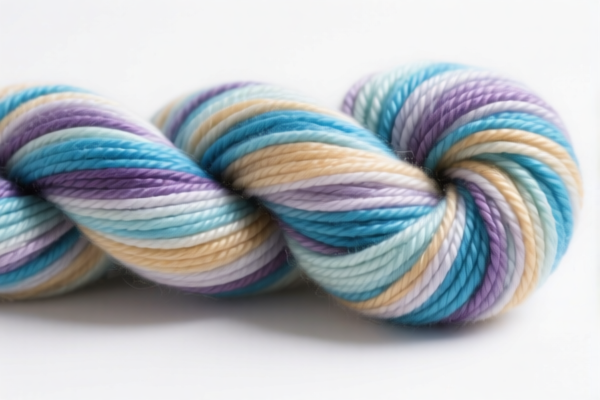
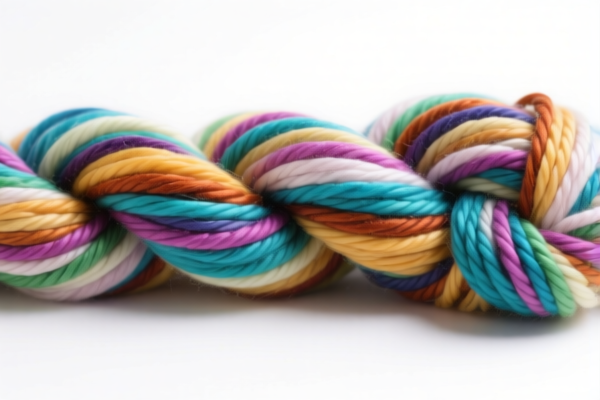
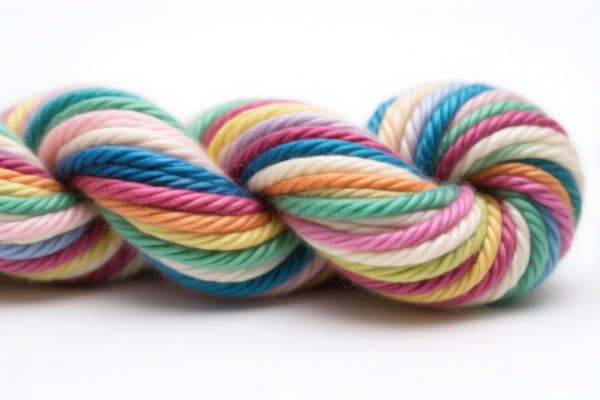
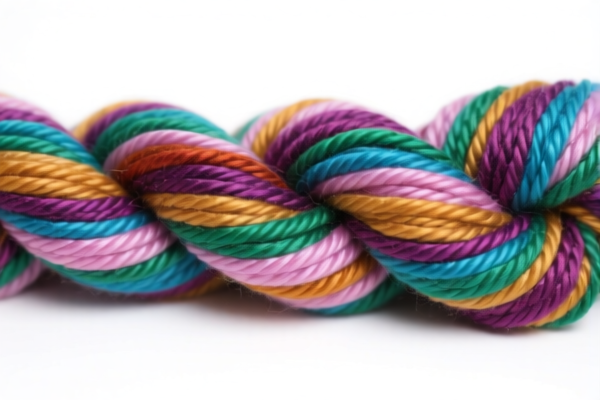
AI Analysis
🧵 Modified Acrylic Blended Twisted Yarn (Synthetic Fiber Waste Context)
🌐 HS Code Reference & Customs Clearance Guide | 2026 Latest Tariff Analysis | Professional Level Clearance Strategy
📌 I. Product Definition & Classification: Do You Really Understand "Man-Made Fiber Waste"?
Modified Acrylic Blended Twisted Yarn itself is a finished textile raw material. However, in the context of international trade compliance and specific tariff inquiries regarding waste (as indicated by the provided data), we must distinguish between the new yarn and the waste generated during its production or use.
The provided data specifically addresses "Waste (including noils, yarn waste and garnetted stock) of man-made fibers." Therefore, the classification below applies only if the product is classified as waste/offal, not the usable yarn.
⚠️ Critical Distinction:
- Usable Twisted Yarn: If the product is good quality twisted yarn for spinning/knitting, it belongs to Chapter 54 or Chapter 55 (e.g., 5509 for synthetic staple fiber yarns), NOT the codes below.
- Waste/Scrap: If the product is noils, yarn waste, garnetted stock, or waste from modified acrylic/synthetic fiber production → Refer to Codes 5505.20.00.00 / 5505.10.00.40 below.
📦 II. HS Code Classification Details (2026 Latest Tariff Authority Comparison)
Since the input data provided is strictly about Waste of Man-Made Fibers, here is the breakdown based on the specific fiber type within the "Modified Acrylic" category.
Note: "Modified Acrylic" often falls under Synthetic Fibers (Polyesters/Acrylics) depending on the chemical modification. The data provided splits these into Artificial and Synthetic.
| HS Code | Product Description | Applicability Scenario | Fiber Type |
|---|---|---|---|
5505.20.00.00 |
Waste of man-made fibers: Of artificial fibers | Waste/Noils from Regenerated modified fibers (e.g., modified rayon/viscose blends if classified as artificial) | Artificial |
5505.10.00.40 |
Waste of man-made fibers: Of synthetic fibers: Of polyesters | Waste/Noils from Synthetic modified acrylic/polyester blends | Synthetic (Polyester) |
🔍 Key Reminder:
- Modified Acrylic is chemically a synthetic polymer (polyacrylonitrile). If it is blended with polyester or is purely synthetic, it likely falls under5505.10.00.40.
- If the "modified" aspect implies a regenerated cellulosic base (artificial fiber), then5505.20.00.00applies.
- Waste Definition: Includes noils (short fibers), yarn waste (cuts, ends), and garnetted stock (shredded waste).
💰 III. 2026 Latest Tariff Rate Detailed Analysis (Including Surcharges)
✅ Applicable Country: United States (US)
✅ Origin: China (CN) (Inferred from the 25% additional tariff structure typical of US-China trade)
✅ Effective Time: Ongoing (Section 301 & IEEPA regimes)
🎯 1. 5505.20.00.00 —— Waste of Man-Made Fibers (Of Artificial Fibers)
| Item | Content |
|---|---|
| Base Tariff | 0% (ad valorem) |
| Section 301 Additional Tariff | +25% (USITC Footnote related to Chapter 55 waste) |
| Total Tax Rate | 25.0% |
| Tax Calculation | CIF Value × 25% |
| De Minimis Exemption | ❌ Not Applicable (Tariff applies to formal entries) |
| Legal Basis Path | HTSUS:5505.20.00.00 → Section 301: 9903.88.01 |
📌 Explanation:
- The 0% base tariff reflects the low duty on raw material waste for recycling.
- The +25% additional tariff is the key cost driver under current US trade policies for Chinese-origin goods.
- Total Effective Rate: 25%.
🎯 2. 5505.10.00.40 —— Waste of Man-Made Fibers (Of Synthetic Fibers: Of Polyesters)
| Item | Content |
|---|---|
| Base Tariff | 0% (ad valorem) |
| Section 301 Additional Tariff | +25% (USITC Footnote related to Chapter 55 waste) |
| Total Tax Rate | 25.0% |
| Tax Calculation | CIF Value × 25% |
| De Minimis Exemption | ❌ Not Applicable |
| Legal Basis Path | HTSUS:5505.10.00.40 → Section 301: 9903.88.01 |
📌 Note:
- If your "Modified Acrylic" is chemically synthetic (polyacrylonitrile) and blended with or identified as polyester waste, this code applies.
- Same 25% total rate as artificial fiber waste in this dataset.
- Critical: Do not confuse "Synthetic" (Polyester/Acrylic) with "Artificial" (Rayon/Viscose). Classification errors lead to penalties.
🛠️ IV. Customs Clearance Practical Advice (Battle-Tested Pitfall Avoidance Guide)
✅ 1. Required Documentation Checklist (Non-Negotiable)
| Document | Mandatory? | Description |
|---|---|---|
| ✅ Product Specification Sheet | ✔️ | Must clearly state: "Waste/Noils of Synthetic/Artificial Fibers," not "Twisted Yarn." |
| ✅ Commercial Invoice | ✔️ | Description must match HS Code exactly: "Waste of Man-Made Fibers." |
| ✅ Certificate of Origin (CO) | ✔️ | To determine eligibility for additional tariffs (e.g., China origin triggers 25%). |
| ✅ Packing List | ✔️ | Show net/gross weight accurately. |
| ✅ Photos of Goods | ✔️ | Must show material is waste/noils, not usable yarn. |
✅ 2. Declaration Tips (Key Mnemonics)
🔥 "Waste Not Yarn, HS 5505 is Key, 25% Tax on Top, Avoid Misclassification!"
| Scenario | Correct Declaration | Incorrect Practice |
|---|---|---|
| Product is usable twisted yarn | Do NOT use 5505 codes. Use Chapter 54/55 for yarn (e.g., 5509). | Misdeclaring usable yarn as waste to lower duties → High Risk of Penalty/Seizure. |
| Product is noils/scrap | 5505.10.00.40 or 5505.20.00.00 |
Declaring as "Textile Waste" vaguely → Customs Delay. |
| Product is garnetted stock | 5505.10.00.40 (if synthetic) |
Missing "Noils/Waste" in description → Audit Trigger. |
✅ 3. Special Situation Handling
| Situation | Handling Advice |
|---|---|
| "Modified Acrylic" Ambiguity | If unsure if it's Synthetic or Artificial, provide chemical analysis report. Acrylic is typically Synthetic → 5505.10.00.40. |
| Mixed Waste (Synthetic + Natural) | If blended with cotton/wool, may fall under different HS codes (e.g., 5102 for wool waste). Ensure purity declaration. |
| Recycled vs. Industrial Waste | If intended for recycling, ensure it meets "Waste" definition. If it's "Recycled Fiber" for new yarn, check Chapter 55 again. |
🌍 V. Global Major Market Clearance Comparison (2026 Latest)
| Country/Region | Recommended HS Code | Tariff Rate | Certification Requirements | Notes |
|---|---|---|---|---|
| 🇺🇸 USA | 5505.10.00.40 / 5505.20.00.00 |
25% (China Origin) | None specific | High tariff due to Section 301. |
| 🇨🇳 China | 5505.10.00.40 / 5505.20.00.00 |
0-5% | None | Low duty on waste imports for recycling. |
| 🇪🇺 EU | 5505.20 / 5505.10 |
0% (Generally) | REACH Compliance | No additional tariffs for waste fibers. |
| 🇬🇧 UK | 5505.20 / 5505.10 |
0% | UKCA Mark (if applicable) | Post-Brexit rules similar to EU. |
📌 Conclusion:
- USA is the only major market with a significant 25% additional tariff on these waste codes from China.
- EU/UK are more favorable with 0% base duties.
- China has low import duties for waste fibers to support domestic recycling.
📌 VI. Common Errors & Pitfall Guide (Blood-Tested Lessons)
❌ Error 1: Declaring usable twisted yarn as waste to avoid higher yarn tariffs.
👉 Consequence: Customs inspection reveals usable yarn → Seizure + Fine + Blacklisting.
❌ Error 2: Misclassifying Synthetic Acrylic Waste as Artificial Fiber Waste.
👉 Consequence: While tax rate may be same (25%), misdescription leads to data integrity issues and potential audits.
❌ Error 3: Ignoring the "Waste" definition.
👉 Consequence: If the product is "Noils" but packaged as "New Yarn," HS Code 5505 is invalid.
✅ Correct Approach:
"Waste of Synthetic Man-Made Fibers (Polyester/Acrylic Blend), Noils Grade, For Recycling Use, Model XYZ, Section 301 Applicable."
🎯 VII. Conclusion: Professional Classification Saves Money!
🎯 Remember the Mnemonic:
🔹 "Waste is 5505, Yarn is 54/55, 25% US Tax on China Waste, Don't Mix Yarn and Waste!"
🔹 "HS Code Defines Destiny, 25% Tax Difference, Misdeclaration Means Trouble!"
📌 Tip:
If your "Modified Acrylic Blended Twisted Yarn" is NOT waste but usable yarn, do NOT use the codes above. Contact a customs broker to classify under Chapter 54 or 55 (e.g., 5509.33 for acrylic staple fiber yarns). The provided data is only for waste.
📣 Immediate Action:
📞 Contact a professional customs broker + Provide Sample Photos + Confirm "Waste vs. Usable" status.
🚀 Let your goods, clear smoothly, efficiently, and profitably!
✨ Professional Clearance Starts with Accurate Classification!
💼 Every Cent of Cost Deserves Precise Calculation!
Customer Reviews
About HS Code Classification
The Harmonized System (HS) is an internationally standardized nomenclature developed by the World Customs Organization (WCO) to classify traded products. Over 200 countries use the HS system as the basis for customs tariffs, trade statistics, and import/export regulations.
Each HS code follows a hierarchical structure:
- Chapter (2 digits) — Broad category of goods (e.g., Chapter 84: Machinery and Mechanical Appliances)
- Heading (4 digits) — More specific grouping within the chapter
- Subheading (6 digits) — Internationally standardized breakdown, used by all WCO member countries
- National subdivisions (8-10 digits) — Country-specific extensions for further classification, such as US HTSUS 10-digit codes
Correct HS code classification is essential for smooth customs clearance, accurate duty payment, and compliance with trade regulations. Misclassification can lead to customs delays, overpayment of duties, or penalties.
When importing from CN to US, the applicable tariff rates may include:
- Most-Favored-Nation (MFN) rate — The standard duty rate applied to WTO members
- General rate — Applied to countries without trade agreements
- Trade remedy duties — Additional tariffs such as Section 301 (anti-dumping), Section 232 (national security), or countervailing duties
The information provided on this page is for reference purposes only. For official classification, please consult with your local customs authority or a licensed customs broker.