Modified Aromatic Antibacterial Powder
CN → US| HS Code | Tariff Rate | Origin | Destination | Doc |
|---|---|---|---|---|
| 3307490000 | 41.0% | CN | US | Official Doc |
| 3307410000 | 37.4% | CN | US | Official Doc |
| 3809921000 | 41.5% | CN | US | Official Doc |
| 3809931000 | 41.5% | CN | US | Official Doc |
| 3808591000 | 16.5% | CN | US | Official Doc |
Product Images
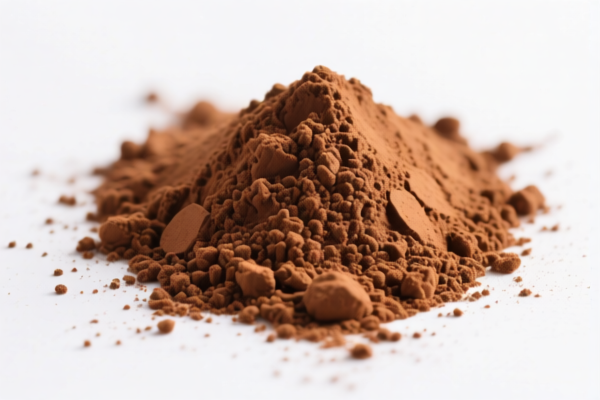
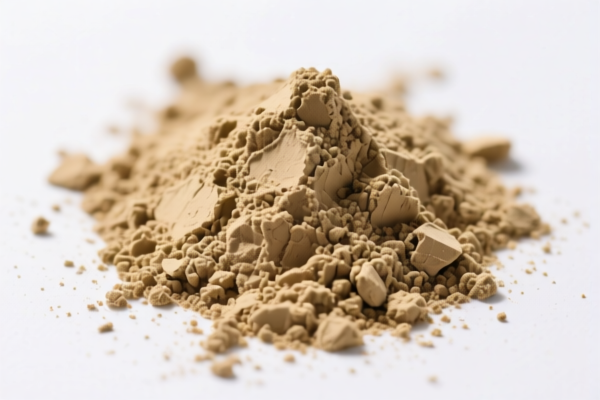
AI Analysis
🌸 改良型芳香抗菌小包装(Modified Aromatic Antibacterial Powder)
🌐 HS Code Reference & Customs Clearance Guide | 2026 Latest Tariff Analysis | Professional Entry Strategy
📌 I. Product Definition & Classification: What Exactly Is It?
"Modified Aromatic Antibacterial Powder" refers to small-packaged, chemically formulated products designed to emit fragrance and/or possess antibacterial properties. In international trade, these products sit at the intersection of cosmetics/perfumery and pesticides/biocides. The key to accurate classification lies in determining the primary function and chemical composition:
- Fragrance/Air Care (Heading 3307): Primarily for deodorizing, perfuming, or adding scent. The "antibacterial" aspect is an secondary feature or bonus.
- Pesticide/Biocidal Product (Heading 3808/3809): Primarily for killing insects, pests, or acting as a specific chemical agent. The "aromatic" aspect is merely the carrier or scent component to mask chemical smells.
⚠️ Critical Distinction Point:
- If the main purpose is odor control or ambient scenting, with antibacterial properties as a minor additive → Heading 3307.
- If the main purpose is pest control (insect repellent/killer) or chemical treatment, with aroma as a modifier → Heading 3808/3809.
📦 II. HS Code Classification Details (2026 Latest Tariff Authority Match)
Based on the provided content, here are the four potential classifications for "Modified Aromatic Antibacterial Powder," ranked by relevance to the product description.
| HS Code | Product Description (from ) | Applicability Scenario | Primary Function |
|---|---|---|---|
3307.49.00.00 |
Modified aromatic antibacterial small package; use: deodorizing/aromatic agents; material: fragrance-containing preparation. | Air fresheners, room deodorizers, toilet deodorizers where scent is the main draw. | Deodorizing / Aromatic |
3307.41.00.00 |
Modified aromatic antibacterial small package; use: generates odor, antibacterial is an additional function of fragrance preparation; material: fragrance-containing preparation. | Scented powders where antibacterial action is secondary to the scent. | Fragrance (with Antibacterial Bonus) |
3809.92.10.00 |
Modified aromatic insecticide mixture; contains aromatic or modified aromatic substances; belongs to chemical preparations. | Chemical sprays/powders for pests that smell nice. | Chemical Agent / Insecticide |
3809.93.10.00 |
Modified aromatic insecticide mixture; contains 5% or more aromatic substances; belongs to product/form category. | Insecticides with high aromatic content (>5%). | Insecticide (High Aroma Content) |
3808.59.10.00 |
Modified aromatic insecticide mixture; use: insecticide; contains any aromatic or modified aromatic pesticide. | Specific pesticide products classified under Heading 3808. | Insecticide |
🔍 Key Reminder:
- Most Common Scenario: For consumer goods like "powder" used in homes (e.g., for carpets, trash bins, or air), if it smells good and reduces odor, it is overwhelmingly classified under 3307.
- Risk Scenario: If the product claims to "kill mosquitoes" or "repel ants," even if scented, US Customs (CBP) will likely push it to 3808 or 3809. The "antibacterial" keyword can be tricky; if it kills bacteria, it might be considered a pesticide/biocide, but in the context of "aromatic powder" for general use, 3307 is usually the safer, standard entry for scent-focused products.
💰 III. 2026 Latest Tariff Rate Breakdown (Including Add-ons & Policy Surcharges)
✅ Applicable Country: United States (US)
✅ Origin: China (CN) (Note: Rates assume Chinese origin based on 122 Clause reference in )
✅ Effective Date: Current enforcement periods
🎯 1. 3307.49.00.00 —— Deodorizing/Perfuming Preparations (Non-Smoking)
| Item | Content |
|---|---|
| Basic Duty | 6.0% (Ad Valorem) |
| Section 301 Add-on Duty | +25.0% (USITC Footnote) |
| 122 Clause Duty | +10.0% (Specific USITC provision) |
| Total Tax Rate | 41.0% |
| Tax Calculation | CIF Value × 41.0% |
| De Minimis Exemption? | ❌ No (Denied) |
| Legal Basis Path | 122 Clause:10% + 301 Clause:25% + Base:6% |
📌 Explanation:
- This is the most likely classification for general-use "aromatic powders" (e.g., for bathrooms or rooms).
- Total Duty: 41%. This is a significant cost driver.
- The 122 Clause applies specifically to certain chemical preparations from China, adding an extra 10% on top of the 25% Section 301 tariff.
🎯 2. 3307.41.00.00 —— Perfuming/Deodorizing Preparations (Others)
| Item | Content |
|---|---|
| Basic Duty | 2.4% (Ad Valorem) |
| Section 301 Add-on Duty | +25.0% |
| 122 Clause Duty | +10.0% |
| Total Tax Rate | 37.4% |
| Tax Calculation | CIF Value × 37.4% |
| De Minimis Exemption? | ❌ No (Denied) |
| Legal Basis Path | 122 Clause:10% + 301 Clause:25% + Base:2.4% |
📌 Explanation:
- This code is used if the product is classified as a "perfuming" preparation rather than a general "deodorizing" one, often depending on specific ingredient lists or marketing claims.
- Total Duty: 37.4%. Slightly cheaper than 3307.49, but requires precise justification that the primary function is perfuming.
🎯 3. 3809.92.10.00 & 3809.93.10.00 —— Aromatic Insecticide Mixtures
| Item | Content |
|---|---|
| Basic Duty | 6.5% |
| Section 301 Add-on Duty | +25.0% |
| 122 Clause Duty | +10.0% |
| Total Tax Rate | 41.5% |
| Tax Calculation | CIF Value × 41.5% |
| De Minimis Exemption? | ❌ No (Denied) |
📌 Explanation:
- If your powder is marketed as killing insects/pests, it falls here.
- Total Duty: 41.5%. This is the highest rate among the options.
- Warning: Misclassifying an insecticide as a perfume (3307) is a major compliance risk. CBP may assess penalties if the product makes pesticidal claims.
🎯 4. 3808.59.10.00 —— Insecticides, Fungicides, Rodenticides
| Item | Content |
|---|---|
| Basic Duty | 6.5% |
| Section 301 Add-on Duty | +0.0% (Note: Some 3808 items may be exempt from 301, check specific list) |
| 122 Clause Duty | +10.0% |
| Total Tax Rate | 16.5% |
| Tax Calculation | CIF Value × 16.5% |
| De Minimis Exemption? | ❌ No (Denied) |
| Legal Basis Path | 122 Clause:10% + Base:6.5% |
📌 Explanation:
- Total Duty: 16.5%. This is the lowest tax rate in the dataset.
- Critical Strategy: If your product is technically an insecticide or biocide (even if scented), this is the optimal classification for cost savings. However, you must be prepared to prove it is a pesticide under FDA/EPF regulations. If it is not a registered pesticide, you cannot use this code.
🛠️ IV. Customs Clearance Practical Advice (Battle-Tested Pitfall Guide)
✅ 1. Documentation Checklist (Non-Negotiable)
| Document | Required? | Details |
|---|---|---|
| ✅ Product Label & Marketing Copy | ✔️ | Must clearly state if it is for "Deodorizing" (3307) or "Killing Pests" (3808). |
| ✅ Safety Data Sheet (SDS) | ✔️ | Shows chemical composition. Helps distinguish between perfume ingredients and pesticide active ingredients. |
| ✅ EPA Registration Number | ✔️ | Crucial. If claiming antibacterial/antimicrobial or pesticidal effects, EPA registration is mandatory for 3808 codes. If not registered, you cannot claim these effects. |
| ✅ Commercial Invoice | ✔️ | Must accurately describe the product. Avoid ambiguous terms like "Magic Powder." Use "Aromatic Deodorizing Powder" or "Insecticidal Dust." |
| ✅ Certificate of Origin | ✔️ | Required for applying 122 Clause and 301 Tariffs. |
✅ 2. Declaration Strategy (Key Mantras)
🔥 "Function Rules, Label Proves, Tax Saves!"
| Scenario | Correct Declaration | Incorrect Declaration | Result |
|---|---|---|---|
| Scented Room Powder | 3307.49.00.00 |
"Insect Repellent" | 41.0% Duty |
| Scented Room Powder | 3307.41.00.00 |
"Perfume" | 37.4% Duty |
| Pest Control Powder | 3808.59.10.00 |
"Fragrance" | 16.5% Duty (If legally classified as pesticide) |
| Pest Control Powder | 3809.92.10.00 |
"Fragrance" | 41.5% Duty (Misclassification Risk) |
📌 Strategic Tip:
- If your product does not have an EPA registration number, you cannot legally market it as having "antibacterial" or "pesticidal" effects. In this case, you must use 3307 (Fragrance/Deodorizer).
- If your product does have an EPA registration, consider using 3808.59.10.00 to save 24.5% in tariffs (16.5% vs 41.0%).
✅ 3. Special Cases Handling
| Case | Handling Advice |
|---|---|
| "Antibacterial" Claims on Non-Registered Products | DANGER! Do not declare as pesticide. CBP and FDA will seize goods. Declare as "Deodorizing" (3307) only if no pesticidal claim is made. |
| Mixed Packages (Powder + Diffuser) | If sold together, classify based on the essential character. If the powder is the main value, use 3307/3808. If the diffuser is the main value, use 8509/9013. |
| Small Packets (< $800) | ❌ No De Minimis. Section 301 and 122 Clause duties cannot be avoided via Section 321 (de minimis). Full duty applies. |
🌍 V. Global Market Comparison (2026 Latest)
| Country/Region | Recommended HS Code | Estimated Duty (CN Origin) | Key Requirement | Notes |
|---|---|---|---|---|
| 🇺🇸 USA | 3307.49.00.00 |
41.0% | No EPA needed for "deodorizer" | High duty due to 301 + 122. |
| 🇨🇳 China | 3307.49.00.00 |
~5-7% | GB Standard Compliance | Much lower duty than US. |
| 🇪🇺 EU | 3307.41.00.00 |
~6.5% | CLP Regulation + IFRA | No 301/122 equivalent. |
| 🇬🇧 UK | 3307.41.00.00 |
~6.5% | UKCA Marking | Post-Brexit rules apply. |
📌 Conclusion:
- The US market is the most expensive due to the叠加 (stacking) of Base Tariff + Section 301 (25%) + 122 Clause (10%).
- Total 41-41.5% is a significant barrier. Pricing strategies must account for this.
- Canada/Mexico (USMCA) may have different rules, but US imports from China face these specific penalties.
📌 VI. Common Mistakes & Pitfalls (Blood Lessons)
❌ Mistake 1: Using "Antibacterial" in marketing but declaring as Perfume (3307) without EPA registration.
👉 Consequence: FDA seizure, fines, and blacklisting.
Fix: Either get EPA registration or remove "antibacterial/pesticidal" claims from packaging.
❌ Mistake 2: Assuming small packages (< $800) are duty-free.
👉 Consequence: CBP will assess 41% duty on Section 321 entries from China.
Fix: Budget for 41% duty even for small shipments.
❌ Mistake 3: Confusing "Antibacterial" with "Pesticide."
👉 Consequence: Misclassification. If it kills bacteria, it's a pesticide (3808). If it just smells good, it's perfume (3307).
Fix: Consult legal counsel on product claims.
🎯 VII. Conclusion: Professional Declaration, Cost Control, Compliance!
🎯 Remember the Mantra:
🔹 "If it smells, it's 3307 (41%). If it kills, it's 3808 (16.5%). If it claims both, check EPA!"
🔹 "No De Minimis for China. 41% is the floor!"
📌 Pro Tip:
If your product is not a registered pesticide, stick to 3307.49.00.00. Do not risk 3808. The 41% duty is painful, but the cost of FDA enforcement is far higher.
If you are a large importer, explore HTS Exclusions (if any apply) or Supply Chain Diversification (Vietnam/India) to avoid 122 Clause + 301 Tariffs.
📣 Immediate Action:
📞 Contact a Licensed Customs Broker + Provide SDS & Marketing Materials + Apply for Ruling if Volume is High.
🚀 Ensure Compliance, Clear Customs Smoothly, Protect Your Margin!
✨ Professional Customs Clearance Starts with Precise Classification!
💼 Every Percent of Duty Counts!
Customer Reviews
About HS Code Classification
The Harmonized System (HS) is an internationally standardized nomenclature developed by the World Customs Organization (WCO) to classify traded products. Over 200 countries use the HS system as the basis for customs tariffs, trade statistics, and import/export regulations.
Each HS code follows a hierarchical structure:
- Chapter (2 digits) — Broad category of goods (e.g., Chapter 84: Machinery and Mechanical Appliances)
- Heading (4 digits) — More specific grouping within the chapter
- Subheading (6 digits) — Internationally standardized breakdown, used by all WCO member countries
- National subdivisions (8-10 digits) — Country-specific extensions for further classification, such as US HTSUS 10-digit codes
Correct HS code classification is essential for smooth customs clearance, accurate duty payment, and compliance with trade regulations. Misclassification can lead to customs delays, overpayment of duties, or penalties.
When importing from CN to US, the applicable tariff rates may include:
- Most-Favored-Nation (MFN) rate — The standard duty rate applied to WTO members
- General rate — Applied to countries without trade agreements
- Trade remedy duties — Additional tariffs such as Section 301 (anti-dumping), Section 232 (national security), or countervailing duties
The information provided on this page is for reference purposes only. For official classification, please consult with your local customs authority or a licensed customs broker.