Modified Aromatic Herbicide
CN → US| HS Code | Tariff Rate | Origin | Destination | Doc |
|---|---|---|---|---|
| 3808591000 | 16.5% | CN | US | Official Doc |
| 3808931500 | 41.5% | CN | US | Official Doc |
| 2935909500 | 16.5% | CN | US | Official Doc |
| 2935901300 | 10.0% | CN | US | Official Doc |
| 3808931500 | 41.5% | CN | US | Official Doc |
Product Images
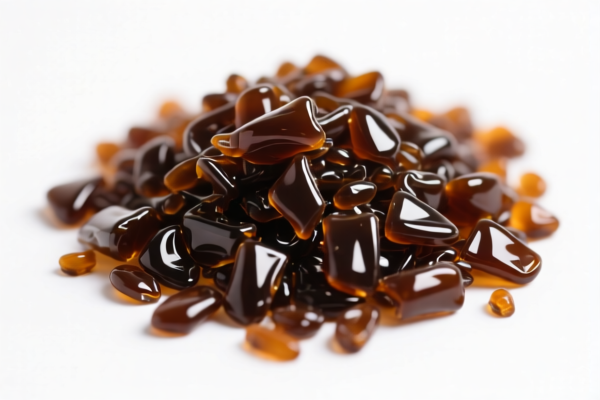
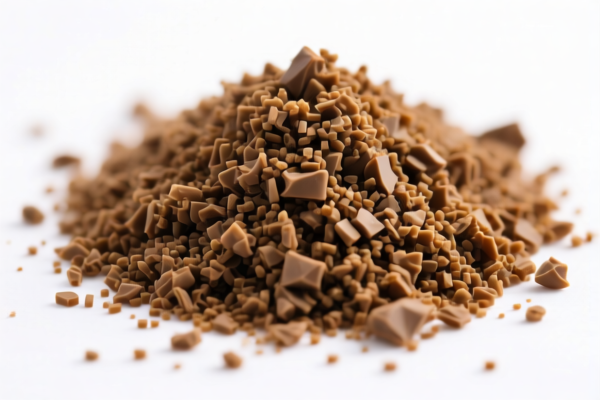
AI Analysis
🌿 Modified Aromatic Herbicide: HS Code Classification & 2026 Tax Strategy Guide
🌐 Global Trade Compliance & Tariff Breakdown | US Customs Strategy | Professional Clearance Guide
📌 I. Product Definition: What is "Modified Aromatic Herbicide"?
A Modified Aromatic Herbicide is a specialized agricultural chemical designed to control unwanted vegetation. Unlike standard herbicides, these compounds have undergone structural modification (often sulfonation, alkylation, or salt formation) to alter their aromatic ring properties. This modification typically enhances solubility, stability, or systemic absorption within plants.
In the context of international trade (specifically US Customs), these products fall under Chapter 29 (Organic Chemicals) or Chapter 38 (Chemical Products) depending on whether the primary classification is based on the specific chemical structure (sulfonamides, etc.) or the broader "pesticide" category.
⚠️ Critical Classification Logic:
- If the product is a single, defined chemical entity (e.g., a specific sulfonamide derivative), it often falls under HS 2935 (Sulfonamides).
- If the product is a mixture or formulated pesticide where the aromatic herbicide is the active ingredient, it falls under HS 3808 (Pesticides).
- "Modified" Status: The term "modified" does not exempt the product; it triggers scrutiny regarding whether the chemical structure aligns with the specific subheadings for "aromatic" or "modified aromatic" compounds.
📦 II. HS Code Classification & Tax Breakdown (2026 US Tariff Data)
Based on the provided trade data, here are the 5 Potential HS Codes for "Modified Aromatic Herbicide," ranked by tariff impact and classification logic.
🔍 Classification Logic & Tax Summary
| HS Code | Product Description & Logic | Total Tax Rate | Tax Detail Breakdown | Risk Level |
|---|---|---|---|---|
| 3808.93.15.00 | Containing Aromatic/Modified Aromatic Herbicide (Direct match: "Modified Aromatic" + "Herbicide" in name) |
41.5% | Base: 6.5% + Add-on: 25.0% + Section 122: 10% | 🟠 High |
| 3808.93.15.00 | Containing Aromatic Components (Focus: "Containing Aromatic" + "Herbicide") |
41.5% | Base: 6.5% + Add-on: 25.0% + Section 122: 10% | 🟠 High |
| 2935.90.95.00 | Other Organic Chemicals (Sulfonamides/NES) (Logic: Generic organic chemical, "N.E.S." fallback) |
16.5% | Base: 6.5% + Add-on: 0.0% + Section 122: 10% | 🟡 Medium |
| 3808.59.10.00 | Modified Aromatic Herbicide (Other) (Logic: "Herbicide" + "Modified Aromatic" material match) |
16.5% | Base: 6.5% + Add-on: 0.0% + Section 122: 10% | 🟡 Medium |
| 2935.90.13.00 | Sulfonamides (Specific Subheading) (Logic: "Herbicide" function + "Modified" chemical form) |
10.0% | Base: 0.0% + Add-on: 0.0% + Section 122: 10% | 🟢 Low |
💰 III. Detailed Tax Clause Analysis (2026 US Import)
✅ Applicable Market: United States (US)
✅ Origin: China (CN) (Implied by Section 122 and Add-on Tax presence)
✅ Tax Components: - Base Tariff (General Rate): Standard duty applied to the chemical class. - Section 301 / Add-on Tax (25%): "China Trade War" tariffs applied to specific chemical categories. - Section 122 / "122 Clause" (10%): Additional penalty/retaliatory tariff (often applied to specific chemical groups).
🎯 1. The "High Cost" Trap: HS 3808.93.15.00 (41.5%)
- Why it applies: This code explicitly captures pesticides containing aromatic or modified aromatic herbicides. The summary states: "Material and usage match completely."
- Tax Calculation:
- Base: 6.5%
- Section 301 Add-on: 25.0% (Heavy penalty for aromatic pesticides)
- Section 122: 10.0% (Retaliatory tariff)
- Total: $6.5 + 25.0 + 10 = \mathbf{41.5\%}$
- Consequence: This is the most expensive classification. If your product is a formulated mixture, this is the likely default, leading to massive cost increases.
🎯 2. The "Middle Ground": HS 3808.59.10.00 & 2935.90.95.00 (16.5%)
- Why it applies:
- 3808.59.10.00: Matches "Modified Aromatic" with "Herbicide" but avoids the specific "Aromatic/Modified Aromatic" subheading that triggers the 25% add-on.
- 2935.90.95.00: Uses the "N.E.S." (Not Elsewhere Specified) fallback for sulfonamides/organic chemicals. Since the specific structure isn't fully defined, this is a "safe" generic chemical classification.
- Tax Calculation:
- Base: 6.5%
- Add-on: 0.0% (No Section 301 penalty for this specific sub-subheading)
- Section 122: 10.0%
- Total: $6.5 + 0 + 10 = \mathbf{16.5\%}$
- Advantage: Saves 25% in taxes compared to the 3808.93.15.00 route.
🎯 3. The "Best Case": HS 2935.90.13.00 (10.0%)
- Why it applies: This code targets Sulfonamides. The summary argues that "Herbicide" falls under the functional category of sulfonamides, and "Modified" is just a chemical state.
- Crucial Condition: This classification assumes the product is a sulfonamide and the US Customs classifies the base duty as 0% (Free).
- Tax Calculation:
- Base: 0.0% (Most favorable)
- Add-on: 0.0%
- Section 122: 10.0%
- Total: $0 + 0 + 10 = \mathbf{10.0\%}$
- Strategy: If your chemical structure is verifiable as a sulfonamide, this is the optimal code.
🛠️ IV. Customs Clearance Strategy & Recommendations
✅ 1. Critical Decision Matrix: How to Choose the Right Code?
| Scenario | Recommended HS Code | Rationale | Action Item |
|---|---|---|---|
| Pure Chemical (Sulfonamide) | 2935.90.13.00 |
Lowest tax (10%); fits chemical structure perfectly. | Submit Chemical Structure Diagram proving it is a sulfonamide. |
| Formulated Mixture (Aromatic) | 3808.59.10.00 |
Balances safety and tax (16.5%); avoids 25% penalty. | Emphasize "Other Herbicide" in description; avoid "Aromatic" keywords if possible. |
| Generic/Unknown Structure | 2935.90.95.00 |
Fallback option (16.5%); "N.E.S." logic. | Provide MSDS showing organic nature but vague structure. |
| High Risk / Broad Category | 3808.93.15.00 |
AVOID unless explicitly required by law. | Do not use if alternatives exist; triggers 41.5% tax. |
✅ 2. Documentation Checklist (Must-Have)
To secure the lower tax rates (10% or 16.5%) and avoid the 41.5% penalty:
| Document | Requirement | Purpose |
|---|---|---|
| Technical Data Sheet (TDS) | Must show Chemical Structure | Proves if it's a "Sulfonamide" (2935) or generic "Herbicide" (3808). |
| MSDS (Safety Data Sheet) | Section 3 (Composition) | Confirms active ingredients and absence of other aromatic compounds that trigger 3808.93. |
| Chemical Abstract Service (CAS) Number | Mandatory | Allows Customs to cross-reference the exact chemical class. |
| Formula/Composition Breakdown | Percentage of active vs. inert | Determines if it's a "preparation" (3808) or "pure chemical" (2935). |
| Certificate of Analysis (COA) | Purity & Grade | Validates the "Modified" status. |
✅ 3. Declaration Tips (The "Golden Rules")
🔥 Rule #1: Don't Over-Describe "Aromatic"
If the chemical structure allows for2935(Sulfonamide), do not highlight "Aromatic" in the declaration description unless legally required. Focus on the chemical family (e.g., "Sulfonamide Derivative") rather than the ring structure.🔥 Rule #2: Distinguish "Pure" vs. "Formulated"
- Pure Chemical: Declare as2935.90.13.00(10% tax).
- Formulated Product: Declare as3808.59.10.00(16.5% tax).
Do not declare a formulated product as a pure chemical to get the 10% rate; this is fraud.🔥 Rule #3: Handle Section 122 (10%)
Note that ALL codes in the provided data include the 10% Section 122 tariff. No code currently offers full exemption from this specific clause. Plan your margin accordingly.
🌍 V. Global Market Comparison (US vs. Rest of World)
| Region | HS Code Logic | Total Tax (Est.) | Risk |
|---|---|---|---|
| 🇺🇸 USA | Strict Chemical Structure Review | 10% - 41.5% | 🚨 High (Section 122 + 301) |
| 🇪🇺 EU | Pesticide Focus | ~5-15% | 🟡 Medium (VAT + Pesticide fees) |
| 🇨🇳 China | Chemical Focus | 0-6% | 🟢 Low (No Section 122) |
| 🇦🇺 Australia | Pesticide Registration Required | 5-10% | 🟡 Medium |
💡 Insight: The US market is the most punitive for "Modified Aromatic Herbicides" due to the 25% Section 301 add-on. Europe and Asia are significantly cheaper markets for this product if US clearance costs are prohibitive.
📌 VI. Conclusion & Action Plan
🏆 Best Strategy for "Modified Aromatic Herbicide"
- Verify Structure: Confirm if the "Modified Aromatic" compound is technically a Sulfonamide.
- ✅ YES → Declare as
2935.90.13.00(Tax: 10%). - ❌ NO or Mixture → Declare as
3808.59.10.00(Tax: 16.5%).
- ✅ YES → Declare as
- Avoid:
3808.93.15.00(Tax: 41.5%) unless your chemical composition explicitly forces this classification. - Prepare: Have the CAS Number and Chemical Structure Diagram ready for US Customs and Border Protection (CBP) review.
🚀 Final Warning:
Classification Errors = Audits. Misdeclaring2935as3808(or vice versa) can lead to back-taxes, fines, and shipment seizures. Always consult a licensed customs broker to validate the Sulfonamide claim before shipping.
✨ Professional Clearance Starts with Precision!
💼 Your Product is Safe in Our Hands.
Customer Reviews
About HS Code Classification
The Harmonized System (HS) is an internationally standardized nomenclature developed by the World Customs Organization (WCO) to classify traded products. Over 200 countries use the HS system as the basis for customs tariffs, trade statistics, and import/export regulations.
Each HS code follows a hierarchical structure:
- Chapter (2 digits) — Broad category of goods (e.g., Chapter 84: Machinery and Mechanical Appliances)
- Heading (4 digits) — More specific grouping within the chapter
- Subheading (6 digits) — Internationally standardized breakdown, used by all WCO member countries
- National subdivisions (8-10 digits) — Country-specific extensions for further classification, such as US HTSUS 10-digit codes
Correct HS code classification is essential for smooth customs clearance, accurate duty payment, and compliance with trade regulations. Misclassification can lead to customs delays, overpayment of duties, or penalties.
When importing from CN to US, the applicable tariff rates may include:
- Most-Favored-Nation (MFN) rate — The standard duty rate applied to WTO members
- General rate — Applied to countries without trade agreements
- Trade remedy duties — Additional tariffs such as Section 301 (anti-dumping), Section 232 (national security), or countervailing duties
The information provided on this page is for reference purposes only. For official classification, please consult with your local customs authority or a licensed customs broker.