Modified Aromatic Hydrocarbon Composite Solvent
CN → US| HS Code | Tariff Rate | Origin | Destination | Doc |
|---|---|---|---|---|
| 2902903050 | 35.0% | CN | US | Official Doc |
| 3814002000 | 41.5% | CN | US | Official Doc |
| 3814001000 | 41.5% | CN | US | Official Doc |
| 3824992900 | 41.5% | CN | US | Official Doc |
| 2902909000 | 35.0% | CN | US | Official Doc |
Product Images
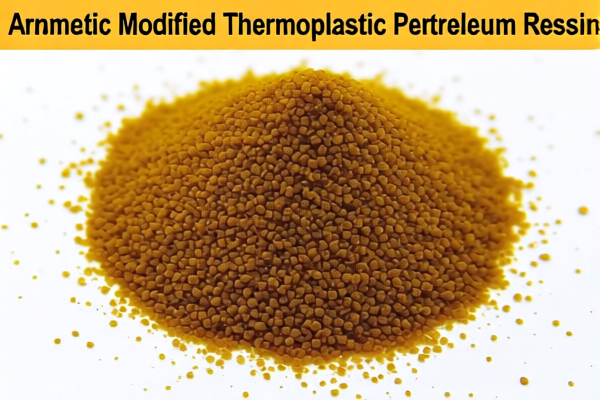
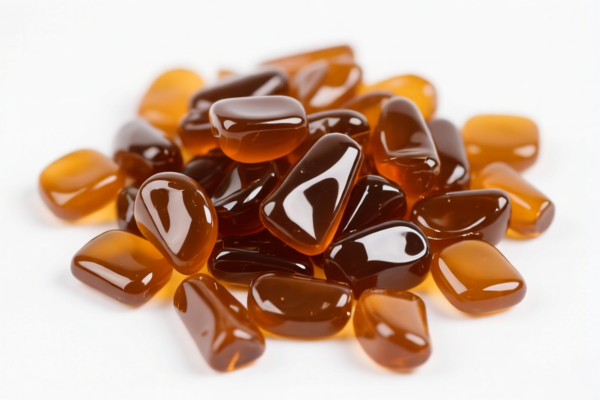
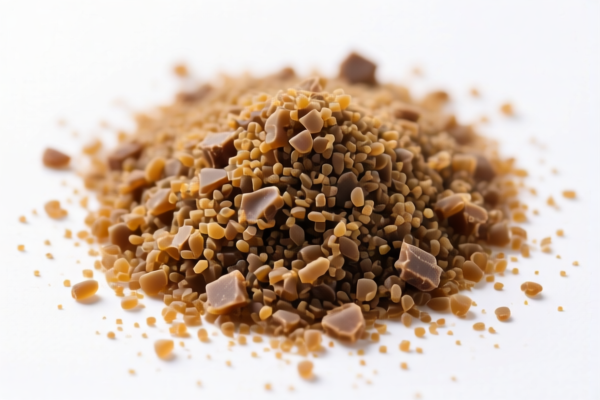
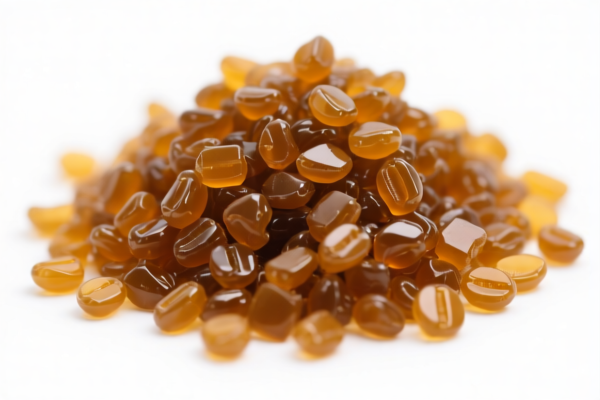
AI Analysis
🧪 Modified Aromatic Hydrocarbon Composite Solvent
🌐 HS Code Reference & Customs Clearance Guide | 2026 Latest Tariff Analysis | Professional-Level Compliance Strategy
📌 I. Product Definition & Classification: What Exactly Is This Solvent?
Modified Aromatic Hydrocarbon Composite Solvent is a specialized industrial chemical mixture. In international trade, it is primarily classified based on its chemical composition ("Modified Aromatic Hydrocarbons") and its functional form ("Composite Solvent").
The core debate in classification lies between: 1. Chemical Commodities (Chapter 29): Specifically "Other Halogenated Derivatives of Hydrocarbons" or "Other Cyclohydrocarbons" if viewed strictly as raw chemicals. 2. Chemical Products/Preparations (Chapter 38): Specifically "Organic Composite Solvents" or "Other Chemical Products and Preparations."
⚠️ Key Classification Distinction:
- If the product is a pure, unmodified aromatic hydrocarbon with no specific industrial solvent formulation → Might fall under 2902.
- If the product is explicitly labeled/used as a "Composite Solvent" containing >25% aromatic or modified aromatic substances → Falls under 3814 (Composite Solvents).
- If it is a complex mixture not fitting the specific "solvent" definition but fits "other chemical preparations" → Falls under 3824.
📦 II. HS Code Classification Details (2026 Latest Tariff Authority Comparison)
Based on the provided data, here are the four potential HS Codes with their matching logic:
| HS Code | Product Description | Matching Logic & Summary | Tax Rate |
|---|---|---|---|
| 3814.00.20.00 | Organic Composite Solvents | ✅ High Confidence Match. The product name "Modified Aromatic Hydrocarbon" directly corresponds to "modified aromatic substances" (≥25% content). "Composite Solvent" fits the "Organic Composite Solvent" usage description perfectly. | 41.5% |
| 3814.00.10.00 | Other Composite Solvents | ✅ High Confidence Match. "Modified Aromatic Hydrocarbons" match the "aromatic or modified aromatic substances" material feature. It falls within the "Composite Solvent" category. | 41.5% |
| 3824.99.29.00 | Other Chemical Products and Preparations | ✅ Moderate Confidence Match. "Modified Aromatic Hydrocarbons" match "modified aromatic substances." "Composite Solvent" is viewed as a chemical preparation form. | 41.5% |
| 2902.90.30.50 | Other Hydrocarbons (Alkylbenzenes, etc.) | ⚠️ Low Confidence/Risky. "Aromatic Hydrocarbons" match "Alkylbenzenes" (chemically consistent). However, this code is for raw chemicals, not necessarily solvents. Risk of misclassification if used as a solvent. | 35.0% |
| 2902.90.90.00 | Other Cyclohydrocarbons | ⚠️ Low Confidence/Risky. "Aromatic Hydrocarbons" match "Cyclohydrocarbons" structurally. "Composite Solvent" is a chemical form. Risk of misclassification if not a pure cyclohydrocarbon. | 35.0% |
🔍 Critical Reminder:
- Primary Recommendation:3814.00.20.00or3814.00.10.00are the most accurate for Composite Solvents.
- Secondary Option:3824.99.29.00if it doesn't strictly meet the "solvent" definition but is a chemical preparation.
- Avoid:2902codes unless you can prove it is a pure, unmodified chemical not intended as a solvent mixture. Misclassifying a solvent as a raw chemical can lead to customs disputes.
💰 III. 2026 Latest Tariff Rate Details (Including Surcharges & Policy Add-ons)
✅ Applicable Country: United States (US)
✅ Origin: China (CN)
✅ Effective Date: From November 10, 2025 (including subsequent imports)
🎯 1. 3814.00.20.00 & 3814.00.10.00 —— Organic Composite Solvents
| Item | Content |
|---|---|
| Base Tariff | 6.5% (ad valorem) |
| USITC Surcharge (Section 301) | +25.0% |
| IEEPA Surcharge (Section 122) | +10.0% |
| Total Effective Tariff | 41.5% |
| Tax Calculation | CIF Value × 41.5% |
| De Minimis Eligibility | ❌ No (deny_de_minimis) |
| Legal Basis Path | IEEPA:9903.01.25 → IEEPA:9903.01.24 → USITC:3814.00.20.00 → FOOTNOTE:9903.88.01 |
📌 Explanation:
- The 6.5% base rate applies to composite solvents under HTSUS 3814.
- The 25% surcharge is from USITC Footnote 9903.88.01 (Section 301 tariffs on Chinese goods).
- The 10% surcharge is from IEEPA (Section 122 tariffs on Chinese/香港 products).
- Total: 41.5%. This is a high-cost category. Accurate classification is vital to avoid higher penalties.
🎯 2. 3824.99.29.00 —— Other Chemical Products and Preparations
| Item | Content |
|---|---|
| Base Tariff | 6.5% |
| USITC Surcharge | +25.0% |
| IEEPA Surcharge | +10.0% |
| Total Effective Tariff | 41.5% |
| Tax Calculation | CIF × 41.5% |
| De Minimis Eligibility | ❌ No |
| Legal Basis Path | Similar to above |
📌 Note: Same total rate as 3814. However,
3814is more specific to "solvents." Using3824might invite scrutiny if the product is clearly a solvent.
🎯 3. 2902.90.30.50 & 2902.90.90.00 —— Other Hydrocarbons
| Item | Content |
|---|---|
| Base Tariff | 0.0% |
| USITC Surcharge | +25.0% |
| IEEPA Surcharge | +10.0% |
| Total Effective Tariff | 35.0% |
| Tax Calculation | CIF × 35.0% |
| De Minimis Eligibility | ❌ No |
📌 Caution: While the rate is lower (35% vs 41.5%), misclassification risk is extreme. If customs determines the product is a "composite solvent" and not a "pure hydrocarbon," you face:
- Back duties (difference in base rate)
- Penalties for false declaration
- Potential seizure or delay
🛠️ IV. Customs Clearance Practical Advice (Battle-Tested Pitfall Guide)
✅ 1. Required Documentation Checklist (Non-Negotiable)
| Document | Required | Explanation |
|---|---|---|
| ✅ Technical Data Sheet (TDS) | ✔️ | Must specify composition: "% of Modified Aromatic Hydrocarbons," presence of other solvents. |
| ✅ MSDS (Safety Data Sheet) | ✔️ | Confirms chemical nature and hazard class. |
| ✅ Product Photographs | ✔️ | Clear labels showing "Composite Solvent" usage. |
| ✅ Commercial Invoice | ✔️ | Must explicitly state: "Modified Aromatic Hydrocarbon Composite Solvent". Do not just write "Solvent." |
| ✅ Bill of Lading | ✔️ | Consistent with invoice description. |
| ✅ Origin Certificate | ✔️ | Proof of Chinese origin to apply correct tariffs. |
✅ 2. Declaration Strategy (Key Mantras)
🔥 "Declare the Function, Not Just the Chemistry!"
| Scenario | Correct Declaration | Wrong Declaration | Consequence |
|---|---|---|---|
| Standard Composite Solvent | 3814.00.20.00 - "Modified Aromatic Hydrocarbon Composite Solvent" |
"Aromatic Hydrocarbon" | 41.5% vs 35% + Risk of Penalty |
| Pure Chemical (Not a Solvent) | 2902.90.30.50 - "Alkylbenzene" |
"Composite Solvent" | If used as solvent, customs may reclassify to 3814 |
| Mixture with Unknown Composition | 3824.99.29.00 |
"Aromatic Solvent" | Ambiguity leads to delays |
✅ 3. Special Handling Tips
| Situation | Handling Advice |
|---|---|
| OEM/White Label Products | Provide customer contract + formulation proof. Avoid vague terms like "Industrial Cleaner." |
| Multi-Component Mixtures | If >25% is aromatic, 3814 is mandatory. Do not attempt to classify under 2902. |
| Hazardous Goods | Ensure UN Number and Hazard Class are correctly declared alongside HS Code. |
| Pre-Ruling Request | Highly Recommended. Apply for an Advance Ruling with CBP if the formulation is complex. |
🌍 V. Global Market Clearance Comparison (2026 Latest)
| Country/Region | Recommended HS Code | Tariff Rate | Certification Requirements | Notes |
|---|---|---|---|---|
| 🇺🇸 USA | 3814.00.20.00 |
41.5% | None Specific (Chemical) | High tariff burden. |
| 🇨🇳 China | 3814.00.10.00 |
6.5% | None | No Section 301/122 tariffs. |
| 🇪🇺 EU | 3814.00.10.00 |
6.5% | REACH Registration | No US-style surcharges. |
| 🇯🇵 Japan | 3814.00.20.00 |
6.5% | Chemical Substance Control Law | No surcharges. |
📌 Conclusion:
- USA is the most expensive market due to Section 301 and IEEPA tariffs.
- Europe and Japan offer standard rates (~6.5%) without punitive surcharges.
- Supply Chain Strategy: If shipping to the US, ensure maximum accuracy to avoid penalties. Consider sourcing from non-China origins if possible to mitigate tariff risk.
📌 VI. Common Errors & Pitfall Guide (Blood-Teaching Lessons)
❌ Error 1: Declaring "Modified Aromatic Hydrocarbon Composite Solvent" as 2902.90.90.00 to save 6.5%.
👉 Consequence: Customs will audit. If proven to be a solvent, you owe the difference + penalties. Risk > Reward.
❌ Error 2: Vague Invoice Description: "Solvent for Cleaning."
👉 Consequence: Customs cannot verify HS Code. Leads to 90-day hold or inspection.
❌ Error 3: Ignoring the "Composite" aspect.
👉 Consequence: If the product is a mixture, it cannot be classified as a single chemical under Chapter 29. Must be Chapter 38.
✅ Correct Practice:
"Modified Aromatic Hydrocarbon Composite Solvent, CAS No. [Insert], Used for Industrial Degreasing, Concentration: 100%, HS Code: 3814.00.20.00"
🎯 VII. Conclusion: Precision Classification Saves Money!
🎯 Remember the Mantra:
🔹 "Solvent = Chapter 38, Pure Chemical = Chapter 29."
🔹 "41.5% is the US Reality for Solvents, Don't Gamble with 35%."
🔹 "Declare Honestly, Declare Precisely, Declare Fast."
📌 Pro Tip:
If your product is shipped from Vietnam, Mexico, or Thailand, you may qualify for IEEPA Exemptions, reducing the effective tariff significantly.
Strongly recommend applying for a CBP Advance Ruling before shipping to the US.
📣 Immediate Action:
📞 Contact your freight forwarder + Provide TDS/MSDS + Apply for HS Code Pre-Ruling
🚀 Let your solvent clear customs smoothly, avoid penalties, and maximize profit!
✨ Professional Clearance Starts with Accurate Classification!
💼 Every cent of your cost deserves precise calculation!
Customer Reviews
About HS Code Classification
The Harmonized System (HS) is an internationally standardized nomenclature developed by the World Customs Organization (WCO) to classify traded products. Over 200 countries use the HS system as the basis for customs tariffs, trade statistics, and import/export regulations.
Each HS code follows a hierarchical structure:
- Chapter (2 digits) — Broad category of goods (e.g., Chapter 84: Machinery and Mechanical Appliances)
- Heading (4 digits) — More specific grouping within the chapter
- Subheading (6 digits) — Internationally standardized breakdown, used by all WCO member countries
- National subdivisions (8-10 digits) — Country-specific extensions for further classification, such as US HTSUS 10-digit codes
Correct HS code classification is essential for smooth customs clearance, accurate duty payment, and compliance with trade regulations. Misclassification can lead to customs delays, overpayment of duties, or penalties.
When importing from CN to US, the applicable tariff rates may include:
- Most-Favored-Nation (MFN) rate — The standard duty rate applied to WTO members
- General rate — Applied to countries without trade agreements
- Trade remedy duties — Additional tariffs such as Section 301 (anti-dumping), Section 232 (national security), or countervailing duties
The information provided on this page is for reference purposes only. For official classification, please consult with your local customs authority or a licensed customs broker.