Modified Aromatic Insecticidal Granules
CN → US| HS Code | Tariff Rate | Origin | Destination | Doc |
|---|---|---|---|---|
| 3809921000 | 41.5% | CN | US | Official Doc |
| 3809931000 | 41.5% | CN | US | Official Doc |
| 3808591000 | 16.5% | CN | US | Official Doc |
| 3808912501 | 41.5% | CN | US | Official Doc |
Product Images
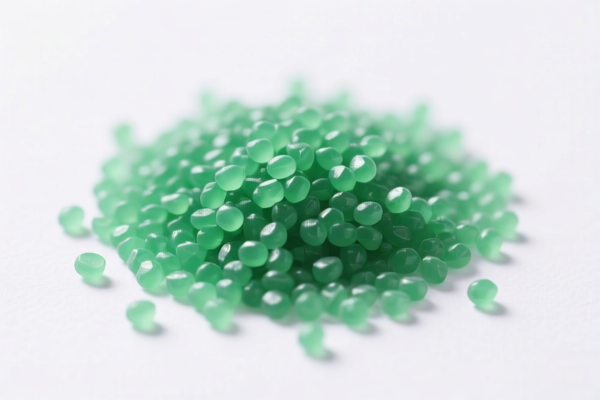

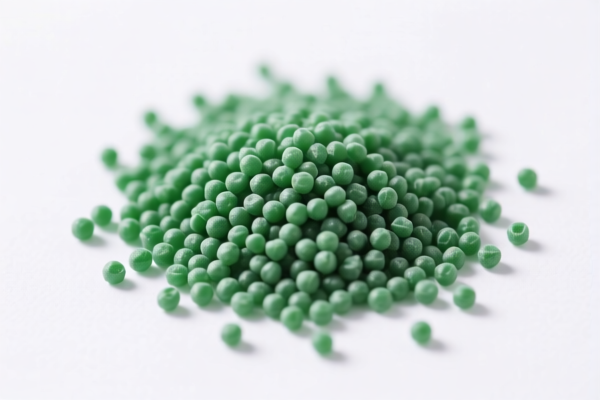
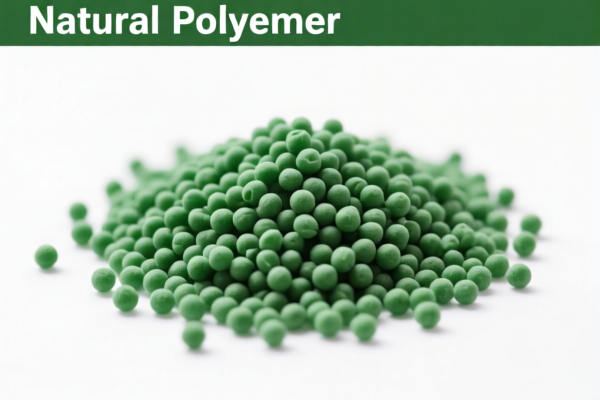
AI Analysis
🐜 Modified Aromatic Insecticidal Granules | Chemical Pesticides & Preparations
🌐 HS Code Reference & Customs Clearance Guide | 2026 Latest Tariff Analysis | Professional Strategy for US-China Trade
📌 I. Product Definition & Classification: Decoding "Aromatic Insecticides"
Modified Aromatic Insecticidal Granules are specialized chemical preparations designed for pest control. The term "Modified" suggests a specific formulation, while "Aromatic" refers to the presence of aromatic organic compounds (such as benzene derivatives or pyrethroids which may contain aromatic rings) acting as the active or carrier ingredients.
In international trade, the classification hinges on three critical factors: 1. Active Ingredient Type: Is it strictly a pesticide (HS 3808) or a general chemical mixture (HS 3809)? 2. Chemical Composition: Does it contain >5% aromatic substances? 3. Formulation Status: Is it a "preparation/product" ready for use, or a raw chemical intermediate?
⚠️ Key Distinction:
- If classified as a Pesticide (3808), it relies on the specific insecticidal properties of the aromatic compounds.
- If classified as a Chemical Mixture/Product (3809/3803), it may be treated as a general commercial chemical or fumigant mixture.
- Crucial Note: The presence of "Aromatic" substances triggers specific 122 Clause tariffs (Section 301/IEEPA equivalents) if originating from China.
📦 II. HS Code Classification Details (2026 Authorized References)
Based on the provided data, there are 4 unique HS Codes (with one duplicate entry) applicable to this product. The total tax rate varies significantly based on the specific sub-heading interpretation.
| HS Code | Product Description (Summary) | Classification Logic | Total Tax Rate |
|---|---|---|---|
| 3809.92.10.00 | Improved Aromatic Insecticidal Mixture, containing aromatic substances, classified as a chemical preparation | General chemical mixture with aromatic components; not strictly defined as a primary pesticide under 3808.00. | 41.5% |
| 3809.93.10.00 | Improved Aromatic Insecticidal Mixture, containing >5% aromatic substances, classified as a product/preparation | Specific threshold trigger: >5% aromatic content pushes it into this sub-heading for "other preparations." | 41.5% |
| 3808.59.10.00 | Improved Aromatic Insecticidal Mixture, containing aromatic pesticides, classified as other pesticide products | Classified under Chapter 3808 (Insecticides), specifically "Other" (59) because it doesn't fit more specific 3808 sub-headings. | 16.5% |
| 3808.91.25.01 | Improved Aromatic Insecticidal Mixture, containing aromatic insecticides, material & use fully matched | Best-fit classification if the product is definitively an aromatic insecticide preparation. Requires exact match of material and use case. | 41.5% |
🔍 Critical Observation:
- Note the duplicate entry for3808.91.25.01in the source data.
- Tax Discrepancy: While3808.59.10.00offers a lower rate (16.5%), the other codes (including the most specific3808.91.25.01) carry a high rate of 41.5%. This discrepancy usually stems from different interpretations of "122 Clause" applicability or specific product descriptions in the customs database.
- Base Tariff: All codes share a 6.5% base tariff.
- Surcharge (301/Trade War): Most codes incur a 25% surcharge, except3808.59.10.00which shows 0% surcharge in the source data (likely due to different trade policy applicability).
- 122 Clause Tariff: All codes incur a 10% additional tariff.
💰 III. 2026 Latest Tariff Rate Breakdown (Including Surcharges & Policy Levies)
✅ Applicable Country: United States (US)
✅ Origin: China (CN)
✅ Context: Includes Base Tariff + Section 301 (25%) + 122 Clause (10%) where applicable.
🎯 1. 3809.92.10.00 & 3809.93.10.00 —— Aromatic Mixture (Chemical/Product Category)
| Item | Content |
|---|---|
| Base Tariff | 6.5% |
| Section 301 Surcharge | +25.0% |
| 122 Clause Tariff | +10.0% |
| Total Effective Rate | 41.5% |
| Calculation | CIF Value × 41.5% |
| De Minimis Exemption | ❌ Not Applicable (High value/prohibited categories) |
| Legal Basis Path | HTS:3809.92.10.00 → USITC Footnote 301:25% → 122 Clause:10% |
📌 Explanation:
- These codes fall under Chapter 3809 (Preparations used in finishing leather, paper, etc., or other preparations).
- The 41.5% rate is punitive. The 25% is the standard Section 301 tariff on many chemical products from China.
- The 10% is a specific "122 Clause" levy often applied to specific chemical categories.
- Risk: High. Customs may challenge the "Aromatic" content threshold.
🎯 2. 3808.59.10.00 —— Aromatic Pesticides (Other Pesticide Products)
| Item | Content |
|---|---|
| Base Tariff | 6.5% |
| Section 301 Surcharge | 0.0% |
| 122 Clause Tariff | +10.0% |
| Total Effective Rate | 16.5% |
| Calculation | CIF Value × 16.5% |
| De Minimis Exemption | ❌ Not Applicable |
| Legal Basis Path | HTS:3808.59.10.00 → Exemption from 301 (Specific List) → 122 Clause:10% |
📌 Explanation:
- This is the most favorable rate in the dataset.
- Why 0% Surcharge? This specific sub-code (3808.59.10.00) may be exempt from the standard 25% Section 301 tariff due to specific exclusions or different policy mapping for "Other Insecticides" in certain contexts.
- Caveat: This rate applies only if the product is strictly defined as an "aromatic pesticide" under Chapter 3808. Misclassification here can lead to severe penalties.
🎯 3. 3808.91.25.01 —— Aromatic Insecticides (Perfect Material/Use Match)
| Item | Content |
|---|---|
| Base Tariff | 6.5% |
| Section 301 Surcharge | +25.0% |
| 122 Clause Tariff | +10.0% |
| Total Effective Rate | 41.5% |
| Calculation | CIF Value × 41.5% |
| De Minimis Exemption | ❌ Not Applicable |
| Legal Basis Path | HTS:3808.91.25.01 → USITC Footnote 301:25% → 122 Clause:10% |
📌 Explanation:
- Despite being in Chapter 3808 (Pesticides), this specific sub-code attracts the full 25% surcharge.
- The "Perfect Material & Use Match" description suggests it is a highly specific, perhaps proprietary, aromatic insecticide formulation.
- High Cost Alert: Even with precise classification, the tariff burden is high.
🛠️ IV. Customs Clearance Practical Advice (Avoiding Pitfalls)
✅ 1. Documentation Checklist (Non-Negotiable)
| Document | Mandatory? | Details |
|---|---|---|
| Certificate of Analysis (COA) | ✔️ Yes | Must explicitly state % of Aromatic Substances (critical for distinguishing 3809.92 vs 3809.93). |
| MSDS / SDS | ✔️ Yes | Safety Data Sheet detailing chemical composition, hazard class, and active ingredients. |
| EPA Registration Number | ✔️ Yes | If classified as a pesticide (3808), an EPA registration number is mandatory for US import. |
| Commercial Invoice | ✔️ Yes | Must clearly describe as "Modified Aromatic Insecticidal Granules" and specify HS Code. |
| Bill of Lading | ✔️ Yes | Standard shipping document. |
| Product Photos | ✔️ Yes | Label must show ingredient list, concentration, and manufacturer details. |
✅ 2. Classification Strategy & Key Keywords
🔥 Strategy: "Prove the Pesticide, Avoid the Chemical Trap!"
| Scenario | Recommended HS Code | Reasoning |
|---|---|---|
| Product is a registered Insecticide | 3808.59.10.00 |
Best Rate (16.5%). Requires proving it is a pesticide, not just a chemical mix. Must have EPA Reg #. |
| Product is a General Chemical Mixture | 3809.92.10.00 |
High Rate (41.5%). Use only if it fails the strict definition of a pesticide under Chapter 3808. |
| Aromatic Content > 5% | 3809.93.10.00 |
High Rate (41.5%). Specific sub-heading for mixtures with >5% aromatics. |
| Highly Specific Formulation | 3808.91.25.01 |
High Rate (41.5%). Use if the product matches the exact "material & use" description but falls under "Other Insecticides." |
📌 Warning:
- Do NOT use3808.59.10.00without strong evidence (EPA Reg, pesticide label) that it is a pesticide.
- If Customs determines it is not a pesticide, they will reclassify it to3809.9x.xxxx, triggering the 41.5% rate + back taxes.
✅ 3. Special Handling & Compliance
| Situation | Action Item |
|---|---|
| EPA Non-Compliance | If the product lacks EPA registration, it cannot be imported as a pesticide (3808). It must be declared as a chemical, likely incurring higher scrutiny and potential seizure. |
| Aromatic Content Dispute | If the % of aromatic substances is borderline (e.g., 4.9% vs 5.1%), the HS code shifts from 3809.92 to 3809.93. Ensure your COA is accurate. |
| 122 Clause Liability | All codes include a 10% 122 Clause tax. This is non-negotiable for Chinese origin. Plan for this in cost modeling. |
| Sample Submission | If HS Code is disputed, be prepared to submit a physical sample to CBP for classification review. |
🌍 V. Global Market Comparison (2026 Snapshot)
| Region | HS Code | Tariff | Notes |
|---|---|---|---|
| 🇺🇸 USA | 3808.59.10.00 |
16.5% | Best case. Requires EPA Reg. |
| 🇺🇸 USA | 3809.92.10.00 |
41.5% | High tax. No EPA required (but not a pesticide). |
| 🇨🇳 China | 3808.59.00 |
~6.5-10% | Export tax may apply. Check China customs rules. |
| 🇪🇺 EU | 3808.94 |
~6.5% | No Section 301 equivalent. Different classification system. |
📌 Conclusion:
- USA is the most complex market for this product due to layered tariffs (Base + 301 + 122).
- Effort to classify as3808.59.10.00is worth it for the 25% savings.
- Compliance is Key: Without EPA registration, you cannot legally sell as a pesticide in the US, forcing you into the higher-taxed, lower-category chemical buckets.
📌 VI. Common Mistakes & Pitfalls (Lessons Learned)
❌ Mistake 1: Importing as "Pesticide" (3808) without EPA Registration.
👉 Result: Seizure & Destruction. CBP will not allow unregistered pesticides.
👉 Fix: Obtain EPA registration or reclassify as a general chemical (if allowed).
❌ Mistake 2: Using 3808.59.10.00 to save tax without proper documentation.
👉 Result: Audit & Back Taxes. Customs will reclassify to 3809.92.10.00 (41.5%) + penalties.
👉 Fix: Ensure product label and COA explicitly state pesticide active ingredients and EPA Reg #.
❌ Mistake 3: Ignoring the "122 Clause" (10%) in cost calculations.
👉 Result: Margin Erosion. Profit margins are wiped out if this 10% is not budgeted.
👉 Fix: Include 10% in all landed cost models.
✅ Correct Action:
"Import Modified Aromatic Insecticidal Granules, EPA Reg. #XYZ, Active Ingredient: Aromatic Compound ABC (XX%), Form: Granules. HS: 3808.59.10.00."
🎯 VII. Conclusion: Precision in Classification Saves Millions
🎯 Key Takeaway:
🔹 "Pesticide Status = Lower Tax (16.5%), but High Barrier (EPA)."
🔹 "General Chemical = Higher Tax (41.5%), Lower Barrier."
🔹 "Always Account for the 10% 122 Clause."
📌 Pro Tip:
If your product does not have EPA registration, do NOT force it into 3808.59.10.00. Instead, consult a customs broker to determine if it qualifies as a general chemical under 3809.92.10.00 or 3809.93.10.00, but be prepared for the 41.5% tariff.
📣 Immediate Action:
📞 Verify EPA Status of your aromatic insecticide.
📄 Request Detailed COA showing aromatic content %.
🧮 Calculate Landed Cost using both 16.5% and 41.5% scenarios.
🚀 Secure Customs Broker with expertise in Chapter 38 (Chemical Products).
✨ Smart Classification, Smarter Profits!
💼 Don't let tariffs eat your margin. Get the HS Code right.
Customer Reviews
About HS Code Classification
The Harmonized System (HS) is an internationally standardized nomenclature developed by the World Customs Organization (WCO) to classify traded products. Over 200 countries use the HS system as the basis for customs tariffs, trade statistics, and import/export regulations.
Each HS code follows a hierarchical structure:
- Chapter (2 digits) — Broad category of goods (e.g., Chapter 84: Machinery and Mechanical Appliances)
- Heading (4 digits) — More specific grouping within the chapter
- Subheading (6 digits) — Internationally standardized breakdown, used by all WCO member countries
- National subdivisions (8-10 digits) — Country-specific extensions for further classification, such as US HTSUS 10-digit codes
Correct HS code classification is essential for smooth customs clearance, accurate duty payment, and compliance with trade regulations. Misclassification can lead to customs delays, overpayment of duties, or penalties.
When importing from CN to US, the applicable tariff rates may include:
- Most-Favored-Nation (MFN) rate — The standard duty rate applied to WTO members
- General rate — Applied to countries without trade agreements
- Trade remedy duties — Additional tariffs such as Section 301 (anti-dumping), Section 232 (national security), or countervailing duties
The information provided on this page is for reference purposes only. For official classification, please consult with your local customs authority or a licensed customs broker.