Modified Aromatic Insecticidal Powder
CN → US| HS Code | Tariff Rate | Origin | Destination | Doc |
|---|---|---|---|---|
| 3809921000 | 41.5% | CN | US | Official Doc |
| 3809931000 | 41.5% | CN | US | Official Doc |
| 3808591000 | 16.5% | CN | US | Official Doc |
| 3808912501 | 41.5% | CN | US | Official Doc |
| 3808611000 | 41.5% | CN | US | Official Doc |
Product Images
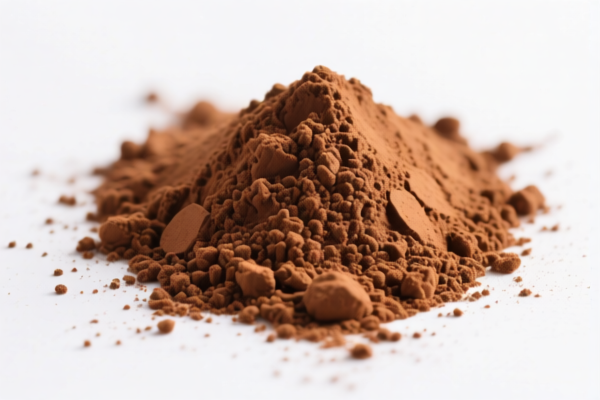

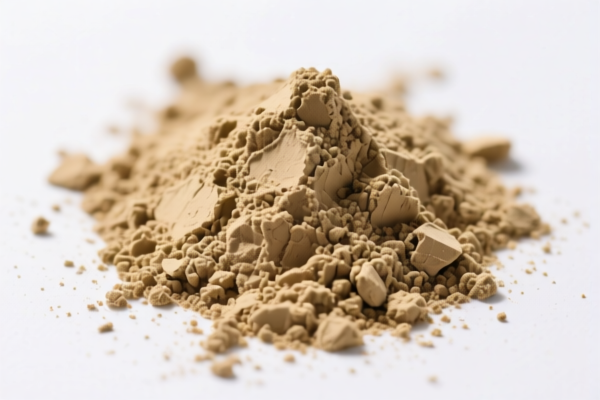
AI Analysis
🧪 Modified Aromatic Insecticidal Powder: HS Code Classification & US Customs Clearance Guide
🌐 HS Code Reference & Customs Clearance Guide | 2026 Latest Tariff Analysis | Professional Entry Strategy
📌 I. Product Definition & Classification: What is "Modified Aromatic Insecticidal Powder"?
"Modified Aromatic Insecticidal Powder" refers to a specialized class of pest control agents characterized by the presence of aromatic compounds. In international trade, these products are generally categorized based on their chemical nature, concentration of active ingredients, and specific regulatory status as either "pesticides" or "chemical preparations."
Key Distinction:
- If classified as a Pesticide (HS 3808): The product is registered or treated as a chemical pesticide containing aromatic compounds. It falls under specific pesticide subheadings.
- If classified as a Chemical Preparation (HS 3809/3808 mixed): The product may be viewed as a mixture where the insecticidal effect is secondary to its aromatic nature, or it is a specific formulation not fully covered by standard pesticide definitions, thus falling under "other preparations."
⚠️ Critical Clarification Point:
- If the product is primarily an insecticide with aromatic constituents → It may fall under 3808 (Pesticides).
- If the product is a mixture emphasizing aromatic substances for insect control but categorized as a general chemical preparation → It may fall under 3809 (Chemical Preparations).
- The presence of "122 Clause Tariffs" (Section 301/IEEPA) significantly impacts the final landed cost.
📦 II. HS Code Classification Matrix (2026 Latest Tariff Authority Comparison)
Based on the provided data, here is the precise breakdown for "Modified Aromatic Insecticidal Powder" or similar mixtures:
| HS Code | Product Description (Chinese Summary Translated) | Key Characteristics | Applicability |
|---|---|---|---|
| 3809.92.10.00 | Improved aromatic insecticidal mixture, containing aromatic substances, classified as chemical preparations | Contains aromatic substances; treated as a general chemical mix rather than a pure pesticide. | General aromatic insect repellents/control mixes. |
| 3809.93.10.00 | Improved aromatic insecticidal mixture, containing >5% aromatic substances, classified as products and preparations | High concentration of aromatic components (>5%). | Formulations with significant aromatic solvent/base content. |
| 3808.59.10.00 | Improved aromatic insecticidal mixture, containing aromatic pesticides, classified as other aromatic pesticide products | Explicitly contains aromatic pesticides as the active ingredient. | Products registered or defined specifically as pesticides. |
| 3808.91.25.01 | Improved aromatic insecticidal mixture, containing aromatic insecticides, material & use fully matched | Exact match for material and use; specific subheading for aromatic insecticides. | Precise regulatory match for aromatic insecticide formulations. |
| 3808.61.10.00 | Aromatic insecticidal powder, containing aromatic substances, classified as insecticide preparations | Specifically a powder form; aromatic nature confirmed. | Solid form (powder) aromatic insecticides. |
🔍 Key Insight:
- HS 3808 codes indicate the product is primarily regulated as a Pesticide.
- HS 3809 codes indicate the product is primarily regulated as a Chemical Preparation.
- Tax Liability: Note that most codes attract a 41.5% total tariff due to US trade actions, while one code attracts 16.5%. This difference is critical for cost planning.
💰 III. 2026 Latest Tariff Rate Breakdown (Including Surtaxes & Policy Add-ons)
✅ Applicable Country: United States (US)
✅ Origin: China (CN)
✅ Effective Date: Post-November 10, 2025 (Including subsequent imports)
🎯 1. High-Tariff Scenarios (Total Tax: 41.5%)
Applicable HS Codes:
- 3809.92.10.00
- 3809.93.10.00
- 3808.91.25.01
- 3808.61.10.00
| Item | Content |
|---|---|
| Base Tariff | 6.5% |
| Surtax (Section 301) | 25.0% |
| 122-Clause Tariff (IEEPA) | 10.0% |
| Total Effective Tax Rate | 41.5% |
| Tax Calculation | CIF Value × 41.5% |
| De Minimis Exemption | ❌ Not Available (deny_de_minimis) |
| Legal Basis Path | Base Tariff (6.5%) → USITC Footnote (25%) → IEEPA Section 122 (10%) |
📌 Explanation:
- The 25% surtax is applied under US Trade Law Section 301 against Chinese goods.
- The 10% "122-Clause Tariff" (often associated with IEEPA authorities or specific Section 232/301 expansions) is additional.
- Total 41.5% is a very high barrier, requiring significant margin protection or alternative sourcing.
🎯 2. Low-Tariff Scenario (Total Tax: 16.5%)
Applicable HS Code:
- 3808.59.10.00
| Item | Content |
|---|---|
| Base Tariff | 6.5% |
| Surtax (Section 301) | 0.0% |
| 122-Clause Tariff (IEEPA) | 10.0% |
| Total Effective Tax Rate | 16.5% |
| Tax Calculation | CIF Value × 16.5% |
| De Minimis Exemption | ❌ Not Available (deny_de_minimis) |
| Legal Basis Path | Base Tariff (6.5%) → IEEPA Section 122 (10%) |
📌 Explanation:
- This code (3808.59.10.00) is unique in the dataset as it does not attract the 25% Section 301 Surtax.
- This suggests it may be classified under a specific pesticide subheading that was excluded from the broader manufacturing/chemical surtax list, or it falls under a different regulatory pathway.
- Saving Potential: 25% reduction in total duty compared to other codes.
🛠️ IV. Customs Clearance Practical Advice (Combat Pitfall Guide)
✅ 1. Preparation Checklist (Must-Provide)
| Document | Required | Notes |
|---|---|---|
| ✅ Product Specification Sheet | ✔️ | Must detail chemical composition, % of aromatic substances, and active ingredient status. |
| ✅ Ingredient List (CAS Numbers) | ✔️ | Critical for determining if it’s a Pesticide (3808) vs. Chemical Prep (3809). |
| ✅ Product Photos (Including Label) | ✔️ | Show the "Insecticidal" claim clearly. |
| ✅ EPA Registration Number (if applicable) | ✔️ | If classified as 3808, an EPA number is often required to prove it's a regulated pesticide. |
| ✅ Commercial Invoice | ✔️ | Must clearly state "Modified Aromatic Insecticidal Powder" and exact HS Code. |
| ✅ Certificate of Origin (CO) | ✔️ | Proof of Chinese origin triggers surtaxes. |
| ✅ Packing List | ✔️ | Detail net/gross weight to avoid volumetric disputes. |
✅ 2. Declaration Strategy (Key Mantras)
🔥 “Classify as Pesticide to Save 25%, but Prove it to Pass EPA!”
| Scenario | Correct Declaration | Wrong Declaration |
|---|---|---|
| Product is a registered pesticide | 3808.59.10.00 (16.5%) |
Misdeclare as 3809... → 41.5% (Overpay!) |
| Product is an unregistered aromatic mix | 3809.92.10.00 or 3809.93.10.00 (41.5%) |
Misdeclare as Pesticide → Penalty + Retreatment |
| Product is an aromatic powder | 3808.61.10.00 (41.5%) |
Generic "Insect Repellent" → Customs Query/Delay |
| Product contains >5% aromatics | 3809.93.10.00 (41.5%) |
Ignore aromatic content → Misclassification |
📌 Warning:
- If you claim it’s a pesticide (3808) but lack EPA registration or proper chemical justification, Customs will reclassify it as a chemical preparation (3809) or even a different commodity, leading to back taxes, fines, and detention.
- Conversely, if you declare it as a chemical preparation (3809) when it is a registered pesticide, you overpay 25%.
✅ 3. Special Cases Handling
| Scenario | Handling Advice |
|---|---|
| EPA Unregistered Product | Cannot enter as a pesticide under 3808. Must be classified as a chemical preparation (3809) → Expect 41.5% tax. |
| High Aromatic Content (>5%) | Ensure 3809.93.10.00 is used if it’s a mixture, not a pure pesticide. |
| Powder Form | Specify "Powder" in description. 3808.61.10.00 is specific for aromatic insecticidal powders. |
| Mixed Shipments | Do not mix EPA-registered pesticides with non-registered aromatic mixes in one entry if HS codes differ significantly. |
🌍 V. Global Market Comparison (2026 Latest)
| Country/Region | Recommended HS Code | Total Tariff (China Origin) | Certification | Notes |
|---|---|---|---|---|
| 🇺🇸 United States | 3808.59.10.00 (Best Case) |
16.5% | EPA Registration | If not 3808, expect 41.5% under 3809 codes. |
| 🇺🇸 United States | 3809.92.10.00 / 3809.93.10.00 |
41.5% | None/Pesticide Label | High surtax applies. |
| 🇨🇳 China | 3808 or 3809 |
5-10% | China Pesticide Permit | Lower entry barrier, but export tax may apply. |
| 🇪🇺 EU | 3808 or 3809 |
0-6.5% | EU Biocidal Product Regulation (BPR) | Strict BPR compliance needed. No 122/301 surtaxes. |
| 🇯🇵 Japan | 3808 or 3809 |
0-6% | Pesticide Control Law | Requires Japanese registration. |
📌 Conclusion:
- USA is the most complex market due to the dual-layer surtax (25% + 10%).
- Opportunity: If your product qualifies as a standard aromatic pesticide under3808.59.10.00, you can save 25% in duties.
- Risk: Misclassification between 3808 and 3809 leads to massive cost discrepancies or compliance failures.
📌 VI. Common Errors & Pitfall Avoidance (Lessons Learned)
❌ Error 1: Declaring a non-registered aromatic mix as a Pesticide (3808) to save 25%
👉 Consequence: Customs rejects entry, demands EPA proof, or reclassifies to 3809 → 41.5% tax + penalties.
❌ Error 2: Ignoring the "Aromatic" component in the description
👉 Consequence: Customs may classify under general insecticides, potentially triggering different surtaxes or inspections.
❌ Error 3: Assuming all "Insecticidal Powders" are the same
👉 Consequence: 3808.61.10.00 (Powder, Aromatic) vs. 3809.92.10.00 (Mixture) have different legal bases. Wrong code = Wrong Audit.
❌ Error 4: Overlooking the 122-Clause Tariff
👉 Consequence: Even if base tariff is low, the 10% IEEPA surtax is unavoidable for most HS codes in this dataset.
✅ Correct Approach:
"Modified Aromatic Insecticidal Powder, Contains [Specific CAS] Aromatic Compounds, EPA Reg. No. [XXXXX], Classify as Pesticide under 3808.59.10.00"
OR
"Aromatic Insecticidal Mixture, >5% Aromatic Solvents, Chemical Preparation, Classify under 3809.93.10.00"
🎯 VII. Conclusion: Precise Classification Saves 25%!
🎯 Key Takeaway:
🔹 "Pesticide Status Saves 25%, but EPA Proof is Mandatory!"
🔹 "Aromatic Content >5% Triggers 3809, Tax Jumps to 41.5%."
🔹 "122 Clause 10% is Almost Always On."
📌 Pro Tip:
- If your product is not EPA-registered, do NOT try to force it into 3808. Accept the 41.5% rate under 3809 to avoid compliance risks.
- If it is EPA-registered, aggressively pursue 3808.59.10.00 to lock in the 16.5% rate.
- Always include CAS numbers and EPA Reg No. (if applicable) in your commercial invoice and packing list.
📣 Immediate Action Required:
📞 Contact a US Customs Broker: Provide product spec sheet + EPA status.
📋 Apply for Advance Ruling: If unsure about 3808 vs. 3809 classification, request a CBP Advance Ruling to secure the 16.5% rate legally.
🚀 Optimize Supply Chain: If 41.5% is unsustainable, consider re-formulating to meet 3808 criteria (if possible) or sourcing from non-China origins to bypass surtaxes.
✨ Professional Clearance Starts with Accurate Classification!
💼 Your Profit Margin Depends on the 25% Difference!
Customer Reviews
About HS Code Classification
The Harmonized System (HS) is an internationally standardized nomenclature developed by the World Customs Organization (WCO) to classify traded products. Over 200 countries use the HS system as the basis for customs tariffs, trade statistics, and import/export regulations.
Each HS code follows a hierarchical structure:
- Chapter (2 digits) — Broad category of goods (e.g., Chapter 84: Machinery and Mechanical Appliances)
- Heading (4 digits) — More specific grouping within the chapter
- Subheading (6 digits) — Internationally standardized breakdown, used by all WCO member countries
- National subdivisions (8-10 digits) — Country-specific extensions for further classification, such as US HTSUS 10-digit codes
Correct HS code classification is essential for smooth customs clearance, accurate duty payment, and compliance with trade regulations. Misclassification can lead to customs delays, overpayment of duties, or penalties.
When importing from CN to US, the applicable tariff rates may include:
- Most-Favored-Nation (MFN) rate — The standard duty rate applied to WTO members
- General rate — Applied to countries without trade agreements
- Trade remedy duties — Additional tariffs such as Section 301 (anti-dumping), Section 232 (national security), or countervailing duties
The information provided on this page is for reference purposes only. For official classification, please consult with your local customs authority or a licensed customs broker.