Modified Aromatic Rodenticide Emulsifiable Concentrate
CN → US| HS Code | Tariff Rate | Origin | Destination | Doc |
|---|---|---|---|---|
| 2922492600 | 41.5% | CN | US | Official Doc |
| 2933992200 | 16.5% | CN | US | Official Doc |
| 3808691000 | 41.5% | CN | US | Official Doc |
| 2922190900 | 16.5% | CN | US | Official Doc |
Product Images
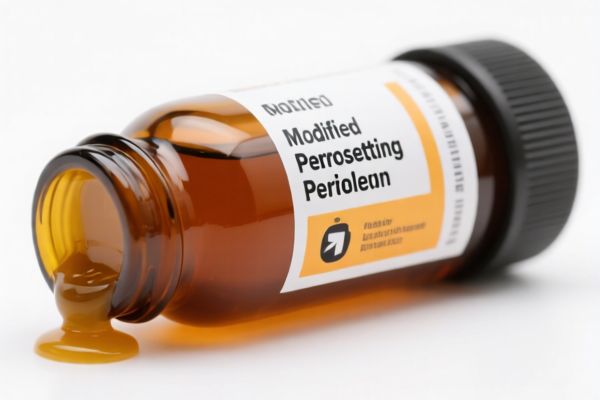

AI Analysis
🐀🧪 Modified Aromatic Rodenticide Emulsifiable Concentrate: HS Code Masterclass & 2026 Clearance Strategy
🌐 Global Trade Intelligence | 2026 Tariff Guide | Rodenticide Import/Export Strategy
📌 I. Product Definition: What Exactly is "Modified Aromatic Rodenticide Emulsifiable Concentrate"?
The Modified Aromatic Rodenticide Emulsifiable Concentrate (MEC) is a highly potent, liquid pesticide formulation designed for rodent control. Its name reveals three critical classification factors:
- Chemical Structure ("Modified Aromatic"): The active ingredient is derived from a modified aromatic chemical structure (likely a derivative of compounds like brodifacoum, difethialone, or similar anticoagulants).
- Function ("Rodenticide"): Its sole purpose is to kill rodents (rats, mice, etc.).
- Form ("Emulsifiable Concentrate"): It is a liquid concentrate that forms an emulsion when mixed with water, classified chemically as a mixture or preparation.
⚠️ The Classification Trap:
Is it a Chemical (Chapter 29) or a Pesticide Preparation (Chapter 38)?
- Chapter 29: If the active ingredient is a pure, modified aromatic chemical compound itself.
- Chapter 38: If it is a mixture/formulation where the active ingredient is combined with solvents/additives for practical use as a pesticide.
Note: Even if it's a "pure" chemical, if it's intended specifically for use as a rodenticide in a specific formulation, Chapter 38 often takes precedence, BUT specific 29-headings for "modified aromatic compounds" create a unique overlap requiring precise tax analysis.
📦 II. HS Code Classification Matrix (2026 Tax Regime)
Based on the product description and current tariff data, here are the four possible HS Code classifications for this product, ranging from pure chemical derivatives to specific pesticide preparations.
| HS Code | Product Description & Material | Purpose/Form | Total Tax Rate |
|---|---|---|---|
| 2922.49.26.00 | Modified Aromatic Compound (Derivative) | Rodenticide / Drug Form: Emulsifiable Concentrate |
41.5% |
| 2933.99.22.00 | Modified Aromatic Heterocycle (Other) | Pesticide Form: Concentrate |
16.5% |
| 3808.69.10.00 | Pesticide Preparation | Rodenticide Form: Emulsifiable Concentrate |
41.5% |
| 2922.19.09.00 | Other Modified Aromatic Amine | Drug / Chemical Product Form: Emulsifiable Concentrate |
16.5% |
🔍 Key Distinction Logic: * 41.5% Tier (High Risk): Applies if the item is classified as a specific "Drug/Pesticide" under Chapter 29 (2922) OR as a specific "Pesticide Preparation" under Chapter 38 (3808). * 16.5% Tier (Low Risk): Applies if the item is classified as a generic "Chemical Derivative" (Chapter 29) where the "Pesticide" function does not override the chemical nature, OR if the "Drug" classification is more specific than the "Rodenticide" classification.
💰 III. Detailed Tariff Breakdown & Legal Basis (2026 Standards)
The total tax burden is determined by three distinct components: Base Tariff, Section 301 (Additional) Tariff, and Section 122 (Retaliatory) Tariff.
🎯 Scenario A: The High-Tax Trap (41.5%)
Applicable Codes: 2922.49.26.00 & 3808.69.10.00
| Tax Component | Rate | Legal Source | Description |
|---|---|---|---|
| Base Tariff | 6.5% | Harmonized System | Standard Most-Favored-Nation (MFN) rate for chemicals/pesticides. |
| Section 301 (USITC) | 25.0% | "301 Actions" | Section 301 duties imposed on Chinese-origin goods (specifically chemicals/pesticides) to counter unfair trade practices. |
| Section 122 | 10.0% | "122 Clause" | Section 122 tariffs (Retaliatory tariffs) imposed in response to specific trade measures. |
| Total Effective Rate | 41.5% | 6.5 + 25.0 + 10.0 |
High Duty Alert: This is the maximum exposure for this product type. |
📌 Why this happens: If Customs determines the product is a "Specific Rodenticide" (Chapter 38) or a specific "Drug/Chemical" (Chapter 29) targeted by the 301 list, the 25% surcharge kicks in immediately.
🎯 Scenario B: The Optimized Path (16.5%)
Applicable Codes: 2933.99.22.00 & 2922.19.09.00
| Tax Component | Rate | Legal Source | Description |
|---|---|---|---|
| Base Tariff | 6.5% | Harmonized System | Standard MFN rate. |
| Section 301 | 0.0% | Excluded Category | No 301 Surcharge applied. This classification falls outside the specific 301 "chemicals/pesticides" blacklist. |
| Section 122 | 10.0% | "122 Clause" | Section 122 tariffs still apply (as it is likely a chemical product subject to general retaliation). |
| Total Effective Rate | 16.5% | 6.5 + 0.0 + 10.0 |
Cost-Saving Strategy: Achievable only if the chemical structure fits the "Other Aromatic" definition and is not explicitly targeted as a "Rodenticide" in the 301 list. |
🛠️ IV. Clearance & Customs Strategy (Expert Recommendations)
To navigate these complex tax structures, you must treat the HS Code Selection as a strategic decision, not just a technical one.
✅ 1. Pre-Shipment Classification (The "Golden Rule")
"Structure vs. Function" is the deciding factor.
- If your product is a "Finished Pesticide" (Ready to use as a spray):
- Customs may force
3808.69.10.00(41.5%). - Strategy: If possible, declare as a Chemical Intermediate (if valid) to aim for
2933.99.22.00.
- Customs may force
- If the chemical is a "Modified Aromatic Derivative":
- Check the specific 301 exclusion lists. If the specific aromatic derivative is not on the 301 list, it may qualify for
2933.99.22.00(16.5%). - Crucial: Do not label it "Pesticide" on the commercial invoice if you are claiming a chemical code; label it as "Modified Aromatic Chemical Intermediate" (if legally accurate).
- Check the specific 301 exclusion lists. If the specific aromatic derivative is not on the 301 list, it may qualify for
✅ 2. Documentation Checklist (Mandatory)
To avoid delays and audits, prepare the following before shipping:
| Document | Requirement | Why It Matters |
|---|---|---|
| Technical Data Sheet (TDS) | Must explicitly state "Chemical Structure" and "Is not a finished pesticide" (if claiming Chapter 29). | Proves classification as a chemical, not a pesticide preparation. |
| Formula Composition | Detailed % of active ingredient vs. solvents. | Determines if it's a "Preparation" (3808) or a "Chemical" (29xx). |
| MSDS / Safety Data Sheet | Must match the HS Code description. | Mismatch = Automatic Audit. |
| Certificate of Origin | Must be clear (e.g., "Made in China"). | Required to calculate the 301 and 122 surcharges correctly. |
| Intended Use Declaration | Careful Wording: "For further formulation" vs. "For immediate rodent control." | Critical: If declared as "Ready to use as rodenticide," 3808 is almost certain. |
✅ 3. Clearance Pitfalls to Avoid
- ❌ Misleading "Emulsifiable Concentrate" Label: Even if the product is technically an emulsifiable concentrate, if it contains only the active rodenticide and is marketed as such, it must go to
3808.- Result: 41.5% Tax.
- ❌ Over-Specificity: Declaring "Modified Aromatic Rodenticide" when you can declare "Modified Aromatic Chemical Derivative" (if the chemical nature is the primary characteristic).
- Result: Potential 41.5% vs. 16.5% difference.
- ❌ Ignoring the 122 Clause: Many importers forget the 10% 122 tariff even if they get the 301 exemption. Always calculate 16.5% or 41.5%, never 6.5% only.
🌍 V. Global Market Comparison (Quick Reference)
| Destination | Recommended HS Code | Est. Tax Rate | Strategy |
|---|---|---|---|
| USA | 3808.69.10.00 (If Pesticide) |
41.5% | Hard target. Requires proving it's a chemical intermediate. |
| USA | 2933.99.22.00 (If Chemical) |
16.5% | Best Case. Requires strict chemical structure proof. |
| EU | 3808.94 (General) |
~10-15% | No Section 301, but high pesticide regulation. |
| SE Asia | Varies | Low | Check local pesticide registration (often blocks import). |
📌 VI. Final Verdict: The "16.5% vs 41.5%" Decision Matrix
| Condition | Action | Expected HS Code | Tax Rate |
|---|---|---|---|
| Product is a Finished Pesticide | Declare as "Rodenticide Preparation" | 3808.69.10.00 |
41.5% |
| Product is a Chemical Intermediate (for further processing) | Declare as "Modified Aromatic Chemical" | 2933.99.22.00 |
16.5% |
| Product is a Specific Drug/Chemical (Non-pesticide function) | Declare as "Other Aromatic Amine" | 2922.19.09.00 |
16.5% |
| Product is a Specific Drug/Chemical (Pesticide function) | Declare as "Drug/Pesticide" | 2922.49.26.00 |
41.5% |
🚀 Pro Tip:
If your company manufactures this, consider applying for a Binding Tariff Information (BTI) or US Customs Ruling before shipping. A pre-approval for the 16.5% classification is worth its weight in gold, as the difference (25%) is massive.
✨ Final Thought:
In the world of Modified Aromatic Rodenticides, the devil is in the classification. Are you a chemical or a pesticide? The answer dictates a 25% tariff jump.
Verify your chemical structure, label with precision, and calculate the full 41.5% or 16.5%—never guess!
📢 Need Help?
📞 Contact Customs Broker for a Product Classification Ruling (PCR) before the first container sails.
🚀 Save thousands on duties by choosing the right HS Code today.
Disclaimer: This guide is for informational purposes based on 2026 tax projections. Customs regulations change frequently. Always consult a licensed customs broker or legal expert for your specific shipment.
Customer Reviews
About HS Code Classification
The Harmonized System (HS) is an internationally standardized nomenclature developed by the World Customs Organization (WCO) to classify traded products. Over 200 countries use the HS system as the basis for customs tariffs, trade statistics, and import/export regulations.
Each HS code follows a hierarchical structure:
- Chapter (2 digits) — Broad category of goods (e.g., Chapter 84: Machinery and Mechanical Appliances)
- Heading (4 digits) — More specific grouping within the chapter
- Subheading (6 digits) — Internationally standardized breakdown, used by all WCO member countries
- National subdivisions (8-10 digits) — Country-specific extensions for further classification, such as US HTSUS 10-digit codes
Correct HS code classification is essential for smooth customs clearance, accurate duty payment, and compliance with trade regulations. Misclassification can lead to customs delays, overpayment of duties, or penalties.
When importing from CN to US, the applicable tariff rates may include:
- Most-Favored-Nation (MFN) rate — The standard duty rate applied to WTO members
- General rate — Applied to countries without trade agreements
- Trade remedy duties — Additional tariffs such as Section 301 (anti-dumping), Section 232 (national security), or countervailing duties
The information provided on this page is for reference purposes only. For official classification, please consult with your local customs authority or a licensed customs broker.