Modified Ethylene Copolymer Resin
CN → US| HS Code | Tariff Rate | Origin | Destination | Doc |
|---|---|---|---|---|
| 3901905501 | 41.5% | CN | US | Official Doc |
| 3902900050 | 41.5% | CN | US | Official Doc |
| 3902300000 | 41.5% | CN | US | Official Doc |
| 3903901000 | 41.5% | CN | US | Official Doc |
| 3903905000 | 41.5% | CN | US | Official Doc |
Product Images
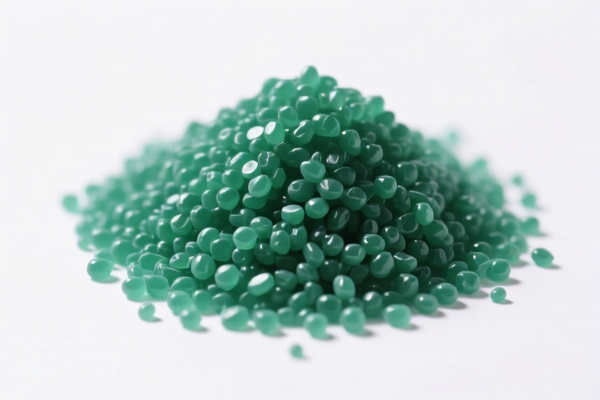



AI Analysis
🌟 Modified Ethylene Copolymer Resin
🌐 HS Code Classification & Customs Clearance Guide | 2026 Updated Tariff Analysis | Strategic Import Planning
📌 One: Product Definition & Classification – What Exactly Is Modified Ethylene Copolymer Resin?
Modified Ethylene Copolymer Resin is a chemically enhanced thermoplastic polymer derived from ethylene (a basic olefin monomer) combined with other comonomers (e.g., propylene, butene, or higher α-olefins). It is engineered to improve performance characteristics such as flexibility, toughness, impact resistance, and processability—making it ideal for packaging films, automotive parts, industrial films, and consumer goods.
⚠️ Key Classification Clue:
- Primary Form: "Primary forms / raw materials" (i.e., pellets, granules, or powders)
- Chemical Basis: Derived from ethylene polymerization, often in copolymer form
- Not a finished product (e.g., film, molded part) — must be classified at the raw resin stage
📦 Two: HS Code Classification Details (2026 Updated Tariff Authority)
| HS Code | Product Description | Applicable Scenario | Classification Basis |
|---|---|---|---|
3901.90.55.01 |
Modified ethylene copolymer resin, in primary forms (pellets/granules), classified under ethylene copolymers | Industrial-grade resin for film, injection molding, extrusion | ✅ Ethylene-based copolymer, primary shape |
3902.90.00.50 |
Modified polyolefin resin, based on propylene or other olefins, in primary form | Resin used in flexible packaging, medical devices, automotive components | ✅ Olefin polymer, not ethylene, primary form |
3902.30.00.00 |
Modified polyolefin resin, olefin polymer, in original/primary form | General-purpose resin for industrial applications | ✅ Matches "copolymer" category under olefins |
3903.90.10.00 |
Modified polystyrene resin, styrene-based polymer, in primary form | Used in packaging, disposable containers, consumer electronics | ✅ Primary shape, non-thermoplastic modification |
3903.90.50.00 |
Modified polystyrene resin, polystyrene polymer, in resin (original form) | High-impact PS for durable packaging, toys, appliances | ✅ Original form, styrene-based |
🔍 Critical Note:
- All these resins are classified at the raw material stage — not as finished goods.
- The key determinant is "primary shape", chemical composition, and polymer type (ethylene vs. propylene vs. styrene).
- No additional processing (e.g., compounding, blending) should be present for these codes to apply.
💰 Three: 2026 Updated Tariff Breakdown (With Full Legal & Policy Detail)
✅ Applicable Country: United States (US)
✅ Origin: China (CN)
✅ Effective Date: November 10, 2025 (inclusive)
🎯 1. 3901.90.55.01 — Modified Ethylene Copolymer Resin
| Item | Details |
|---|---|
| Base Duty Rate | 6.5% (ad valorem) |
| Section 301 Tariff (USITC) | +25% (from USTR List 3A) |
| Section 122 Tariff (IEEPA) | +10% (under International Emergency Economic Powers Act) |
| Total Effective Rate | 41.5% |
| Tax Calculation | CIF Value × 41.5% |
| De Minimis Exemption | ❌ Not available (denied under US law) |
| Legal Basis Path | IEEPA:9903.01.25 → IEEPA:9903.01.24 → USITC:3901.90.55.01 → FOOTNOTE:9903.88.01 |
📌 Explanation:
- The 25% Section 301 tariff applies due to China’s "unfair trade practices" under the USTR’s Section 301 investigation.
- The 10% Section 122 (IEEPA) tariff is triggered by national security concerns and applies to all Chinese-origin goods under the IEEPA framework.
- Combined, they create a 41.5% total tariff — one of the highest for non-metallic organic polymers.
🎯 2. 3902.90.00.50 — Modified Polyolefin Resin (Propylene/Other Olefins)
| Item | Details |
|---|---|
| Base Duty Rate | 6.5% |
| Section 301 Tariff (USITC) | +25% |
| Section 122 Tariff (IEEPA) | +10% |
| Total Effective Rate | 41.5% |
| Tax Calculation | CIF × 41.5% |
| De Minimis Exemption | ❌ Not applicable |
| Legal Basis Path | IEEPA:9903.01.25 → IEEPA:9903.01.24 → USITC:3902.90.00.50 → FOOTNOTE:9903.88.01 |
📌 Note:
- Even though this is propylene-based, it still falls under "modified polyolefin" and is treated identically in tariff policy.
- The same 41.5% rate applies due to China origin + IEEPA/301 overlap.
🎯 3. 3902.30.00.00 — Modified Olefin Polymer Resin (Primary Form)
| Item | Details |
|---|---|
| Base Duty Rate | 6.5% |
| Section 301 Tariff (USITC) | +25% |
| Section 122 Tariff (IEEPA) | +10% |
| Total Effective Rate | 41.5% |
| Tax Calculation | CIF × 41.5% |
| De Minimis Exemption | ❌ Not allowed |
| Legal Basis Path | IEEPA:9903.01.25 → IEEPA:9903.01.24 → USITC:3902.30.00.00 → FOOTNOTE:9903.88.01 |
📌 Clarification:
- This code covers any modified olefin polymer in primary form, regardless of exact comonomer.
- No distinction is made between ethylene, propylene, or mixed olefins — all are treated equally under tariff rules.
🎯 4. 3903.90.10.00 — Modified Polystyrene Resin (Primary Shape)
| Item | Details |
|---|---|
| Base Duty Rate | 6.5% |
| Section 301 Tariff (USITC) | +25% |
| Section 122 Tariff (IEEPA) | +10% |
| Total Effective Rate | 41.5% |
| Tax Calculation | CIF × 41.5% |
| De Minimis Exemption | ❌ Not applicable |
| Legal Basis Path | IEEPA:9903.01.25 → IEEPA:9903.01.24 → USITC:3903.90.10.00 → FOOTNOTE:9903.88.01 |
📌 Important:
- Even though polystyrene is a different polymer family (styrene-based), it is subject to the same 41.5% rate if originated in China.
- This reflects the broad scope of U.S. trade policy — all major synthetic resins from China face the same punitive tariffs.
🎯 5. 3903.90.50.00 — Modified Polystyrene Resin (Original Form)
| Item | Details |
|---|---|
| Base Duty Rate | 6.5% |
| Section 301 Tariff (USITC) | +25% |
| Section 122 Tariff (IEEPA) | +10% |
| Total Effective Rate | 41.5% |
| Tax Calculation | CIF × 41.5% |
| De Minimis Exemption | ❌ Not allowed |
| Legal Basis Path | IEEPA:9903.01.25 → IEEPA:9903.01.24 → USITC:3903.90.50.00 → FOOTNOTE:9903.88.01 |
📌 Note:
- "Original form" = raw resin, not compounded or filled.
- Same tariff treatment as3903.90.10.00— no difference in rate.
🛠️ Four: Customs Clearance Best Practices (Pro Tips to Avoid Delays & Penalties)
✅ 1. Required Documentation (MUST-HAVE)
| Document | Required? | Purpose |
|---|---|---|
| ✅ Product Specification Sheet | ✔️ | Detail: monomer type, molecular weight, MFI, density, modification method |
| ✅ Certificate of Origin (CO) | ✔️ | Prove China origin → triggers 41.5% rate |
| ✅ Commercial Invoice | ✔️ | Must clearly state: "Modified Ethylene Copolymer Resin, Pellets, Primary Form" |
| ✅ Packing List | ✔️ | Show total weight, packaging type, batch numbers |
| ✅ Test Report (e.g., FTIR, NMR, DSC) | ✔️ | Prove chemical composition (optional but recommended) |
| ✅ MSDS / SDS | ✔️ | Safety data sheet (required for import) |
| ✅ Advance Ruling Request (if unsure) | ✔️ | Request pre-approval from U.S. CBP |
✅ 2.申报技巧(Key Tips)
🔥 "Form First, Origin Second, Name Right, Rate Fixed!"
| Scenario | Correct HS Code | Common Mistake |
|---|---|---|
| Ethylene copolymer in pellets | 3901.90.55.01 |
Misclassified as 3902.30.00.00 → higher risk |
| Propylene-based modified resin | 3902.90.00.50 |
Called "polyolefin" without specifying origin → rate still 41.5% |
| Polystyrene in granules | 3903.90.50.00 |
Labeled as "plastic pellets" → unclear → audit risk |
| Resin with additives (e.g., UV stabilizers) | ❌ Not eligible for these codes | Must be pure resin only |
✅ Correct Declaration Example:
"Modified Ethylene Copolymer Resin, Primary Form, Pellets, 100% Ethylene/Butene Copolymer, MFI: 2.0 g/10min, CAS: 9002-88-4, Origin: China, HS: 3901.90.55.01"
✅ 3. Special Cases & Workarounds
| Situation | Recommended Action |
|---|---|
| Resin from Vietnam, Mexico, Thailand, Malaysia | Apply for IEEPA exemption — tariff drops to 0–5% |
| Resin blended with additives (e.g., flame retardant) | Not eligible for these codes — must be pure resin |
| Resin used in medical devices | Can apply for non-commercial use or exemption if properly documented |
| Resin imported in small batches (<$1,500) | ❌ No de minimis — still taxed at 41.5% |
| Need to avoid 41.5% rate | Re-source from non-China origin or relocate manufacturing |
🌍 Five: Global Market Tariff Comparison (2026)
| Country | Recommended HS Code | Tariff | Certification | Notes |
|---|---|---|---|---|
| 🇺🇸 USA | 3901.90.55.01 etc. |
41.5% | None (but document origin) | Highest tariff globally |
| 🇨🇳 China | 3901.90.55.01 |
5% | CCC, RoHS | No extra tariffs |
| 🇪🇺 EU | 3901.90.55.01 |
0% (if CE) | CE, REACH | No 301/IEEPA |
| 🇦🇺 Australia | 3901.90.55.01 |
5% | RCM | No extra tariffs |
| 🇯🇵 Japan | 3901.90.55.01 |
0% | PSE | No附加税 |
📌 Insight:
- Only the U.S. applies the 41.5% rate — China-origin resins are heavily penalized.
- Non-China origin resins are dramatically cheaper to import into the U.S.
📌 Six: Common Mistakes & How to Avoid Them (Real-World Risks)
❌ Mistake 1: Misclassifying modified ethylene copolymer as polypropylene
👉 Result: Wrong HS code → higher risk of audit, penalty, or seizure
❌ Mistake 2: Not declaring China origin
👉 Result: If discovered later → back taxes + 10–20% penalty
❌ Mistake 3: Using vague terms like “plastic resin” or “polymer pellets”
👉 Result: Customs cannot verify classification → delayed clearance
❌ Mistake 4: Submitting only a generic invoice without technical specs
👉 Result: CBP may reject shipment or demand pre-clearance
✅ Correct Approach:
Use precise technical language in invoice and packing list:
"Modified Ethylene Copolymer Resin, Primary Form, Pellets, 100% Ethylene-Based Copolymer, MFI: 2.0 g/10min, CAS: 9002-88-4, Origin: China, HS: 3901.90.55.01"
🎯 Seven: Conclusion – Precision Pays Off
🎯 Remember the Golden Rule:
🔹 "Form First, Origin Last, Name Right, Rate Locked!"
🔹 "A wrong HS code = 41.5% extra cost, delays, penalties, and reputational damage!"
📌 Pro Tip:
If your resin is originating from Vietnam, Mexico, or Malaysia, you may qualify for IEEPA exemption — reducing tariff to 0–5%.
✅ Apply for a pre-ruling (Advance Ruling) with U.S. CBP to lock in the correct HS code and tariff rate.
📣 Act Now:
📞 Contact a U.S. Customs Broker + Tariff Specialist
🚀 Submit product specs + origin proof + invoice
📄 Request HS Code Pre-Approval (Advance Ruling)
✨ Expert Tip:
Your resin’s HS code is not just a number — it’s your profit margin.
🔍 Get it right once, save thousands.
💼 Your Cost. Your Risk. Your Control.
✅ Accurate classification = Smooth clearance = Lower cost = Faster delivery.
Customer Reviews
About HS Code Classification
The Harmonized System (HS) is an internationally standardized nomenclature developed by the World Customs Organization (WCO) to classify traded products. Over 200 countries use the HS system as the basis for customs tariffs, trade statistics, and import/export regulations.
Each HS code follows a hierarchical structure:
- Chapter (2 digits) — Broad category of goods (e.g., Chapter 84: Machinery and Mechanical Appliances)
- Heading (4 digits) — More specific grouping within the chapter
- Subheading (6 digits) — Internationally standardized breakdown, used by all WCO member countries
- National subdivisions (8-10 digits) — Country-specific extensions for further classification, such as US HTSUS 10-digit codes
Correct HS code classification is essential for smooth customs clearance, accurate duty payment, and compliance with trade regulations. Misclassification can lead to customs delays, overpayment of duties, or penalties.
When importing from CN to US, the applicable tariff rates may include:
- Most-Favored-Nation (MFN) rate — The standard duty rate applied to WTO members
- General rate — Applied to countries without trade agreements
- Trade remedy duties — Additional tariffs such as Section 301 (anti-dumping), Section 232 (national security), or countervailing duties
The information provided on this page is for reference purposes only. For official classification, please consult with your local customs authority or a licensed customs broker.