Modified Ethylene Elastomer
CN → US| HS Code | Tariff Rate | Origin | Destination | Doc |
|---|---|---|---|---|
| 3901905501 | 41.5% | CN | US | Official Doc |
| 3901901000 | 35.0% | CN | US | Official Doc |
| 3904905000 | 41.5% | CN | US | Official Doc |
| 3904901000 | 35.0% | CN | US | Official Doc |
| 3901901000 | 35.0% | CN | US | Official Doc |
Product Images

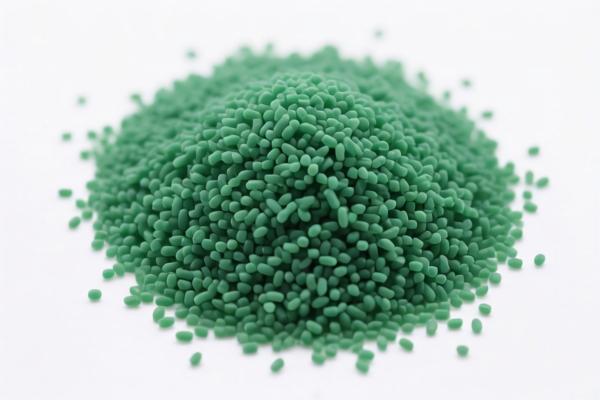

AI Analysis
🔬 Modified Ethylene Elastomer (Resin)
🌐 HS Code Reference & Customs Clearance Guide | 2026 Latest Tariff Analysis | Professional Clearance Strategy
📌 I. Product Definition & Classification: What is "Modified Ethylene Elastomer"?
Modified Ethylene Elastomer refers to a category of thermoplastic materials based on ethylene copolymers. In international trade, these materials are classified based on their chemical structure, physical state (primary shape/resin), and whether they possess elastomeric (rubber-like) properties.
The term "Modified" often implies the addition of flame retardants or other additives. However, for HS Code classification purposes, the chemical nature of the polymer and its physical form are the primary determinants.
⚠️ Key Distinction Points:
- Chemical Basis: Is it a simple ethylene polymer, or does it contain vinyl chloride/halogenated olefins?
- Physical State: Is it in "primary shape" (granules/powder)?
- Property: Is it explicitly an "elastomer" (flexible/rubber-like) or a rigid resin?
📦 II. HS Code Classification Details (2026 Latest Tariff Authority Match)
Based on the provided data for "Modified Ethylene Elastomer / Resin", here are the exact HS Codes and corresponding tax structures.
| HS Code | Product Description (Summary) | Total Tax Rate | Tax Breakdown (China Origin -> US) |
|---|---|---|---|
3901.90.55.01 |
Flame-retardant modified ethylene elastomer resin, ethylene copolymer primary shape | 41.5% | Base: 6.5% + Add: 25.0% + Section 122: 10% |
3901.90.10.00 |
Flame-retardant modified ethylene elastomer resin, ethylene polymer elastomer OR Thermoplastic ethylene elastomer, ethylene polymer elastomer |
35.0% | Base: 0.0% + Add: 25.0% + Section 122: 10% |
3904.90.50.00 |
Flame-retardant modified ethylene elastomer resin, ethylene-type polymer primary shape | 41.5% | Base: 6.5% + Add: 25.0% + Section 122: 10% |
3904.90.10.00 |
Flame-retardant modified ethylene elastomer resin, vinyl chloride or other halogenated olefin polymer elastomer | 35.0% | Base: 0.0% + Add: 25.0% + Section 122: 10% |
🔍 Critical Analysis:
- Group 1 (High Tax: 41.5%): Includes3901.90.55.01and3904.90.50.00. These carry a 6.5% Base Tariff. This typically applies to specific "primary shapes" of ethylene polymers/copolymers that do not qualify for the 0% base rate. - Group 2 (Medium Tax: 35.0%): Includes3901.90.10.00and3904.90.10.00. These carry a 0.0% Base Tariff. This often applies to specific elastomeric forms or halogenated olefin copolymers which benefit from a lower base duty, though still subject to heavy附加 taxes.
💰 III. 2026 Latest Tariff Rate Details (Including Surcharges & Policy Add-ons)
✅ Applicable Country: United States (US)
✅ Origin: China (CN)
✅ Effective Time: Current (Including Section 301 & 122 Surcharges)
🎯 1. HS Code 3901.90.55.01 & 3904.90.50.00 (The 41.5% Bracket)
| Item | Content |
|---|---|
| Base Tariff | 6.5% (Standard MFN Duty) |
| Section 301 Surcharge | +25.0% (Additional Duty on Chinese Goods) |
| Section 122 Surcharge | +10.0% (Specific policy add-on for this category) |
| Total Effective Tax Rate | 41.5% |
| Tax Calculation | CIF Value × 41.5% |
| De Minimis Exemption | ❌ Not Eligible (Deemed high-risk/commercial) |
| Legal Basis Path | HTSUS:3901.90.55.00 → Footnote 6 (Section 301) → Footnote 122 |
📌 Explanation:
- The 6.5% base rate is standard for many polyethylene/propylene primary shapes.
- The 25% Section 301 is the standard punitive tariff on Chinese plastics.
- The 10% Section 122 is a specific additional duty.
- Total: 41.5%. This is a high-cost category. Cost optimization strategies are essential.
🎯 2. HS Code 3901.90.10.00 & 3904.90.10.00 (The 35.0% Bracket)
| Item | Content |
|---|---|
| Base Tariff | 0.0% (Specific subheadings allow for 0% base duty) |
| Section 301 Surcharge | +25.0% (Additional Duty on Chinese Goods) |
| Section 122 Surcharge | +10.0% (Specific policy add-on for this category) |
| Total Effective Tax Rate | 35.0% |
| Tax Calculation | CIF Value × 35.0% |
| De Minimis Exemption | ❌ Not Eligible |
| Legal Basis Path | HTSUS:3901.90.10.00 → Footnote 6 (Section 301) → Footnote 122 |
📌 Explanation:
- The 0.0% base rate is the key differentiator here.
- Even with the 25% and 10% surcharges, the total is 35%, which is 6.5% cheaper than the other group.
- Crucial: You must ensure your product description and chemical composition strictly match the definitions of3901.90.10.00(Ethylene polymer elastomer) or3904.90.10.00(Halogenated olefin elastomer) to qualify for this lower base rate.
🛠️ IV. Customs Clearance Practical Advice (Battle-Tested Pitfall Avoidance)
✅ 1. Required Documentation Checklist (Non-Negotiable)
| Document | Mandatory? | Explanation |
|---|---|---|
| ✅ Product Specification Sheet | ✔️ | Must detail: "Ethylene Copolymer," "Flame Retardant Modified," "Thermoplastic Elastomer." |
| ✅ Chemical Structure Diagram | ✔️ | Crucial for distinguishing between 3901 (Ethylene) and 3904 (Vinyl/Halogenated). |
| ✅ MSDS (Material Safety Data Sheet) | ✔️ | Proves it is a "Primary Shape" (resin/granules) and not a finished good. |
| ✅ Commercial Invoice | ✔️ | Must use precise HS Code descriptions. Do NOT just write "Plastic." |
| ✅ Packaging List | ✔️ | Net weight/Gross weight verification. |
✅ 2. Declaration Strategy (Key Mantra)
🔥 “Define the Polymer, Define the Shape, Choose the Base Rate!”
| Scenario | Correct HS Code | Tax Rate | Risk if Misclassified |
|---|---|---|---|
| Ethylene Copolymer, Primary Shape | 3901.90.55.01 |
41.5% | Low risk if chemically accurate. |
| Ethylene Polymer Elastomer (TPV/POE) | 3901.90.10.00 |
35.0% | Optimal Choice if product is truly elastomeric. Saves 6.5%. |
| Vinyl/Halogenated Olefin Elastomer | 3904.90.10.00 |
35.0% | Optimal Choice if halogenated content is present. Saves 6.5%. |
| General Ethylene Resin (Primary Shape) | 3904.90.50.00 |
41.5% | High tax unless you can prove it fits the 0% base category. |
📌 Note:
- If you declare3901.90.10.00but the customs officer determines it is a rigid resin and not an elastomer, they may reclassify it to a higher tax code or demand proof.
- Proof of "Elastomer": Provide test reports showing elasticity/recovery rates.
✅ 3. Special Situation Handling
| Situation | Handling Advice |
|---|---|
| "Flame Retardant" Additive | If the base resin is ethylene, keep it under 3901. If the halogenated flame retardant changes the polymer classification, consider 3904. |
| Mixed Packaging | Do not split shipments of the same material to avoid "splitting" scrutiny. |
| OEM Custom Grades | Provide the customer’s technical data sheet to prove the specific polymer type (e.g., POE, EPDM, TPV). |
🌍 V. Global Market Comparison (2026 Update)
| Country/Region | Recommended HS Code | Total Tax Rate (China) | Notes |
|---|---|---|---|
| 🇺🇸 USA | 3901.90.10.00 |
35.0% | Best rate via 0% base duty. |
| 🇺🇸 USA | 3901.90.55.01 |
41.5% | Avoid if possible due to 6.5% base. |
| 🇨🇳 China (Import) | 3901.90.10.00 |
~5-6% | Lower import duties, no Section 301. |
| 🇪🇺 EU | 3901.90.10 |
~5% | Standard EU duties, no Section 122. |
| 🇻🇳 Vietnam | 3901.90.10 |
0-5% | Consider supply chain shift for US market. |
📌 Conclusion:
- The USA is the most expensive market due to Section 301 (25%) and Section 122 (10%) surcharges.
- The difference between 35% and 41.5% is significant for high-volume shipments. Strategic classification is key.
📌 VI. Common Errors & Pitfall Guide (Lessons Learned)
❌ Error 1: Using generic terms like "Plastic Resin" without specifying "Ethylene Elastomer."
👉 Consequence: Customs may assign a generic, higher tax code or request manual examination, causing delays.
❌ Error 2: Classifying a rigid polyethylene as an "Elastomer" to get the 35% rate.
👉 Consequence: Customs rejection, fines, and forced reclassification to the 41.5% rate + penalties.
❌ Error 3: Ignoring the "Halogenated" component.
👉 Consequence: If the flame retardant is halogen-based, it might belong under 3904. Misclassification leads to audit risks.
✅ Correct Approach:
"Thermoplastic Olefin (TPO) Resin, Ethylene-Copolymer Based, Flame-Retardant Modified, Primary Shape, HS Code 3901.90.10.00"
🎯 VII. Conclusion: Precision in Classification, Precision in Profit!
🎯 Remember the Mantra:
🔹 "Elastomer? Go 3901.10! (35%)"
🔹 "Rigid/Other Shape? Go 3901.55! (41.5%)"
🔹 "Halogenated? Check 3904.90.10! (35%)"
🔹 "Every 6.5% saved is pure profit!"
📌 Pro Tip:
If your product is originating from Vietnam, Malaysia, or Thailand, you may be eligible for lower or zero Section 301 tariffs.
👉 Recommendation: Apply for an Advance Ruling (Ruling Letter) from CBP if your shipment volume is high. This locks in the 35% rate and provides legal protection against audits.
📣 Immediate Action:
📞 Consult a Customs Broker + Provide Material Safety Data Sheet (MSDS) + Confirm Polymer Type
🚀 Classify Accurately, Clear Efficiently, Maximize Margin!
✨ Professional Clearance Starts with Exact Classification!
💼 Your Cost Is Calculated in Every Decimal Point!
Customer Reviews
About HS Code Classification
The Harmonized System (HS) is an internationally standardized nomenclature developed by the World Customs Organization (WCO) to classify traded products. Over 200 countries use the HS system as the basis for customs tariffs, trade statistics, and import/export regulations.
Each HS code follows a hierarchical structure:
- Chapter (2 digits) — Broad category of goods (e.g., Chapter 84: Machinery and Mechanical Appliances)
- Heading (4 digits) — More specific grouping within the chapter
- Subheading (6 digits) — Internationally standardized breakdown, used by all WCO member countries
- National subdivisions (8-10 digits) — Country-specific extensions for further classification, such as US HTSUS 10-digit codes
Correct HS code classification is essential for smooth customs clearance, accurate duty payment, and compliance with trade regulations. Misclassification can lead to customs delays, overpayment of duties, or penalties.
When importing from CN to US, the applicable tariff rates may include:
- Most-Favored-Nation (MFN) rate — The standard duty rate applied to WTO members
- General rate — Applied to countries without trade agreements
- Trade remedy duties — Additional tariffs such as Section 301 (anti-dumping), Section 232 (national security), or countervailing duties
The information provided on this page is for reference purposes only. For official classification, please consult with your local customs authority or a licensed customs broker.