Modified Plastic Plasticizer
CN → US| HS Code | Tariff Rate | Origin | Destination | Doc |
|---|---|---|---|---|
| 3824995000 | 41.5% | CN | US | Official Doc |
| 3824999397 | 40.0% | CN | US | Official Doc |
| 3909505000 | 41.3% | CN | US | Official Doc |
| 3812205000 | 40.0% | CN | US | Official Doc |
| 3911909110 | 41.5% | CN | US | Official Doc |
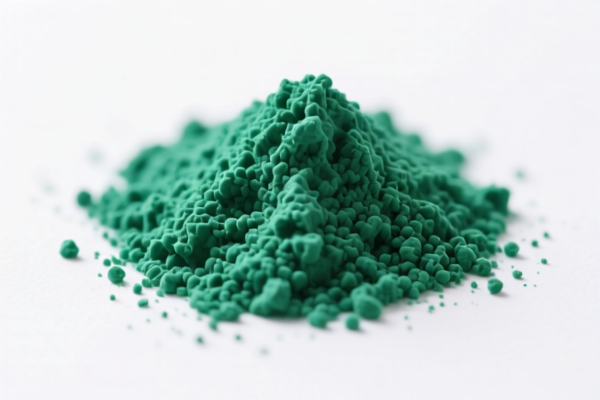
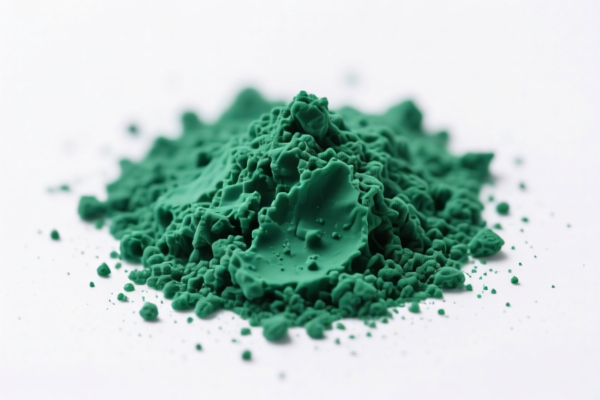
Product Images
AI Analysis
🧪 Modified Plastic Plasticizer (Chemical Additives & Modifiers)
🌐 HS Code Reference & Clearance Guide | 2026 Latest Tariff Analysis | Professional Customs Strategy
📌 I. Product Definition & Classification: What is "Modified Plastic Plasticizer"?
"Modified Plastic Plasticizer" (or Plastic Modifier/Additive) refers to chemical substances used to increase the plasticity, flexibility, or processability of plastics (primarily PVC). In international trade, these products are classified under Chapter 38 (Miscellaneous Chemical Products) or Chapter 39 (Plastics and Articles Thereof), depending on their chemical composition and primary function.
Key Distinction Points: * Pure Plasticizers (e.g., Phthalates, Adipates): Typically fall under 3824.99 (Other chemical products/preparations). * Polymer-Based Modifiers (e.g., Resins, Polymers): May fall under 3909 (Amino-resins, Polyurethanes) or 3911 (Petroleum Resins, Polysulfides). * Compound/Reformulated Additives: Often classified under 3812 (Preparations against gumming or improving lubrication) if they function as composite plasticizers.
⚠️ Critical Note:
- If the product is a pure chemical plasticizer used to soften PVC → Likely 3824.99.50.00 or 3824.99.93.97.
- If the product is a polymer-based modifier (e.g., PU, Amino-resin) → Likely 3909.50.50.00 or 3911.90.91.10.
- If it is a compound/reformulated additive for rubber/plastic processing → Likely 3812.20.50.00.
📦 II. HS Code Classification Details (2026 Latest Tariff Alignment)
Based on the provided data, here are the four potential HS Code classifications with their respective tax implications.
| HS Code | Product Description | Applicable Scenario | Total Tax Rate (China Origin → US) |
|---|---|---|---|
3824.99.50.00 |
Chemical preparations, not specified elsewhere (PVC Plasticizers) | Pure plasticizers, chemical additives for PVC | 41.5% |
3824.99.93.97 |
Other chemical products/preparations (PVC-related chemicals) | PVC-related chemicals, plasticizers classified as "other" | 40.0% |
3909.50.50.00 |
Amino-resins, polyurethanes, other resins (Plastic Modifiers) | Polymer-based modifiers (PU, amino-resins) | 41.3% |
3812.20.50.00 |
Preparations against gumming/composite plasticizers | Compound plasticizers, reformulated additives for rubber/plastic | 40.0% |
3911.90.91.10 |
Petroleum resins, polysulfides (Polymer Processing Aids) | Polymer processing aids, resin-based modifiers | 41.5% |
🔍 Key Insight:
- 3824.99 codes generally apply to chemical plasticizers (non-polymeric).
- 3909.50 / 3911.90 codes apply if the core component is a resin or polymer (e.g., Polyurethane, Amino-resin).
- 3812.20 applies if it is a compound/reformulated product functioning as a plasticizer/lubricant blend.
- All codes are subject to significant additional tariffs due to Section 301 and IEEPA measures.
💰 III. 2026 Latest Tariff Rate Breakdown (Including Additional Duties & Policy Surcharges)
✅ Applicable Country: United States (US)
✅ Origin: China (CN)
✅ Effective Time: Post-November 2025 (Current Trade Environment)
🎯 1. 3824.99.50.00 & 3824.99.93.97 —— Chemical Plasticizers & Preparations
These codes cover most standard PVC plasticizers and chemical preparations.
| Item | Detail |
|---|---|
| Base Tariff (MFN) | 6.5% (3824.99.50.00) / 5.0% (3824.99.93.97) |
| Section 301 Additional Tariff | +25.0% |
| IEEPA Section 122 Surcharge | +10.0% |
| Total Effective Tax Rate | 41.5% (3824.99.50.00) / 40.0% (3824.99.93.97) |
| Tax Calculation Base | CIF Value (Cost + Insurance + Freight) × Total Rate |
| De Minimis Exemption? | ❌ NO (Section 301 goods are denied de minimis exemption) |
| Legal Basis Path | USITC:3824.99 → Section301:Footnote9903.38 → IEEPA:9903.01.25 |
📌 Explanation:
- Base Tariff: Reflects the standard Most Favored Nation (MFN) rate for chemical preparations.
- Section 301 (+25%): Applies to all chemical products from China under HTS 3824.
- IEEPA (+10%): Additional surcharge under the International Emergency Economic Powers Act for certain Chinese imports.
- Total Cost Impact: A $10,000 shipment could incur $4,000–$4,150 in duties alone.
🎯 2. 3909.50.50.00 —— Plastic Modifiers (Polyurethane/Amino-Resins)
If the "modified plastic" is primarily a polyurethane or amino-resin modifier.
| Item | Detail |
|---|---|
| Base Tariff (MFN) | 6.3% |
| Section 301 Additional Tariff | +25.0% |
| IEEPA Section 122 Surcharge | +10.0% |
| Total Effective Tax Rate | 41.3% |
| Tax Calculation Base | CIF Value × 41.3% |
| De Minimis Exemption? | ❌ NO |
| Legal Basis Path | USITC:3909.50 → Section301:Footnote9903.39 → IEEPA:9903.01.25 |
📌 Note:
- Resin-based modifiers are often classified under Chapter 39 but are still subject to Section 301 tariffs if originating from China.
- The slight difference in total tax (41.3% vs 41.5%) is due to the lower base tariff (6.3% vs 6.5%).
🎯 3. 3812.20.50.00 & 3911.90.91.10 —— Compound Plasticizers & Polymer Processing Aids
For compound formulations or petroleum-resin-based modifiers.
| Item | Detail |
|---|---|
| Base Tariff (MFN) | 5.0% (3812.20) / 6.5% (3911.90) |
| Section 301 Additional Tariff | +25.0% |
| IEEPA Section 122 Surcharge | +10.0% |
| Total Effective Tax Rate | 40.0% (3812.20) / 41.5% (3911.90) |
| Tax Calculation Base | CIF Value × Total Rate |
| De Minimis Exemption? | ❌ NO |
📌 Strategic Tip:
-3812.20.50.00offers the lowest total tax rate (40.0%) among the listed codes, provided the product qualifies as a "preparation against gumming" or composite plasticizer.
-3911.90.91.10has a higher base tariff (6.5%), resulting in a 41.5% total rate.
🛠️ IV. Customs Clearance Practical Advice (Pitfall Avoidance Guide)
✅ 1. Document Checklist (Must-Haves)
| Document | Mandatory? | Purpose |
|---|---|---|
| ✅ Technical Data Sheet (TDS) | ✔️ | To prove chemical composition (e.g., % PU, % Resin, % Plasticizer) |
| ✅ Formula/Composition Breakdown | ✔️ | Critical for distinguishing between Chapter 38 (Chemicals) and Chapter 39 (Polymers) |
| ✅ Product Photos (Label + Package) | ✔️ | To confirm no hazardous material warnings (if applicable) |
| ✅ Safety Data Sheet (SDS) | ✔️ | Required for chemical imports; confirms classification basis |
| ✅ Commercial Invoice | ✔️ | Must state "Plasticizer" or "Plastic Modifier" clearly, not generic "Chemical" |
| ✅ Certificate of Origin (CO) | ✔️ | To verify China origin and apply correct Section 301 tariffs |
| ✅ Packing List | ✔️ | To confirm gross/net weight for duty calculation |
✅ 2. Declaration Tips (Key Mnemonics)
🔥 "Know Your Base: Chemical 38, Polymer 39, Total Tax ~40%!"
| Scenario | Correct HS Code | Risk if Misclassified |
|---|---|---|
| Pure PVC Plasticizer (e.g., DOTP, DINP) | 3824.99.50.00 |
Misclassifying as 39 may lead to audit & penalties |
| PU/Amino-Resin Modifier | 3909.50.50.00 |
If declared as 3824, customs may reclassify & adjust tax |
| Compound/Reformulated Additive | 3812.20.50.00 |
Best for cost optimization (40.0% total) if qualifying |
| Petroleum Resin-Based | 3911.90.91.10 |
Ensure core component is resin, not a simple plasticizer |
📌 Critical Warning:
- Do NOT split shipments to avoid tariffs. Section 301 applies per HS Code, regardless of packaging.
- De Minimis Exemption ($800) does NOT apply to goods from China under Section 301 tariffs for these HS codes. Every shipment, no matter the value, is subject to the ~40% duty.
✅ 3. Special Case Handling
| Situation | Recommendation |
|---|---|
| OEM Custom Plasticizer | Provide exact chemical formula. If >50% is a specific polymer, consider 39xx codes. |
| Blended Products | If it’s a mixture of plasticizer + resin, the principal function determines classification. Consult a customs broker. |
| Non-China Origin | If sourced from Vietnam, Thailand, or Malaysia, IEEPA and Section 301 may not apply. Check Rules of Origin carefully. |
| Hazardous Chemicals | If the plasticizer is classified as hazardous (e.g., certain phthalates), additional EPA/OSHA compliance may be required. |
🌍 V. Global Market Clearance Comparison (2026 Update)
| Region | Recommended HS Code | Estimated Duty (China Origin) | Key Certification | Notes |
|---|---|---|---|---|
| 🇺🇸 USA | 3824.99.50.00 / 3909.50.50.00 |
40.0% – 41.5% | SDS, EPA (if applicable) | Highest duty due to Section 301 + IEEPA |
| 🇨🇳 China | 3824.99.93.97 |
5.0% | REACH-like standards | Low import duty, no Section 301 |
| 🇪🇺 EU | 3824.99.93 |
6.5% | REACH Registration | No Section 301, but REACH compliance is costly |
| 🇬🇧 UK | 3824.99.93 |
6.5% | UK REACH | Post-Brexit regime, similar to EU |
| 🇦🇺 Australia | 3824.99.50 |
5.0% | AICIS | Low duty, no major surcharges |
| 🇯🇵 Japan | 3824.99.93 |
5.8% | JITL | Low duty, no surcharges |
📌 Conclusion:
- The US market is the most challenging for Chinese plasticizers due to the ~40% total tariff burden.
- Non-US markets (EU, UK, Asia) offer significantly lower duty costs (5–6.5%), but require strict chemical compliance (REACH, AICIS, etc.).
- Supply Chain Strategy: Consider sourcing plasticizers from non-China origins (e.g., Vietnam, India) to bypass US Section 301 tariffs.
📌 VI. Common Errors & Pitfalls (Lessons Learned)
❌ Error 1: Declaring "Plasticizer" as "Plastic Parts" (3926)
👉 Result: Wrong HS Code → Customs seizure or forced reclassification + penalties.
❌ Error 2: Ignoring Section 301 Applicability
👉 Result: Assuming de minimis exemption applies → Unexpected bill at border → Shipment held.
❌ Error 3: Vague Product Description ("Chemical Additive")
👉 Result: Customs ambiguity → Delayed clearance + potential audit → Increased storage fees.
❌ Error 4: Misclassifying Polymer Resins as Pure Chemicals
👉 Result: If the product is 90% Polyurethane, it should be 3909, not 3824. Misclassification leads to incorrect tariff application.
✅ Correct Practice:
"Modified PVC Plasticizer, Polyurethane-Based, Chemical Grade, MSDS Attached, HTS 3909.50.50.00"
🎯 VII. Conclusion: Precision in Classification Saves Money
🎯 Remember the Key Rules:
🔹 "Chapter 38 = Chemical, Chapter 39 = Polymer."
🔹 "China Origin + US Entry = ~40% Duty. No Exemptions."
🔹 "Document Composition to Justify HS Code."
📌 Pro Tip:
If your plasticizer is resin-based (e.g., Polyurethane), consider classifying under 3909.50.50.00 or 3812.20.50.00 (if compound) to potentially optimize within the ~40–41.5% range, but always confirm with a licensed customs broker.
📣 Immediate Action:
📞 Consult a Customs Broker for pre-classification advice.
📄 Prepare SDS & Formula Breakdown before shipping.
🌍 Explore Non-China Sourcing if US tariffs are prohibitive for your margin.
✨ Professional clearance starts with accurate classification!
💼 Every percentage point in duty matters. Get it right!
Customer Reviews
About HS Code Classification
The Harmonized System (HS) is an internationally standardized nomenclature developed by the World Customs Organization (WCO) to classify traded products. Over 200 countries use the HS system as the basis for customs tariffs, trade statistics, and import/export regulations.
Each HS code follows a hierarchical structure:
- Chapter (2 digits) — Broad category of goods (e.g., Chapter 84: Machinery and Mechanical Appliances)
- Heading (4 digits) — More specific grouping within the chapter
- Subheading (6 digits) — Internationally standardized breakdown, used by all WCO member countries
- National subdivisions (8-10 digits) — Country-specific extensions for further classification, such as US HTSUS 10-digit codes
Correct HS code classification is essential for smooth customs clearance, accurate duty payment, and compliance with trade regulations. Misclassification can lead to customs delays, overpayment of duties, or penalties.
When importing from CN to US, the applicable tariff rates may include:
- Most-Favored-Nation (MFN) rate — The standard duty rate applied to WTO members
- General rate — Applied to countries without trade agreements
- Trade remedy duties — Additional tariffs such as Section 301 (anti-dumping), Section 232 (national security), or countervailing duties
The information provided on this page is for reference purposes only. For official classification, please consult with your local customs authority or a licensed customs broker.