Modified Polyamide Film
CN → US| HS Code | Tariff Rate | Origin | Destination | Doc |
|---|---|---|---|---|
| 3920991000 | 41.0% | CN | US | Official Doc |
| 3920920000 | 39.2% | CN | US | Official Doc |
| 3908100000 | 41.3% | CN | US | Official Doc |
| 3908907000 | 41.5% | CN | US | Official Doc |
| 5407410030 | 48.6% | CN | US | Official Doc |
Product Images
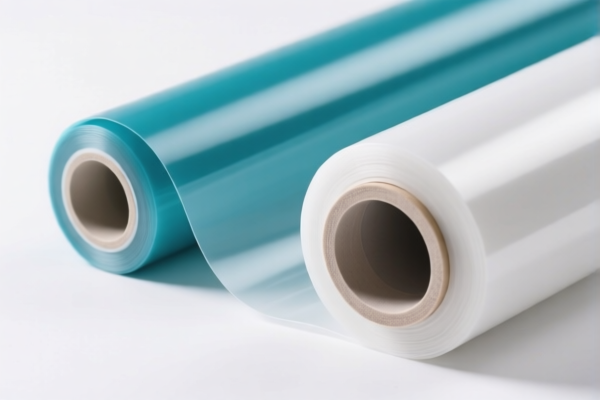
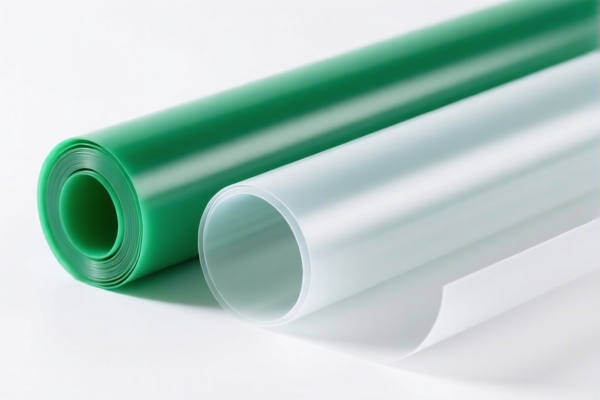
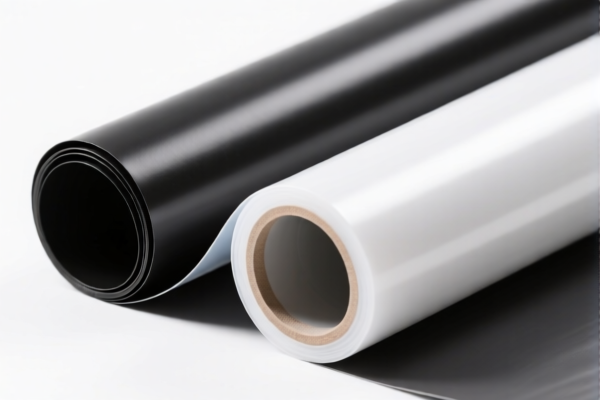
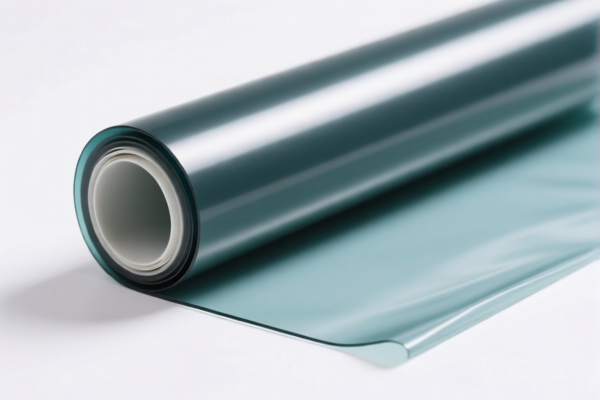
AI Analysis
🧬 Modified Polyamide Film (PA Film)
🌐 HS Code Reference & Customs Clearance Guide | 2026 Latest Tariff Breakdown | Strategic通关 Strategy for High-Tariff Goods
📌 One, Product Definition & Classification: What is "Modified Polyamide Film"?
Modified Polyamide Film refers to films primarily composed of polyamide (commonly known as Nylon) that have undergone specific modifications (such as blending, coating, or lamination) to enhance properties like barrier performance, flexibility, or heat resistance. In international trade, the classification depends heavily on whether it is classified as a "Plastic Film" (Chapter 39) or a "Textile/Weave" (Chapter 54), and whether it is in a primary shape or a finished film form.
⚠️ Key Distinction Point:
- If the product is a finished film (roll/sheet) used for packaging or protection → Classified under Chapter 39 (Plastics).
- If the product is interpreted as a textile fabric or thin sheet made of polyamide yarn → Classified under Chapter 54 (Synthetic Filaments).
- Primary Shape vs. Film: "Primary shape" (e.g., pellets, raw resin) falls under 3908, but if the import is explicitly "Film," 3920 is the most accurate fit. Misclassification between 3908 and 3920 leads to significant tariff differences.
📦 Two, HS Code Classification Details (2026 Latest Tariff Authority Comparison)
Based on the provided data, here is the authoritative breakdown for Modified Polyamide Film imported into the US from China.
| HS Code | Product Description | Application Scenario | Tax Rate | Key Characteristic |
|---|---|---|---|---|
3920.99.10.00 |
Polyamide Film (General) | Packaging, industrial wrapping, standard PA films | 41.0% | Direct fit for "Plastic Film" definition; most common for finished films. |
3920.92.00.00 |
Polyamide Film (Specific Subheading) | Specific polyamide types defined in 92 subheadings | 39.2% | Slightly lower base tariff; requires precise material match to subheading 92. |
3908.10.00.00 |
Polyamide in Primary Shape | Raw PA resin, pellets, or unformed granules | 41.3% | ❗ Risk: Only for raw materials. If imported as "Film," this is likely misclassified. |
3908.90.70.00 |
Polyamide (Other Primary Shapes) | Other raw polyamide forms not in 10/30/40/50 | 41.5% | ❗ Risk: Similar to above. High base tariff (6.5%) + heavy附加税. |
5407.41.00.30 |
Polyamide Woven Fabric/Sheets | Textile-grade PA fabric, non-woven mats | 48.6% | ❗ Risk: Classified as Textile. Highest tax rate. Only for woven/non-woven forms. |
🔍 Critical Warning:
- Do NOT use 3908 (Primary Shapes) if you are importing finished films. Customs may reject it or assess it as "misdeclaration," leading to penalties.
- Do NOT use 5407 unless the product is clearly a textile fabric. If it is a plastic film, using 5407 incurs a 48.6% tax rate vs. 41.0% for3920.
- Best Fit:3920.99.10.00or3920.92.00.00are the most accurate for Modified Polyamide Film.
💰 Three, 2026 Latest Tariff Rate Breakdown (Including Surtaxes & Policy Add-ons)
✅ Applicable Country: United States (US)
✅ Origin: China (CN)
✅ Effective Date: November 10, 2025 onwards
🎯 1. 3920.99.10.00 —— Polyamide Film (General)
| Item | Detail |
|---|---|
| Base Tariff | 6.0% (Ad Valorem) |
| Section 301 Surtax | +25.0% |
| Section 122 Tariff | +10.0% |
| Total Tax Rate | 41.0% |
| Tax Calculation | CIF Value × 41.0% |
| De Minimis Exemption? | ❌ No (Not eligible for $800 threshold) |
| Legal Basis Path | USITC:3920.99.10.00 → Section 301 Footnote → Section 122 |
📌 Explanation:
- The 25% Section 301 tariff is the standard surtax for Chinese plastic goods.
- The 10% Section 122 tariff is a recent addition targeting specific industrial materials.
- Total 41% is high, but it is the lowest among the "Film" categories if3920.92is not applicable.
🎯 2. 3920.92.00.00 —— Polyamide Film (Specific)
| Item | Detail |
|---|---|
| Base Tariff | 4.2% |
| Section 301 Surtax | +25.0% |
| Section 122 Tariff | +10.0% |
| Total Tax Rate | 39.2% |
| Tax Calculation | CIF Value × 39.2% |
| De Minimis Exemption? | ❌ No |
| Legal Basis Path | USITC:3920.92.00.00 → Section 301 → Section 122 |
📌 Note:
- This is the most cost-effective option if the film strictly matches the definition of subheading 92.
- Savings: 1.8% lower than3920.99.10.00. For large volumes, this is significant.
🎯 3. 3908.10.00.00 & 3908.90.70.00 —— Primary Shapes (RAW MATERIALS)
| Item | Detail |
|---|---|
| Base Tariff | 6.3% / 6.5% |
| Section 301 Surtax | +25.0% |
| Section 122 Tariff | +10.0% |
| Total Tax Rate | 41.3% / 41.5% |
| Tax Calculation | CIF Value × 41.3%~41.5% |
| De Minimis Exemption? | ❌ No |
⚠️ CRITICAL RISK:
- If you import Film but declare as 3908 (Resin/Pellets), Customs may seize the goods for misdeclaration.
- Even if accepted, the tax is higher (41.3-41.5%) than3920.99.10.00(41.0%).
- Do not use this category for films.
🎯 4. 5407.41.00.30 —— Polyamide Woven Fabric (Textile)
| Item | Detail |
|---|---|
| Base Tariff | 13.6% |
| Section 301 Surtax | +25.0% |
| Section 122 Tariff | +10.0% |
| Total Tax Rate | 48.6% |
| Tax Calculation | CIF Value × 48.6% |
| De Minimis Exemption? | ❌ No |
⚠️ CRITICAL RISK:
- This is the most expensive option.
- Only use if the product is a woven fabric or textile mat.
- Misclassifying film as textile leads to higher taxes and potential compliance issues.
🛠️ Four, Customs Clearance Practical Advice (Battle-Tested Pitfall Avoidance)
✅ 1. Document Checklist (Non-Negotiable)
| Document | Required | Notes |
|---|---|---|
| ✅ Product Specification Sheet | ✔️ | Must clearly state: "Polyamide Film," thickness, width, roll length. |
| ✅ Material Composition Report | ✔️ | Confirm >50% polyamide content. If blended, declare blend ratio. |
| ✅ Product Photos | ✔️ | Show roll form, cross-section, and any coatings/laminations. |
| ✅ Commercial Invoice | ✔️ | Describe as "Modified Polyamide Film, for packaging/industrial use." |
| ✅ Bill of Lading | ✔️ | Ensure weight and dimensions match invoice. |
| ✅ Certificate of Origin (CO) | ✔️ | Mandatory for Section 301 determination. |
✅ 2. Declaration Tips (Key Mantra)
🔥 "Film is Film, Resin is Resin! Don't Mix Them!"
| Scenario | Correct HS Code | Wrong HS Code | Consequence |
|---|---|---|---|
| Finished PA Film (Roll) | 3920.99.10.00 or 3920.92.00.00 |
3908.10.00.00 |
Misdeclaration Risk: Goods held, fines, higher tax (41.3% vs 41.0%). |
| Raw PA Pellets | 3908.10.00.00 |
3920.99.10.00 |
Tax Loss: You pay more if you under-declare the "primary shape" tariff. |
| Woven PA Fabric | 5407.41.00.30 |
3920.99.10.00 |
Tax Loss: 48.6% vs 41.0%. Also, regulatory mismatch. |
| Laminated PA Film | 3920.99.10.00 |
5407.41.00.30 |
Misclassification: If plastic is primary material, don't use textile code. |
✅ 3. Special Situations
| Situation | Handling Advice |
|---|---|
| Multi-Layer Co-Extruded Film | Classify based on the ** predominant layer**. If PA is the main layer, use 3920. |
| Modified with Other Plastics (e.g., PE/PA) | If PA is >50% by weight, still likely 3920. If <50%, may change HS code. |
| Small Samples (<$800) | ❌ No De Minimis: Section 301 and Section 122 taxes still apply even for small shipments. |
| OEM Custom Film | Provide customer PO and specs to prove "custom film" nature, not generic resin. |
🌍 Five, Global Market Comparison (2026 Latest)
| Country/Region | Recommended HS Code | Tariff (CN Origin) | Certification | Notes |
|---|---|---|---|---|
| 🇺🇸 USA | 3920.99.10.00 |
41.0% | No specific | High tax due to Section 301 & 122. |
| 🇨🇳 China | 3920.99.10.00 |
6.0% (Import) | No | Low import tax, but high export tax? No, usually low. |
| 🇪🇺 EU | 3920.99.00 |
6.5% | REACH | No Section 301/122. Much cheaper than US. |
| 🇬🇧 UK | 3920.99.00 |
6.5% | UKCA | Post-Brexit, no EU alignment. |
| 🇯🇵 Japan | 3920.99.00 |
6.0% | PSE | Low tariff, no surtax. |
📌 Conclusion:
- The US market is the most expensive for polyamide films due to 41% total tax.
- EU, UK, Japan, and China have significantly lower tariffs (6-7%).
- If targeting the US, cost optimization is critical. Consider supply chain diversification (e.g., Southeast Asia) to avoid Section 301, but verify Origin Rules carefully.
📌 Six, Common Mistakes & Pitfall Avoidance (Blood Lessons)
❌ Mistake 1: Declaring "Polyamide Film" as 3908.10.00.00 (Resin)
👉 Consequence: Customs flags "physical form mismatch." If accepted, tax is 41.3% (higher). If rejected, delay + penalties.
👉 Fix: Always declare 3920 for films.
❌ Mistake 2: Using 5407.41.00.30 for Plastic Film
👉 Consequence: Tax jumps to 48.6%. Also, incorrect regulatory compliance (Textile vs. Plastic).
👉 Fix: Only use 5407 for woven/non-woven textiles.
❌ Mistake 3: Ignoring Section 122 Tariff
👉 Consequence: Under-declaring tax by 10%. Customs will audit and backcharge with interest.
👉 Fix: Always include 10% Section 122 in cost calculations for US imports from China.
✅ Correct Practice:
"Modified Polyamide Film, 50 microns, 1000mm width, roll form, for packaging. HS Code: 3920.99.10.00."
🎯 Seven, Conclusion: Professional Declaration, Cost Control, Efficiency!
🎯 Remember the Mantra:
🔹 "Film is 3920, Resin is 3908! Don't mix them up!"
🔹 "US Tax is 41%, EU Tax is 6%! Plan your supply chain wisely!"
🔹 "Section 301 + Section 122 = 35% Extra! Budget accordingly!"
📌 Pro Tip:
If your polyamide film is originally from Vietnam, Thailand, or Mexico, you may qualify for Section 301 Exemption or lower tariffs.
✅ Action: Apply for Advance Ruling from US CBP before shipment.
✅ Action: Verify Substantial Transformation if sourcing from third countries.
📣 Immediate Action:
📞 Contact a Licensed Customs Broker
📄 Provide Product Specs & Photos
🚀 Get Pre-Clearance Ruling for 2026
💰 Optimize Your 41% Tax Burden!
✨ Professional Clearance Starts with Accurate Classification!
💼 Your Every Dollar Saved is a Dollar Earned!
Customer Reviews
About HS Code Classification
The Harmonized System (HS) is an internationally standardized nomenclature developed by the World Customs Organization (WCO) to classify traded products. Over 200 countries use the HS system as the basis for customs tariffs, trade statistics, and import/export regulations.
Each HS code follows a hierarchical structure:
- Chapter (2 digits) — Broad category of goods (e.g., Chapter 84: Machinery and Mechanical Appliances)
- Heading (4 digits) — More specific grouping within the chapter
- Subheading (6 digits) — Internationally standardized breakdown, used by all WCO member countries
- National subdivisions (8-10 digits) — Country-specific extensions for further classification, such as US HTSUS 10-digit codes
Correct HS code classification is essential for smooth customs clearance, accurate duty payment, and compliance with trade regulations. Misclassification can lead to customs delays, overpayment of duties, or penalties.
When importing from CN to US, the applicable tariff rates may include:
- Most-Favored-Nation (MFN) rate — The standard duty rate applied to WTO members
- General rate — Applied to countries without trade agreements
- Trade remedy duties — Additional tariffs such as Section 301 (anti-dumping), Section 232 (national security), or countervailing duties
The information provided on this page is for reference purposes only. For official classification, please consult with your local customs authority or a licensed customs broker.