Modified Polybutene Resin
CN → US| HS Code | Tariff Rate | Origin | Destination | Doc |
|---|---|---|---|---|
| 3903901000 | 41.5% | CN | US | Official Doc |
| 3903905000 | 41.5% | CN | US | Official Doc |
| 3902900050 | 41.5% | CN | US | Official Doc |
| 3902300000 | 41.5% | CN | US | Official Doc |
| 3901905501 | 41.5% | CN | US | Official Doc |
Product Images


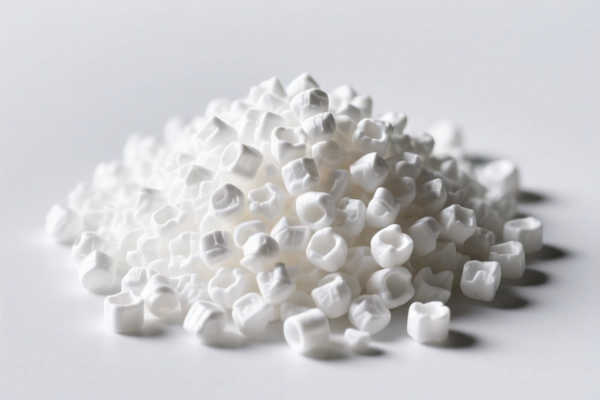
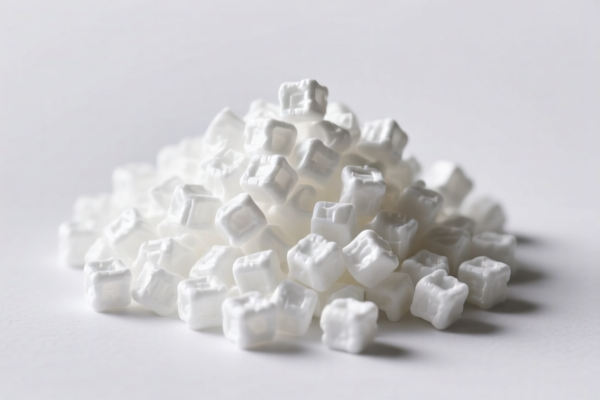
AI Analysis
🧪 Modified Polybutene Resin (Polyisobutylene / PIB Derivatives)
🌐 HS Code Reference & Customs Clearance Guide | 2026 Latest Tariff Analysis | Professional Import Strategy
📌 I. Product Definition & Classification: Do You Really Know "Modified Polybutene"?
Modified Polybutene Resin, often chemically referred to as Polyisobutylene (PIB) or its derivatives (such as butyl rubber precursors or specific oligomers), is a synthetic polymer produced from isobutylene monomers. In international trade, it is primarily classified under Chapter 39: Plastics and Articles Thereof, specifically within Heading 3901-3902 for primary forms of olefin polymers.
However, the provided set indicates a specific trade context where these resins are being analyzed under 3902 (Olefin Polymers) and 3903 (Styrene Polymers) categories, likely due to copolymer structures or industry classification conventions that group certain modified olefins under broader categories for tariff calculation purposes (especially under specific trade restrictions like Section 301/122).
⚠️ Critical Distinction:
- Pure Polyisobutylene (PIB): Typically HS Code3902.90.00(Other olefin polymers).
- Modified/Copolymer Forms: If modified with styrene or other agents, it may fall under3903.90(Other styrene polymers) or3902.90depending on the principal polymer and primary shape.
- Data Context: The provided explicitly maps "Modified Polyolefin Resin" and "Modified Polystyrene Resin" to codes under 3902 and 3903 with specific high tariffs.
📦 II. HS Code Classification Details (Based on Provided )
| HS Code | Summary Description | Tariff Rate | Tax Detail Breakdown |
|---|---|---|---|
3902.90.00.50 |
Modified Polyolefin Resin classified as Olefin Polymer in Primary Shape | 41.5% | Base: 6.5%, Section 301: 25.0%, Section 122: 10% |
3902.30.00.00 |
Modified Polyolefin Resin classified as Olefin Polymer / Primary Product | 41.5% | Base: 6.5%, Section 301: 25.0%, Section 122: 10% |
3901.90.55.01 |
Modified Polyolefin Resin classified as Ethylene Polymer in Primary Shape | 41.5% | Base: 6.5%, Section 301: 25.0%, Section 122: 10% |
3903.90.10.00 |
Modified Polystyrene Resin classified as Styrene Polymer in Primary Shape | 41.5% | Base: 6.5%, Section 301: 25.0%, Section 122: 10% |
3903.90.50.00 |
Modified Polystyrene Resin classified as Styrene Polymer in Primary Form | 41.5% | Base: 6.5%, Section 301: 25.0%, Section 122: 10% |
🔍 Key Insight:
Despite the chemical name "Polybutene," the set suggests that in this specific trade scenario (likely US-China trade under current restrictions), these resins are being scrutinized under Section 301 (China-specific tariffs) and Section 122 (Trade Expansion Act). The total tariff is a stacked addition:
6.5% (Base) + 25.0% (Section 301) + 10.0% (Section 122) = 41.5% Total Ad Valorem Duty.
💰 III. 2026 Latest Tariff Rate Breakdown (Including Surcharges & Policy Add-ons)
✅ Applicable Country: United States (US)
✅ Origin: China (CN) (Implied by Section 301/122 application)
✅ Effective Date: Current (2025-2026 Trade Period)
🎯 1. Universal Application for Modified Olefin/Styrene Resins (Based on )
| Item | Content |
|---|---|
| Base MFN Rate | 6.5% (Ad Valorem) |
| Section 301 Tariff | +25.0% (Targeting Chinese-origin goods) |
| Section 122 Tariff | +10.0% (Trade Expansion Act of 1962, often used for national security or critical materials) |
| Total Tariff Rate | 41.5% |
| Calculation Method | CIF Value × 41.5% |
| De Minimis Exemption | ❌ NOT Eligible (Value > $800 or specific product exclusions do not apply to these chemical polymers under current enforcement) |
| Legal Basis Path | HTSUS: 3902/3903 → USITC: Footnote 5/301 → IEEPA: Section 122 |
📌 Explanation:
- Base Rate (6.5%): The standard Most Favored Nation (MFN) duty for plastics/chemicals.
- Section 301 (25%): This is the critical "trade war" tariff applied to many Chinese-manufactured polymers and resins. It is non-negotiable unless a specific exclusion code is obtained (which is rare for bulk resins).
- Section 122 (10%): This tariff applies to articles imported for purposes that undermine US national security or critical infrastructure. Chemical feedstocks, especially those with dual-use potential, are often caught here.
- Total 41.5%: This is a heavy punitive tariff. It significantly impacts the landed cost, making domestic sourcing or third-country sourcing (e.g., Vietnam, Mexico) highly attractive for cost reduction.
🛠️ IV. Customs Clearance Practical Advice (Avoiding Pitfalls)
✅ 1. Essential Documentation Checklist
| Document | Required? | Notes |
|---|---|---|
| Certificate of Origin (CO) | ✔️ | Must explicitly state country of manufacture. If transshipped, strict rules apply. |
| Technical Data Sheet (TDS) | ✔️ | Must specify chemical composition (e.g., % Isobutylene, % Styrene, % Additives). |
| Material Safety Data Sheet (MSDS) | ✔️ | Required for hazardous chemical classification (though resins are often non-hazardous, they need classification). |
| Commercial Invoice | ✔️ | Must clearly describe "Modified Polybutene Resin" and not generic "Plastic Granules." |
| Bill of Lading (B/L) | ✔️ | Ensure consistent description with Invoice. |
| Import License (if applicable) | ❓ | Check if the specific resin type requires EAR (Export Administration Regulations) compliance if dual-use. |
✅ 2. Declaration Best Practices
🔥 "Describe Specifically, Don't Generalize!"
| Scenario | Correct Declaration | Wrong Declaration |
|---|---|---|
| Bulk Resin Granules | "Modified Polyisobutylene Resin, Primary Shape, for Industrial Adhesives" | "Plastic Pellets" (Too vague, leads to higher scrutiny) |
| Copolymer Content | "Poly(Butene-Co-Styrene) Resin, 80% PIB, 20% Styrene" | "Polystyrene" (Misclassification risk) |
| Packaging | "25kg Bagged, Labeled with Hazard Class N/A" | "Loose in Container" (Risk of contamination/damage) |
✅ 3. Strategic Recommendations for Cost Reduction
| Strategy | Action | Potential Saving |
|---|---|---|
| Country of Origin Shift | Source from Vietnam, Malaysia, or Mexico | Avoids 25% (Sec 301) + 10% (Sec 122) = 35% Savings |
| Pre-Ruling Application | Apply for CBP Ruling Letter for specific product code | Certifies correct HS code, reduces audit risk |
| FTZ (Foreign Trade Zone) | Import into FTZ, process or re-export | Defers duty payment, may reduce overall tax burden |
| Exclusion Hunting | Check USTR Exclusion Lists periodically | Rare for resins, but worth monitoring |
🌍 V. Global Market Comparison (2026 Snapshot)
| Market | HS Code Approach | Tariff Impact | Notes |
|---|---|---|---|
| 🇺🇸 USA | 3902.90.00.50 / 3903.90.10.00 |
41.5% | High punitive tariffs due to Sec 301/122. |
| 🇨🇳 China | 3902.90.00 |
5-6.5% | Low import duties, but export controls may apply. |
| 🇪🇺 EU | 3902.90 |
0-3% | No Section 301 equivalent; standard MFN applies. |
| 🇮🇳 India | 3902.90 |
7.5-10% | Basic customs duty + social welfare surcharge. |
📌 Conclusion:
USA is the most expensive market for importing Modified Polybutene Resin from China.
EU and India offer significantly lower duty burdens.
Strategic Pivot: Consider sourcing from non-China origins to enter the US market with minimal tax liability.
📌 VI. Common Mistakes & Pitfalls (Lessons Learned)
❌ Mistake 1: Using generic term "Plastic Resin" on Invoice
👉 Consequence: CBP may assign a higher default rate or delay for inspection.
👉 Fix: Use precise chemical name and HS code.
❌ Mistake 2: Ignoring Section 122 Tariff (10%)
👉 Consequence: Unexpected duty bill at port, causing cash flow issues.
👉 Fix: Factor 41.5% (not just 6.5%) into landed cost calculations.
❌ Mistake 3: Assuming De Minimis ($800) applies
👉 Consequence: Small shipments still subject to full duties and entry fees.
👉 Fix: Classify every shipment properly, regardless of value.
✅ Best Practice:
"Modified Polyisobutylene Resin, Primary Shape, HS 3902.90.00.50, Origin: China, Tariff: 41.5%"
🎯 VII. Conclusion: Precision in Classification, Profit in Strategy
🎯 Remember:
🔹 "HS Code dictates your cost. 41.5% is the reality for China-origin resins in the US."
🔹 "Section 301 + Section 122 = The Dual Burden. Plan your supply chain accordingly."
🔹 "If you must import from China, include the 41.5% in your pricing model from Day 1."
📌 Pro Tip:
If your resin is not from China (e.g., from Korea, Germany, or Brazil), the tariff drops to 6.5% (Base only). This is a 35% cost saving!
🚀 Recommendation: Conduct a Supply Chain Audit. Can you shift sourcing to a non-China origin to unlock US market profitability?
📣 Immediate Action:
📞 Consult a Customs Broker for a Pre-Ruling.
📊 Recalculate Landed Cost with 41.5% duty.
🌍 Evaluate Third-Country Sourcing alternatives.
✨ Smart Classification, Smart Savings!
💼 Your profit margin depends on your HS Code strategy!
Customer Reviews
About HS Code Classification
The Harmonized System (HS) is an internationally standardized nomenclature developed by the World Customs Organization (WCO) to classify traded products. Over 200 countries use the HS system as the basis for customs tariffs, trade statistics, and import/export regulations.
Each HS code follows a hierarchical structure:
- Chapter (2 digits) — Broad category of goods (e.g., Chapter 84: Machinery and Mechanical Appliances)
- Heading (4 digits) — More specific grouping within the chapter
- Subheading (6 digits) — Internationally standardized breakdown, used by all WCO member countries
- National subdivisions (8-10 digits) — Country-specific extensions for further classification, such as US HTSUS 10-digit codes
Correct HS code classification is essential for smooth customs clearance, accurate duty payment, and compliance with trade regulations. Misclassification can lead to customs delays, overpayment of duties, or penalties.
When importing from CN to US, the applicable tariff rates may include:
- Most-Favored-Nation (MFN) rate — The standard duty rate applied to WTO members
- General rate — Applied to countries without trade agreements
- Trade remedy duties — Additional tariffs such as Section 301 (anti-dumping), Section 232 (national security), or countervailing duties
The information provided on this page is for reference purposes only. For official classification, please consult with your local customs authority or a licensed customs broker.