Modified Polycarbonate Resin
CN → US| HS Code | Tariff Rate | Origin | Destination | Doc |
|---|---|---|---|---|
| 3907400000 | 40.8% | CN | US | Official Doc |
| 3907995050 | 41.5% | CN | US | Official Doc |
Product Images
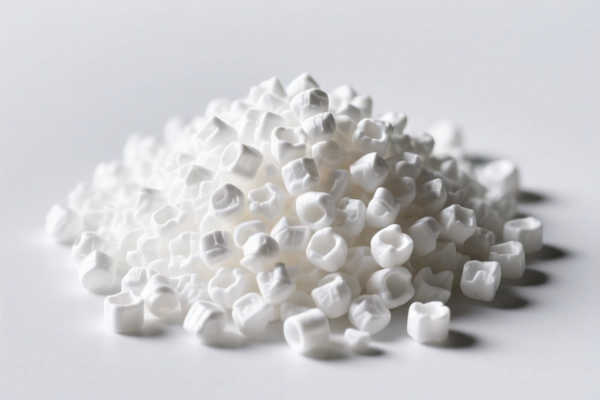
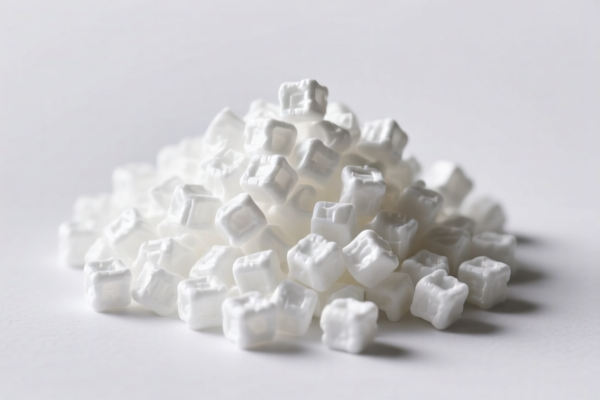
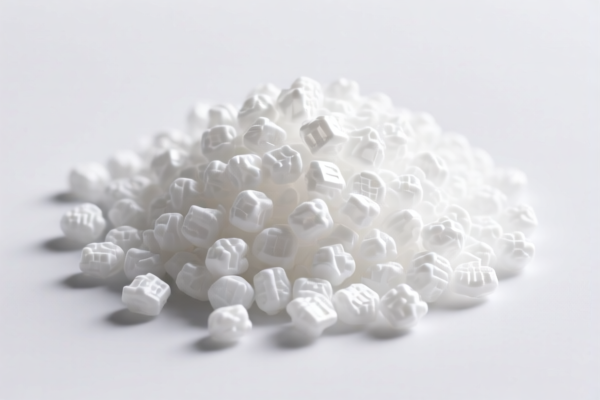
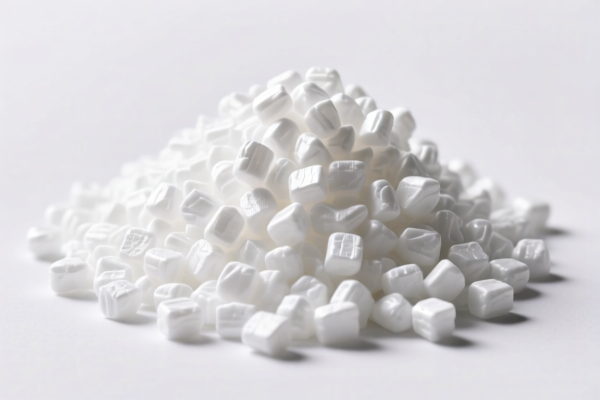
AI Analysis
🧪 Modified Polycarbonate Resin (Primary Forms)
🌐 HS Code Reference & Customs Clearance Guide | 2026 Latest Tariff Analysis | Professional Level Strategy
📌 I. Product Definition & Classification: What Exactly is "Modified Polycarbonate"?
Polycarbonates are high-performance engineering thermoplastics known for their transparency, impact resistance, and thermal stability. In the context of international trade (HS Code Chapter 39), "Modified Polycarbonate Resin" typically refers to polycarbonate blends or compounds in primary forms (powders, granules, pellets, or liquid forms ready for molding).
Key Distinction: The classification hinges on whether the product is a pure polycarbonate or a blended/modified polyester.
⚠️ Critical Classification Point: - If the resin is predominantly Polycarbonate (PC), even if blended with other polymers (modifications), it falls under 3907.40. - If the resin is a Polyester (e.g., PET, PBT) with polycarbonate additives or is a polycondensate other than polycarbonate, it falls under 3907.99. - "Modified" in customs terminology often triggers scrutiny: Is it still essentially polycarbonate? Or has it become a generic polyester blend?
📦 II. HS Code Classification Details (2026 Latest Tariff Authority)
Based on the provided dataset, here are the two potential classifications:
| HS Code | Product Description | Applicable Scenario | Tax Rate (Total) |
|--------|--------------------------|--------------------------|
| 3907.40.00.00 | Polycarbonates (Primary Forms) | Pure polycarbonate resins, or blends where PC is the essential character. Includes "Modified Polycarbonate" if it retains PC identity. | 0.0% |
| 3907.99.50.50 | Other Polyesters: Other | Polyesters that are not polycarbonates, alkyds, or polyallyl esters. If the "modification" makes it legally a different polyester type, or if the product is misdeclared. | 31.5% |
🔍 Important Note: - 3907.40.00.00 is the specific heading for Polycarbonates. - 3907.99.50.50 is a residual category for "Other Polyesters." If a product is claimed as "Modified Polycarbonate" but lacks sufficient proof of being primarily polycarbonate, customs may reclassify it here, resulting in a massive tax hike.
💰 III. 2026 Latest Tariff Rate Breakdown (Detailed Tax Clauses)
✅ Applicable Country: United States (US) ✅ Origin: China (CN) ✅ Effective Date: Current rates apply as per the provided data.
🎯 1. 3907.40.00.00 —— Polycarbonates (The Ideal Classification)
| Item | Content |
|---|---|
| Basic Tariff | 0.0% (Ad Valorem) |
| Additional Tariff (Section 301/Other) | 0.0% |
| Total Effective Tax Rate | 0.0% |
| Tax Calculation | CIF Value × 0% = $0 |
| De Minimis Eligibility | ✅ Yes (Generally, if under $800) |
| Legal Basis | HTSUS 3907.40.00.00 |
📌 Explanation: - Polycarbonates are classified under heading 3907.40. - According to the data, this specific code has 0% total tax. - This makes it highly competitive for importers. - Crucial: The product must be genuinely polycarbonate (or a blend where PC is the principal material).
🎯 2. 3907.99.50.50 —— Other Polyesters (The Risk Classification)
| Item | Content |
|---|---|
| Basic Tariff | 6.5% (Ad Valorem) |
| Additional Tariff (Section 301/Other) | 25.0% |
| Total Effective Tax Rate | 31.5% |
| Tax Calculation | CIF Value × 31.5% |
| De Minimis Eligibility | ❌ No (High-value industrial chemicals often exempt from de minimis) |
| Legal Basis | HTSUS 3907.99.50.50 + Footnotes |
📌 Explanation: - If the "Modified Polycarbonate" is reclassified as a generic polyester (or if the PC content is too low), it falls into the "Other Polyesters" bucket. - This incurs a 6.5% base duty PLUS a 25% additional tariff. - Total 31.5% is a significant cost burden. - This is often the result of misdeclaration (claiming it's not PC) or inadequate proof of composition.
🛠️ IV. Customs Clearance Practical Advice (Avoiding Pitfalls)
✅ 1. Preparation of Documentation (Must-Haves)
| Document | Required | Explanation |
|---|---|---|
| ✅ Certificate of Analysis (COA) | ✔️ | Critical. Must show chemical composition, specifically % of Polycarbonate vs. other resins/fillers. |
| ✅ Technical Data Sheet (TDS) | ✔️ | Clearly states the polymer base (e.g., "PC-ABS Blend," "Pure PC"). |
| ✅ Structure Diagram | ✔️ | Shows if it's a primary form (pellets/powder) and not a finished good. |
| ✅ Commercial Invoice | ✔️ | Must accurately describe the product as "Polycarbonate Resin" or "Modified Polycarbonate" with precise HS Code. |
| ✅ Statement of Composition | ✔️ | A signed statement from the manufacturer declaring the % of PC content. |
✅ 2. Declaration Strategy (Key Tips)
🔥 "Prove the PC, Avoid the Polyester Penalty!"
| Scenario | Correct Declaration | Incorrect Action |
|---|---|---|
| Pure PC or PC-Blend (PC > 50%) | HS Code: 3907.40.00.00Desc: "Modified Polycarbonate Resin" |
Declaring as "Plastic Granules" (Vague) → Audit Risk |
| PC-ABS Blend (PC is Principal) | HS Code: 3907.40.00.00Desc: "Polycarbonate-Alloy Resin" |
Declaring as "Other Plastic" → 31.5% Tax |
| Minor PC Additive in Polyester | HS Code: 3907.99.50.50Desc: "Polyester Resin" |
Declaring as "Polycarbonate" → Fraud/False Declaration |
✅ 3. Special Considerations
| Situation | Handling Advice |
|---|---|
| "Modified" Means Filled/Reinforced | If filled with glass fiber/carbons but PC is the binder, it still falls under 3907.40.00.00. |
| Liquid Polycarbonate | Ensure it meets the definition of "primary form." If it's a ready-to-use coating, it might fall under Chapter 32. Clarify form. |
| Recycled Polycarbonate | Must be processed to a primary form. If contaminated, it may be classified as waste or rejected. |
| Origin Marking | Ensure "Made in China" is clearly marked. This triggers the additional tariff scrutiny for 3907.99 codes. |
🌍 V. Global Market Comparison (2026 Overview)
| Country/Region | Recommended HS Code | Tax Rate (China Origin) | Certification | Notes |
|---|---|---|---|---|
| 🇺🇸 USA | 3907.40.00.00 |
0.0% | None specific | Best Case. Avoid 3907.99 (31.5%). |
| 🇨🇳 China | 3907.40.00.00 |
5.0% (Import Duty) | CCC (if applicable) | Lower tax than US, but no "additional" tariff. |
| 🇪🇺 EU | 3907.40.00.00 |
6.5% | REACH Registration | No Section 301 equivalent, but base duty is higher than US. |
| 🇯🇵 Japan | 3907.40.00.00 |
0.0% (JSEPA) | PSE (if electrical) | Free trade agreements may apply. |
| 🇰🇷 Korea | 3907.40.00.00 |
0.0% (KETZ) | KC Mark | Free trade agreement benefits. |
📌 Conclusion: - The USA offers the best tariff rate (0%) for genuine Polycarbonates (
3907.40). - The risk lies in misclassification. If you fail to prove the PC content, you face a 31.5% hit in the US. - China, EU, and Asia have more moderate base duties, but US Section 301/Additional Tariffs make the US classification critical.
📌 VI. Common Errors & Pitfalls (Lessons Learned)
❌ Error 1: Declaring "Modified Polycarbonate" as 3907.40 without a COA.
👉 Consequence: Customs audits the chemical composition. If PC < 50%, reclassified to 3907.99.50.50 → Back taxes + Penalties (31.5% + Interest).
❌ Error 2: Mixing "Polycarbonate" and "Polyester" in one shipment without separate declaration. 👉 Consequence: Entire shipment may be audited. The polyester portion gets hit with 31.5%, and the PC portion may be delayed.
❌ Error 3: Using vague descriptions like "Plastic Resin" or "Raw Material." 👉 Consequence: Customs assigns a default higher duty rate or holds the shipment for further inspection.
❌ Error 4: Ignoring the "Primary Form" requirement. 👉 Consequence: If the resin is pre-molded into parts, it’s no longer Chapter 39. It moves to Chapter 39.16 or 8517 (if electronic). Misdeclaration leads to reclassification and fines.
✅ Correct Action:
"Polycarbonate Resin, Grade XYZ, Modified with Impact Modifiers, Primary Form (Pellets), PC Content >80%, Made in China"
🎯 VII. Conclusion: Precise Classification Saves Money!
🎯 Remember the Golden Rule:
🔹 "Prove the PC, Pay Zero. Hide the PC, Pay Thirty-One." 🔹 "Modified is Fine, if PC is Prime. If it's Polyester, the Tax is High."
📌 Pro Tip: If your product is a PC-ABS Blend, ensure the PC component is clearly stated as the primary polymer in the TDS and COA. This solidifies the claim for
3907.40.00.00and the 0% tax rate in the US.
📣 Immediate Action:
📞 Consult a Customs Broker to review your Technical Data Sheet (TDS). 📝 Get a Pre-Ruling (HTSUS Determination) from CBP if the modification is complex. 🚀 Ensure your Commercial Invoice matches the HS Code and Description exactly to avoid delays.
✨ Professional Clearance Starts with Accurate Classification! 💼 Your bottom line depends on this 8-digit code.
Customer Reviews
About HS Code Classification
The Harmonized System (HS) is an internationally standardized nomenclature developed by the World Customs Organization (WCO) to classify traded products. Over 200 countries use the HS system as the basis for customs tariffs, trade statistics, and import/export regulations.
Each HS code follows a hierarchical structure:
- Chapter (2 digits) — Broad category of goods (e.g., Chapter 84: Machinery and Mechanical Appliances)
- Heading (4 digits) — More specific grouping within the chapter
- Subheading (6 digits) — Internationally standardized breakdown, used by all WCO member countries
- National subdivisions (8-10 digits) — Country-specific extensions for further classification, such as US HTSUS 10-digit codes
Correct HS code classification is essential for smooth customs clearance, accurate duty payment, and compliance with trade regulations. Misclassification can lead to customs delays, overpayment of duties, or penalties.
When importing from CN to US, the applicable tariff rates may include:
- Most-Favored-Nation (MFN) rate — The standard duty rate applied to WTO members
- General rate — Applied to countries without trade agreements
- Trade remedy duties — Additional tariffs such as Section 301 (anti-dumping), Section 232 (national security), or countervailing duties
The information provided on this page is for reference purposes only. For official classification, please consult with your local customs authority or a licensed customs broker.