Modified Polymer Antioxidant Masterbatch
CN → USProduct Images

AI Analysis
🧪 Modified Polymer Antioxidant Masterbatch
🌐 HS Code Reference & Customs Clearance Guide | 2026 Latest Tariff Analysis | Professional-Grade Strategy
📌 1. Product Definition and Classification: Do You Really Understand "Masterbatch"?
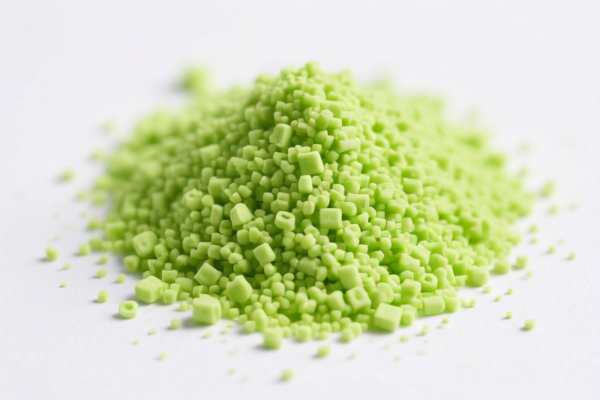
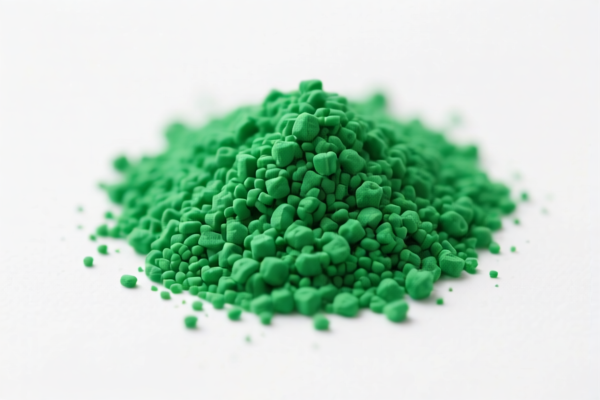
A Modified Polymer Antioxidant Masterbatch is a concentrated mixture of antioxidants (stabilizers) dispersed in a carrier resin (such as PE, PP, or EVA), used to improve the thermal and oxidative stability of plastics during processing.
In international trade, it is critically important to distinguish between the carrier material and the function. Customs authorities typically classify this product based on whether it is considered a "chemical product" (additives) or a "plastic product/material."
Two Main Classification Paths:
- As a Plastic Material/Preparation (Most Common for "Masterbatch"):
If the product is a solid, pelletized form where the carrier resin forms the bulk, it is often classified under Chapter 39 (Plastics and Articles Thereof). Specifically, as a "Preparation" or "Waste and Scrap" depending on purity, but usually as a Plastic Preparation. - As an Antioxidant Additive (If sold as a pure chemical mix):
If the carrier is minimal or the product is strictly defined as a chemical antioxidant preparation not in a plastic matrix, it may fall under Chapter 29 (Organic Chemicals) or Chapter 38 (Miscellaneous Chemical Products).
⚠️ Key Distinction Point:
- If it is pelletized/granular and used for extrusion/blow-molding with other plastics → Chapter 39 (Plastic Preparations).
- If it is a powder or liquid chemical additive without a plastic carrier matrix → Chapter 29/38 (Chemicals).
- Masterbatch is almost always treated as a Plastic Preparation because the carrier resin dominates the physical form and handling.
📦 2. HS Code Classification Details (2026 Latest Tariff Authority Comparison)
| HS Code | Product Description | Application Scenario | Carrier Type |
|---|---|---|---|
3907.60.00.00 |
Polyacetals (POM), other primary forms | If the carrier is POM | POM |
3907.99.00.00 |
Other polymers, primary forms (General Catch-all) | Common for PE/PP/EVA carriers in masterbatch | PE, PP, EVA |
3906.90.00.00 |
Acrylic polymers, primary forms | If the carrier is Acrylic (PMMA) | PMMA |
3916.10.00.00 |
Monofilament ≥67 decitex... | If shaped as fibers | Fiber |
3921.90.00.00 |
Other plates, sheets, film... | If shaped as sheets | Sheets |
3824.99.99.00 |
Prepared binders for foundry molds; other chemical products | Rare: If defined strictly as a chemical additive without plastic form | Chemical Only |
🔍 Priority Note:
-3907.99.00.00is the most frequent classification for PP/PE-based Antioxidant Masterbatches.
- If the carrier is EVA, it may fall under3901.30.00.00(Ethylene polymers with specific gravity ≤0.94).
- Do not classify as2939(Antioxidants) unless it is a pure chemical substance without a plastic carrier matrix. Masterbatches are plastic preparations.
💰 3. 2026 Latest Tariff Rate Breakdown (Including Surcharge & Policy Add-ons)
✅ Applicable Country: USA (US)
✅ Country of Origin: China (CN)
✅ Effective Date: From November 10, 2025 (including subsequent imports)
🎯 1. 3907.99.00.00 —— Other Polymers, Primary Forms (PP/PE Carrier)
| Item | Content |
|---|---|
| Base Tariff Rate | 5.3% (ad valorem) |
| USITC Surcharge (Section 301) | +25% |
| IEEPA Surcharge | +10% (For China/HK products, effective Nov 10, 2025) |
| Total Effective Rate | 40.3% |
| Tax Calculation | CIF Value × 40.3% |
| De Minimis Eligibility | ❌ No (deny_de_minimis) |
| Legal Basis Path | IEEPA:9903.01.25 → IEEPA:9903.01.24 → USITC:3907.99.00.00 → FOOTNOTE:9903.88.01 |
📌 Explanation:
- The 25% USITC surcharge applies to most plastics and chemical preparations from China under Section 301.
- The 10% IEEPA surcharge is a new layer added in late 2025, specifically targeting Chinese-origin goods in strategic sectors, including advanced materials.
- Total 40.3% is a high cost, significantly impacting margin for plastic processing businesses.
🎯 2. 3901.30.00.00 —— Ethylene Polymers (EVA Carrier)
| Item | Content |
|---|---|
| Base Tariff Rate | 5.3% |
| USITC Surcharge (Section 301) | +25% |
| IEEPA Surcharge | +10% |
| Total Effective Rate | 40.3% |
| Tax Calculation | CIF × 40.3% |
| De Minimis Eligibility | ❌ No |
| Legal Basis Path | IEEPA:9903.01.25 → IEEPA:9903.01.24 → USITC:3901.30.00.00 → FOOTNOTE:9903.88.01 |
📌 Note:
- EVA-based masterbatches face the same tariff burden as PP/PE ones.
- Do not assume "specialty resins" get lower rates; if they are ethylene/propylene-based, they are heavily taxed.
🎯 3. 3824.99.99.00 —— Miscellaneous Chemical Products (If Misclassified)
| Item | Content |
|---|---|
| Base Tariff Rate | 5.3% |
| USITC Surcharge (Section 301) | +25% |
| IEEPA Surcharge | +10% |
| Total Effective Rate | 40.3% |
| Tax Calculation | CIF × 40.3% |
| De Minimis Eligibility | ❌ No |
📌 Warning:
- Even if argued as a "chemical additive," the additional tariffs remain the same.
- However, classification as3824carries a higher audit risk because masterbatches are physically plastic pellets, not bulk chemicals.
🛠️ 4. Customs Clearance Practical Advice (Real-World Pitfall Avoidance)
✅ 1. Required Documentation Checklist (All Mandatory)
| Document | Must Provide | Description |
|---|---|---|
| ✅ Product Spec Sheet | ✔️ | Includes carrier resin type (PP/PE/EVA), antioxidant concentration (%), melting index. |
| ✅ Composition Analysis | ✔️ | Breakdown of resin vs. antioxidant additive. Critical for proving it's a "preparation." |
| ✅ Product Photos | ✔️ | Clear images of pellets/granules, packaging, and labels. |
| ✅ Third-Party Test Report | ✔️ | SGS, Intertek, or BV report confirming physical form (solid pellets) and chemical composition. |
| ✅ Commercial Invoice | ✔️ | Description must say "Plastic Masterbatch (Antioxidant)" not just "Chemical Additive." |
| ✅ Certificate of Origin (CO) | ✔️ | Essential for claiming any potential exemptions (though unlikely for China-origin). |
| ✅ Packaging List | ✔️ | Net/Gross weight, number of bags, pallets. |
✅ 2. Declaration Strategy (Key Mnemonics)
🔥 "Solid Pellets = Plastic, Liquid/Powder = Chemical; Don't Split, Declare Whole!"
| Scenario | Correct Declaration | Wrong Practice |
|---|---|---|
| PP Carrier Masterbatch | 3907.99.00.00 |
Misclassify as 2939 → Audit Risk |
| EVA Carrier Masterbatch | 3901.30.00.00 |
Misclassify as 3906 → Delay |
| Mixed Carrier (Unknown) | Request Lab Test | Guessing HS Code → Penalty |
| Bulk Chemical Powder | 3824.99.99.00 |
Calling it "Masterbatch" → Contradiction |
✅ 3. Special Situation Handling
| Situation | Handling Advice |
|---|---|
| OEM Private Label | Provide original design sheet to prove it's a standard masterbatch, not a novel chemical. |
| High Concentration (>50% Active Ingredient) | Still classified as Plastic Preparation if carrier dominates volume/weight. Provide weight ratio proof. |
| Recycled Carrier | May fall under 3915 (Waste/Scrap), but masterbatches are usually "primary forms." Clarify with importer. |
| Used in Food Contact Applications | Provide FDA Compliance Statement + LFGB Report (if EU). Not a tariff issue, but a clearance blocker. |
🌍 5. Global Market Clearance Comparison (2026 Latest)
| Country/Region | Recommended HS Code | Tariff (China Origin) | Certification Required | Notes |
|---|---|---|---|---|
| 🇺🇸 USA | 3907.99.00.00 |
40.3% | FDA (if food contact) | Highest barrier due to IEEPA+301 |
| 🇨🇳 China | 3907.99.00.00 |
5% | RoHS | No additional surcharges |
| 🇪🇺 EU | 3907.99.00.00 |
6.5% | REACH Registration | No additional tariffs, but REACH compliance critical |
| 🇦🇺 Australia | 3907.99.00.00 |
5% | ACCC | No additional tariffs |
| 🇯🇵 Japan | 3907.99.00.00 |
5% | PSE (if electrical) | Stable tariff environment |
📌 Conclusion:
- USA is the only market with punitive surcharges (40.3%).
- EU and Asia maintain stable, moderate rates (5-6.5%), but REACH (EU) and FDA (USA) compliance are non-negotiable for clearance.
- Cost Advantage: Shifting final plastic production to Vietnam/Mexico can reduce tariff burden, but exporting masterbatch itself from China remains expensive.
📌 6. Common Errors & Pitfall Guide (Lessons Learned)
❌ Error 1: Declaring as "Antioxidant Powder" (HS 2939) when it's actually pellets
👉 Consequence: Customs Seizure for false declaration of physical form.
❌ Error 2: Ignoring IEEPA 10% Surcharge in cost calculation
👉 Consequence: Profit Margin Erosion (unexpected 10% cost increase).
❌ Error 3: Not providing Composition Ratio
👉 Consequence: Customs may reclassify as "Chemical Product" or "Waste," leading to delays and fines.
❌ Error 4: Using vague description "Plastic Additive"
👉 Consequence: HS Code Uncertainty → Risk of wrong classification → 40.3% vs 5% dispute.
✅ Correct Practice:
"Antioxidant Masterbatch, Granular Form, Carrier: Polypropylene (PP), Antioxidant Content: 20%, For Industrial Plastic Stabilization, FDA Compliant"
🎯 7. Conclusion: Professional Declaration, Cost Control, Efficient Clearance
🎯 Remember the Mnemonics:
🔹 "Pellets = Plastic, Code 39; Powder = Chemical, Code 38/29."
🔹 "USA = 40.3% Pain; EU = REACH Check; China = 5% Easy."
🔹 "Declare Carrier Resin First, Then Additive Function."
📌 Pro Tip:
If your masterbatch uses recycled resin or is bio-based, provide sustainability certificates to potentially access green trade lanes or lower internal carbon taxes in the EU.
For US imports, consider Supply Chain Diversification: Source carriers from non-China origins (e.g., Malaysia, Thailand) to mitigate IEEPA surcharges, though this is complex for masterbatches.
📣 Immediate Action:
📞 Consult a US Customs Broker for Pre-Ruling on
3907.99.00.00applicability.
📦 Ensure FDA/REACH docs are ready before shipment.
💰 Factor in 40.3% total landed cost for US-bound goods.
✨ Precision Starts with Correct Classification!
💼 Every Percentage Point Counts in Global Trade!
Customer Reviews
About HS Code Classification
The Harmonized System (HS) is an internationally standardized nomenclature developed by the World Customs Organization (WCO) to classify traded products. Over 200 countries use the HS system as the basis for customs tariffs, trade statistics, and import/export regulations.
Each HS code follows a hierarchical structure:
- Chapter (2 digits) — Broad category of goods (e.g., Chapter 84: Machinery and Mechanical Appliances)
- Heading (4 digits) — More specific grouping within the chapter
- Subheading (6 digits) — Internationally standardized breakdown, used by all WCO member countries
- National subdivisions (8-10 digits) — Country-specific extensions for further classification, such as US HTSUS 10-digit codes
Correct HS code classification is essential for smooth customs clearance, accurate duty payment, and compliance with trade regulations. Misclassification can lead to customs delays, overpayment of duties, or penalties.
When importing from CN to US, the applicable tariff rates may include:
- Most-Favored-Nation (MFN) rate — The standard duty rate applied to WTO members
- General rate — Applied to countries without trade agreements
- Trade remedy duties — Additional tariffs such as Section 301 (anti-dumping), Section 232 (national security), or countervailing duties
The information provided on this page is for reference purposes only. For official classification, please consult with your local customs authority or a licensed customs broker.