Modified Pulp Chemicals
CN → US| HS Code | Tariff Rate | Origin | Destination | Doc |
|---|---|---|---|---|
| 3505100092 | 0.0% | CN | US | Official Doc |
| 3505100045 | 0.0% | CN | US | Official Doc |
| 3824999397 | 40.0% | CN | US | Official Doc |
Product Images
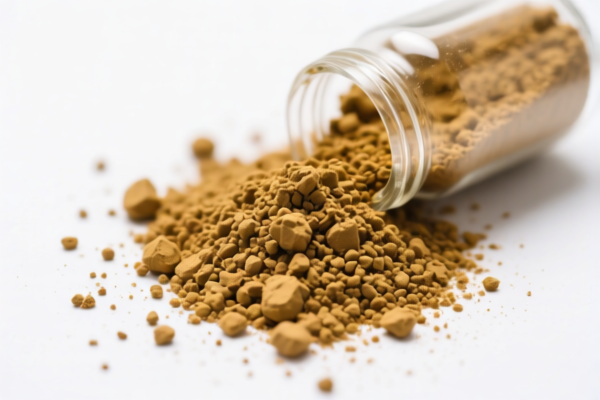

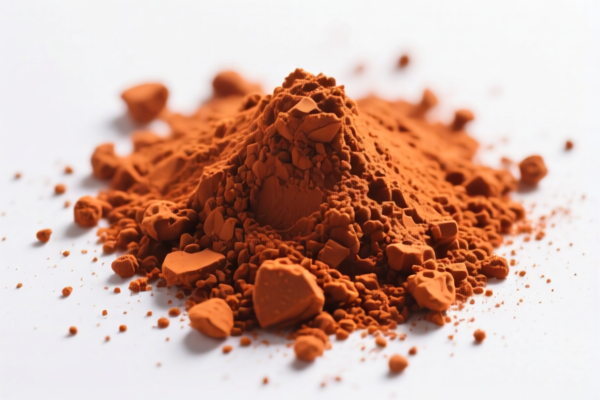
AI Analysis
🧪 Modified Pulp Chemicals (Paper Chemicals)
🌐 HS Code Reference & Customs Clearance Guide | 2026 Latest Tariff Analysis | Professional Strategy for US Imports
📌 Part 1: Product Definition & Classification – What Are "Modified Pulp Chemicals"?
Modified pulp chemicals, commonly referred to in trade as "Paper Chemicals," are specialized chemical additives used in the papermaking process. They fall under the broad category of chemical products and preparations. These substances are typically derived from starches, resins, or synthetic polymers and are designed to improve paper quality, strength, retention, and drainage.
In international trade, they are generally classified into three main types based on their composition: 1. Starch Derivatives & Modified Starches: The most common base, used for surface sizing and internal retention. 2. Resins & Synthetic Additives: Such as AKD (Alkyl Ketene Dimer) or ASA for waterproofing and strengthening. 3. Chemical Mixtures/Blends: Complex formulations containing multiple active ingredients, fillers, and carriers.
⚠️ Key Distinction:
- If the product is purely modified starch (e.g., oxidized starch, cationic starch) → It often falls under Heading 3505.
- If the product is a complex mixture not specifically described elsewhere (e.g., a blend of starch, resin, and enzymes) → It may fall under the "Other" category in Heading 3824.
📦 Part 2: HS Code Classification Details (2026 Latest Tariff Authority)
Based on the provided data, here are the specific HS codes for modified pulp chemicals:
| HS Code | Product Description | Applicable Scenario | Material Composition |
|---|---|---|---|
3505.10.00.92 |
Paper Chemicals – Other starch derivatives, resins, or additives | General paper chemicals not elsewhere specified | Starch derivatives, resins, chemical additives |
3505.10.00.45 |
Paper Chemicals – Starch, dextrins, or modified starches | Starch-based sizing agents, retention aids | Modified starches, dextrins |
3824.99.93.97 |
Paper Chemicals – Chemical mixtures/preparations (Other) | Complex blends, non-specific chemical preparations | Mixtures of chemicals, binders, additives |
🔍 Critical Note:
-3505.10is for starch-based products. If your chemical is primarily starch (modified or unmodified), use this heading.
-3824.99is the residual ("catch-all") category for chemical mixtures that don’t fit neatly into specific subheadings. It is often used for complex blends.
- Misclassification Risk: Declaring a complex mixture as3505(starch) when it contains significant non-starch components can lead to customs disputes and higher tariffs under3824.
💰 Part 3: 2026 Latest Tariff Rate Breakdown (Including Additional Duties)
✅ Applicable Country: United States (US)
✅ Country of Origin: China (CN)
✅ Effective Date: Post-2025 (Including Section 301 & 122 Tariffs)
🎯 1. 3505.10.00.92 – Paper Chemicals (Other Starch Derivatives/Resins)
| Item | Content |
|---|---|
| Base Tariff | $0.007/kg (Ad Valorem equivalent is low, but specific duty applies) |
| Additional Duty (Section 301) | +7.5% (Ad Valorem) |
| Section 122 Tariff | +10% (Ad Valorem) |
| Total Effective Tax | $0.007/kg + 17.5% Ad Valorem |
| Tax Calculation | 0.7¢/kg + (17.5% × CIF Value) |
| De Minimis Exemption? | ❌ No (High tariff rate disqualifies it from $800 de minimis) |
| Legal Path | Base: 3505.10.00.92 → Section 301: 7.5% → Section 122: 10% |
📌 Explanation:
- The $0.007/kg is a specific duty per kilogram.
- The 17.5% is the sum of the 7.5% Section 301 tariff and 10% Section 122 tariff.
- This structure means the tax burden is both weight-based and value-based, making it complex for small-value shipments.
🎯 2. 3505.10.00.45 – Paper Chemicals (Starch/Dextrins/Modified Starch)
| Item | Content |
|---|---|
| Base Tariff | $0.007/kg |
| Additional Duty (Section 301) | +7.5% |
| Section 122 Tariff | +10% |
| Total Effective Tax | $0.007/kg + 17.5% Ad Valorem |
| Tax Calculation | 0.7¢/kg + (17.5% × CIF Value) |
| De Minimis Exemption? | ❌ No |
| Legal Path | Base: 3505.10.00.45 → Section 301: 7.5% → Section 122: 10% |
📌 Note:
- Identical tariff structure to3505.10.00.92.
- Use this code only if the product is primarily starch/dextrin/modified starch.
- If the product is a blend with non-starch chemicals, this code may be challenged.
🎯 3. 3824.99.93.97 – Paper Chemicals (Chemical Mixtures/Other Preparations)
| Item | Content |
|---|---|
| Base Tariff | 5.0% |
| Additional Duty (Section 301) | +25.0% |
| Section 122 Tariff | +10% |
| Total Effective Tax | 40.0% Ad Valorem |
| Tax Calculation | 40% × CIF Value |
| De Minimis Exemption? | ❌ No |
| Legal Path | Base: 3824.99.93.97 → Section 301: 25% → Section 122: 10% |
📌 Warning:
- This code has a much higher tariff rate (40%) compared to the starch-based codes.
- It applies to complex mixtures that do not fit the starch definition.
- If you can prove your product is starch-based, you save 22.5% in additional duties!
🛠️ Part 4: Customs Clearance Practical Advice (Real-World Pitfall Avoidance)
✅ 1. Required Documentation Checklist
| Document | Mandatory? | Purpose |
|---|---|---|
| ✅ Product Specification Sheet | ✔️ | Must list chemical composition (e.g., % starch, % resin, % water). |
| ✅ MSDS (Material Safety Data Sheet) | ✔️ | Required for chemical imports; shows hazard classification. |
| ✅ Formula/Ingredient Breakdown | ✔️ | Critical to prove if the product is starch-based (3505) or mixture (3824). |
| ✅ Commercial Invoice | ✔️ | Clearly describe as "Paper Chemicals" or "Modified Starch," NOT generic "Chemical." |
| ✅ Certificate of Origin | ✔️ | To confirm China origin for Section 301/122 application. |
| ✅ Third-Party Lab Report | ✔️ | Optional but recommended to prove starch content if disputed. |
✅ 2. Classification Strategy (Key Tip)
🔥 "Starch-Based is Cheaper; Mixtures are Expensive!"
| Scenario | Correct HS Code | Tariff Rate | Risk Level |
|---|---|---|---|
| Product is >70% Modified Starch | 3505.10.00.45 |
0.7¢/kg + 17.5% | ✅ Low (if formula supports) |
| Product is Starch + Minor Additives | 3505.10.00.92 |
0.7¢/kg + 17.5% | ✅ Low |
| Product is Complex Blend (Resin + Starch + Enzyme) | 3824.99.93.97 |
40.0% | ⚠️ High (Verify with customs) |
| Product is Pure Synthetic Resin | 3824.99.93.97 |
40.0% | ⚠️ High |
📌 Critical Advice:
- If your product is a blend, try to optimize the formula to emphasize the starch content.
- If you declare3505but customs determines it’s a mixture, you will face back taxes + penalties.
- Pre-clearance Ruling: Consider applying for an HTS Code Pre-Ruling from CBP to secure the lower 17.5% rate if borderline.
✅ 3. Special Cases & Handling
| Situation | Handling Advice |
|---|---|
| Bulk vs. Packaged | Bulk shipments may require different documentation (e.g., Tank Farm Records). |
| Private Label (OEM) | Ensure the invoice matches the brand but doesn’t imply a different chemical origin. |
| Samples | Even samples are subject to full tariff if declared as commercial goods. Use "No Commercial Value" carefully (high risk). |
| Origin Transshipment | If shipped from Vietnam/Malaysia, ensure no substantial transformation occurred; otherwise, origin remains China. |
🌍 Part 5: Global Market Comparison (2026)
| Country/Region | Recommended HS Code | Tariff (China Origin) | Notes |
|---|---|---|---|
| 🇺🇸 USA | 3505.10.00.45 |
0.7¢/kg + 17.5% | Best Rate if starch-based |
| 🇨🇳 China | 3505.10.00.45 |
~5-10% | Lower than US; check FTA benefits |
| 🇪🇺 EU | 3505.10 |
0-6.5% | No Section 301/122; lower rates |
| 🇬🇧 UK | 3505.10 |
~5% | Post-Brexit tariff schedule |
| 🇯🇵 Japan | 3505.10 |
0-5% | JETPA benefits may apply |
📌 Conclusion:
- USA has the highest effective tariff due to Section 301 and 122.
- Accurate classification is critical to avoid paying 40% instead of 17.5%.
- China-origin products face significant barriers in the US market.
📌 Part 6: Common Errors & Pitfalls (Lessons Learned)
❌ Error 1: Declaring a complex chemical mixture as 3505.10 (Starch) to save on tariffs.
👉 Consequence: Customs audits may reclassify it as 3824, leading to 22.5% back taxes + penalties.
❌ Error 2: Not providing a formula breakdown.
👉 Consequence: CBP cannot verify starch content → Likely to default to 3824 (40% tariff).
❌ Error 3: Ignoring the Specific Duty (0.7¢/kg) in 3505.
👉 Consequence: Underestimating costs for low-value, high-volume shipments.
❌ Error 4: Using generic terms like "Chemical Additive" on invoices.
👉 Consequence: Delays, inspections, and potential misclassification.
✅ Correct Approach:
"Modified Starch for Paper Industry, Cationic Type, CAS No. XXXX-XX-X, Purity >95%, HS 3505.10.00.45"
🎯 Part 7: Conclusion – Precision Classification Saves Money!
🎯 Remember the Golden Rule:
🔹 "Starch-Based = 17.5% + $0.007/kg"
🔹 "Mixture/Resin = 40%"
🔹 "Verify Formula, Protect Profit!"
📌 Pro Tip:
If your product is on the borderline between starch and mixture, consider consulting a customs broker or applying for a CBP Ruling before shipping. The cost of a ruling is far less than the cost of a 22.5% tariff shock.
📣 Action Steps:
1. Review your product formula – Is it >70% starch?
2. Prepare MSDS and Spec Sheets – Highlight starch content.
3. Choose HS Code 3505.10.00.45 or 3505.10.00.92 if applicable.
4. Avoid 3824 unless necessary – The 40% rate is steep.
5. Partner with a experienced customs broker – For accurate declaration.
✨ Professional clearance starts with precise classification!
💼 Your margin depends on your HS Code!
Customer Reviews
About HS Code Classification
The Harmonized System (HS) is an internationally standardized nomenclature developed by the World Customs Organization (WCO) to classify traded products. Over 200 countries use the HS system as the basis for customs tariffs, trade statistics, and import/export regulations.
Each HS code follows a hierarchical structure:
- Chapter (2 digits) — Broad category of goods (e.g., Chapter 84: Machinery and Mechanical Appliances)
- Heading (4 digits) — More specific grouping within the chapter
- Subheading (6 digits) — Internationally standardized breakdown, used by all WCO member countries
- National subdivisions (8-10 digits) — Country-specific extensions for further classification, such as US HTSUS 10-digit codes
Correct HS code classification is essential for smooth customs clearance, accurate duty payment, and compliance with trade regulations. Misclassification can lead to customs delays, overpayment of duties, or penalties.
When importing from CN to US, the applicable tariff rates may include:
- Most-Favored-Nation (MFN) rate — The standard duty rate applied to WTO members
- General rate — Applied to countries without trade agreements
- Trade remedy duties — Additional tariffs such as Section 301 (anti-dumping), Section 232 (national security), or countervailing duties
The information provided on this page is for reference purposes only. For official classification, please consult with your local customs authority or a licensed customs broker.