Modified Resin Solution for Casting
CN → US| HS Code | Tariff Rate | Origin | Destination | Doc |
|---|---|---|---|---|
| 3209900000 | 40.9% | CN | US | Official Doc |
| 3209100000 | 40.1% | CN | US | Official Doc |
| 3208100000 | 38.7% | CN | US | Official Doc |
| 3208200000 | 38.6% | CN | US | Official Doc |
| 3907210000 | 41.5% | CN | US | Official Doc |
| 3907300000 | 41.1% | CN | US | Official Doc |
Product Images
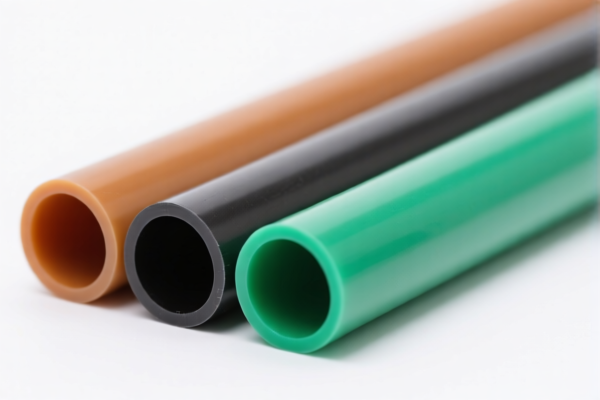

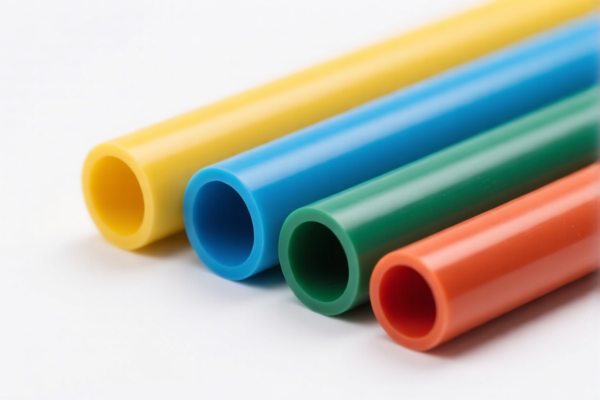
AI Analysis
🎨 Modified Resin Solutions for Casting & Coatings
🌐 HS Code Classification & Customs Clearance Guide | 2026 Latest Tariff Analysis | Precision Classification Strategy
📌 I. Product Definition & Classification: What is "Modified Resin Solution"?
In international trade, "Modified Resin Solution for Casting" is not a single homogeneous product but a category defined by its base polymer type, solvent system (aqueous vs. non-aqueous), and application state. The term "Modified Resin" typically refers to natural polymers (like shellac, rosin, or lignin) that have been chemically altered to improve properties, or synthetic polymers prepared by chemical modification.
To ensure accurate customs clearance, you must determine: 1. The Base Polymer: Is it based on Polyester, Acrylic/Vinyl, Polyethers, or Epoxides? 2. The Medium: Is it dispersed/dissolved in a non-aqueous medium (solvent-based) or an aqueous medium (water-based)? 3. The Form: Is it a "solution," "emulsion," or "dispersion"?
⚠️ Critical Distinction:
- If it is solvent-based (non-aqueous) and based on Polyesters → HS 3208.10
- If it is solvent-based (non-aqueous) and based on Acrylic/Vinyl → HS 3208.20
- If it is water-based (aqueous) and based on Acrylic/Vinyl → HS 3209.10
- If it is water-based (aqueous) and "Other" (not acrylic/vinyl) → HS 3209.90
- If it is raw resin material (not a paint/coating solution) like Epoxides or Polyethers → HS 3907.xx
📦 II. HS Code Classification Details (2026 Latest Tariff Alignment)
Based on the provided data, here are the precise HS Codes for "Modified Resin Solutions" categorized by chemical composition and medium:
| HS Code | Product Description | Key Characteristics | Solvent/Medium |
|---|---|---|---|
3208.10.00.00 |
Paints/Varnishes based on Polyesters | Synthetic polymer-based, non-aqueous | Non-aqueous (Solvent-based) |
3208.20.00.00 |
Paints/Varnishes based on Acrylic/Vinyl | Synthetic polymer-based, non-aqueous | Non-aqueous (Solvent-based) |
3209.10.00.00 |
Paints/Varnishes based on Acrylic/Vinyl | Synthetic polymer-based, aqueous | Aqueous (Water-based) |
3209.90.00.00 |
Paints/Varnishes Other | Synthetic/chemically modified natural polymers, aqueous | Aqueous (Water-based) |
3907.21.00.00 |
Polyethers (e.g., Bis(polyoxyethylene) methylphosphonate) | Primary form resin, not a coating solution | N/A (Raw Material) |
3907.30.00.00 |
Epoxide Resins | Primary form resin, not a coating solution | N/A (Raw Material) |
🔍 Important Note:
- Items under HS 3907 are considered "Chemicals/Raw Resins in Primary Forms," not "Paints/Varnishes." If your "resin solution" is intended as a raw material for further industrial processing (not as a final coating), it may fall under 3907.
- Items under HS 3208/3209 are classified as "Prepared Paints, Varnishes, or Similar Coatings." If the resin is mixed with solvents, pigments, or additives to form a ready-to-use casting mold coating, it belongs here.
💰 III. 2026 Tariff Rate Breakdown (Detailed Tax Clause)
✅ Context: Based on the provided data, we assume import into a market with specific "Additional Duties" (likely US Section 301 or similar trade remedy measures).
✅ Origin: Likely China (CN) given the "Additional Duty" structure.
🎯 1. HS 3208.10.00.00 – Polyester-Based Non-Aqueous Solutions
| Item | Detail |
|---|---|
| Base Tariff | 0.0% |
| Additional Duty | 0.0% |
| Total Tax Rate | 0.0% |
| Tax Detail | Base: 0.0%, Additional: 0.0% |
| Strategic Insight | Zero Duty Advantage! This is one of the most favorable codes. If your resin is polyester-based and solvent-based, you pay no tariff. |
🎯 2. HS 3208.20.00.00 – Acrylic/Vinyl-Based Non-Aqueous Solutions
| Item | Detail |
|---|---|
| Base Tariff | 0.0% |
| Additional Duty | 0.0% |
| Total Tax Rate | 0.0% |
| Tax Detail | Base: 0.0%, Additional: 0.0% |
| Strategic Insight | Zero Duty Advantage! Similar to polyester, acrylic/vinyl solvent-based solutions are also duty-free in this context. |
🎯 3. HS 3907.21.00.00 – Polyethers (e.g., Bis(polyoxyethylene) methylphosphonate)
| Item | Detail |
|---|---|
| Base Tariff | 6.5% |
| Additional Duty | 25.0% |
| Total Tax Rate | 31.5% |
| Tax Detail | Base: 6.5%, Additional: 25.0% |
| Strategic Insight | High Duty. If your resin is a polyether type (often used as a surfactant or intermediate), it faces a 31.5% total tariff. This is significantly higher than paint codes. |
🎯 4. HS 3907.30.00.00 – Epoxide Resins (Epoxy)
| Item | Detail |
|---|---|
| Base Tariff | 6.1% |
| Additional Duty | 25.0% |
| Total Tax Rate | 31.1% |
| Tax Detail | Base: 6.1%, Additional: 25.0% |
| Strategic Insight | High Duty. Epoxy resins are heavily taxed. If you are importing raw epoxy resin for casting molds, expect a 31.1% tariff. |
🎯 5. HS 3209.90.00.00 – Other Water-Based Solutions
| Item | Detail |
|---|---|
| Base Tariff | 5.9% |
| Additional Duty | 25.0% |
| Total Tax Rate | 30.9% |
| Tax Detail | Base: 5.9%, Additional: 25.0% |
| Strategic Insight | High Duty. Water-based coatings that are not acrylic/vinyl (e.g., alkyd, urethane, or chemically modified natural polymers) incur a 30.9% tariff. |
🎯 6. HS 3209.10.00.00 – Acrylic/Vinyl Water-Based Solutions
| Item | Detail |
|---|---|
| Base Tariff | 0.0% |
| Additional Duty | 0.0% |
| Total Tax Rate | 0.0% |
| Tax Detail | Base: 0.0%, Additional: 0.0% |
| Strategic Insight | Zero Duty Advantage! If your resin solution is water-based and acrylic/vinyl-based, it is duty-free. |
🛠️ IV. Customs Clearance Practical Advice
✅ 1. Document Preparation Checklist
| Document | Requirement | Purpose |
|---|---|---|
| Product Specification Sheet | Must clearly state Chemical Composition (e.g., % Polyesters, % Acrylics), Solvent Type (Water vs. Organic Solvent), and Viscosity. | Critical for determining HS Code (3208 vs. 3907). |
| Formula/Material Safety Data Sheet (MSDS) | Confirm if the product is a "Prepared Paint" (HS 32) or "Chemical Product" (HS 39). | Determines if it's a coating or a raw material. |
| Commercial Invoice | Describe as "Polyester-Based Resin Solution for Casting" or "Acrylic Water-Based Coating." Do not use generic terms like "Resin Liquid." | Avoids ambiguity. |
| Certificate of Origin | Essential for verifying trade remedy eligibility. | Proof of origin for additional duties. |
| Lab Report | May be required to prove if the resin is "Chemically Modified Natural" or "Synthetic." | Supports HS 3208/3209 classification. |
✅ 2. Classification Strategy & Tax Optimization
| Scenario | Recommended HS Code | Estimated Tax | Action |
|---|---|---|---|
| Solvent-Based, Polyester | 3208.10.00.00 |
0% | Best Option. High value, zero tax. |
| Solvent-Based, Acrylic | 3208.20.00.00 |
0% | Best Option. High value, zero tax. |
| Water-Based, Acrylic | 3209.10.00.00 |
0% | Best Option. Eco-friendly, zero tax. |
| Water-Based, Other | 3209.90.00.00 |
30.9% | Avoid if possible. Consider reformulating to Acrylic/Vinyl. |
| Raw Epoxide Resin | 3907.30.00.00 |
31.1% | High tax. Only use if necessary for specific casting properties. |
| Raw Polyether | 3907.21.00.00 |
31.5% | Highest tax. Review if alternative materials can be used. |
💡 Pro Tip:
If your product is a "Modified Natural Polymer" (e.g., modified shellac or rosin) dissolved in solvents, it may still fall under HS 3208 if it meets the definition of "Paints and Varnishes." However, if it is purely a chemical intermediate, it might be classified under HS 39. Always provide a detailed chemical structure to argue for HS 32 if it is intended as a coating.
✅ 3. Common Pitfalls & Errors
❌ Error 1: Classifying Solvent-Based Acrylic as HS 3209 (Water-Based)
👉 Consequence: Incorrect HS Code leads to 30.9% tax instead of 0%.
👉 Solution: Clearly state "Non-Aqueous Medium" in description.
❌ Error 2: Classifying Raw Epoxy Resin as HS 3208 (Paint)
👉 Consequence: If customs determines it’s not a "prepared paint" (no pigments, binders, or ready-to-use form), they may reclassify to HS 3907.30.00.00 and charge 31.1% or demand additional duties for misdeclaration.
👉 Solution: If it’s a raw resin, declare as "Epoxide Resin in Primary Forms" under HS 3907.
❌ Error 3: Using Generic Terms like "Resin Solution"
👉 Consequence: Customs may assign a default high-duty code or hold the shipment for inspection.
👉 Solution: Specify the base polymer (Polyester, Acrylic, Epoxy) and medium (Aqueous, Non-Aqueous).
🌍 V. Global Market Comparison (2026)
| Market | Recommended HS Code | Tax Rate (China Origin) | Notes |
|---|---|---|---|
| USA | 3208.10.00.00 / 3208.20.00.00 |
0% | Zero duty for these specific polyester/acrylic solvent-based codes. |
| USA | 3209.10.00.00 |
0% | Zero duty for water-based acrylic/vinyl. |
| USA | 3907.30.00.00 |
31.1% | High duty for Epoxy resins. |
| EU | Varies | ~0-6.5% | Generally lower additional duties compared to US Section 301. |
| China | Varies | ~0-6.5% | Import duties may vary; check for reciprocal tariffs. |
📌 Conclusion:
- The USA market offers significant duty advantages (0%) for Polyester, Acrylic, and Vinyl based solutions, whether aqueous or non-aqueous, provided they are classified under HS 3208/3209.
- Raw Resins (HS 3907) face ~31% duties.
- Strategy: If possible, formulate your casting resin solutions to be Acrylic or Polyester-based and ensure they meet the definition of "Prepared Paints/Varnishes" to qualify for 0% duty.
🎯 VI. Conclusion: Precision Classification Saves Money
🎯 Key Takeaway:
🔹 "Solvent-Based Polyester/Acrylic = 0% Tax"
🔹 "Water-Based Acrylic/Vinyl = 0% Tax"
🔹 "Raw Epoxy/Polyether = ~31% Tax"
🔹 "Water-Based Other = ~30.9% Tax"
📌 Final Advice:
1. Analyze your formula: Identify the primary polymer.
2. Choose the right medium: If possible, use Aqueous Acrylic or Non-Aqueous Polyester/Acrylic to qualify for 0% duty.
3. Describe accurately: Use precise chemical names in customs declarations.
4. Seek Pre-Ruling: If unsure, apply for a Customs Ruling before shipping to avoid costly delays or penalties.
✨ Professional Classification Starts Here!
💼 Don’t let 30%+ tariffs eat your margins. Optimize your HS Code today!
Customer Reviews
About HS Code Classification
The Harmonized System (HS) is an internationally standardized nomenclature developed by the World Customs Organization (WCO) to classify traded products. Over 200 countries use the HS system as the basis for customs tariffs, trade statistics, and import/export regulations.
Each HS code follows a hierarchical structure:
- Chapter (2 digits) — Broad category of goods (e.g., Chapter 84: Machinery and Mechanical Appliances)
- Heading (4 digits) — More specific grouping within the chapter
- Subheading (6 digits) — Internationally standardized breakdown, used by all WCO member countries
- National subdivisions (8-10 digits) — Country-specific extensions for further classification, such as US HTSUS 10-digit codes
Correct HS code classification is essential for smooth customs clearance, accurate duty payment, and compliance with trade regulations. Misclassification can lead to customs delays, overpayment of duties, or penalties.
When importing from CN to US, the applicable tariff rates may include:
- Most-Favored-Nation (MFN) rate — The standard duty rate applied to WTO members
- General rate — Applied to countries without trade agreements
- Trade remedy duties — Additional tariffs such as Section 301 (anti-dumping), Section 232 (national security), or countervailing duties
The information provided on this page is for reference purposes only. For official classification, please consult with your local customs authority or a licensed customs broker.