Module
CN → US| HS Code | Tariff Rate | Origin | Destination | Doc |
|---|---|---|---|---|
| 8542320036 | 60.0% | CN | US | Official Doc |
| 8473301140 | 35.0% | CN | US | Official Doc |
| 8543901500 | 35.0% | CN | US | Official Doc |
| 8543906800 | 35.0% | CN | US | Official Doc |
| 8542320071 | 60.0% | CN | US | Official Doc |
| 8542390090 | 60.0% | CN | US | Official Doc |
| 8543709860 | 37.6% | CN | US | Official Doc |
Product Images
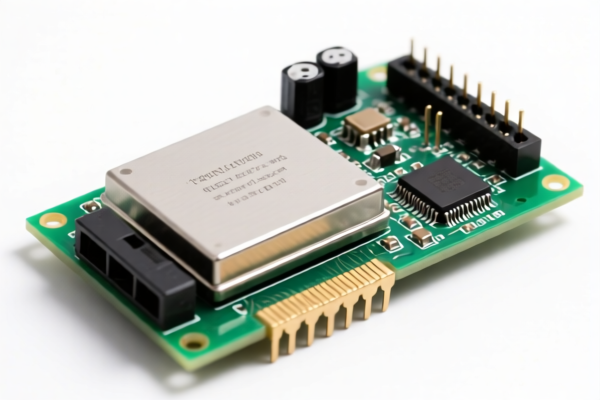
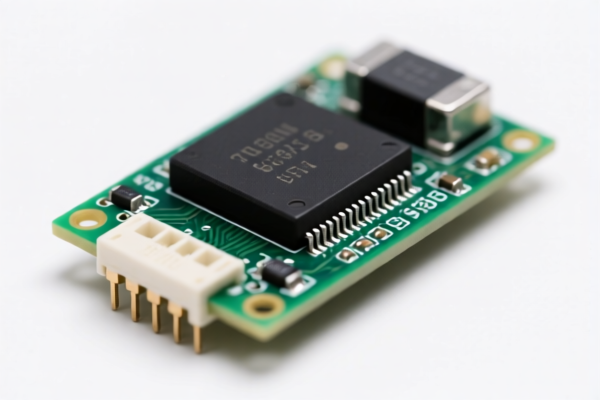
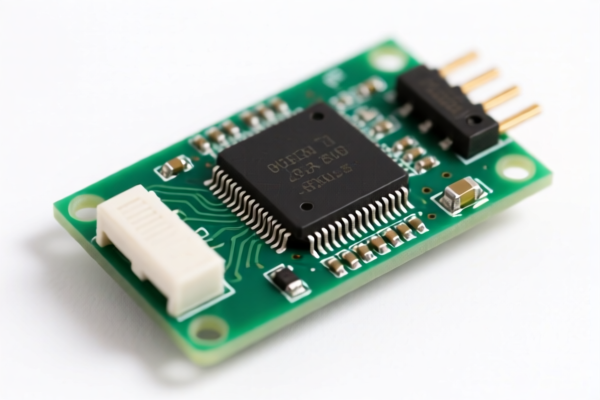

AI Analysis
🔋 Power Modules & Memory Modules: HS Code Classification & Customs Clearance Guide (2026)
🌐 HS Code Reference & Customs Clearance Guide | 2026 Latest Tariff Analysis | Professional Tier-1 Clearance Strategy
📌 I. Product Definition & Classification: Do You Really Understand "Modules"?
In international trade, "Modules" are critical electronic components. However, classification depends heavily on function and structure. Based on the provided data, two main categories emerge: Memory Modules and Power Modules. Misclassification can lead to severe tariff penalties due to Section 301 and IEEPA tariffs.
⚠️ Key Distinction Point:
- Memory Modules: Classified as Integrated Circuits (ICs) if they function strictly as memory storage for data processing.
- Power Modules: Classified as Independent Electrical Apparatus or Printed Circuit Assemblies (PCAs), not as simple ICs.
- Crucial Warning: "Memory Module" descriptions in the data sometimes erroneously apply to power modules or misinterpret the hardware nature. Always verify the circuitry and primary function.
📦 II. HS Code Classification Details (Based on Provided Data)
| HS Code | Product Description (From Data) | Summary/Logic Provided | Total Tax Rate |
|---|---|---|---|
8542.32.00.36 |
Memory Module (Memory Category) | Summarizes as "Memory modules belong to the storage category, form and use consistent with DRAM, are electronic IC finished products." | 60.0% |
8473.30.11.40 |
Memory Module (PCA Category) | Summarizes as "Product name 'Memory Module' directly corresponds to use form, fits printed circuit component characteristics." | 35.0% |
8543.90.15.00 |
Memory/Power Module (Electrical Device) | Summarizes as "Composed of ICs, PCBs... fits material/form of electrical machines/equipment parts." | 35.0% |
8543.90.68.00 |
Memory Module (PCA Component) | Summarizes as "Electronic components, core is printed circuit assembly, fits classification attributes." | 35.0% |
8542.32.00.71 |
Memory Module (Storage/IC) | Summarizes as "Storage form, fits 'storage' use classification, material attribute consistent with electronic ICs." | 60.0% |
8542.39.00.90 |
Power Module (Other IC) | Summarizes as "Power module belongs to electronic IC components, not excluded categories, fits 'other' catch-all." | 60.0% |
8543.70.98.60 |
Power Module (Independent Apparatus) | Summarizes as "Independent functional electrical device, fits 'other machines/apparatus' category." | 37.6% |
🔍 Important Note:
- The data contains contradictory summaries for "Memory Module." Some cite8542(ICs) with 60% tax, while others cite8543/8473(Electrical Machines/PCAs) with 35% tax.
- Power Modules are split between8542(60%) and8543(37.6%).
- You must determine the actual physical composition to choose between the 35% and 60% brackets.
💰 III. 2026 Latest Tariff Rate Breakdown (Including Surcharges)
✅ Applicable Country: USA (US)
✅ Origin: China (CN)
✅ Effective Date: Includes subsequent imports post-2025/2026 policy updates
🎯 1. High-Tariff Bracket: 60.0%
Applicable HS Codes:
- 8542.32.00.36 (Memory as IC)
- 8542.32.00.71 (Memory as IC)
- 8542.39.00.90 (Power as IC)
| Item | Details |
|---|---|
| Base Duty | 0.0% |
| Section 301 Surcharge | 50.0% |
| IEEPA 122 Clause Surcharge | 10.0% |
| Total Tax Rate | 60.0% |
| Calculation | CIF Value × 60% |
| De Minimis Exemption | ❌ Not Allowed (High risk of audit) |
| Legal Path | USITC:8542.xx.xx → SECTION301:50% → IEEPA:10% |
📌 Explanation:
- This rate applies if the module is considered a pure Integrated Circuit (IC) or part of the "semiconductor" block.
- Risk: If the module includes additional functional circuits (e.g., power regulation, buffering), it may not qualify as a simple IC, leading to underpayment penalties.
🎯 2. Medium-Tariff Bracket: 35.0%
Applicable HS Codes:
- 8473.30.11.40 (PCA)
- 8543.90.15.00 (Electrical Machine Part)
- 8543.90.68.00 (PCA Component)
| Item | Details |
|---|---|
| Base Duty | 0.0% |
| Section 301 Surcharge | 25.0% |
| IEEPA 122 Clause Surcharge | 10.0% |
| Total Tax Rate | 35.0% |
| Calculation | CIF Value × 35% |
| De Minimis Exemption | ❌ Not Allowed |
| Legal Path | USITC:8473/8543 → SECTION301:25% → IEEPA:10% |
📌 Explanation:
- This rate applies if the module is classified as a Printed Circuit Assembly (PCA) or an electrical machine part, rather than a pure semiconductor IC.
- Advantage: Saves 25% compared to the 60% bracket.
- Requirement: Must prove the module’s primary identity is a circuit assembly or apparatus part, not a bare memory chip.
🎯 3. Special Power Module Bracket: 37.6%
Applicable HS Code:
- 8543.70.98.60 (Power Module as Independent Apparatus)
| Item | Details |
|---|---|
| Base Duty | 2.6% |
| Section 301 Surcharge | 25.0% |
| IEEPA 122 Clause Surcharge | 10.0% |
| Total Tax Rate | 37.6% |
| Calculation | CIF Value × 37.6% |
| De Minimis Exemption | ❌ Not Allowed |
| Legal Path | USITC:8543.70.98.60 → SECTION301:25% → IEEPA:10% |
📌 Explanation:
- Specifically for Power Modules that are independent functional devices.
- Slightly higher base duty (2.6%) but lower surcharge structure than pure ICs.
🛠️ IV. Customs Clearance Practical Advice
✅ 1. Document Preparation Checklist
| Document | Required | Notes |
|---|---|---|
| ✅ Product Specification Sheet | ✔️ | Must detail circuit diagram, voltage input/output, memory type (if applicable), and PCB layer count. |
| ✅ Circuit Schematic | ✔️ | Critical to distinguish between "IC" (8542) and "PCA/Device" (8543/8473). |
| ✅ Product Photos (Labeled) | ✔️ | Show chip components, connectors, and any labeling (e.g., "DDR4," "Power Supply Unit"). |
| ✅ Test Reports | ✔️ | FCC, CE, RoHS, UL (if applicable). |
| ✅ Commercial Invoice | ✔️ | Accurate description: e.g., "Memory Module, DDR4, No Control Circuit" vs. "Power Conversion Module". |
| ✅ Packing List | ✔️ | Itemize components clearly. |
✅ 2. Classification Strategy & Risk Mitigation
🔥 "Know Your Circuit: IC is 60%, PCA is 35%!"
| Scenario | Recommended HS Code | Tax Rate | Reasoning |
|---|---|---|---|
| Pure DRAM Module (No extra logic, just storage) | 8542.32.00.36 / .71 |
60% | Fits "Integrated Circuit" definition. High risk, but often legally accurate for pure memory. |
| Memory Module with Buffer/Regulator | 8543.90.15.00 / .68 |
35% | Contains additional circuitry beyond pure storage → "Electrical Machine Part." |
| Standard Power Supply Module | 8543.70.98.60 |
37.6% | Independent apparatus. Do NOT classify as IC unless it’s a simple DC-DC chip on a PCB. |
| Power Module as PCA | 8473.30.11.40 |
35% | If it’s a sub-assembly for another machine, not an independent device. |
✅ 3. Common Pitfalls & Avoidance
❌ Mistake 1: Labeling everything as "Memory Module" to avoid "Power Module" scrutiny.
👉 Consequence: If it’s a power module, misclassification can lead to fraud penalties and retroactive duties.
❌ Mistake 2: Assuming all PCBs are "Integrated Circuits" (8542).
👉 Consequence: Customs may reclassify as "Electrical Machinery" (8543), leading to underpayment of 25% + interest.
❌ Mistake 3: Ignoring the IEEPA 10% Clause.
👉 Consequence: All these rates include the 10% IEEPA surcharge. Failing to account for it leads to immediate shipment hold.
✅ Best Practice:
Provide a technical white paper explaining why the module is classified as a PCA (35%) rather than an IC (60%), if applicable. This is your strongest defense for tariff reduction.
🌍 V. Global Market Comparison (2026)
| Region | Typical HS Code | Base Duty | Surcharges (China) | Total Est. Rate |
|---|---|---|---|---|
| 🇺🇸 USA | 8542 (IC) |
0% | 50% + 10% | 60% |
| 🇺🇸 USA | 8543/8473 (PCA) |
0% | 25% + 10% | 35% |
| 🇺🇸 USA | 8543.70 (Power) |
2.6% | 25% + 10% | 37.6% |
| 🇪🇺 EU | Varies | 0-4% | None | Low |
| 🇨🇳 China | Varies | 0-5% | None | Low |
📌 Key Takeaway:
- The US market is the most expensive due to Section 301 and IEEPA tariffs.
- EU and China have significantly lower entry barriers for these components.
- If possible, optimize supply chain to avoid US origin or leverage free trade agreements (e.g., USMCA) if components originate elsewhere.
📌 VI. Conclusion: Professional Classification Saves Money
🎯 Remember:
🔹 "IC = 60%, PCA = 35%, Power = 37.6%"
🔹 "Documentation is Key: Circuit Diagrams Decide Your Tax Rate!"
🔹 "Do Not Guess: Misclassification Leads to Seizure and Penalties!"
📌 Pro Tip:
If your product is not manufactured in China (e.g., Vietnam, Malaysia), you may exempt the IEEPA 10% and Section 301 tariffs, reducing costs by 25-60%.
Always seek an Advance Ruling from US Customs (CBP) if the classification is ambiguous.
📣 Immediate Action:
📞 Consult a licensed customs broker.
📄 Submit circuit diagrams for pre-classification.
🚀 Ensure compliance, avoid delays, and maximize profit margins!
✨ Precision in Classification, Power in Clearance!
💼 Every Percent Saved is Pure Profit!
Customer Reviews
About HS Code Classification
The Harmonized System (HS) is an internationally standardized nomenclature developed by the World Customs Organization (WCO) to classify traded products. Over 200 countries use the HS system as the basis for customs tariffs, trade statistics, and import/export regulations.
Each HS code follows a hierarchical structure:
- Chapter (2 digits) — Broad category of goods (e.g., Chapter 84: Machinery and Mechanical Appliances)
- Heading (4 digits) — More specific grouping within the chapter
- Subheading (6 digits) — Internationally standardized breakdown, used by all WCO member countries
- National subdivisions (8-10 digits) — Country-specific extensions for further classification, such as US HTSUS 10-digit codes
Correct HS code classification is essential for smooth customs clearance, accurate duty payment, and compliance with trade regulations. Misclassification can lead to customs delays, overpayment of duties, or penalties.
When importing from CN to US, the applicable tariff rates may include:
- Most-Favored-Nation (MFN) rate — The standard duty rate applied to WTO members
- General rate — Applied to countries without trade agreements
- Trade remedy duties — Additional tariffs such as Section 301 (anti-dumping), Section 232 (national security), or countervailing duties
The information provided on this page is for reference purposes only. For official classification, please consult with your local customs authority or a licensed customs broker.