Moisture proof Cotton Quilt Bag
CN → US| HS Code | Tariff Rate | Origin | Destination | Doc |
|---|---|---|---|---|
| 6307909891 | 24.5% | CN | US | Official Doc |
| 6307908940 | 17.0% | CN | US | Official Doc |
| 4202926010 | 41.3% | CN | US | Official Doc |
| 4202926091 | 41.3% | CN | US | Official Doc |
Product Images
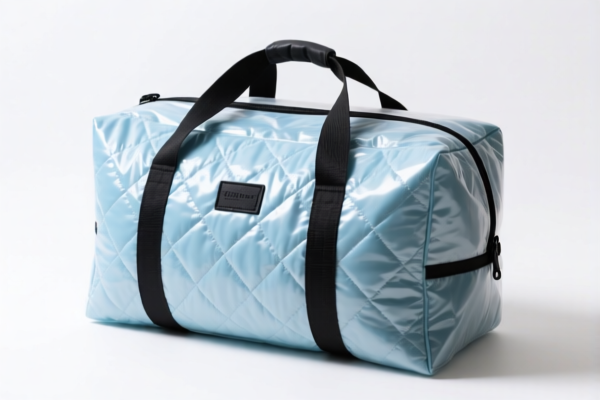
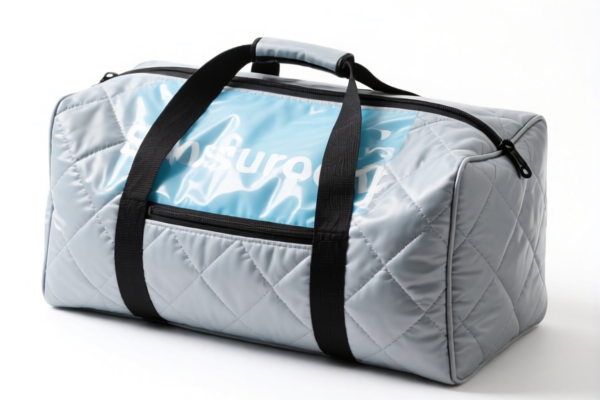
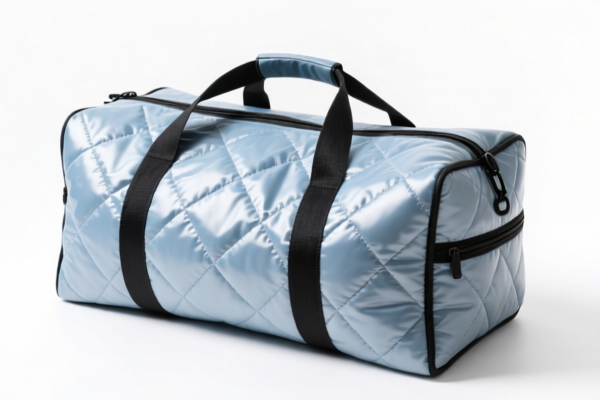
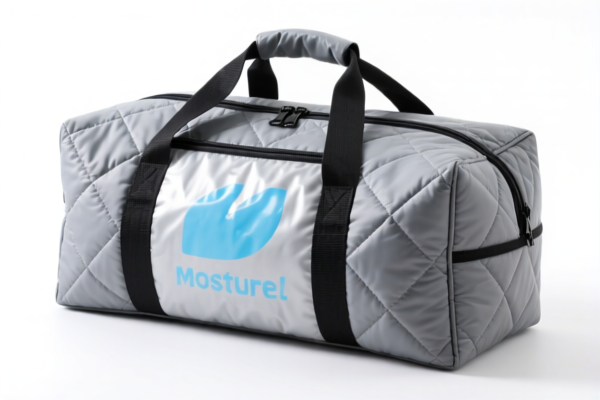
AI Analysis
🛍️ Moisture-Proof Cotton Quilt Bag (棉质收纳袋/防潮被袋)
🌐 HS Code Reference & Customs Clearance Guide | 2026 Latest Tariff Analysis | Professional Transit Strategy
📌 I. Product Definition & Classification: What is a "Cotton Quilt Bag"?
A Moisture-Proof Cotton Quilt Bag is a textile-based storage solution designed for bedding. In international trade, it falls under two main categories depending on its specific construction and intended use classification:
- General Textile Accessories (Household Textiles): If classified as a general "made-up" textile article for storage or household use.
- Textile Travel/Goods Containers: If classified as a container-like item for storing goods, specifically under Chapter 42 (though less common for pure cotton soft bags, specific textile containers may fall here if they meet structural criteria).
⚠️ Key Distinction Point:
- If the bag is treated simply as a "made-up textile article" (like a sack, bag, or pouch) for general household storage → It falls under HS 6307 (Other Made-up Articles).
- If the bag is considered a "container" for goods (similar to a suitcase or trunk lining, but made of textile) → It may fall under HS 4202 (Travel Goods, Handbags, etc., specifically "other containers").
📦 II. HS Code Classification Details (2026 Latest Tariff Authority Comparison)
| HS Code | Product Description | Application Scenario | Material/Structure Conflict? |
|---|---|---|---|
6307.90.98.91 |
Cotton Storage Bag / Moisture-Proof Cotton Quilt Bag | General household storage, bedding bags, soft textile containers | ✅ No. Classified as "Other Made-up Textile Articles". |
6307.90.89.40 |
Cotton Storage Bag (General Other Articles) | General storage, no specific material conflict, finished consumer good | ✅ No. "Other" made-up articles. |
4202.92.60.10 |
Cotton Container (Textile Material) | Bag used as a container for storage, textile-based | ✅ No. Classified under "Similar Containers" in Chapter 42. |
4202.92.60.91 |
Cotton Container (Other Category) | Non-retail jewelry/cosmetic containers, general storage | ✅ No. Specific textile container category. |
🔍 Key Reminder:
- HS 6307 is generally the most common classification for soft cotton bags used for quilts/bedding, as they are considered "made-up articles."
- HS 4202 applies if customs authorities view the item primarily as a "container" for goods rather than just a textile accessory. This often results in higher tariffs due to Chapter 42 duties.
- The presence of "moisture-proof" treatment does not change the HS code but may require additional material declarations (e.g., plastic coating or lining).
💰 III. 2026 Latest Tariff Rate Breakdown (Including Additional Duties & Policy Surcharges)
✅ Applicable Country: United States (US)
✅ Origin: China (CN)
✅ Effective Date: 2025/2026 Tariff Schedule
🎯 1. 6307.90.98.91 & 6307.90.89.40 —— Cotton Storage Bag (Made-up Textile Article)
| Item | Content |
|---|---|
| Base Tariff Rate | 7.0% (Ad Valorem) |
| Section 301 (Trade War) Surcharge | 7.5% (Specific to this subheading or general 6307 list) |
| Section 122 Tariff | 10% (Specific surcharge for cotton/textile articles) |
| Total Tariff Rate | 24.5% (for 6307.90.98.91) 17.0% (for 6307.90.89.40) |
| Tax Calculation | CIF Value × Total Rate |
| De Minimis Eligibility | ❌ Not Eligible (Deny de minimis for certain textile items under specific clauses) |
| Legal Basis Path | Section 301 → Section 122 → USITC:6307 |
📌 Explanation:
- Base Rate (7.0%): Standard MFN duty for other made-up textile articles.
- Section 301 (7.5%): Additional duty imposed on Chinese imports under Section 301 of the Trade Act.
- Section 122 (10%): Specific tariff provision for certain cotton or textile products.
- Total: 24.5% is the standard high-risk tariff for this code. However,6307.90.89.40may qualify for a lower Section 301 rate (0%), resulting in 17.0% total.
🎯 2. 4202.92.60.10 & 4202.92.60.91 —— Cotton Container (Chapter 42)
| Item | Content |
|---|---|
| Base Tariff Rate | 6.3% (Ad Valorem) |
| Section 301 Surcharge | 25.0% (Standard Section 301 rate for Chapter 42) |
| Section 122 Tariff | 10% (Specific surcharge) |
| Total Tariff Rate | 41.3% |
| Tax Calculation | CIF Value × 41.3% |
| De Minimis Eligibility | ❌ Not Eligible |
| Legal Basis Path | Section 301 → Section 122 → USITC:4202 |
📌 Explanation:
- Higher Risk: Classifying cotton quilt bags as "containers" (Chapter 42) triggers a 25% Section 301 surcharge, significantly increasing the total tariff to 41.3%.
- Why? Chapter 42 duties are generally higher and attract heavier Section 301 penalties than Chapter 63 (Textile Articles).
- Recommendation: Unless the bag has rigid structures or specific container classifications, prefer HS 6307 to save ~17-24% in tariffs.
🛠️ IV. Customs Clearance Practical Advice (Avoid Pitfalls)
✅ 1. Required Documentation Checklist
| Document | Mandatory? | Notes |
|---|---|---|
| ✅ Commercial Invoice | ✔️ | Must clearly state "Cotton Quilt Bag" or "Storage Bag," not just "Bag." |
| ✅ Product Description | ✔️ | Specify: "100% Cotton," "Moisture-Proof Lining," "For Bedding Storage." |
| ✅ HS Code Declaration | ✔️ | Recommend 6307.90.98.91 or 6307.90.89.40 to minimize duty. |
| ✅ Material Composition | ✔️ | Prove cotton content to avoid misclassification as plastic packaging (HS 3923). |
| ✅ Photos | ✔️ | Show soft structure, zipper/buttons, no rigid frame (to support HS 6307). |
✅ 2. Strategic Classification Tips
🔥 "Soft Bag = Textile (6307), Hard Container = Chapter 42 (4202)"
| Scenario | Recommended HS Code | Total Duty | Reason |
|---|---|---|---|
| Soft cotton bag with zipper, no frame | 6307.90.98.91 |
24.5% | Standard textile article. |
| Soft cotton bag, specific subheading available | 6307.90.89.40 |
17.0% | Lower Section 301 rate if applicable. |
| Bag with rigid plastic insert/frame | 4202.92.60.10 |
41.3% | Considered a "container," higher duty. |
| Misclassified as "Plastic Packaging" (HS 3923) | ❌ Avoid | Risk of Penalty | Cotton content must be declared. |
✅ 3. Special Considerations
| Situation | Handling Advice |
|---|---|
| Moisture-Proof Lining | Declare material (e.g., "PE-coated cotton"). Do not mislead customs as "100% Cotton" if it has plastic lining. |
| Set of Bags | If sold in a set, declare the principal component (cotton). |
| OEM/Custom Design | Provide design sketches to prove it's a "made-up article" not a "container." |
| De Minimis Exemption | ❌ Not Available for these HS codes under current US regulations for Chinese origin. |
🌍 V. Global Market Comparison (2026)
| Country/Region | Recommended HS Code | Tariff (China Origin) | Remarks |
|---|---|---|---|
| 🇺🇸 USA | 6307.90.98.91 |
24.5% | High tariffs due to Section 301 & 122. |
| 🇨🇳 China | 6307.90.98.91 |
7.0% | No Section 301 or 122 surcharges. |
| 🇪🇺 EU | 6307.90.98 |
4.0% | No additional surcharges for textiles. |
| 🇬🇧 UK | 6307.90.98 |
4.0% | Post-Brexit tariffs align with EU for textiles. |
| 🇯🇵 Japan | 6307.90.90 |
0.0% | Often duty-free for made-up textile articles. |
📌 Conclusion:
- The US market is the most expensive for cotton quilt bags due to 24.5%–41.3% tariffs.
- Canada, Mexico, EU, and Japan offer significantly lower duty rates (0–7%).
- Consider supply chain diversification if targeting the US market heavily.
📌 VI. Common Errors & Pitfalls (Lessons Learned)
❌ Error 1: Classifying cotton quilt bags as "Plastic Packaging" (HS 3923)
👉 Consequence: Customs will reclassify as textile, impose 24.5%–41.3% duty + penalties.
✅ Fix: Clearly declare "100% Cotton" or "Cotton with PE Lining."
❌ Error 2: Using HS 4202 for soft cotton bags
👉 Consequence: Unnecessary 41.3% tariff instead of 24.5%.
✅ Fix: Use HS 6307 unless the bag has a rigid structure.
❌ Error 3: Ignoring Section 122 Tariff
👉 Consequence: Underpayment by 10%, leading to customs audit and back taxes.
✅ Fix: Include Section 122 in cost calculation.
🎯 VII. Conclusion: Professional Classification, Cost Savings!
🎯 Key Takeaway:
🔹 "Soft Cotton Bag = HS 6307 (24.5%) vs. HS 4202 (41.3%) – Save 17% by Correct Classification!"
🔹 "Moisture-Proof ≠ Plastic Packaging" – Declare material accurately.
🔹 "US Tariffs are High – Plan accordingly."
📌 Pro Tip:
If your cotton quilt bags are originating from Vietnam, Thailand, or India, you may qualify for preferential tariffs (e.g., 0% under GSP or FTAs), bypassing Section 301 and 122 surcharges.
👉 Recommendation: Apply for an Advance Ruling from US Customs (CBP) to confirm HS code 6307.90.98.91 eligibility.
📣 Immediate Action:
📞 Consult a licensed customs broker.
📄 Prepare product specs showing "soft textile structure."
🚀 Optimize HS Code to6307for maximum cost efficiency!
✨ Accurate Classification Saves Money!
💼 Every percentage point counts in international trade!
Customer Reviews
About HS Code Classification
The Harmonized System (HS) is an internationally standardized nomenclature developed by the World Customs Organization (WCO) to classify traded products. Over 200 countries use the HS system as the basis for customs tariffs, trade statistics, and import/export regulations.
Each HS code follows a hierarchical structure:
- Chapter (2 digits) — Broad category of goods (e.g., Chapter 84: Machinery and Mechanical Appliances)
- Heading (4 digits) — More specific grouping within the chapter
- Subheading (6 digits) — Internationally standardized breakdown, used by all WCO member countries
- National subdivisions (8-10 digits) — Country-specific extensions for further classification, such as US HTSUS 10-digit codes
Correct HS code classification is essential for smooth customs clearance, accurate duty payment, and compliance with trade regulations. Misclassification can lead to customs delays, overpayment of duties, or penalties.
When importing from CN to US, the applicable tariff rates may include:
- Most-Favored-Nation (MFN) rate — The standard duty rate applied to WTO members
- General rate — Applied to countries without trade agreements
- Trade remedy duties — Additional tariffs such as Section 301 (anti-dumping), Section 232 (national security), or countervailing duties
The information provided on this page is for reference purposes only. For official classification, please consult with your local customs authority or a licensed customs broker.